Acid Tolerant Ornamental Grasses

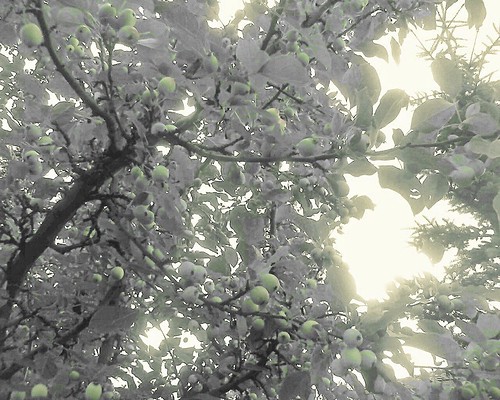
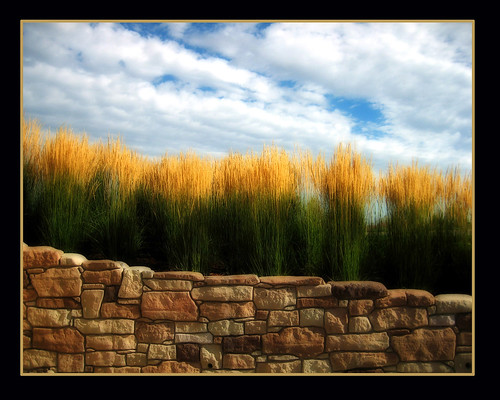
Fun With Grass 1 by StuffEyeSee

TheGardenLady received this question from Donell.

I live in MI and have removed 3 of 6 evergreen trees between my neighbor’s house and mine. I would like to plant something between the 3 that are left to have a little more privacy – are there any acid tolerant ornamental grasses that could be used?

By removing half of the evergreen trees you have opened up the area for more sun. Most grasses like light and at least 6 hours of sun (see here) . Michigan has some interesting grasses that should grow nicely for you (see here)  and since landscapers are recommending grasses for high interest but low maintenance you might find some that will work for you (see here).

Many ornamental grasses tend to be tolerant of a wide range of soil types and prefer a pH between 5 and 7. So have your soil tested to see if you can grow the grasses you like.
Japanese Peace Lily – Flowering Issues

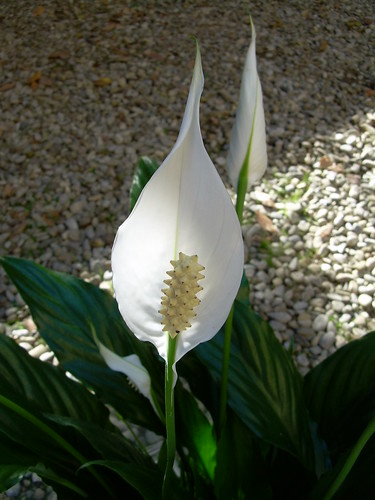
spathiphyllum by magictarty

TheGardenLady received this question from Cecilia.

I have had a Japanese Peace Lily for about 2-3 years. It was flowering when I bought it and it seems to be thriving as it has grown a fair bit but it has not flowered since.   What can I do?

There can be a number of reasons that your Japanese Peace Lily, Spathipyllum has not flowered since you bought it (see here). I hope the plants are healthy.  Always check to see there are no insects or slugs on them. They need brighter light than most houses have but they don’t want sun shining on them. Spathiphyllums are tropical plants that grow in shade under tall trees; but in the house where the environment is not identical to their native habitat, they need much more light. You might want to try using grow lights. They like to be misted. Mist the leaves with soft water and keep the plant on a tray of pebbles filled with water that is not touching the plant. They should be watered only when the top 3 inches of soil is really dry and the plant feels light weight. But be sure you don’t over water the plant. Don’t water too frequently. They want to be rootbound. Do not be too quick to repot them and never move them to a pot more than 2 inches larger diameter than the old one. And for best results they need temperatures between 65 and 90 degrees F.

When you bought the plant, the plants might have come from its native habitat. Or the nursery might have gotten plants that were forced to enable it to bloom. You can go back to the nursery where you bought it and ask some questions about it and complain. Or if the plant is healthy, no spider web looking things on the plants which might be spider mites, you might just enjoy it for its foliage.

One of the challenges of raising plants is trying to emulate the plants native habitat. If you can duplicate its native environment, the plant will do what it was created to do – have flowers. But this is difficult to do especially in the home. Homes can be dry or darker than the outdoors. That is why people like to have green houses where they can try to create the environment of the plants. But even green houses can be challenging.

Why Grass Might be Difficult to Grow

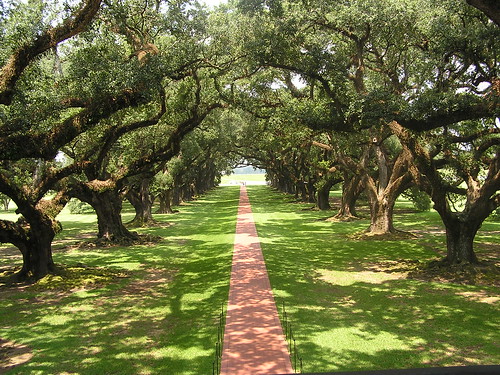
Oak Alley by Lake Fred

TheGardenLady received this question on a post about acidic soil from Todd.

My yard had many oak trees in it. I have stopped letting leaves sit so I can start a decent yard.  Could this be the reason grass is so difficult to grow?

If you want grass to grow on a lawn, it is good that you stop letting leaves sit on the grass. Grass loves sun. Even the so called shade grass doesn’t like a blanket of leaves covering because all grass needs light. And grass is a heavy feeder. Some kinds of grass need more fertilizer than others.

Grass really doesn’t like to have competition from tree roots.

You wrote that your yard HAD many oak trees in it. What does that mean? Did you chop the trees down? If you still have oak trees in your yard, know that oak trees are also heavy feeders. Their roots want the nutrients and the water to feed the trees. Tree roots are like pancakes- spread out. 90% of tree roots are in the top 3 feet of soil and 50-75% of feeder roots are in the top 1 foot of soil.

Continue reading “Why Grass Might be Difficult to Grow”

Determining Your Hardiness Temperature Zone

Hardiness Temperature Zones

TheGardenLady received this question from August.

I live in Mount Laurel, NJ.  I see many garden care articles related to zone. What zone am I in?

Depending on the hardiness temperature zone map you use, Mount Laurel, New Jersey is either in hardiness temperature zone 6b which has a low in the winter of -5 degrees or is in the warmer zone 7 which has a low in the winter of 0 degrees.  I believe Mt. Laurel is zone 7 as reported in the Arbor Day Foundation site,  where you can type in your zip code and your hardiness temperature zone will be shown. The United States National Arboretum site lists Mt. Laurel, NJ in the lower zone 6b.

Anyone who wants to check out their plant hardiness temperature zones should google up the Arbor Day Foundation website or the United States National Arboretum website. Both websites have lots of other information besides your hardiness zone. For example, check out the information on any tree you might want to plant on the Arbor Day Foundation website or the United States National Arboretum has a Gardening Question & Answer section.

Continue reading “Determining Your Hardiness Temperature Zone”

Toxic Sweet Peas – Lathyrus Odoratus

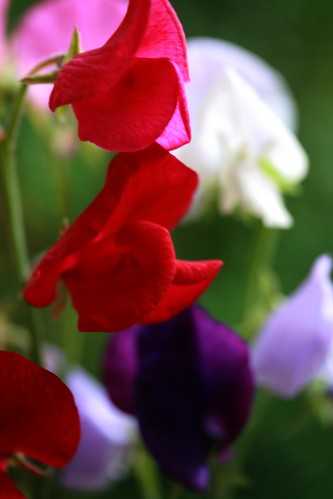
Lathyrus Odoratus by Ivlys

TheGardenLady received a question on her post about sweet peas that asked whether sweet peas are edible.

Sweet peas, Lathyrus odoratus, are the lovely flowers that English gardeners have been raising since Victorian times and call the Queen of Annuals (see here).  Sweet peas are NOT edible! They are TOXIC. A website definition of toxic is something that is capable of causing injury or death, especially by chemical means; they are poisonous. An excellent, comprehensive list of toxic plants is the one from the University of California at Davis that tells you which plants are dangerous (see here). Refer to this list when you are concerned about plant toxicity. Note that the list tells you the level of toxicity of a plant.

Luktärt (Sweet Pea), Lathyrus odoratus by Peter Karlsson

Do not confuse the fragrant, colorful and charming ornamental flowers Lathyrus odoratus that are toxic with edible peas Pisum sativum that may be classified as garden peas (English peas), snap peas and snow peas (sugar peas). One eats the shoots and pods of the edible peas. Edible peas have been raised and eaten in Europe since prehistoric times.

Autumn is ideal for Encore Azalea planting

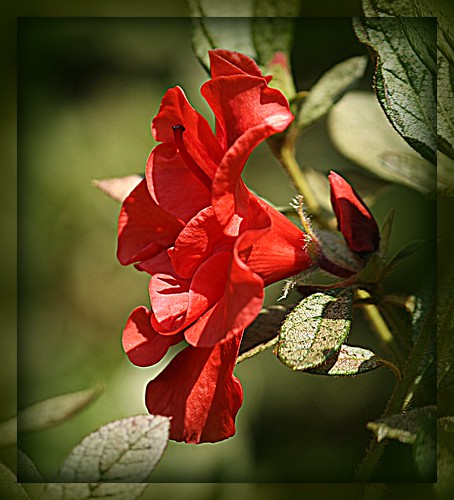
Encore by Carol (Nona)

The following is an update from Encore® Azalea.

Gardeners know fall is a great time of year to plant trees, shrubs, and flowering bulbs.  But did you know autumn is an ideal time for Encore Azalea planting, too?

Planting Encore Azaleas in the garden before winter’s frost gives gardeners double benefits. First, you’ll enjoy their vibrant blooms until first frost and then Encore Azaleas will enjoy a period of dormancy to become established before next spring’s arrival.

Even after the fall blooms fade away on Encore Azaleas, the evergreen foliage provides a beautiful backdrop for the winter garden with lush, year-round hues of green. During the dormant period, the branches may stop growing; but underneath the soil, the roots are developing a healthy support system – fortifying the Encore Azalea to produce beautiful new growth the following spring.

When planting Encore Azaleas, remember that Encore Azaleas tolerate more sunlight than traditional azaleas.

Unlike traditional azaleas, Encore Azaleas perform best in sun to partial shade, preferably afternoon shade. Encore Azaleas must receive 4-6 hours of direct sunlight per day for optimal blooms.

Encore Azaleas will also tolerate full sun, but care must be taken to prevent damage from exposure to drought or other heat-related conditions. To find a retailer near you, please visit www.EncoreAzalea.com.

Happy gardening,

From your friends at Encore® Azalea

Fall is a Great Time to Buy and Plant Plants, Shrubs and Trees

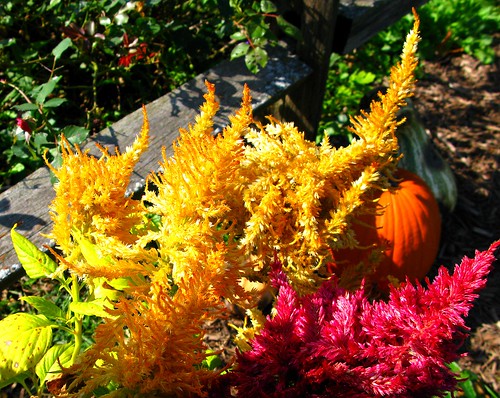
Colorful Fall Planting by Don3rdSE

The GardenLady just returned home from another buying spree of perennials and shrubs. This is TheGardenLady’s favorite time to buy plants. At Russell Gardens Wholesale, I got the Jackmanii Clematis that I wanted to plant next to my new arbor. I also bought 9 good sized hosta plants plus 6 other perennial plants. The price for everything came to just a little over $50. I couldn’t fit another plant in the car. Today I bought the Buddleia davidii Pink Delight that I decided I needed when I saw the wonderful long pink spikes it has. This buddleia looked magnificent in the Coastal Maine Botanical Garden. I bought it in a gallon pot at half price.

When you are driving around this fall, I hope the readers of this blog notice the huge signs at most nurseries that say SALE. And like TheGardenLady, I do hope that you are taking advantage of these sales. Unless you are shopping for a new plant that is being featured in the spring or you are looking for a plant that absolutely must be planted in the spring, FALL is the time of the year to buy and plant your garden. Why? Because this is the time of year that nurseries and gardens are having sales. The nurseries want to get rid of inventory so that they don’t have to keep all those plants in pots over the winter. And they want to make room for new plants that will be coming to them in the spring. And it is not just nurseries that are having the sales, plant catalogs and websites are having their sales. So you, the gardener will reap the benefit of these sales. Fall is a buyers market for perennial plants, shrubs and trees.

Continue reading “Fall is a Great Time to Buy and Plant Plants, Shrubs and Trees”

The Pomegranate Tree – Punica Granatum

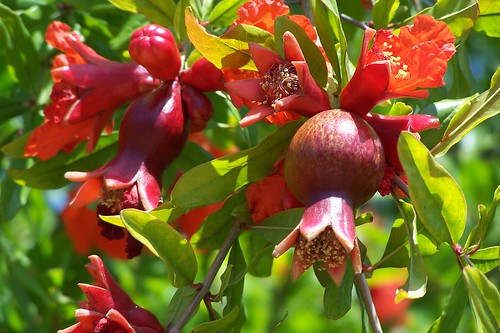
Pomegranate buds and blossoms by laurielabar

One of the prettiest flowering shrub or small tree is the pomegranate tree Punica granatum. Those fortunate enough to live in a climate warm enough- zones 7 to 10- to be able to grow the pomegranate tree outdoors have seen the flowers, which are attractive scarlet, white or variegated flowers that are over an inch across and have 5 to 8 crumpled petals and a red, fleshy, tubular calyx which you see remaining at the top of the fruit. The flowers may be solitary or grouped in twos and threes at the ends of the branches.

Even Aesop, the famous writer, wrote a delightful fable about the beauty of the Pomegranate tree entitled, The Pomegranate, Apple – Tree and Bramble.

Continue reading “The Pomegranate Tree – Punica Granatum”

Ambleside Garden & Nursery

By now readers know that TheGardenLady loves to recommend what she considers outstanding nurseries.

There is an excellent nursery in central NJ called Ambleside Gardens & Nursery,  located in Hillsborough, NJ, that TheGardenLady wants her readers to know about. This is a pretty garden as well as a nursery, a place to visit as a destination.  It’s a place that TheGardenLady takes out of state visitors. It is a garden with lots of gorgeous plants to see that are all for sale and in the center is a charming building with lots of interesting items to buy- items from around the world, not necessarily just for gardens.

It is simply a great nursery to go to if you want to buy excellent plants and/or gifts for yourself or a friend. For example, if you love to give Poinsettias for Christmas, they have some of the most beautiful and unusual colored ones as well as magnificent pots of the red varieties. But if you are looking for something more unusual as a Christmas gift, like Christmas decorations, this is the place to shop. For example, if you like creches for Christmas, they have them from around the world. Even if you don’t celebrate Christmas, these items are works of art. Whoever is their buyer knows how to find some of the most fascinating decorations.

But they are really a nursery. So if you want to see and buy the newest plants on the market, they are probably at Ambleside. If you want to get some idea of how to decorate your garden, Ambleside Gardens is the place to go. If you want help, they have friendly people there to help- including the owner David Scudder and his mother who originally founded the nursery. If you want to be left alone, they are happy that you have come to visit and will leave you alone.

Continue reading “Ambleside Garden & Nursery”

Apples trees don’t like anything to grow near them

Crab Apple Tree by LostMyHeadache

TheGardenLady received this question from Sandy.

We have a 50 year old crabapple tree in our back yard that is huge. We have tried hostas, astilbes, ferns and such around it and nothing seems to grow more than one year… any suggestions? Apparently the soil is very acidic due to the falling apples.

How very fortunate to have a 50 year old crabapple tree in your back yard! The spring bloom must be magnificent.

Apple blossoms were always my favorite blossoms in the spring. We had a huge old crabapple tree in our side yard that had loads of apples. The apples were too small to really use, so we fed them to the animals or composted them.

The tree was so huge that as a child we would climb its trunk till where it forked. And we always had a swing hanging from one of the biggest branches. I spent many hours on that swing. To make the swing my father used heavy rope over the tree branch and a board that he notched on either side. From the other big limb- this one lower down where the limb joined the trunk, the one where the trunk forked, my father always hung a hammock. One side of the hammock was attached to this lower limb and the other side was attached to a wooden pole that my father hammered into the ground at the perfect distance to enable the hammock to stretch. Again, as children, as many as three of us would lie on the hammock swinging it as high as we could. We tied a thinner rope to a pole at the side of the hammock that was used to pull us back and forth. My father also loved to lie on the hammock to rest after plowing or working in the field.

We never planted anything under the tree, for besides the swing and hammock, we also had chairs to sit on under the shade of the branches- a cool spot to chat with family or friends or a place to shell peas before the era of air conditioning.

Apple trees don’t like having anything grow under them because their roots really don’t want competition for soil nutrients or water. So why fight nature? If you don’t want to put cozy domestic items like chairs or swings under the shade of the tree, why don’t you consider putting some interesting sculpture or yard art under the tree.

Continue reading “Apples trees don’t like anything to grow near them”