Ants are amazing. Watch this video and marvel at their underground structure. It’s remarkable!
Read here for a post on ants by TheGardenLady.

In depth gardening advice from an expert gardener
Ants are amazing. Watch this video and marvel at their underground structure. It’s remarkable!
Read here for a post on ants by TheGardenLady.

TheGardenLady received this question from Wanita:
Can you provide some nurseries that sell espaliered apple trees? Â I live in
southern Michigan and would like to plant in the spring. I have a small yard and
would like a couple apple trees and a peach tree if possible in my space.
One of the really good places to get espaliered apple and peach trees in the United States (they ship everywhere in the US except Hawaii) is from Stark Brothers Nurseries and Orchards. See here. After 200 years this company knows their business. They have a number of espaliered tree choices that they sell.
There are many English orchards or nurseries that sell espaliered trees but Stark Bros. told me that espaliered fruit trees is becoming more popular in the US.
You do know that you need at least 6 hours of sun for the trees to bear fruit. Stark Bros. will send you free planting instructions that should include pruning techniques. You will have to prune espaliered trees yearly. Because fruit trees often need lots of pesticides, ask for the most disease resistant trees when you buy. If you have any problems with the trees, they will be able to help solve them.
I do not know your temperature zone- I guess it is zone 5- but you should ascertain what it is before ordering. When buying trees, tell the nursery your temperature zone to get the best trees for your area.
Fall is the best time to plant espaliered trees and Stark Bros. is presently shipping orders of espaliered and other fruit trees. They may also giving a discount if you order online.
So call and order your trees immediately if you are serious about wanting espaliered trees in your yard next spring. If you order through Stark Bros. you can get their cataogue online or call for it at 800.325.4180
Next spring you will enjoy your garden. TheGardenLady and her readers would love to have you share photos of your espaliered trees with any comments you have to tell about your experience with them.

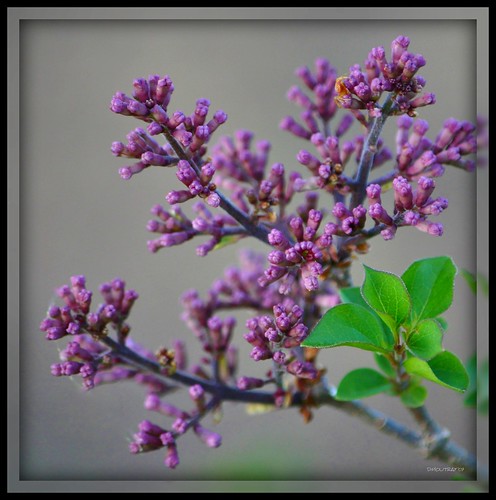
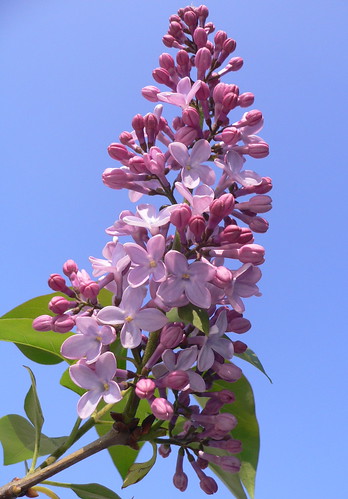
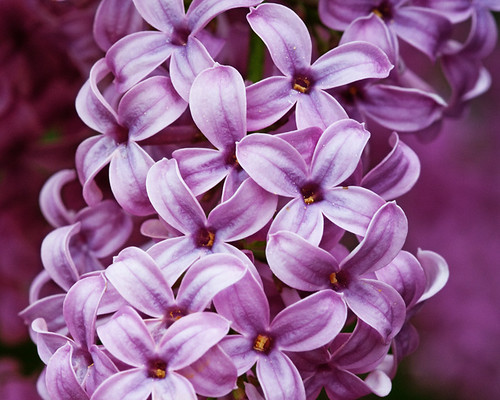
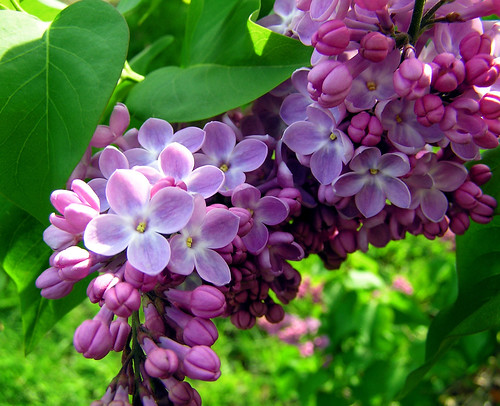
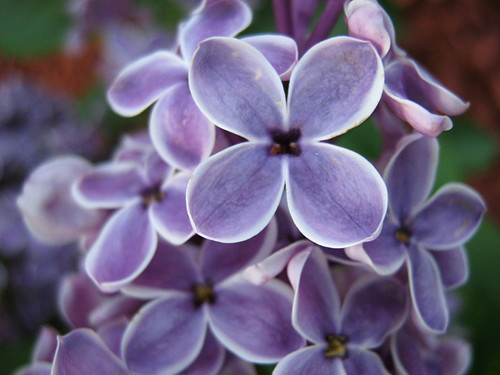
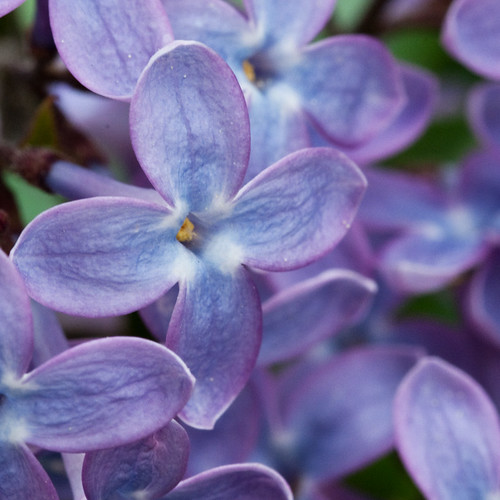
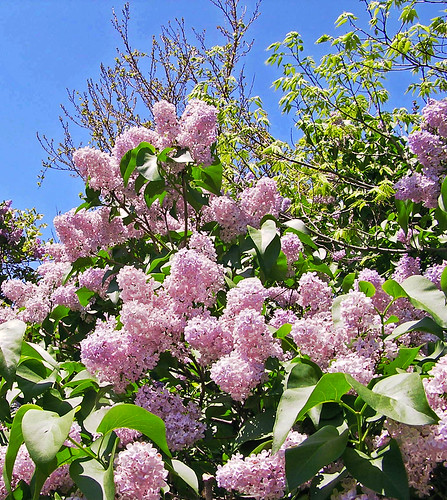
As many of you know, TheGardenLady’s nom de plume is Lilac. So TheGardenLady would like to share with her readers some beautiful images of lilacs. I hope they brighten up your day!


TheGardenLady received this question from Jonathan:
Can a wandering jew be completley sumerged in water and still live?
The plant commonly called Wandering Jew or Inch Plant, Tradescantia Zebrina is considered one of the easiest plants to grow as an indoor plant and if you live in zones 9-11 as an outdoor plant as well. One only has to pinch off a piece of the stem with some leaves (you can even start new plants from the leaves) and stick the stem part in water and it will root. Leave the rooted stem in water, do not let the roots dry out and the plant will grow to be a beautiful indoor hanging type plant and even may produce flowers. It thrives in bright but indirect sunlight- the brighter the light the more flowers it will produce, though it is mainly grown for its lovely foliage.
The Wandering Jew is not an underwater plant, so it does not want to be completely submerged. The plant really wants light on its leaves. If you want to keep it in water, you might get root rot. Either toss the rotten plant out or cut off and toss out the rotted root part and put the healthy plant in fresh water to start new roots.
Of course the plant will do better in soil. So now that your plant has made roots in water, plant those rooted pieces in potting soil. Keep the soil moist all the time. The plant even likes its leaves misted daily for added moisture. See here. However, TheGardenLady never bothered with the daily misting and the plant is so hardy, it thrived. The plant enjoys diluted liquid fertilizer, especially if it is grown in water, for extra nutrients.
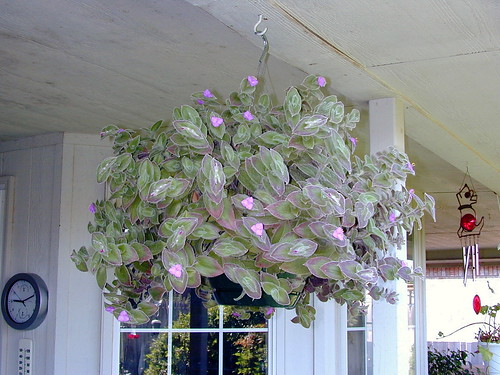
This is an ideal plant for dorm rooms and for people who want green plants but feel they have “black thumbs”. And it is an attractive plant for your home. TheGardenLady can almost guarantee that you will have success with this plant. Keep on cutting off small stems with leaves and putting them in fresh water to start more plants.
If you go to buy a Wandering Jew plant, you will often see it sold in a large hanging basket. No one I knew ever bought one. People just pinched off stems from someone else’s plant and started growing the plant successfully.You can almost go into business with all the plants you can start so easily. Starting a plant is called propagation.
I have read that for some people handling the plant can get an allergic reaction. So use gloves when cutting the stems and don’t handle too much. This Garden Lady has never known anyone who had a problem.
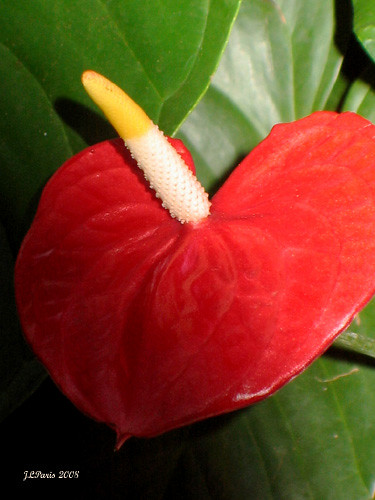
Anthurium – Arum by Stellas mom
TheGardenLady received this question from Ellen:
I have a peace lily that blooms red instead of white and I wondered how rare this is, as I have never seen anything but the white blooming peace lilies?
Could you possibly have an Anthurium plant that has a red spathe or flower bract? A spathe is a modified leaf that looks like a flower The long-lasting, showy flower bracts come in shades of red, rose, pink, white and some other colors with a protruding pale yellow, tail-like flower spadix. See here. The name Anthurium comes from antho- + Greek oura a tail.
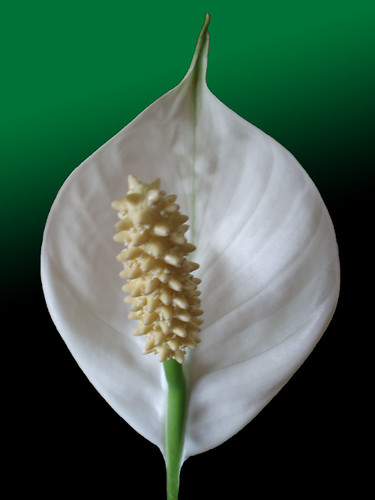
The white spathe plant that is generally referred to as the Peace Lily is a Spathyphylum. See here. The Latin name Spathyphylum comes from the Greek -spathe- meaning bract and phyllon meaning leaf because the flowers are leaf like in shape.
Scientists and herbalists understood the need for systematic, reliable plant and animal identification and classification. This is so everyone is sure to know exactly the kind of plant or animal you are talking about. Over 300 years ago a scientist by the name of Linneaeus created a system of writing the names of plants and animals in Latin. All scientist around the world have pretty much accepted these Latin names because common names can change depending on where you live. For example, there is a darling plant we grow in the garden that has a common name of Snapdragon because if you were to gently squeeze the flower it has what looks like a mouth. If you were to live in Iran, I was told you would not call it a snapdragon but would call it a monkey mouth.The Latin name for snapdragon is Antirrhinum majus. Thus when scientists in the US and scientists in Iran talk about the Antirrhinum, they know exactly the plant they are talking about. The Latin name Antirrhinum comes from the Greek antirrhinon, from anti- like (from anti against, equivalent to) + rhin-, rhis nose and used in Latin.  See here.
Does this mean one should start learning Latin? It might be fun. And it is a fun challenge to learn the proper name for each plant you have. Go on- impress your friends. Let them know if you have an Anthurium or a Spathyphylum.
Once again TheGardenLady is recommending having plants in your house, especially now during the cold and flu season. It is important that our houses and offices have good air quality all the time so you don’t suffer breathing problems, but it seems doubly important when you are gasping for breath with a stuffed nose: you don’t want to worry about breathing in poor quality air if you can help it. According to Dr. Woverton, “Only recently have many physicians begun to associate the increase in respiratory problems with exposure to poor indoor air quality.” Read this.
A scientist Dr. Bill Wolverton who worked for NASA is the author of the book “How To Grow Fresh Air- 50 Houseplants That Purify Your Home or Office” and another book called “Eco-Friendly House Plants-50 Indoor plants that purify the air in homes and offices” and he is coming out in December 2009 with a new book coauthored with Mr Kozabura Takenaka “Plants -Why You Can’t Live Without Them” where “the authors delve into the latest research involving the use of plants to improve indoor air quality.” This book will be interesting to read because it discusses “how plants grown in hydroculture (soil-free) are more effective in cleaning the air than plants in potting soil.” Dr. Wolverton says that “hospitals in Japan are adding plants to take advantage of their air-cleaning properties.”
Besides the role of the plant’s leaves and their root microbes removing impurities from the air, just by having plants in the house brings added moisture to the indoor air. So many houses are so extremely dry indoors when the heat comes on, so by watering the plants and or having them sit on stones over water or if you keep your plants or bouquets of flowers in water, you can breathe so much more easily.
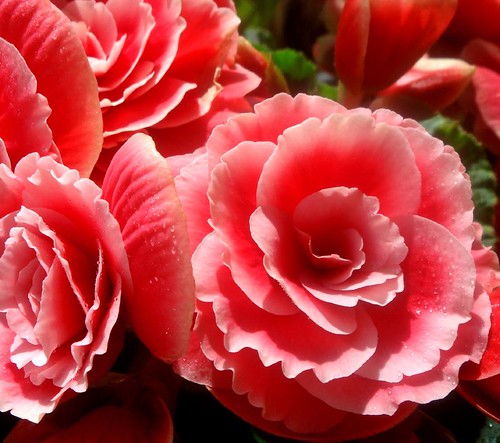
Any of the plants you already have indoors or ones that we have discussed on TheGardenLady blog are helpful. For example, the Sanseviera, Mother-In-Law’s Tongue plant. If you have low light or if you have good light, how about considering the lovely fancy leafed begonias. TheGardenLady will be writing about these begonias in a future post.
Now that you have beautified your rooms with plants, TheGardenLady hopes that you will be able to enjoy the atmosphere and that you don’t get sick with a cold or the flu. But should you become ill you can rest easier knowing that you have done something to help the environment in your home.
If TheGardenLady’s readers wonder what the signs of the flu are, below is an easy chart to check to see if you have a cold or the flu. If you are sick, stay home and take loving care of yourself. Make yourself happy with pretty plants in your rooms. TheGardenLady hopes that none of her readers comes down with the flu.
H1N1 flu is about to be upon us and we need to be on top of information regarding it. Here is a comparison to the normal cold symptoms that was sent to me.
Know the Difference between Cold and H1N1 Flu Symptoms
|
Symptom |
Cold |
H1N1 Flu |
|
Fever |
Fever is rare with a cold. |
Fever is usually present with the flu in up to 80% of all flu cases. A temperature of 100°F or higher for 3 to 4 days is associated with the flu. |
|
Coughing |
A hacking, productive (mucus- producing) cough is often present with a cold. |
A non-productive (non-mucus producing) cough is usually present with the flu (sometimes referred to as dry cough). |
|
Aches |
Slight body aches and pains can be part of a cold. |
Severe aches and pains are common with the flu. |
|
Stuffy Nose |
Stuffy nose is commonly present with a cold and typically resolves spontaneously within a week. |
Stuffy nose is not commonly present with the flu. |
|
Chills |
Chills are uncommon with a cold. |
60% of people who have the flu experience chills. |
|
Tiredness |
Tiredness is fairly mild with a cold. |
Tiredness is moderate to severe with the flu. |
|
Sneezing |
Sneezing is commonly present with a cold. |
Sneezing is not common with the flu. |
|
Sudden Symptoms |
Cold symptoms tend to develop over a few days. |
The flu has a rapid onset within 3-6 hours. The flu hits hard and includes sudden symptoms like high fever, aches and pains. |
|
Headache |
A headache is fairly uncommon with a cold. |
A headache is very common with the flu, present in 80% of flu cases. |
|
Sore Throat |
Sore throat is commonly present with a cold. |
Sore throat is not commonly present with the flu. |
|
Chest Discomfort |
Chest discomfort is mild to moderate with a cold. |
Chest discomfort is often severe with the flu. |
The only way to stop the spread of the epidemic is to spread the awareness!