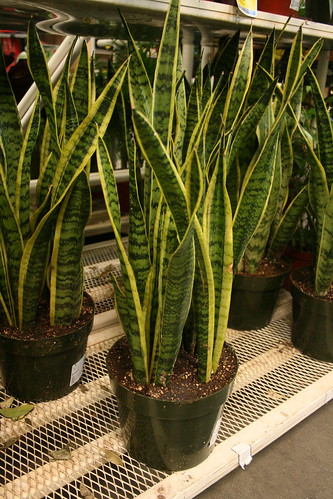
Where To Buy Sansevieria, also known as Mother-in-Law’s Tongue

Sansevieria – Mother-in-law tongue or Snake Plant by Green Acres Nursery

TheGardenLady received this question from Glen.

Where can I find a mother-in-law’s tongue to buy?

Generally you should be able to buy Sansevieria – common name is Mother-in-Law’s Tongue – at your local nurseries or garden centers that sell indoor plants. If you cannot find the plants locally, there are numerous sites online where you can order them in the US and abroad. You might also contact or join the International Sansevieria Organization or a local Cactus Society to see which nurseries they recommend.

There is a website called Cactus Mall that lists places to buy Sansevieria.  See here.  This site has interesting information about Sansevieria.

Untitled by *n*o*o*r*

You can buy Sansevieria on eBay.

Though TheGardenLady cannot recommend any specific online nursery, a short list of online nurseries where you can order Sansevieria are:

Bob Smoley’s Gardenworld

Brookside Nursery

Glasshouse Works

Succulent Garden website

Hope this helps.

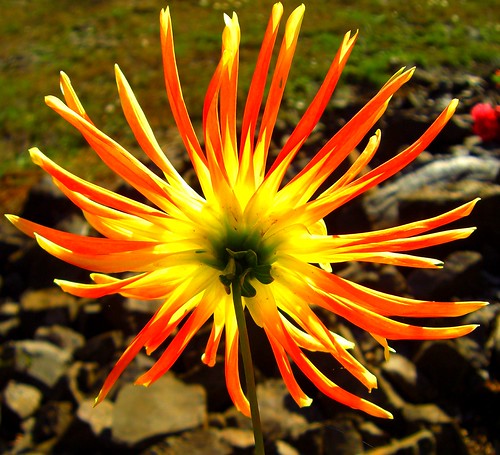
Do Hydrangeas, Lilies and Dahlias Love Sun?

Face to the sun by Quiltsalad

TheGardenLady received this question from Kareena.

I had someone plant flowers in my garden. I told them the types of flowers I like (dahlias, lilies, tulips). There are already 3 azalea bushes there. They planted 3 hydrangeas, 4 lilies, 4 dahlias. There is sun all day because I am at an end-unit. My question is: Will the flowers have a problem growing/staying alive with this combination and the all-day sunlight?

All the flowers that you mention, except for perhaps the azalea bushes, love sun. Usually azaleas like afternoon shade. Some Azaleas like Encore Azaleas do like all day sun.  Since I do not know the type of azaleas that you have and because I cannot predict the intensity of this summer, one cannot say for sure if your azaleas will have a problem where they are planted. But since the 3 azaleas are already growing in the garden, I imagine that they have established good root systems and are happy where they are so they will continue thriving for you. Let us hope. Be sure to water the azaleas regularly and should there be a drought, be sure that you give the azalea bushes ample water.

Dead Heading Gardenias

Gardenia: dead or alive by wiccked

TheGardenLady received this question from Annette.

My gardenia bushes were so full of blooms this year – they were glorious. The blooms only lasted a few days, about half of them yellowed and started to fall off.  I deadheaded them as they have some more buds. Did I do the right thing?

You absolutely did the right thing in dead heading the dead gardenia flowers.  See here.

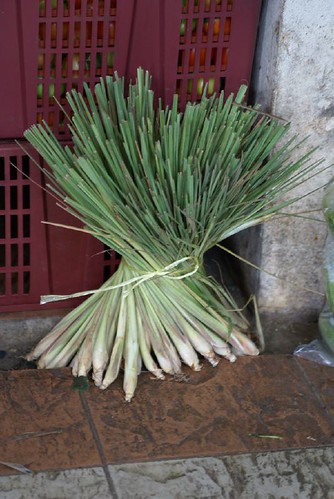
The Medicinal Power of Lemon Grass

Drops – Cymbopogon Citratus Staupf by J.Gil

A long time ago, TheGardenLady received an email asking about plants that help medically. Today TheGardenLady read an article that said that after a five year study Australian scientists have scientifically proven the lemon grass plant Cymbopogon ambiguus may be as good as aspirin when it comes to treating headaches. They knew that lemon grass has been used by indigenous Australians as traditional medicine for the treatment of headaches and migraines. It may be as good as aspirin in the treatment of headaches.  See here.

Cymbopogon citratus, Gramineae by EthnoFlora

There are 56 species of Lemon grass. Cymbopogon citratus, not C ambiguus, is the lemon grass that is usually grown in herb gardens. Whether C. citratus helps headaches and migraines, TheGardenLady doesn’t know. But it also seems to have good medicinal properties. Many websites claim that Ben Gurion research on Cymbopogon citratus found that it causes cancer cells to “commit suicide. ” See here.  Since TheGardenLady can not find this original research online, but only sites that are selling the product as an alternative medicine, she does not know the validity of this statement. But there is lots of information that the lemon grass Cymbopogon citratus does have medicinal use for digestive problems in children and minor feverish illnesses and can be used externally for ringworm, lice, athlete’s foot, arthritis and scabies. So one might want to grow it in your herb garden and use it in your cooking or creating your on salve to use externally.

C. citratus likes well-drained soil in sun with moderate humidity. You can sow seeds in the spring or buy plants or if a friend has it, divide the plant and plant it in the spring.  This  site has some interesting recipes using lemon grass.

A vegan recipe for it can be found here.

Garden Landscaping for Beginners – Part 1

Garden Landscaping by rainbow_landscaping

Because TheGardenLady has been asked about landscaping and/or choosing a good landscaper, TheGardenLady thought this would make an interesting column.

Below are a few suggestions for anyone who is interested in landscaping one’s property. There are many outstanding female landscapers as well as male landscapers. (The word “he” was used most of the time in this post just to make the writing of this column easier.)

Make sure you know your property or do what is called a site analysis.  Know where North, South, East and West are on your property. This is important because some plants prefer to get morning or evening sun and light. And when you plant, you want plants that will be happiest in a location. You want roses? They want sun, sun, sun; but some varieties will take just 5 hours of sun.  So if you write down notes to yourself telling exactly how much sun a spot gets, this will be very helpful in your planning. Know existing conditions on your property such as hills, or areas of elevation and if you have good or bad drainage. You may want to try to eliminate the problem or work with it.

Know the Temperature Zone in your area. Even within one state, there might be different Temperature Zones. Plants that grow in the Northern part of the United States might be unhappy in the South and vice versa and some plants might grow in a broad range of climates. A clematis that grows in Zone 9 or 10 won’t live outdoors in the winter in Zone 6. Or you might want a cactus garden, but if you live in NJ, it is trickier to plant cactus than it would be in Arizona. Yet there are some cactus that will survive in NJ, even in NJ winters. So be sure to check your temperature zone and be sure that when you buy plants, you buy plants that will survive and thrive in your area.  See here.

Most people want plants that are easy to raise in your area, but if you like a challenge like Wayne Daniels in California who raises tulips where they usually don’t grow (see here) you have to know the needs of the plants in order to accommodate them in your area.

Have your soil tested.  I cannot stress the importance of soil testing. And I really recommend using your local Master Gardening chapter or your local extension office. When you get it tested, get different areas where you want to plant different things tested in separate tests. For example, if you want a vegetable garden, test that area separately from an area that you might want to plant lawn. The tests will then send you back information for what to amend the exact amount for that need. Though the tests might cost a few more dollars than a soil kit you can buy in a store, you will get a thorough readout of what you have and what you need to amend your soil. And visiting the Master Gardeners with your questions and or problems is FREE. They will even explain your soil test results if you want – for FREE.

Examine your property and note what conditions there are. Note existing conditions on your property like hills, or bogs or areas of elevation and if you have good or bad drainage. Do you have walls blocking the sun or making a micro climate that might be hotter than the rest of your property? Are there trees?  If so what types of trees are on your property?  Few plants will thrive under nut trees and if you want perennials under the nut trees, be sure you get those plants that will live near a nut tree. You will also note, by the size of the trees or how large they can grow, how expansive a root mass it has or will get.

Locate wet or dry sites on your property to know what will live – for example land near a blacktop driveway or roadway may give off too much heat for some plants and might also be salted to remove snow – plants cannot tolerate excessive salt. And you would need different types of plants for under your rain spout.

Know your site boundaries and where the house is located on your property. When you are designing your landscaping, consider the views from both inside your house looking out as well as how the plants will look outside your house. You might even want to consider your neighbor’s house when you plant.  Do you want your neighbor to see your beautiful plants from his house? Or do you want to make a hedge so you and your neighbor can’t see each other’s house?

Check your soil consistency. You want soil that is friable, not compacted or if you live in a sandy area, you want to know what can grow in that type of soil. You can always amend the soil with the compost TheGardenLady knows you are saving.

Rain Gardens

A new concept in gardening that is ecologically and enviromnenally sound is called the Rain Garden. What is a rain garden?

“A rain garden is a naturally landscaped, shallow depression that allows rain and snow melt to be collected and seep naturally into the ground.” These are small gardens designed specifically to withstand extremes of moisture by taking advantage of rainfall and storm water runoff. These gardens are situated near the source of rain runoff from storm water like under a rain spout, driveway or sump pump. Rain gardens capture rainwater runoff to stop the water from reaching the sewer system and are designed to trap all the water that might possibly deluge the area; but plants have to be chosen that will tolerate both a lot or water as well as for times of drought and for all the times in between. To this end, mostly deep rooted native plants and grasses are planted- though one can find other plants that will work.  (See here)

The Rain Garden is a specialty garden that needs a special site- probably one place that you might have despaired of ever having a nice garden. Examples of rain garden design are here and here.

By building a rain garden you will not only enhance your landscaping with a garden that will attract native butterflies and birds but will help the water quality in your area and will provide storm water control.  (See here)

When looking for native plants to put in your rain garden check out your Native Plant Societies- each state has such a society.   Here or here and many states have a native plant public gardens.  See here.   In Pennsylvania a lovely native garden is Bowman’s Hill. These societies and native plant gardens can give you advice on perfect plants for your rain gardens and often have plant sales where you can buy these native plants. Bowman’s Hill has plant sales in the spring and in the fall and also sell seeds.  See here.

TheGardenLady would love to have photos of your rain garden. Please email photos.

Save the Monarch Butterfly – Create a Monarch Butterfly Waystation

Just released... by weedsforwildlife.com

Have TheGardenLady readers ever thought of having their garden become a Monarch butterfly Waystation? Let me explain.

Everyone knows that the Monarch follows a route of migration from Mexico up to Canada in the spring and then returns to Mexico every fall. This is a herculean task and the monarch butterfly needs lots of nutrients or places to lay its eggs to survive this rigorous flight. However, the population of monarch butterflies is deteriorating rapidly. The population is down to one-tenth of its peak in 1996. This is because of the destruction of farms and the urban building of too many houses, paved parking lots and the use of herbicide resistant crops as well as pesticides.

So how can you help? In 2005, insect ecologist Chip Taylor, of the University of Kansas in Lawrence came up with the idea of creating at least 10,000 “waystations” wherever Monarchs fly. This is how people who have a garden or flower bed can help: by planting plants that monarchs need to lay eggs, like milkweed and nectaring plants for them to drink, like zinnias; these are sun loving plants and butterflies love full sun,too. Also offer a little water in a birdbath type of vessel. Monarch butterflies can and will stop at your home for much needed sustenance. And you can have the pleasure of seeing butterflies fly in your garden.

Monarch in our yard on milkweed by rowrlm

You can get your own waystation kit online here or by calling 1-800-780-9986. Kits contain seeds for milkweeds and nectar plants. You can read more about the Monarch butterfly’s need here.

The Swamp Milkweed Asclepias incarnata is the best perennial plant for the Monarch butterfly. Another milkweed that Monarchs like is tropical Milkweed Asclepias Curassavica. New England asters Aster novae angliae is an excellent nectar plant for Monarchs. Zinnia elegans and Zinnia lilliput are also excellent nectar plants to raise. These seeds can all be purchased here.

And having these plants in your garden will also attract other butterflies besides the Monarch butterflies.

So, please, Dear Readers, won’t you plan and plant your garden with butterflies in mind?. Make your garden a “waystation” and send TheGardenLady photos of your waystation with its visiting butterflies. Help restore the numbers of Monarchs to the environment. Thanks.

Fruit Fantasy – Exotic Fruit From Around The World

tropical fruit world by mralan

Winter is the time when TheGardenLady dreams of delicious freshly harvested fruit. We are lucky to live in an age when we can buy and eat fruit all year long. But between harvesting the fruits in countries like Chile and eating them when one buys them in the Supermarket here in the Northeast during the winter, leaves a lot to be desired, tastewise. Sadly, most fruit sold is tastless.

I recently read a book about people who travel around the world hunting for exotic fruits. The book is called The “Fruit Hunters” by Adam Leith Gollner.  The book is filled with fascinating facts about fruits and about people who are obsessed with finding them. Someone said that there are about 2 trillion different types of food in the world on the 7 continents. Even if there aren’t that many fruits and vegetables, there are just a handful of fresh fruits and vegetables sold in our supermarket with very few fruit choices ( with the new Asian food stores popping up around the country, there are a few more fresh fruits offered for sale.)

Continue reading “Fruit Fantasy – Exotic Fruit From Around The World”

Raising Plants in the Desert

Tomato Plants in the Negev

It may be winter here and across most of the US, but I think back to the terrible drought that Texas and other parts of the Southwest had this past summer and the potential for water problems in these areas and the West in the future.

I recently read an interesting article about new desert technology that is coming out of Israel.  There at the Center for Experiments in Desert Farming “researchers joined with scientists from the Ben-Gurion University, the Vulkani Institute, and the Hebrew University to figure out how to grow tomatoes using brackish water. At the experimental station, organic tomato plants are all irrigated with salt water mixed with floodwater and recycled waste water. Using sophisticated technology, researchers carefully monitor the plants to determine the correct percentage of salt needed for each species to thrive. ” Israel produces “15,000 tons of ‘Desert Sweet’ tomatoes in 250 acres of hothouses in the desert, ranging from organic tomatoes to especially small strains of cherry tomatoes that are sold at a high price to restaurants and hotels throughout the world.”

“In addition to preserving precious freshwater in this thirsty desert region, growing tomatoes with brackish water has a pleasant, if unintended, side effect: as a reaction to the pressure that the salt exerts on its cells, the tomato plants produce more sugar, making their flesh even sweeter than those grown in central and northern Israel.”

At the Yair Agricultural Research Station in Israel’s desert they are using what they call “popcorn” soil which is ” actually a stone that gets heated to 5,000 degrees, causing it to pop and act like a sponge. When wet, it can irrigate the plant continuously and is therefore much more efficient than sand.” In Israel’s desert, “an area with an average rainfall of only 20 millimeters a year, farmers manage to raise 60%” of Israel’s produce for export.”

I think it is important to learn from other country’s successes in agriculture so that we can improve our growing methods. If readers read about new agricultural improvements coming out of other countries, please let the readers of TheGardenLady blog know about them, too. We learn by sharing ideas.

2010 Award Winning Flowers

Happy New Year- 2010. This is the time of year that plant associations are choosing the best of the best new plants for the year.

AAS the All America Selections has chosen 4 plants for 2010 that they count as award winning. They recommend these plants for gardeners to plant in their gardens.

Mesa Flower

The first is a Gaillardia x grandiflora  or blanket flower called Gaillardia F1 ‘Mesa Yellow’. This is the first hybrid blanket flower that has a controlled plant habit that does not get tall, loose and floppy; starts blooming a few weeks early and blooms all summer; and is relatively maintenance free.

Twinny Peach

The second AAS Award winner is Antirrhinum majus Snapdragon F1 ‘Twinny Peach’. It is a snapdragon without the jaws that snap- what they call a double or butterfly flower form. It is a blend of peach tone colors that are unique. These snapdragons are easy to grow, will flower all season with little care and has exhibited some heat tolerance.

Endurio Sky Blue Marien

The third AAS winner is Viola cornuta F1’Endurio Sky Blue Marien”. This delicate looking, spreading/ mounding sky -blue flowering plant AAS says is tough as nails.

Zahara Starlight Rose

The last AAS winner is the Zinnia marylandica ‘Zahara Starlight Rose.’ This is a bicolor zinnia that has resistance to leaf spot and mildew- two diseases of zinnias that are ugly and can kill the plants. Try to always buy disease resistant plants. Besides being disease resistant, Zahara Starlight Rose provides generous color all season, is heat and drought tolerant, easy to grow in gardens. AAS says that this is a ” perfect plant for the novice or experienced gardener because it is so undemanding with a maximum number of blooms.”

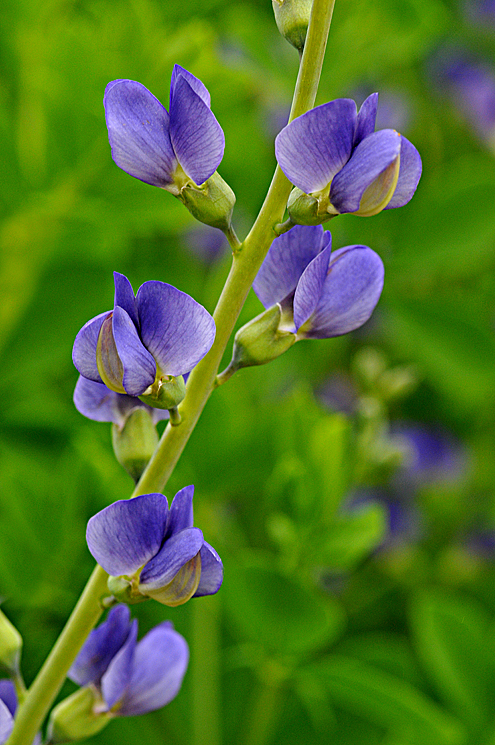
Baptisia australis blue false indigo

The Perennial Plant Association has chosen Baptisia australis blue false indigo as the perennial plant of 2010. This native American plant is an excellent choice for sunny gardens all over the continent. It attracts butterflies and makes a great cut flower.

First Frost

The 2010 Hosta of the year is called ‘First Frost.’  Hosta First Frost features intense blue-green leaves with irregular, jetting, yellow margins that turn white in summer. A beautiful plant that looks great until the first frost, thus the name.  The Hosta Society also has named the Hosta of the year for 2011. This is called ‘Praying Hands.’