The Amazing Effect of TheGardenLady’s Garden

TheGardenLady’s Garden in Bloom

TheGardenLady’s garden is a flowering garden. I attempt to have flowering plants for as long as the year allows flowers to bloom.  I recently found the book Continuous Bloom by Pam Duthie in the local library and was pleased that I had almost every plant she suggested blooming in my garden. (I have more than Duthie suggests because she only writes about perennials and I have a lot of flowering shrubs and add flowering annuals.)

The earliest plants to flower in my garden are Hellebores, which open in the winter. Can you believe that one Hellebore plant is still in bloom? From that first flower, I insist on having flowers in continuous bloom.  Some of the flowering plants blooming now are echinaceas, buddleias, brugmansia, phlox, among others.  These blooming flowers are mostly along the street where there is most sun and fewest tree roots so everyone who passes the house sees the flowers. This is not a hidden garden.

Because of the problems of the property, my garden is not a particularly beautifully landscaped garden. But because of the visibility of the continuous blooms, the most interesting sociological phenomenon has occurred. This GardenLady thinks the phenomenon is amazing.  She thinks that someone should do a study about it. What has happened that I find so amazing is that every day, more than once a day, mostly when I am out working in  the garden, people stop to tell me how much they love the garden and how beautiful the garden is. I say that it happens mostly when I am in the garden, because sometimes when I am in the house people come to ring my door bell to tell me how much they appreciate the garden. Many of the people are neighbors or people that I know but most of the people are complete strangers. People stop their cars to tell me of their enjoyment. Many of these people have become new friends.  People tell me that they love seeing the flowers so much they purposely drive out of their way to see what is in bloom. Complements have ranged from “You have created a little piece of paradise” to “It is another world walking past your garden”  to a two year old asking if any flowers had more than one color. I showed him my lantana flowers.

When I grew up in the small farming village, this was a common occurrence. People would stop over to discuss gardens and plants all the time. But in the town I have now been living in for about 38 years, people were more formal. People would never just drop over. I missed the friendliness of the town of my childhood. But now my gardens have brought this friendliness back. As I said, I am amazed. Neighbors now drop over and strangers stop and talk or ring my doorbell and talk. This garden attracts people as it does birds, bees and butterflies.  I have met such lovely interesting people of all ages. Today a young man who looked like he was in his twenties stopped. I have been invited to see other people’s gardens – people who don’t live in my town. I now can give plants to people when I divide plants instead of composting the overgrown plants. People have offered me plants that I don’t have.

I can not tell you how much I enjoy this phenomenon. In a more and more impersonal world, my garden is bringing people together. Who would have expected?


Mini Iris Problem

Mini Iris by jamesrjohnson

TheGardenLady received this question from Debbie.

My favorite “mini” purple irises have very little blooms this year? Do I need to expose the roots? More sun perhaps?

From the sounds of your letter, your favorite “mini” purple irises have bloomed for you in the past. You don’t mention if the plant seems healthy or not. I hope you checked to see if there is a problem with the plants’ health. If the plants look healthy, then we will make other suggestions.

If the irises bloomed before in the same location they are in now, then the roots were planted at the proper depth. ( You didn’t say if you had moved them to a new location. If you had and they are not blooming, you might have replanted them too deep.)

How many years have you had them in the same spot? Has the location gotten darker because of a tree that might be shading the irises? I find that my irises bloom much more profusely in the sun than in an area where there is shade.

Did you cut the iris leaves after they bloomed last year? You must NEVER cut off any leaves. You must ALWAYS leave the leaves after blooming to enable  the plant to build up the energy it needs to bloom the following year. But you should have deadheaded the flowers – cut off the stem where the flowers died so that they don’t set seeds. This is a minor type of pruning and encourages more flowering the next season.

Continue reading “Mini Iris Problem”

Hummingbirds: Magic in the Air (Video Clip)

Hummingbirds are amazing little creatures, so fast and ephemeral.  Yet they are also so difficult to see for very long with the naked eye.  This YouTube video is a clip of a PBS Nature program called Magic in the Air, which gives us more than a fleeting glimpse of these captivating animals.  See the full video here.

Ann Johnson Prum is the cinematographer and as you learn in the video she uses hi-speed computer-controlled cameras to capture these tough-to-capture energetic hummingbirds.  It’s beautiful to watch.  Enjoy.

Downloads of Nature Walks

What can you do when you can’t get out into your garden?

Our friends at How to Cope with Pain wrote this week about a website Peaceful Walks, which offers downloads of nature “walks” for sale.  As How to Cope with Pain says, these won’t replace getting out into your garden or the outdoors, but they are beautiful photography and relaxing to watch.  Here is a review.

The Importance of Pest Control in the Greenhouse

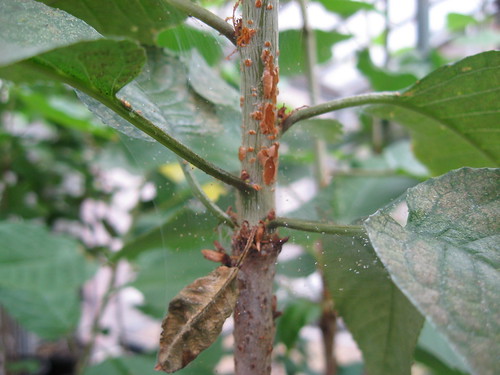
Spider mites by theGardenDeva

TheGardenLady has invited people with horticultural interests and expertise to contribute posts to this blog.  The following post  about the importance of pest control in the greenhouse was submitted by Ahmet Korkmaz.

In the last decade the field of agriculture has undergone many important changes and improvements. People from all over the world are interested in implementing the new ideas that are being advanced by researchers in this developing field.

Greenhouse plantation is one of the exciting advancements that that has been adopted by farmers from all over the world.  Some of the the fruits and vegetables that are commonly planted in a greenhouse include cherries, drupes, radishes, cabbages, and tomatoes. These fruits and vegetables require unique ambient conditions, which a greenhouse can facilitate.

In a greenhouse,  sunlight is amplified for the plants because it gets trapped under a glass cover with four walls, which shield the plants from the heat that is generated. This extra sunlight and controlled heat promotes plant metabolism and provides nice returns in the form of vegetables and plants.

There are other advantages of growing of plants in a greenhouse. The leaves and other shoot parts of the plant can be protected from different kinds of chemical attacks that are air-borne.  Also, many pests and insects can be avoided to some extent in a greenhouse.  But a greenhouse does not prevent all pests.

Common pests in a greenhouse

Spider mites (see photo above), weevils, white flies, aphids and leaf miners are common pests in a greenhouse, the most common of which are the spider mites. Weevils cause a lot of damage to the surface of leaves. White flies tend to attack the major part of root and shoot systems. Aphids can be deadly to the green parts of a plant by feeding on a pigment called chlorophyll. This drastically affects the plant’s overall metabolism.  Leaf miners cause damage in tomato plantation. These pests tend to bore into the leaf’s vegetative part, which renders the leaf unable to take advantage of sunlight.

Continue reading “The Importance of Pest Control in the Greenhouse”

Carolyns Shade Garden 3rd Open House – May 15th, 2010

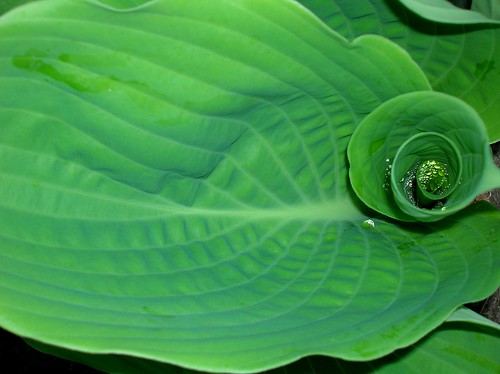
Large Hosta by WxMom

TheGardenLady is a big fan of hostas in the garden. They add such pizazz to any garden landscape. Mine are planted around trees to decorate the feet of the trees for a finishing touch. So in my garden, instead of just seeing a mound of mulch at the bottom of the trees, you see a sort of wreath of hostas that have pushed through the mulch. I think this adds such a pretty touch to the garden picture. If you want to buy hostas for your garden and are in the Philadelphia area on Saturday, May 15th, you should definitely visit Carolyn’s Shade Garden in Bryn Mawr.

Carolyns Shade Garden is having the third open house this Saturday, May 15, from 10 to 3, rain or shine, directions attached (checks and cash only). The display gardens are beautiful and full of great ideas, and the nursery has a huge selection of plants.

Appointment: Feel free to schedule an appointment during this week or next week if you can’t make it on Saturday. There seems to be a misconception that appointments are unusual. In fact, Carolyn does over half her business by appointment. Of course, if you only want a small amount of plants, the open houses are recommended.

Parking: For the convenience of my neighbors, please observe the no parking signs on Robinhood Rd and do not block mailboxes or turn around in driveways.

As promised, this is the best open house for hosta, ferns (10 varieties), and hardy geraniums, including hard-to-find and extremely desirable ‘Rozanne’.

There is also a great selection of phlox, foamflowers, bleeding-hearts, columbines, corydalis, lamium, pulmonaria, and, of course, hellebores (including the Lady Series, the Immanence Collection, and Christmas Rose ‘Jacob’). Japanese primroses and yellow corydalis are also ready.

Carolyn has some beautiful summer and fall-blooming shade plants, including white hardy begonia, ligularias, turtlehead, cardinal flower, great blue lobelia, Japanese anemone (six varieties), and yellow waxbells (Kirengoshoma).

A Word about Hostas: Carolyn has a great selection of hostas this year, including several varieties that she developed herself. She highly recommends that you walk around the gardens and look at the hostas in the landscape before choosing the type you want. Big-leaf hostas look totally different in a pot and often don’t develop their true leaf shape and gorgeous colors until they have been in the ground for a year. Smaller hostas cannot adequately portray their distinct habits in a pot.

When selecting hostas for your garden, you can’t go wrong by selecting a winner of the coveted Hosta of the Year Award from the American Hosta Growers Association. This award means a lot–only 15 hostas have received it out of the over 6,000 cultivars out there. I offer 1998 ‘Fragrant Bouquet’, 1999 ‘Paul’s Glory’, 2000 ‘Sagae’, 2001 ‘June’, 2002 ‘Guacamole’, 2008 ‘Blue Mouse Ears’, 2009 ‘Earth Angel’, and 2011 ‘Praying Hands’. Click here for gorgeous photographs:

Continue reading “Carolyns Shade Garden 3rd Open House – May 15th, 2010”

Growing Plants is a Trial and Error Learning Process

Palouse Falls custodian -“Pete” by oldmantravels

When readers write to say how they struggle to save a marigold, I must tell readers that I have lost more than just one marigold given to me by a friend. There is a saying among gardeners that to learn one has to have killed one hundred plants. This may or may not be an exaggeration. My father-in-law jokingly said that being in the nursery business was the best business because plants were always dying and people were always replacing them. So though I came from a farm, the problems on this property where I have now lived for 35 years were so different from that sunny farm that I had to learn a lot.

For example, mine is a property with trees. Much of the property is covered with huge trees whose roots are wide and the tree canopy shades much of the ground. And where there weren’t native trees, the previous owners had planted sycamore trees that are huge. The farm was open and sunny all day long. You can’t really farm in the woods. Some of the trees on this property are black walnuts. Nut trees in general and black walnut trees specifically give off a toxin called juglone that kills many other plants. We never had one nut tree on the farm.

Continue reading “Growing Plants is a Trial and Error Learning Process”

Safer Brand Organic Bug Spray

TheGardenLady received this question from Greg.

What would you recommend for an organic bug spray? I found an organic bug spray online called Tomato and Vegetable Insect Killer that’s made by Safer Brand. Have you heard of it? Here’s the organic bug spray I’m referring to:

Safer brand organic products are highly respected and are recommended by horticulturists. TheGardenLady has not used the specific product that you ask about.  But she’s very confident that you cannot go wrong with the brand.

The company that sells Safer brand products also sells other products that might interest the gardener.

TheGardenLady just bought their Perky – Pet 48oz Hummingbird feeder #220 was recommended to me by someone who has lots of hummingbird feeders and thinks it is the best design because it is easy to clean.  See here.

They sell mouse and other rodent traps – some are humane – under the Victor brand and they make the Havahart traps to trap animals live, like groundhogs, racoons and squirrels, humanely.

The company seems to make environmentally friendly products and is very helpful. I called them at 1 800 800 1819.

Carolyn’s Shade Gardens Hosts 5th Annual “Bulb and Wildflower Day” – April 10

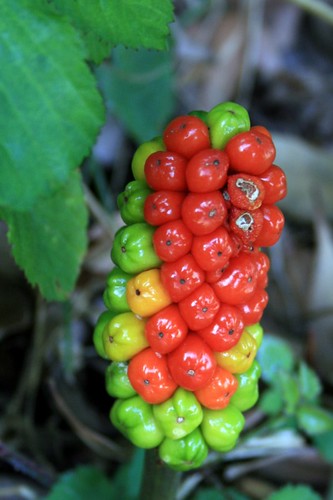
Italian Arum – 20070804-vs-7131 by Made in Madeira

Carolyn of Carolyn’s Shade Gardens says that her unusual bulbs and wildflowers seem to peak between her first two open houses, so she is scheduling her fifth annual “bulb and wildflower day”. Anyone who is interested in purchasing the plants listed below is invited to stop by without an appointment on Saturday, April 10, from 9 to 3 pm, rain or shine (checks and cash only).

If you can’t come Saturday, feel free to schedule an appointment at carolynsshadegardens@verizon.net to stop by during the preceding week (daylight hours April 5 through 9) or Sunday, April 11.

Continue reading “Carolyn’s Shade Gardens Hosts 5th Annual “Bulb and Wildflower Day” – April 10″

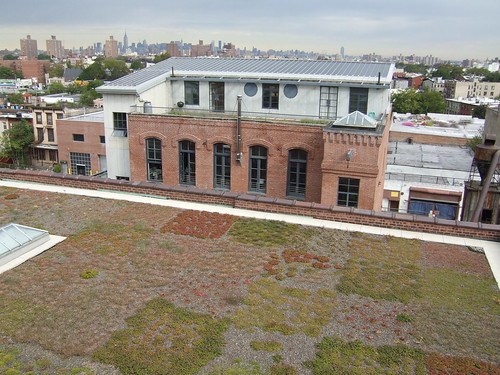
Green Roofs: How to Start One

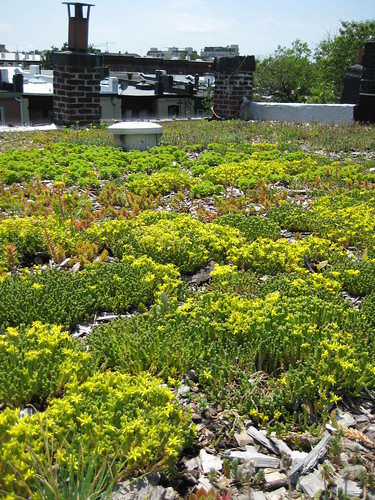
a desert grows in brooklyn by vfraiche

TheGardenLady received this question from Peggy.

I am doing a story on rooftop gardens in Fort Greene, Brooklyn, sort of a how-to piece.  Would you be able to assist me with information on how to start one/if there are licenses to apply for/if Brooklyn rooftop gardens are different from others in the city?

Green roofs are the way of the future. They are being created around the world. Wikipedia speaks of the various types of roof gardens with photos of these gardens around the world.

A Green Roof and Solar Panels in Brooklyn by Kieran K. Meadows

There are many rooftop gardens in New York and Brooklyn that I have read about in newspaper articles.  See here and here.   Even Zabars in Manhattan raises salad on their rooftops – in greenhouses. You should contact these gardens with your questions, especially the educational director of the New York Botanical Gardens.

I do not have any knowledge about the laws for installing the rooftop gardens in Brooklyn nor what licenses are needed. I think one should have an engineer involved. I would check with the Chamber of Commerce or a local roofing company to ask about licensing requirements.  See here.

By going online to various Agricultural Schools in this country you can find excellent information on how to build a greenroof. Rutgers has good information on green roofs.

Swarthmore College was one of the first rooftop garden that I had seen. I believe that they used Furbish Company to install their roofs.  The Furbish Company seems to be a leader in roof gardens on the east cost. I attended a lecture they had given and was impressed with their knowledge. Contact both of these places.

Another good source to go to is a website called greenroofs.  On this site American Hydrotech is offering a free waterproofing and roofing handbook that you might be eligible to get. And they have an excellent database of green roof projects.  See here.