For those of you who responded to the Michigan State University potential budget cut because of TheGardenLady’s column, a big Thank You. Michigan State University extension was spared the budget cut this time.
But readers, please still remain vigilant in Michigan- as well as in all states.
MSU extension spared the budget ax, this time
from American Vegetable Grower e-magazine- MSU Extension Spared In Budget Cuts – For Now Last week we reported that Michigan State University (MSU) Extension was jeopardized by a potential funding cutoff. Governor Jennifer Granholm spared the program by including funding in the state’s new budget. But what happens if MSU Extension is eliminated a year or two from now?Read more
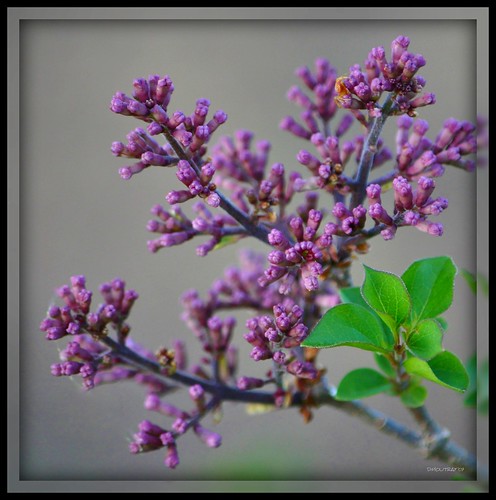
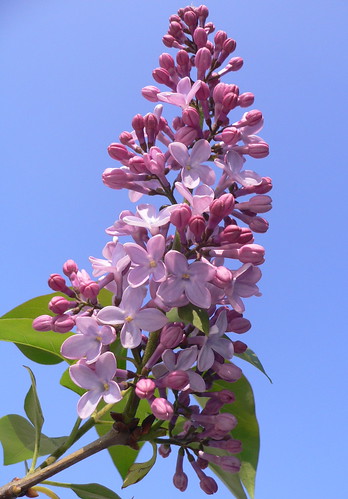
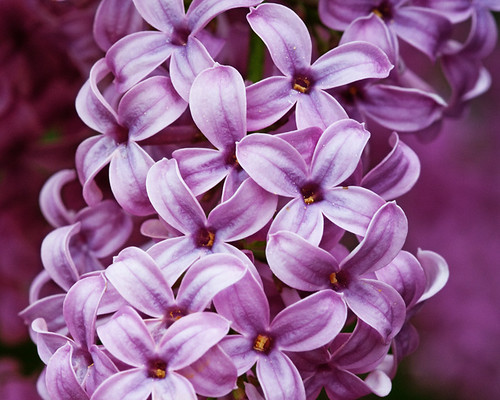
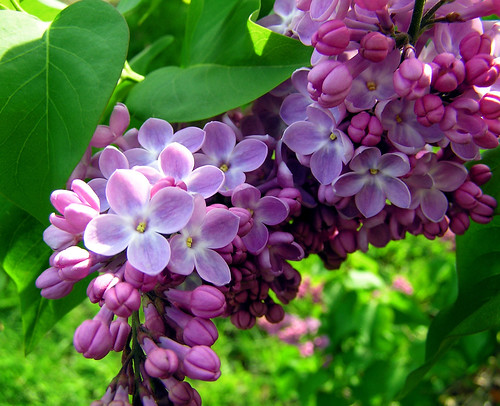
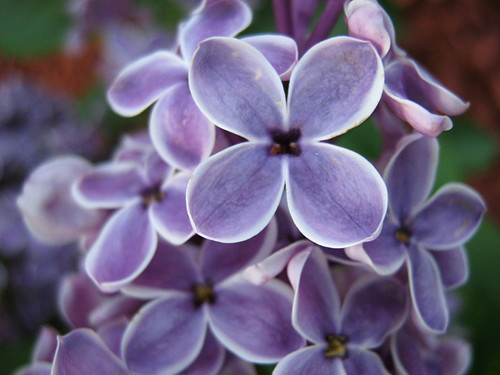
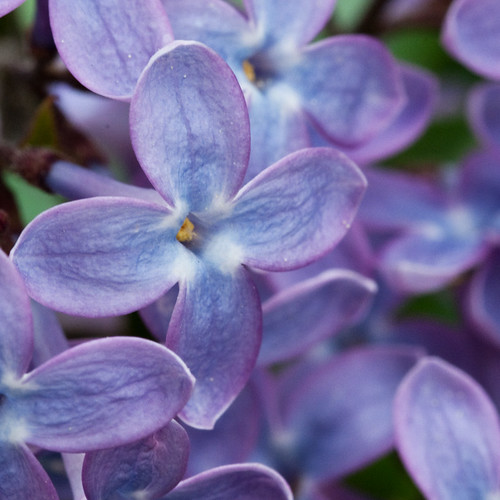
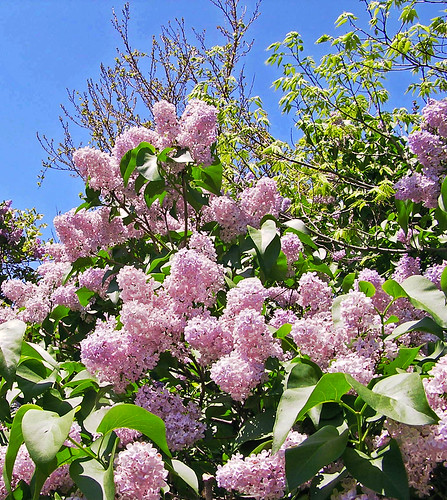
As many of you know, TheGardenLady’s nom de plume is Lilac. So TheGardenLady would like to share with her readers some beautiful images of lilacs. I hope they brighten up your day!
Korean Lilac by DMoutray Lilac (Syringa) by Luigi FDV Lilac, MANY SMALL ONES... by magda.indigoLilacs by Pop38/ lilacs a'bloom by KarenMarleneLarsenLilac Find by deu49097Lilacs by Pop38/ Lilac Tower by CountryDreaming
If readers of TheGardenLady are in central NJ on Sat. Aug. 29th (raindate, Sun. Aug. 30th) and would like to attend the Rutgers Garden Field Day Open House from 1 to 5 pm, please read this press release.
EARTH Center Invites you to Garden Field Day
Rutgers Cooperative Extension of Middlesex County’s EARTH Center will host their Garden Field Day Open House on Saturday, August 29, from 1 to 5 PM (raindate Aug. 30). The event will take place at the EARTH Center located at 42 Riva Ave. in Davidson’s Mill Pond Park, South Brunswick.
The Extension Agriculture Department as well as the County Master Gardeners will be on hand, offering sound advice on horticulture and environmental stewardship. Tours will be given of the various demonstration gardens including a huge vegetable display garden, a 13 bed hardscaped herb garden, and the newly constructed butterfly house. This is a great event for the County’s Master Gardeners to show off the hard worked they have done to educate the public and each other throughout the growing season.
Extension personnel will also be conducting a Jersey Fresh Produce Taste Test. By offering free samples of locally grown produce in exchange for a short survey of consumer buying habits, the County Ag Agent can determine how local farmers should adapt to meet the needs of our local population. There will also be live music, food and kids can meet MC Blue the recycling robot.
Even if you can’t visit the EARTH Center this season, you can still get great vegetable gardening tips from our extension staff, just visit
www.co.middlesex.nj.us/extensionservices and click on Educational Video.
Is the aroma produced from the blooms of your mother-in-law’s tongue plant
harmful?
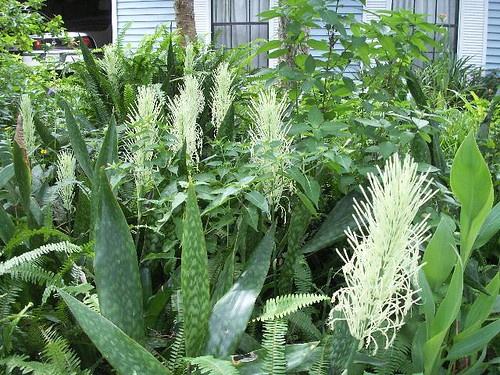
As far as TheGardenLady is concerned, she enjoys the fragrances of flowering plants and does not believe any of them are harmful. She loves the fragrance of the Sansevieria, Mother-in -law’s tongue plant. Fortunately, TheGardenLady has no allergies.
Though there is some problem if one eats the plant parts or some people get what is called contact dermatitis from touching the plant. The plant has low toxicity, and it may cause excessive salivation – though rats fed the flowers have died. Read this.
TheGardenLady would recommend keeping the plant away from animals or children who might eat or play with the plant.
People who are sensitive to or have allergies from plant fragrances are another issue. TheGardenLady has never seen any evidence of the aroma of the Sansevieria being harmful, but she is not a physician and can not say if the Sansaviera fragrance would be harmful to people with allergies to fragrances.
Jelly Fish, Monterey Bay Aquarium by Buck Forester
Assuming you have around 2 days to spend in the Monterey area, I would suggest spending a half day at the Monterey Bay Aquarium. The aquarium has two fantastic exhibits, seahorses and jelly fish, that you should see. Plan to fight off crowds for views of the fish.
Monetery doesn’t have much else to offer. Kids and tourists seem to like the honky-tonk of Cannery Row, but I’m not a fan.
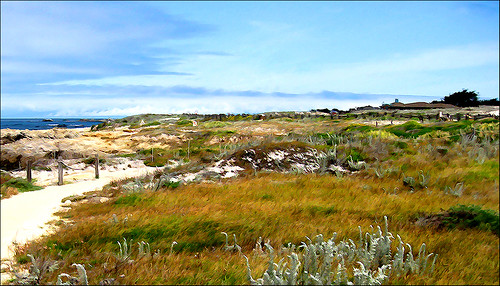
asilomar state beach by Sunnyvaledave
From the Aquarium, drive south from Moneterey along Ocean View Blvd/ Sunset Dr through Pacific Grove to the 17-Mile Drive. This route will take you along the Asilomar State Beach, where you can find all kinds of neat sea creatures living in the rocks (anemones, starfish, etc).
Once you’re on the 17-Mile Drive, there are many “points of interest” where you might want to stop. For example, at the Fanshell Overlook there are often harbor seals. If you’re golf enthusiasts and want to see one of the world’s most famous golf courses, you can visit Pebble Beach near the south end of the Drive.
Would you like to plant a tree for FREE? TheGardenLady discovered this site and wants her readers to know about it.
“Odwalla is planting trees in state parks, and will plant one for you too! All you have to do is click on this link and choose your state. Then pass it on to a friend. Happy planting!”
TheGardenLady chose to plant a tree in another state because her state wasn’t listed.
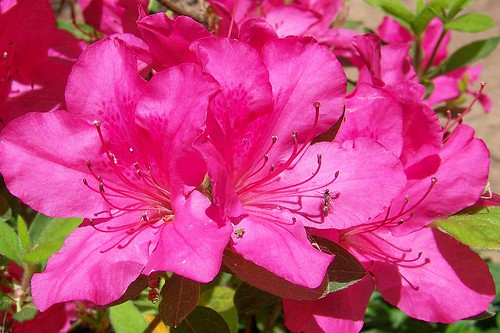
The following information is for your Encore Azaleas and it comes from Encore® Azalea.
The heat of summer can be harsh on all plants, and we at Encore® Azalea would like to help you prepare.
Keep a watchful eye on the moisture level of the soil around your Encore Azaleas. The shallow fibrous roots like to be moist, but not saturated. A mulch of pine bark will help hold moisture near the roots, as well as protect the roots from the harsh rays of the sun.
This is your last chance to prune for the season. Any heavy pruning should be done immediately after your Encore Azalea’s spring bloom cycle. Remember only to prune lightly in high heat.
To find a retailer in your area, please visit www.EncoreAzalea.com.
Here are the open hours for Carolyn Walker’s shade garden.
Saturday, May 23, from 9 am to Noon
Sunday, May 24, from Noon to 3 pm
Monday, May 25, from 2 pm to 5 pm
Anyone who wishes to visit Carolyn’s shade garden, should read the following:
Please pull into the driveway and park along the right hand side after the new fence under the old apple trees. If there is no room there, then turn around and park on Robinhood Road across from my driveway entrance. Directions are attached but please follow the parking instructions above.
I still have a great selection of hardy geraniums, ferns, and hosta (including minis). I have also gotten a good start on inventory for my summer and fall-blooming open house on May 30 with lobelia, liriope, Chinese astilbe, coralbells, corydalis, dwarf goatsbeard, hostas, and hardy begonias. I have restocked the following plants that sold out at the May 9 open house: ‘Herman’s Pride’ lamiastum, yellow corydalis, Japanese primroses, and meadow rue.
This is the time of year when the weeds begin to take over and groundcover plants become a priority. Fill your bare spots with the following excellent groundcovers: Chinese astilbe, purple wood sage, creeping hardy geranium, dwarf hostas, ‘Shell Pink’ and ‘Purple Dragon’ lamium, ‘Royal Purple’ liriope, ‘Lace Carpet’ foamflower, golden groundsel, perennial forget-me-not, white or yellow violets, and dwarf Jacob’s ladder.
Wardie meets Lily by pierrotsomepeople (on flickr)
TheGardenLady received this question from Tiffany.
I recently purchased two three foot tall peace lillies and my cat keeps chewing the leaves. How can I stop the cat from eating the leaves without damaging the plants?
From your question it doesn’t seem like the cat is using the plant soil as its kitty litter but is eating the leaves. So this column will not give suggestions on how to keep cats from digging in the soil.
If the cat eats the leaves of the plant, there is the possibility that the cat is missing some nutrient from its diet. Have you tried to plant catnip? Cats love catnip. They go crazy for it. So perhaps if you plant some catnip for the cat, the cat will forget the peace lily and go after the catnip. Buy a cheap dish drainer to cover a pot indoors or on the spot it is planted outdoors. An example of a dish drainer is on Amazon.com here, but I would see if I could find one in a garage sale. Why waste money on an expensive dish drainer? The catnip will grow through the openings of the dish drainer but won’t let the cat pull the catnip out by the roots and the dish drainer won’t allow the cat to knock over the pot. Try to start a few different catnip plants around the house to distract your cat.
Another option is to buy catnip toys to switch the cat’s behavior to play with toys rather than your plants.
Another option is to have a spray bottle of water or a water pistol and when you see the cat chewing on the leaves of the plant to spray the cat with the water and hope the cat learns the lesson that it is not to eat the flower leaves or it will get sprayed. Cats don’t like to be sprayed with water. But one has to be consistent and whenever you catch the cat in the plant surprise it with the water spray. But don’t use anything stronger than water to spray at the cat.
You can also try making a loud noise when you see the cat going for the plant. Cats have sensitive ears and will learn to avoid the plant if each time it goes near the plant it hears the noise. But again, you have to do it each time it approaches the plant.
Another option is to spray the plant (not the cat) with a solution of cayenne and water or sprinkle the plant with a mixture of 2 parts cayenne pepper,
3 parts dry mustard and 5 parts flour . Sprinkle it on any plant you don’t want the cat to eat. Reapply periodically. If using it outdoors, reapply after a rain.
TheGardenLady read that cats do not like the citrus smell, so if you place some lemon peel or any other citrus peel on the soil of potted plant, the cats should leave the flower alone. Reapply periodically.
Good luck with training your cat. Let the readers know if any of these suggestions worked for you.
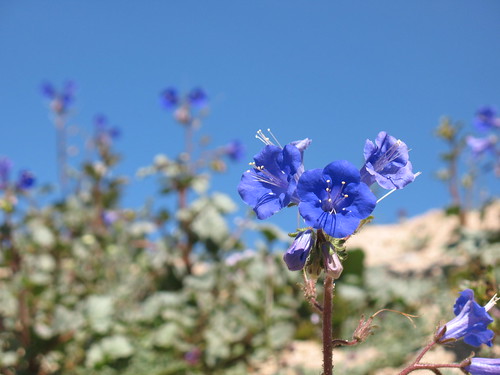
Bluebell Wildflowers - In Joshua Tree National Park by MadeIn1953 (on flickr)
In a departure from the man-made gardens that are often the subject of this blog, this past weekend’s adventure was spent exploring the wildflower displays at two unique spots within the Mojave Desert (see here). Covering southern Nevada, western Arizona, southwestern Utah, and southeastern California, this roughly 25,000 square-mile-large swatch of land is home to hundreds of species of plants; many of which produce springtime blossoms of white, yellow, orange, red, lavender, purple, and blue.
Separated by almost 200 miles, the two unique spots included the southernmost and westernmost tips of the Mojave Desert; respectively in Joshua Tree National Park and the Antelope Valley California Poppy Reserve-both in Southern California. While the blossoms on the two parks’ namesakes-the Joshua tree (Yucca brevifolia) and California poppy (Eschscholzia californica)-were an obvious motive behind picking the locations, numerous other blossoming species also inhabit these regions.
The first stop of the adventure, Joshua Tree National Park (see here), technically spans two deserts: above 3,000 feet and on the west side of the Park is the Mojave Desert, and below on the east side is the Colorado Desert, which is part of the larger Sonoran Desert. On the border, between the two deserts, lies the Lost Palms Oasis Trail; a favorite among hikers eager to see springtime wildflower blossoms. The 7.5 mile hike takes you from the Cottonwood Spring Oasis to the Lost Palms Oasis and back. With the right amount of fall and winter rains, and warm enough springtime temperatures, the typically parched, rocky, and sandy landscape between the two oases is transformed with patches of color.
This early-April weekend, at least 20 different blossoming species were on display along the Lost Palms Oasis Trail. Most prevalent were the yellows of the Creosote Bush (Larrea tridentata), Desert Dandelion (Malacothrix californica), and Brittlebush (Encelia farinosa). Moreover, on the way to the trailhead, when driving from the north end of the Park to the south end, a wonderful highlight was the fields full of Desert Dandelion on both sides of Pinto Basin Road.