Best of Fall Home Show – Sept. 11-13

TheGardenLady loves to talk about shows around the country which gardeners would be interested in attending. Columbus, Ohio will be having the Best of Fall Home Show September 11th 2009 through September 13th. Tickets are $5 per person but senior citizens with valid ID will receive a $1 discount off their ticket on Friday, September 11, 2009, making the tickets $4 instead of $5.

At the show renowned garden author, Tovah Martin will speak.

Renowned garden author Tovah Martin will appear at the show on Friday, Sept. 11, and Saturday, Sept. 12. Martin’s newest book, “Terrariums,” has been the talk of the garden world and has landed her spots on national TV shows and at gardening events. On Friday, Sept. 11, at 3 p.m., Martin will give a presentation on how to use terrariums to bring the outdoors inside in wildly creative ways. In two other sessions she’ll demonstrate how to make a terrarium, with show guests creating their own terrariums to take home and enjoy. The hands-on, make and take workshops take place Friday, Sept. 11, at 5 p.m. and Saturday, Sept. 12, at noon.

For more information please read this release about Tovah Martin.

Remember that the show opens Friday, Sept. 11, and runs through Sunday, Sept. 13, at the Ohio Expo Center. Show hours are Friday Noon – 8 p.m., Saturday 11 a.m. – 7 p.m., and Sunday 11 a.m. – 6 p.m. Tickets are $5 at the door; children 12 under are admitted free. For show information and ongoing updates, log on here.

As a special prize, the first 10 people who contact Jeri at jeri@weirickcommunications.com by 5 p.m. on September 8, 2009 and mention that they read about the show on The Garden Lady.org website will each get a free ticket.

You can download the release on Tovah Martin by clicking here.

Why Gardeners Garden – Part II

pausing for a moment of reflection by ecstaticist

In Part I of “Why Gardeners Garden” post I gave 5 reasons why I garden.  They were to honor my mother, to help the earth, to bring more bees and pollinating insects, to attract butterflies and moths, and to attract birds. Here are 7 more reasons for why love to garden.  Do you garden for any other reason?  TheGardenLady would love to know.

6. Like the people of my parents’ generation, I love sharing my plants with others. One buys a $5 plant one summer and 3 summers later you have to dig it up because it has outgrown its site. I hate throwing plants out so I love to be able to give plants to friends and neighbors. And family and friends have often given me plants from their yards. Some plants come from the family farm- lilacs, rose of sharon, wisteria, irises. Many of my best plants came from friends or family- my crepe myrtle tree, my lilacs, hostas, helleborus, etc. I often donate plants to local fund raisers. Or I have bought plants at garden fund raisers that were donated by other gardeners.

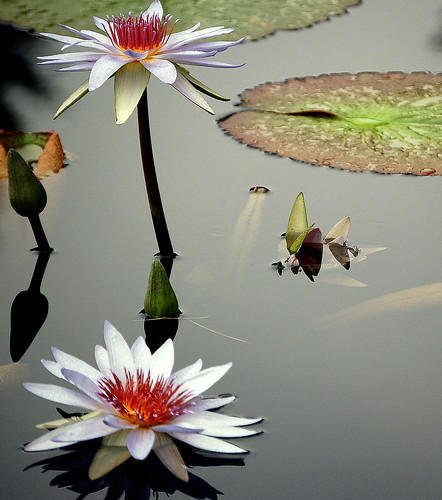
Water Lillies by digitalART2

7. I am so appreciative of those wealthy philanthropists like the DuPonts or the Rockefellars who had the foresight to back the creation of many of the gardens that have been left to mankind to enjoy: gardens like Longwood Gardens in Pennsylvania or Asticou Gardens in Maine. I feel that if I were wealthy that I would want to do the same and leave beautiful gardens for posterity to enjoy. Well, that is a pipe dream because I will never be wealthy. However, I do have my flowering gardens near the street in front of my house for everyone to enjoy. And people do enjoy my flowers. Hardly a day passes that a person doesn’t stop to tell me how beautiful the garden is, or how much they enjoy walking by my garden to see what is in bloom. One family told me that they make a point of walking past my garden every day. I have looked out to see people photographing my plants. People have stopped their cars and gotten out to tell me how much they enjoy my garden. I find this amazing and it is such an added bonus.

8. Because of the flower garden I have made many new friends and met more of my neighbors.

9. I enjoy teaching people about plants when asked. People have asked many questions, like how I prevent deer or rabbits from eating the flowers, etc. I share my information with them much as I share my knowledge with readers of TheGardenLady.org.

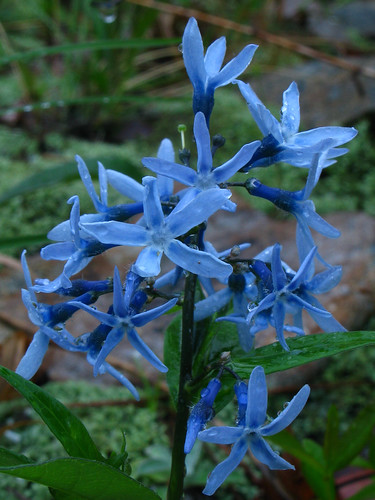
amsonia tabernaemontana, little river canyon national preserve, cherokee county, alabama 2 by Alan Cressler

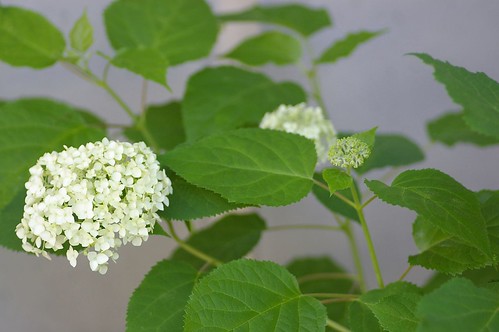
10. People stop to ask me names of plants that are in my garden that they have fallen in love with or asked where I bought the plants. One lady, a Master Gardener, saw my Amsonia tabernaemontana and didn’t know what it was. She wanted one for her garden. A professional landscaper stopped to ask where I bought my Hydrangea Annabelle and then said he would rush over to see if he could buy some at that nursery. I see many more front yard gardens popping up around town and like to think that my garden has in some way inspired these gardens.

Hydrangea Annabelle by bluehazyjunem

11. I also feel that by having a garden I am helping the nursery business. No one that I know gets wealthy by being in the plant business- it is generally a labor of love. So by buying a few plants to add to my garden each year, I feel that I help keep nursery people in business.

12. And gardening is healthy for me. The more one reads about things one should do for oneself, gardening is one of the healthy exercises and being in a garden is one of the things that brings emotional health. So my gardens are good for me. And I can’t stop telling everyone how much I love having the flowers and the color in my garden with all the good that it brings.

Garden Field Day at EARTH Center – Aug. 29

If readers of TheGardenLady are in central NJ on Sat. Aug. 29th (raindate, Sun. Aug. 30th) and would like to attend the Rutgers Garden Field Day Open House from 1 to 5 pm, please read this press release.

EARTH Center Invites you to Garden Field Day

Rutgers Cooperative Extension of Middlesex County’s EARTH Center will host their Garden Field Day Open House on Saturday, August 29, from 1 to 5 PM (raindate Aug. 30). The event will take place at the EARTH Center located at 42 Riva Ave. in Davidson’s Mill Pond Park, South Brunswick.

The Extension Agriculture Department as well as the County Master Gardeners will be on hand, offering sound advice on horticulture and environmental stewardship. Tours will be given of the various demonstration gardens including a huge vegetable display garden, a 13 bed hardscaped herb garden, and the newly constructed butterfly house. This is a great event for the County’s Master Gardeners to show off the hard worked they have done to educate the public and each other throughout the growing season.

Extension personnel will also be conducting a Jersey Fresh Produce Taste Test. By offering free samples of locally grown produce in exchange for a short survey of consumer buying habits, the County Ag Agent can determine how local farmers should adapt to meet the needs of our local population. There will also be live music, food and kids can meet MC Blue the recycling robot.

Even if you can’t visit the EARTH Center this season, you can still get great vegetable gardening tips from our extension staff, just visit

www.co.middlesex.nj.us/extensionservices and click on Educational Video.

For more information call 732 398 5262.

Contact:

RUTGERS

COOPERATIVE

EXTENSION

of Middlesex County, NJ

Dave Smela

Telephone: 732 398 5268

Why Gardeners Garden – Part I

slides-misc-012

The Original Garden Lady

Why do you, my GardenLady readers, garden? And what are some of your favorite plants in your garden? TheGardenLady column’s readers would love to know and TheGardenLady would like to know about your garden and why and what you dream about and want in your garden.

Since I sometimes think I am getting a bit obsessive as I plant my plants and want to plant more and more different plants and constantly dream about more plants to add to my garden while reading every plant catalog or visiting every local nursery and public and private garden, I think about what my motivation is.

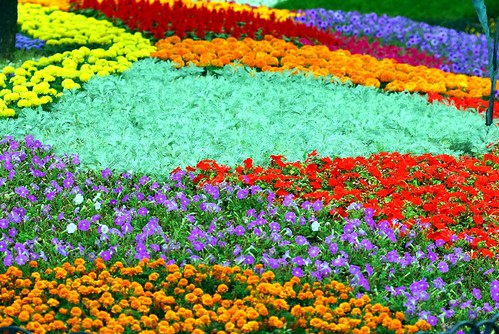
Everland Four seasons garden by floridapfe

I love almost all plants. I especially love blooming plants – whether trees, shrubs, bulbs, tubers, perennials, biannuals or annuals. I love color and I love the show of color to go on as long as it can during the year. If Helleborus or snowdrops will bloom in the snow, I want those blooms. And if chrysanthemums will be in bloom past Thanksgiving, I want those blooms. And because I don’t want a day to pass without flowers in bloom, I must plant flowering plants for bloom that will continue for most of the year. I never want to stop having blooms in my yard. And if I can’t have plants in flower, I want to have plants with vivid berries or plants with bright leaves or leaves that change color in the fall. So I dream of adding more plants that will give me all the color that I crave. Green is calming, meditative, cooling and lovely; but I need my fix of color- continuous color.

Michael Pollan, an author of books about plants – read “Botany of Desire” by him – says that we don’t manipulate plants, we are exploited by plants so that we fall in love with them, which makes us want to plant them and tend to them so that they can continue to survive on this planet. And this GardenLady is surely under the spell of plants. (PS When the flowers come with fragrances, that is an added bonus.)

So why does TheGardenLady plant flowers?

As a child who lived on what is referred to as a truck farm, we mainly grew vegetables. We were very poor, just eking out a living on the farm. The one indulgence my mother had was that she always planted flowers. Though she worked what seemed to be day and night in the vegetable fields, caring for the family without having modern appliances such as the washing machine or dryer, cooking and canning for the winter, and caring for a small dairy as well as other animals- chickens, 2 horses, goats, dogs and cats- she always found time for her flowers.

Continue reading “Why Gardeners Garden – Part I”

Rice Field Art in Japan

The article below has been going around the internet and is being posted so that TheGardenLady readers can see what creative gardeners can accomplish. To see more of the art check out this site or this site.

Stunning crop art has sprung up across rice fields in Japan. But this is no alien creation – the designs have been cleverly planted.

Farmers creating the huge displays use no ink or dye. Instead, different colours of rice plants have been precisely and strategically arranged and grown in the paddy fields.

As summer progresses and the plants shoot up, the detailed artwork begins to emerge.

Napolean on horseback can be seen from the skies, created by precision planting and months of planning between villagers and farmers in Inkadate  Read more: http://www.dailymail.co.uk/news/worldnews/article-1198381/Bizarre-spectacle-giant-crop-murals-covering-rice-fields-Japan.html#ixzz0Mf0fjiTE
A Sengoku warrior on horseback has been created from hundreds of thousands of rice plants, the colours created by using different varieties, in Inakadate in Japan

The village has now earned a reputation for its agricultural artistry and this year the enormous pictures of Napoleon and a Sengoku-period warrior, both on horseback, are visible in a pair of fields adjacent to the town hall.

More than 150,000 vistors come to Inakadate, where just 8,700 people live, every summer to see the extraordinary murals.

Each year hundreds of volunteers and villagers plant four different varieties of rice in late May across huge swathes of paddy fields.And over the past few years, other villages have joined in with the plant designs.

Napolean on horseback can be seen from the skies, created by precision planting and months of planning between villagers and farmers in Inkadate  Read more: http://www.dailymail.co.uk/news/worldnews/article-1198381/Bizarre-spectacle-giant-crop-murals-covering-rice-fields-Japan.html#ixzz0Mf1HzPTc
Napolean on horseback can be seen from the skies, created by precision planting and months of planning between villagers and farmers in Inkadate
Fictional warrior Naoe Kanetsugu and his wife Osen appear in fields in the town of Yonezawa, Japan

The largest and finest work is grown in the Aomori village of Inakadate, 600 miles north of Toyko, where the tradition began in 1993.

Another famous rice paddy art venue is in the town of Yonezawa in the Yamagata prefecture.

This year’s design shows the fictional 16th-century samurai warrior Naoe Kanetsugu and his wife, Osen, whose lives feature in television series Tenchijin.

Various artwork has popped up in other rice-farming areas of Japan this year, including designs of deer dancers.

Smaller works of crop art can be seen in other rice-farming areas of Japan such as this image of Doraemon and deer dancers

The farmers create the murals by planting little purple and yellow-leafed kodaimai rice along with their local green-leafed tsugaru roman variety to create the coloured patterns between planting and harvesting in September.

The murals in Inakadate cover 15,000 square metres of paddy fields. From ground level, the designs are invisible, and viewers have to climb the mock castle tower of the village office to get a glimpse of the work.

Rice-paddy art was started there in 1993 as a local revitalization project, an idea that grew out of meetings of the village committee.

Closer to the image, the careful placement of thousands of rice plants in the paddy fields can be seen
The different varieties of rice plant grow alongside each other to create the masterpieces

In the first nine years, the village office workers and local farmers grew a simple design of Mount Iwaki every year.

But their ideas grew more complicated and attracted more attention. In 2005 agreements between landowners allowed the creation of enormous rice paddy art.

A year later, organisers used computers to precisely plot planting of the four differently colored rice varieties that bring the images to life.


Schultz’s Moisture Plus Potting Mix

TheGardenLady received this question from Andrew.

I recently had some plants that I transplanted From 1.6L pots to 3.5L pots. For the first sized pot I used a mix of plain peatmoss/perlite/topsoil/black earth. I noticed that I had to water these plants every 2/3 days depending on the heat outside. Now that I’ve put my babies in “new shoes”. I’ve used a new soil mix to fill in the rest of the space in the new pots. The soil I used is Schultz’s moisture plus w/time released nutrients (0.08-0.12-0.08). I am completely unsure now when to water because 2 days after the transplant and watering the soil still feels fairly fresh. I tried running some water through one of the plants to make sure it’s not clogged, which it isn’t.  It”s slowly dripping out. I guess my first question is, if my particular plants are prone to root rot, is this new soil going to cause this if I over water them?  My second question is, what would be some tips with this soil on when to water it being they are gallon pots?

You have asked excellent questions. This GardenLady called Schultz’s for the answer. They said that you were doing the best thing for plants and especially for seedlings that are prone to root rot by using their moisture plus w/time released nutrients because the crystals are mixed so well in the potting soil that they help control the amount of water released into the soil. This prevents too much water in one spot which causes root rot. Also the soil is kept consistently wet from the top to the bottom of the pot. The way the crystals work is that they hold the water and then continue to release water into the soil until all the water in the crystals were released.

I asked how to tell if the plant needs more water. I was told that with the crystals it takes twice as long for the plant to be watered – so if your plant needed to be watered in 2/3 days, with the crystals in the soil, the soil will dry out in 4 to six days. I asked how to check if the soil needs watering. I was told that you stick your finger in the soil and if the soil clings to your finger, it doesn’t need watering. I asked if there were a device to stick in the soil to see if there were enough water and was told that was a good idea and he will suggest inventing such a device.

TheGardenLady wrote an article on caring for plants in time of drought. Schultz said that you can use their crystals on plants that have already been planted. Work them into the soil, water the plant and put a mulch over the crystals and soil where you put them to help retain the moisture.

For more information check out their website and go to Products and click on Moisture Plus Potting Mix or call their product specialists at 1-800 257 2941

Blooming Problems With Knock Out Roses

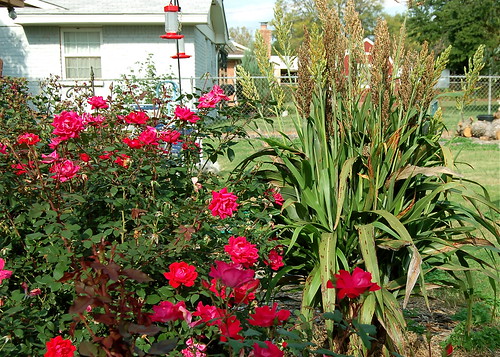
Gotta love those knock-outs!!! by perennialpal

TheGardenLady received these two questions about Knock Out roses from Mary and Diane respectively.

I planted eight knock out roses in the sun last year and they bloomed. After blooming the first year I put mulch on the base of the rose bush and the ground was not frozen. This spring I cut them back slightly the first bloom was great. We went on vacation and had a bad rain storm and the roses stopped. What am I doing wrong?

Last Spring (2008) I planted 9 knock-out roses. They grew and bloomed fairly uniformly. This Spring they looked very healthy, and all burst into bloom at the same time. After the first bloom, two of them turned a very light green.  I have checked them for over/under watering. Fertilizing is not an issue as I have fertilized them all uniformly. The other 7 are beginning to bloom for the second time, but these two do not have new buds. They do not look like they are ready to die.  I can find no evidence of insect damage either at the root or leaf level. They are all planted in the same bed in one grouping for concentrated color (i.e. within feet of each other).  I am stumped as to what to do. Any ideas?

TheGardenLady imagines that you must have a fantastic show of concentrated color with those beds Knock Out Roses. TheGardenLady has just two Knock Out Roses and the floral show is amazing.

Two questions that are similar but not the same; however the treatment of the roses should be the same.

The first lady had Knock Out roses that stopped blooming after heavy rains knocked off the flowers and haven’t started reblooming.

The second lady has some of her Knock Out roses in one bed that are not blooming.

Continue reading “Blooming Problems With Knock Out Roses”

Gardeners in the Northeast: Beware of Late Blight

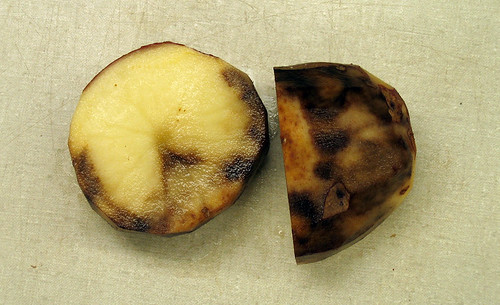
Late blight of potato by Ben·Millett

The following article was not written by TheGardenLady, but she thinks it’s a valuable one that the public should know about.

Irish Potato Famine Disease affecting Gardens and Farmers throughout the Greater Northeast

Revised by A. Wyenandt, NJAES, Rutgers University and M.T McGrath, Cornell University – Original article by Thomas A. Zitter, Cornell University, Ithaca, NY – Updated July 15, 2009

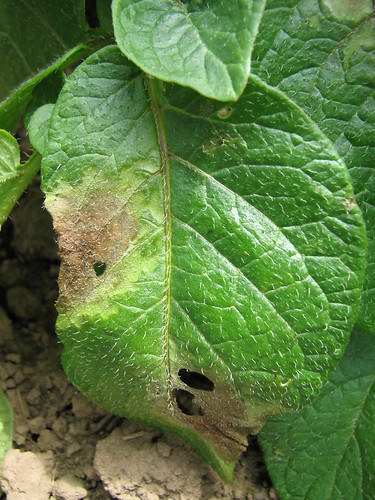
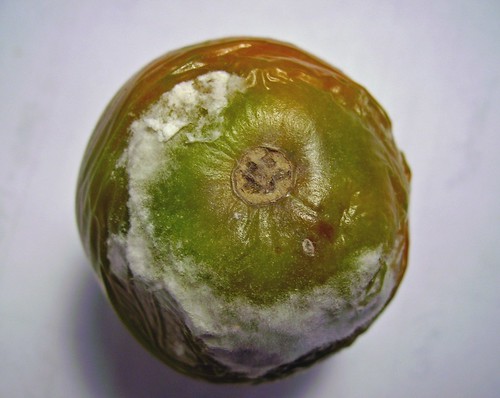
Late blight, caused by Phytophthora infestans, is a serious disease that affects tomato plants and potato plants around the world.

 late blight by ospud 	 late blight by ospud
late blight by ospud late blight by ospud

Late blight can become a serious problem because it can quickly kill affected plants and its spores are easily carried in wind currents to infect other susceptible plants in even the most remote areas in our region.

Late blight occurs sporadically in the Northeast in any given year because farmers diligently use methods to prevent the pathogen from surviving overwinter. Since our summer thus far has been cool with frequent rains, weather conditions have been very conducive for late blight development.

Late Blight on Plum Tomatoes by Franknsteen
Late Blight on Plum Tomatoes by Frank'nsteen

Currently, all tomato and potato plants grown in home gardens and in commercial fields are susceptible to late blight!

Commercial growers are able to respond to reports of the disease by spraying fungicides to prevent its spread, which otherwise would mean certain death of their entire crops. Unfortunately, many homeowners may not be as aware of this important disease, and if no corrective actions are taken in a timely manner, home gardens can provide a source of inoculum (i.e. spores) for their neighbor’s gardens and for commercial interests.

The occurrence of late blight in 2009 is different compared to most seasons. This is the earliest the disease has been reported over such a broad region of the country. More tragic for the Northeast, is that infected plants have been distributed to large local retail stores throughout the region (Ohio to Maine). Never before has such an extensive distribution of infected plants occurred.

Continue reading “Gardeners in the Northeast: Beware of Late Blight”

Preparing the Garden for a Drought

Summer is here. The main jobs in the garden are weeding, WATERING and deadheading.

Those of us in the Northeast have been having the mildest summer this GardenLady has ever experienced. July feels like May; the weather is so Springlike.

TheGardenLady has been watching the weather reports for many parts of the country that are having a major heatwave. She does not know how to best advise gardens experiencing 100 degree plus days in your area where watering plants is prohibited.

Contact your local county extension office to see if they have any special suggestions.

There were some things one could do before the drought. Should things straighten out and you want to plant new plants, consider them when you plant.

Water Jelly Crystals by Baok

Water crystals or beads (hydrogels) are sold as a means to help hold moisture in potting media. They can absorb multiple times their weight in water. Usually they are hydrated (beads or crystals are put in water before putting them in the soil) and mixed into the medium before planting. One company that sells this product is Plant Health Care Comapny.

Continue reading “Preparing the Garden for a Drought”

How To Kill Weeds in St. Augustine Grass

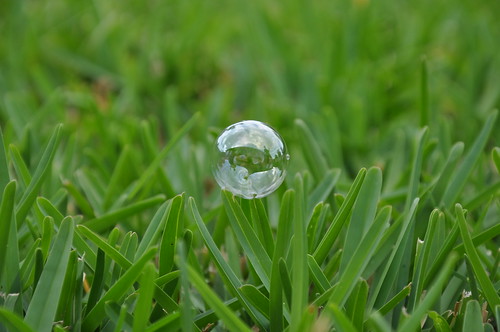
Bubble on St. Augustine grass by jmorgan90

TheGardenLady received this question from Mary.

Will Round Up or Weed-Be-Gone kill my St. Augustine grass? The oxilis is mixed in with the St. Augustine.

Ortho Weed b Gone can NOT be used on St. Augustine grass.  Roundup is a systemic that will kill any plant so that it also can NOT be used on a lawn without killing the grass.

However, there is a special product to kill the weeds in St. Augustine grass. The product is called Weed B gon Spot Weed Killer for St. Augustine grass.

It can be bought at nurseries or at places like Home Depot. This is a granular product which has to be watered when applied. READ THE INSTRUCTIONS ON THE PACKAGE AND FOLLOW DIRECTIONS EXACTLY. Keep pets out of the area where the product is used until the lawn is dry. For any questions contact the manufacturer. They have people on the phone who will answer all questions including where to buy in your area.