Clematis or Akebia?

Clematis and Akebia by edgeplot

TheGardenLady received this question from Rose.

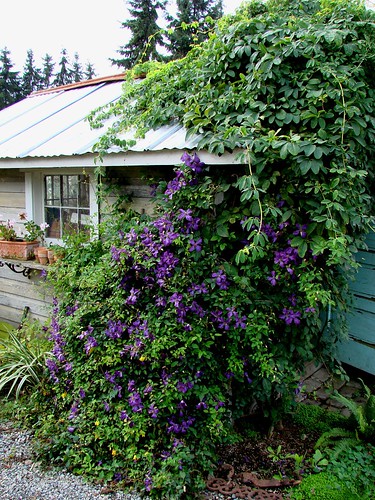
I saw a gorgeous plant at a person’s house and thought it was a clematis. She said it wasn’t and said a name like “boca via” or something. I tried to do a search and couldn’t find anything like that. It is a very tall plant in a huge pot with a trellis type thing to hold it up. Just beautiful! Any ideas what is was?

Trying to find a plant without knowing its Latin name or even a common name, with no description of the flower and its color nor having a photo of the plant- even a photo of its leaves if not a photo of the flower, is asking a lot of TheGardenLady.

I will guess that your friend might have an Akebia Trifoliata known as the three leaf chocolate vine. This has a pretty flower. with a fragrance. It doesn’t like its roots disturbed and can be planted in a container or in the garden. It grows tall.

BUT Akebias can be INVASIVE.   See here.  If this is the vine you are seeking, when buying BE WARY! What does invasive mean? It means that the roots or seeds of the plant will spread all over and for the rest of your life you will be trying to kill the plant all over your yard and your neighbors’ yards. Invasive plants do not allow other plants to live and because the Akebia is not native, it will probably not allow native birds or good insects like butterflies to have sufficient foods that they need. Especially the Akebia quinta (the five leaf chocolate vine) which is definitely said to be VERY invasive. I’ve read of a new variety of Akebia quinta called Silver Bells Chocolate vine. TheGardenLady thinks that this vine will also be an invasive. Just because something is sold does not mean that it is ok.

Please, if this is the vine you are looking for, check out your state’s invasive list or call your local Master Gardener office to check on the plant’s invasiveness. I would worry about the invasive quality of any Akebia and buy a beautiful clematis instead. There are so many clematis to choose from.

If the Akebia is not the vine you are looking for, contact Georgiavines. The owner has made it her life’s work to raise vines of all kinds. She might even suggest a vine for you that the person whose vine you loved will find even more enticing. Two other vine nurseries are here and here.
Container Gardening

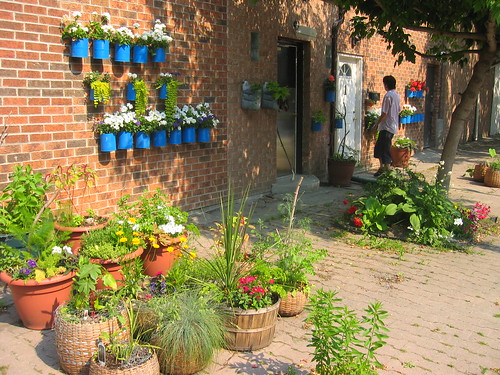
Container garden, Toronto, Canada by Happy Sleepy

TheGardenLady received this question from Joyce.

We have a long raised planter that gets quite a bit of sun but only in the afternoon. It’s very shaded most of the day.  I tried impatiens there last summer but they got too much sun. Any suggestion for colorful easy to grow and fairly low growing annuals? Would pansies or geraniums work?

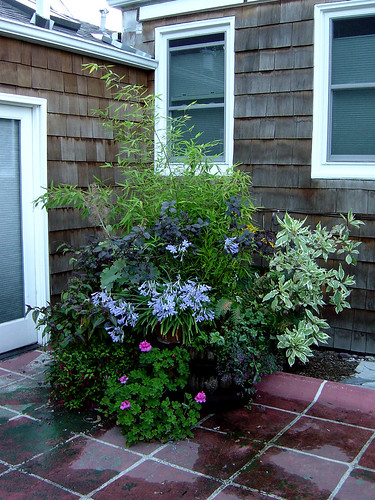
Container gardening is fast becoming one of the most popular ways to garden. All sorts of plants are good to grow in planters.  See here.  Let your imagination run wild. I will give some suggestions of flowering plants.  But consider planting vegetables or herbs in your container or a combination of both.  Watch this video.  Visit local nurseries to see what they have planted in containers both to see what grows well in your area and to see what combinations look good.

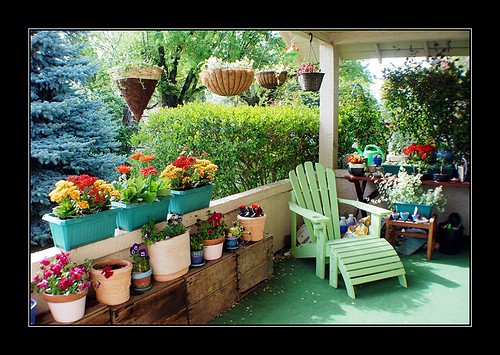
FrontPorchSpringGardenMay08 065small by _Anaya_

Afternoon sun is the hottest sun. Most flowering annuals as well as vegetables and herbs need the hot afternoon sun. These plants want approximately 5 or 6 hours of the afternoon sun. Do you think your planter gets that much sun? Try to see how long the sun shines on your container. If it gets lots of afternoon sun, you have lots of choices.

If you are buying plants, try to get healthy plants from the stores. One brand that prides itself on selling healthy plants is called Proven Winner. A list of stores in Maine that sells this brand is this. If you should have a problem with the plants, I would think the stores would back these plants.

Container Gardening by edgeplot

If you are buying plants or using seed packets, check to see the height the plants will grow to be sure that you get plants the height you want. For example, if you decide to plant zinnias, they come in differing heights. Look for a dwarf variety if you want short plants.

You asked about pansies. Pansies would look lovely in planters. One summer when I was in Freeport, I was impressed with the planters in front of many stores filled with pansies. But understand that pansies are a cool weather plant. They hate hot weather and will not last in the heat. So if this summer is hot, you will be out of luck. Pansies like full sun but will tolerate partial shade.

Geraniums (whose Latin name is Pelargonium) are an excellent choice. They love full sun but will tolerate partial shade, though they may not bloom so profusely. They are drought resistant which might be good for you since containers can dry out more quickly than a garden. There are so many different kinds of geraniums. Consider scented geraniums- Pelargonium species and cultivars with fragrant leaves, ivy-leaved geraniums Pelargonium peltatum with a trailing habit and Pelargonium zonale a bushy plant with red, pink, purple, orange or white flowers and often multi-colored foliage. Remember to dead head the flowers to keep your geraniums blooming.

Some other afternoon sun loving flowering plants you can use are calendula, petunia, marigold, salvia, Calibrachoa, Nasturtium, lantana, melapodium, and if you can find these two unusual annuals- creeping zinnia Sanvitalia procumbens and Tassel flower- Emilia javanica.

Consider using plants with different colored foliage like Dusty miller -Senecio cineraria. Put in plants of different heights so that there is a tall plant in the center and plants that hang over the edges. You can mix tropical indoor plants with the annuals or vegetable plants with the annuals-like cherry tomatoes and marigolds.

The choices are extensive. I wish you luck.

Please share photos of your container with TheGardenLady’s readers.

Avocado Tree Problems

bounty by emdot
bounty by emdot

TheGardenLady received this question from Jonathan.

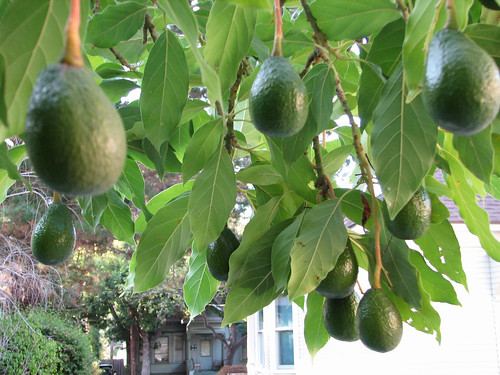
I recently planted a 3-4 year old avocado tree which is now about 8ft tall.  Since planting the leaf tips have been going brown and some leaves are very brittle, despite watering once or twice a day. Am I over watering? When I feel the earth around the tree it can be quite dry.

From reading your question, TheGardenLady cannot tell if you planted the avocado tree in a pot or out in the garden. If you planted the avocado tree in a pot, there may be too much salt gathering in the pot so you have to flush the pot out with lots of water. If it is grown in a pot it is best to give it frequent, light waterings with an occasional deep soak. Generally, the soil should be moist but not saturated. Yellowing leaves are a sign of over-watering; let the plant dry out for a few days. But if, as you described, the leaves turn brown and brown at the tips, too much salt has accumulated in the soil. Let water run freely into the pot and drain for several minutes.

Avocado Trees Damaged by Frost by wlwarner

But if you planted the tree in the soil without a pot, one of the most common problem of avocados is tip burn and marginal necrosis (death) caused by water stress and salinity, which is most prevalent during hot, dry weather according to this site.  Proper watering is essential.

Even if you have good drainage, one can never tell if the ground is dry or wet just by looking at or feeling the top of the earth.  Recommendations are to make a basin around the tree over the root ball that is kept filled with water.   See here.  Also to have a device in the soil to see if the ground is really moist enough. Where avocados are planted on well-drained soil, it is better to give them water frequently than to try to keep them too dry. Read the link carefully for the recommendations on watering your avocado tree.

Eastern and Western Dogwoods

Dogwood In Bloom by pearson251

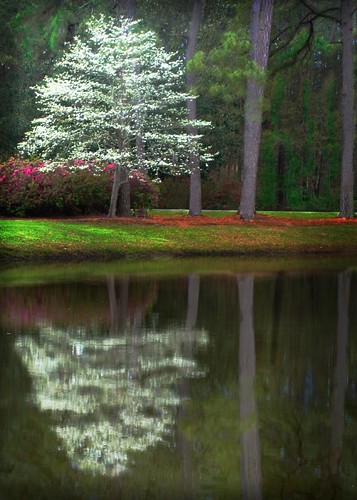
This spring has been an amazingly beautiful one florally. Usually during most springs on the east coast one sees the magnolia trees burst forth in bloom; but very shortly after they open there is a deadly frost that kills all the flowers. So what were once beautiful magnolias trees are now laden with frozen, brown ugly flowers. Nothing can be uglier than those big brown dead flowers. But this year it was different. The magnolia flowers remained looking lovely every day. Some magnolia trees were literaly wrapped in flowers.

The daffodils were spectacular. Everyone greeting one another saying, “isn’t this a magnificent year for daffodils?”. And it seemed like every house had amazing displays of daffodils. People in my area even had planted them in the center islands that were built to slow down traffic. So roads were beautiful as well as the gardens.

And this year wisteria were blooming their “vines” off. Visitors from the west coast were amazed to see tall trees covered with flowering wisteria. Sadly those vines strangle the trees; but still it was amazing to see all the wisteria blooms going up into the sky. Even TheGardenLady’s recalcitrant wisteria that had been dug up from her parents farm where it graced the front porch, had finally flowered this year after approximately 35 years in just this location alone- they are antiques.

Continue reading “Eastern and Western Dogwoods”

Marigold Mystery

Dying Marigold by interchangeableparts

TheGardenLady received this question about marigolds.

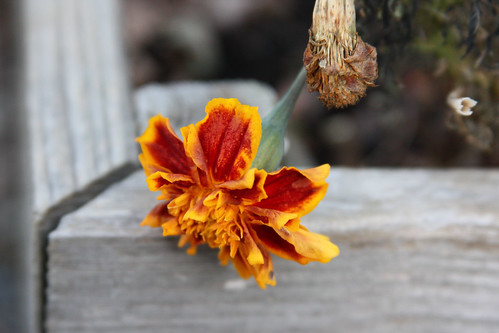
My marigolds are planted around the edge of the garden and watered 2x a week with the rest of the garden.  After a month they just started dying with no visible infestation.  Do you have any idea why?  Last year I planted marigolds in the same vicinity under a citrus tree and they survived just fine.  The plants were bought at Lowe’s garden center both times.

Marigolds are one of the easiest plants to raise. But like any living thing, they can have problems.  See here.  You write that you bought plants at the same local store that you bought them last year. Last year they might have been healthy but this year you might have bought home unhealthy plants- for example, the pots may not have been watered property and you might not have noticed that they looked sickly.

We are lucky to have inexpensive garden centers to buy plants, but many times these stores cannot find knowledgeable people to work in the nursery, people who know how to properly maintain the plants they sell. In the tiny pots the plants come in without proper watering, the roots might have dried out. Or the plants might have had a fungal or bacterial problem in the soil.

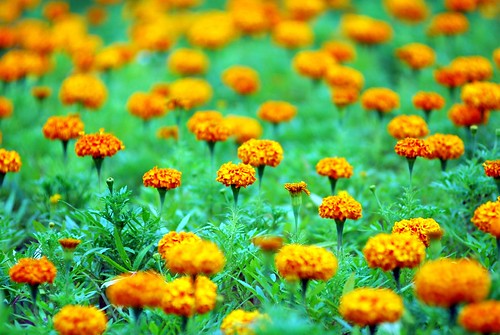
Marigold by floridapfe

You said that you planted the marigolds in the same vicinity as you planted this year. There can be differences in areas that are close by. For example, in my area in my soil we have lots of shale. A part of the ground close by can have larger rocks down below that doesn’t allow for good drainage in one spot but just a few feet away it is fine.

You said that you watered the plants 2 times a week. Not seeing your marigolds, this seems to TheGardenLady to be what caused the death of your marigolds this year. Marigolds may like a little water when the plants are young-if you raised them from seed. But you bought the plants. After the first watering when you planted them, they really don’t want or need to have you water them unless there is a 10 day or 2 week drought. Perhaps the plants in the border that you put the marigolds in need watering twice a week in the area you live, but this was probably too much water for marigolds. Marigolds like to be in dry soil. They don’t like to sit in wet soil and they don’t like overhead watering. When you water them, they prefer it if you use a soaker hose.   See here.

Dig up the dead plants and discard. Replace them with plants that need as much water as the other plants in your border. How will you know which plants are best? Go to a smaller, local nursery where the people who work there are plant lovers themselves. There are many of these small nurseries in every area. Ask questions when you buy the plants. Tell them what other plants are planted near by to see if the new plants you are buying are compatable.

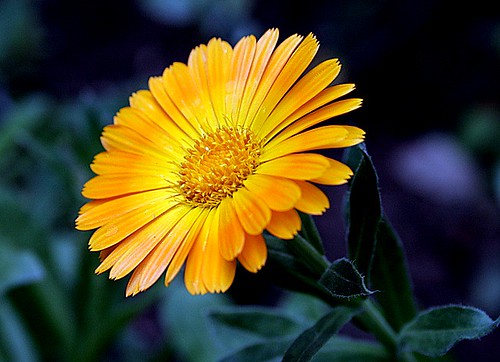
calendula-şamdan çiçeği by NURAY YUZBASI

TheGardenLady has written other posts about problems with marigolds and caring for marigolds.  Check them out here and here and here and here.   Hope you solve your marigold mystery.

Vegetable Gardening for Newbies

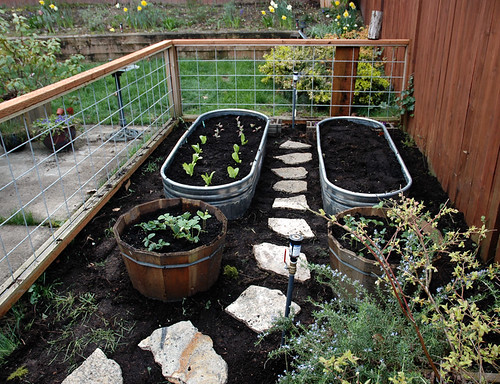
New vegetable garden by Sundry

TheGardenLady received this question from Tricia.

I am very new to gardening, but would love to grow my own veggies. I have a starter set with lettuce, tomatoes, and peppers. I have a large space in my backyard, but it is full of wood chips. Can I plant here? If so what is my next step. Do I need a fence so animals do not get to it?

To have success with vegetable gardening, because vegetables love good friable soil with excellent drainage, you will have to do a lot to prepare your large space. Space alone is not enough to have a vegetable garden. The space for vegetable gardening must be in the sun. Vegetables, especially tomatoes, need all the sun they can get.

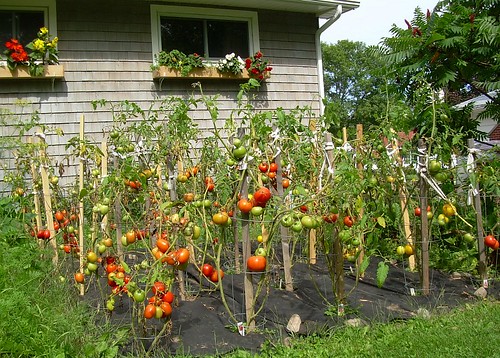
My Tomato Patch by freddyfoyle

Without the proper preparation, you are setting yourself up for frustration and perhaps failure. So this year, you might consider planting vegetables in pots while you get the space in your backyard ready for planting. Buy good potting soil that says it is for vegetables. Some of these soils have fertilizers added to help the plants. Buy or get large pots and plant your vegetables in them this year. You can use either clay pots or plastic pots so long as there is a drainage hole in the bottom of the pot. Then you can start doing the hard work for next year’s vegetable garden in your allotted space.

Continue reading “Vegetable Gardening for Newbies”

Gladiolus Leaves Turning Yellow

Plant turning yellow is an early symptom of Fusarium

TheGardenLady received this question from Diane.

I planted some Gladiolus bulbs in the spring and they were coming up beautifully. Today I noticed the leaves on one of them were turning yellow. I haven’t had any bloom yet but the stalks were very green and hardy. What can I do for this plant? Why would it have turned yellow?

Gladiolus grow best in loamy soil with proper drainage. Glads do not grow well in soil that is too wet. Soggy, compacted soil hampers root growth, diverts moisture and locks up plant food. Glads need plenty of water. Lack of water inhibits spike growth, flower development and corm growth. Watering at planting will help develop a good root system. Provide at least one inch of water each week to ensure good growth, making sure the water soaks 6-8 inches into the soil.

Not having seen your gladiolus, I cannot give the most accurate reason for why your one gladiolus is turning yellow. Gladiolus are very hardy and have few problems. But all living things do HAVE problems.

You may have bought a corm, or what you call a gladiolus bulb, that was deceased. There are a few root rots or corm rots that fit the description of gladiolus getting yellowing leaves.

From the University of Minnesota extension they write,

Stromatinia Corm Dry Rot – This corm disease, caused by the fungus Stromatinia gladioli, is found during periods of cool, wet weather. Leaves produced from infected corms turn yellow prematurely and die. Small, red-brown, sunken lesions develop on the corms. When an infected corm is cut in half, dark streaks can be seen radiating out from the core to the surface of the corm. The fungus produces sclerotia (over-wintering structures) in infected tissue. Often plants are infected in groups as the fungus spreads from the original infected plant. To manage this disease, discard infected corms, plant only healthy corms in well-drained soils and in the fall harvest corms during dry weather. T. Do not replant gladiolus corms in infected soil.

Or another corm rot described in a professional gladioli website is Fusarium oxysporum f. sp.gladioli . During the growing season, leaves turn yellow prematurely and stems collapse. During storage, corms develop a reddish-brown dry rot. Diseased corms produce spindly, weak plants the following year.

Because corms are inexpensive, it would see best to pull up and discard the one plant that looks yellow and hope that if there is a disease, it has not spread to your other gladioli. Never plant another gladioli in the spot where the infected corm was.

Propagating Lavender

Lavender by kathyv
Lavender by kathyv

TheGardenLady received this question from Sheila.

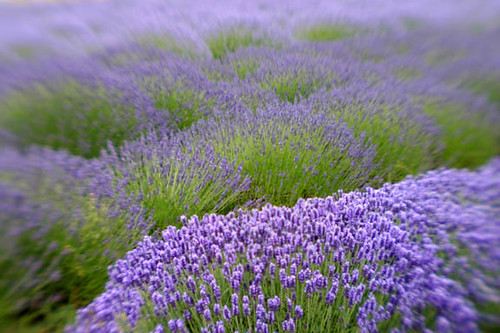
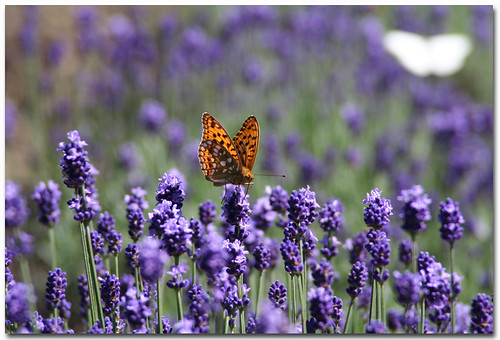
In order to be thrifty I would like to take some lavender cuttings to make a border in a sunny area by my mailbox. I have an established plant and some rooting compound. What next? Any advice.

Lavender Field by B*_J

There are two ways to propagate lavender. One is by seed and the other is by cuttings. Seeds are very tiny and therefore can be tricky to sow. Seeds from some lavender species don’t always run true. And seeds can be slow to germinate.

Cuttings are therefore an excellent way to propagate lavender. See here. Some people have success putting the lavender cuttings just in water without rooting compound. Experiment and try to root a few this way. Lavender officinallis may be the hardiest and most easily started lavender.

To propagate lavender from cuttings, take 2 inch shoots off the main stems and branches in late fall or early spring. Each shoot should include a “heel” which is a portion of older wood attached to its base. Cut the “heel” clean. Remove the lower leaves for about 1 inch from the base. Insert in well-packed sand in a cool greenhouse and keep the sand moist. Slight bottom heat will help rooting. While roots are not more than 1/2 inch long, put up in small pots in a mixture of 1/2 sand, 1/2 soil. Keep in cool greenhouse for winter if fall made cuttings or in a cold frame if spring made.

Read also what Master Gardeners learned about how to root lavender at
a lavender conference
.

When planting the baby plants outdoors, lavender will have much more
prolific blooms, with better fragrance, if grown in a light well-drained soil high in lime content. Rich or heavy soils encourage foliage growth rather than bloom. Lavender will do all right with six hours of sun a day, but it really needs full sun to achieve its true potential. Plant it in as open an area as possible for full air circulation to combat summer humidity. Also,  lavender wants good drainage. If you have poor drainage, try planting it on a raised (7-10 inches) mound. Finally, lavender needs a pH in the 7.0-7.3 range. You should have your soil tested.

Though lavender is a Mediterranean plant, Sequim in Washington State boasts that it is the capital of Lavender growing in the US. Every year they have a lavender festival. There are also lavender conferences that you might want to attend.

And if you like to raise lavender, you might consider joining the Herb
Society of America
.

img_5628

Carolyn Walker’s Shade Garden Open Hours

Here are the open hours for Carolyn Walker’s shade garden.

  • Saturday, May 23, from 9 am to Noon
  • Sunday, May 24, from Noon to 3 pm
  • Monday, May 25, from 2 pm to 5 pm

Anyone who wishes to visit Carolyn’s shade garden, should read the following:

Please pull into the driveway and park along the right hand side after the new fence under the old apple trees. If there is no room there, then turn around and park on Robinhood Road across from my driveway entrance. Directions are attached but please follow the parking instructions above.

I still have a great selection of hardy geraniums, ferns, and hosta (including minis). I have also gotten a good start on inventory for my summer and fall-blooming open house on May 30 with lobelia, liriope, Chinese astilbe, coralbells, corydalis, dwarf goatsbeard, hostas, and hardy begonias. I have restocked the following plants that sold out at the May 9 open house: ‘Herman’s Pride’ lamiastum, yellow corydalis, Japanese primroses, and meadow rue.

This is the time of year when the weeds begin to take over and groundcover plants become a priority. Fill your bare spots with the following excellent groundcovers: Chinese astilbe, purple wood sage, creeping hardy geranium, dwarf hostas, ‘Shell Pink’ and ‘Purple Dragon’ lamium, ‘Royal Purple’ liriope, ‘Lace Carpet’ foamflower, golden groundsel, perennial forget-me-not, white or yellow violets, and dwarf Jacob’s ladder.

Hope you can make it, Carolyn

Eradicating Oxalis Corniculata

Oxalis corniculata by naturgucker.de (on flickr)

TheGardenLady received this question from Gay.

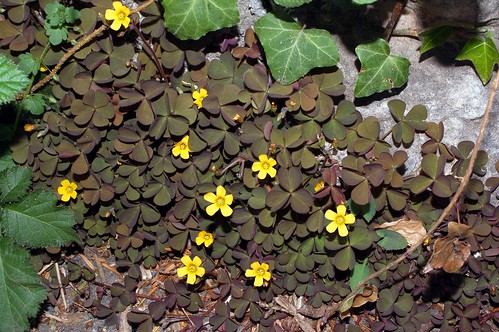
What do you recommend to eradicate Oxalis in coastal climate (SF Bay area)? This is not the ornamental type, it is invasive with a succulent flower stem and yellow blossom.

Oxalis – Oxalis corniculata L. , yellow wood sorrel is an invasive plant in California.

This GardenLady always tries to first recommend the safest method of  weed removal, which is hand pulling. If you aren’t overwhelmed with too many Oxalis on your property always try hand pulling first. Now the problem with oxalis is that it has a long tap root. Besides these tap roots it also sends out stolons. A stolon is a shoot that bends to the ground or that grows horizontally above the ground and produces roots and shoots at the nodes. And it has rhizomes. A rhizome is a horizontal, usually underground stem that often sends out roots and shoots from its nodes. Plus Oxalis makes seeds. How is that for insuring species survival? So to eradicate the oxalis with all its alternative methods of growing into another plant, one has to get rid of all of its roots, stolons and rhizomes before it sets seed. That is very difficult to do. But one can try. If your soil is not rocky you can use a manual asparagus picker to get to the bottom of the tape root.  I hope you can still purchase these manual asparagus pickers. They have a handle and sort of look like a long screw driver with a V at the end which is what you use to cut. However,TheGardenLady does not know where to buy them. Mine is an antique from my parents’ farm.

Continue reading “Eradicating Oxalis Corniculata”