Leaves as Fertilizer

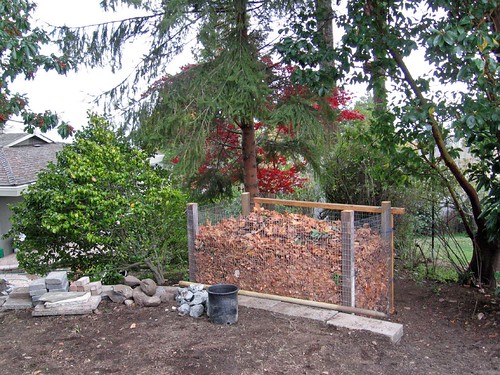
Leaf compost by avisclaire

TheGardenLady received this question from Marvin.

I like your article on using leaves as fertilizer. What specific nutrients are added and how much? I use them in my garden and have sugar maple leaves.

By recycling leaves you are doing what nature does. But leaves by themselves take a long time to break down. Especially maple leaves which can become compacted and suffocate plants if left whole on your plants. So if you just want to use leaves, make them into mulch. Rake the leaves into a pile. Then you can use your lawnmower as a mulcher and mow over the leaves until they are particle sized. Or you can buy a mulcher to do this. This is easiest in the fall when the leaves are brown and dry. Spread the leaves as you would mulch. There are some nutrients in the leaves when used this way and as the leaf mulch works down into the soil it helps make the soil more friable ( crumbly).

Or you can make compost with the leaves. Save the leaves in an out of the way place or build or buy composting bins to hold the leaves. You don’t have to add nutrients, there are some nutrients in the leaves. But to make your compost quicker, you will have to do a little more than just save the leaves. You will want to add grass clippings and household garbage to the leaves.

Microbial activity is affected by the carbon-to-nitrogen (C/N) ratio of the organic waste. Because microbes need nitrogen for their own metabolism and growth, a shortage of nitrogen will slow down the composting process considerably. Material high in carbon relative to nitrogen, such as straw or sawdust, will decompose very slowly unless nitrogen fertilizer is added. Tree leaves are higher in nitrogen than straw or sawdust, but decomposition of leaves still benefits from an addition of nitrogen fertilizer. Grass clippings are generally high in nitrogen and enhance decomposition when mixed properly with leaves. Manure, cottonseed meal, or blood meal can be used as organic sources of nitrogen. Otherwise use a high nitrogen- containing fertilizer. You need an initial C/N ratio of about 30 parts carbon to 1 part of nitrogen. C/N ratios below 25:1 may give off ammonia odors and above 35:1 will take longer to compost. Other nutrients such as phosphorus and potassium are necessary, but are usually present in adequate amounts for decomposition.

Follow the directions here.

You will want to add water to the C/N mix and will want to turn the mix. Some of the purchased bins have a device to turn the barrel. But save your money and use a pitch fork with a little muscle. By getting air in the mix you are heating the mix so that your compost will decompose quicker. Good composting with be hot and you might even see steam even coming out.

By making compost with the mixture of leaves, grass and garbage, you will be making a rich soil to give back to the earth that which was depleted. Your plants will be so thankful.
Pine Needle Mulch

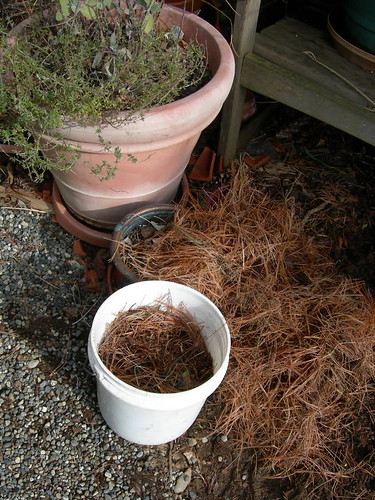
Pine needles for blueberry mulch by greenwalksblog (on flickr)

TheGardenLady received this question from June.

Would potatoes like a pine needle mulch?

According to Clemson University Extension, pine needle mulch is good
for potatoes.   See here.

Tip: Pine needles and coffee grounds make great mulch for acid-loving
plants, such as rhododendrons, azaleas, blueberries, raspberries,
strawberries and potatoes.

Please let TheGardenLady know how you make out with pine needle mulch.

Is There A Weed Killer That Does Not Kill Moss?

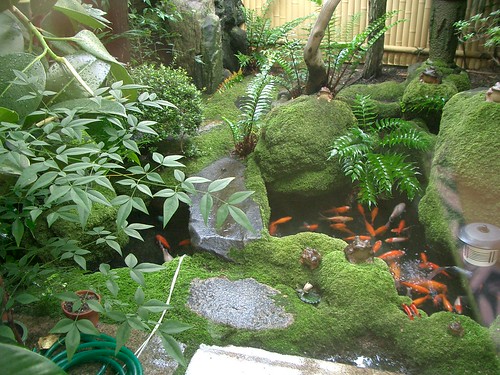
 moss garden by akaitori (on flickr)
moss garden by akaitori (on flickr)

TheGardenLady received this question from Claudia:

Every weed killer that I have located includes moss as a weed so it kills the moss too. Is there a weed killer that does not kill moss?

In one public garden with moss that I visited, I asked this very question. They said they got down in the moss and carefully plucked out all the weeds by hand using some type of tweezers. Moss has no roots. So if you pull some up just push it back in the spot it came from.

Moss loves acid soil- a ph of 5 to 6 is what mosses prefer. Weeds tend not to like soil with such a high acid content. So when the moss is in its preferred environment then it grows vigorously enough that weeds won’t be a problem. In fact you might be surprised that acid loving native plants take root in the soil even if you hadn’t planted them. They come into the moss environment like weeds. You can try adding wettable sulphur to the areas where the moss is weedy – add 1/2 the amount that is on the bag directions and put it in a small, test area to test if it works.

If you have weeds that you can’t hand pull try spotting the weeds with ” Weed Be Gone” or ” Round up”. Use these products in a small test area first to see if it doesn’t burn the moss. Then if it doesn’t burn the moss, you can use these products in other areas.

One of the best places to buy moss and moss products like the wettable sulphur is from Moss Acres. Moss Acres offers a wide range of soil amendment products to lower pH. They also will answer moss questions.

The owner of this company, David Benner, has the loveliest moss garden that is open to the public for a few days every May. Try to visit this garden and ask the tour guide, either David or his son, moss questions.

Getting Rid Of The Horned Worm Caterpillar

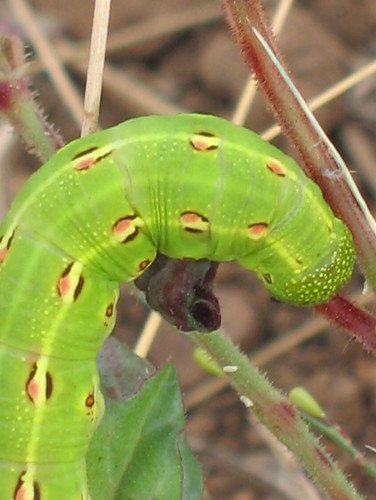
Horned Worm Head by EriMax (on flickr)

TheGardenLady received this question from Katherine.

Is there anything I can do to keep the horned worm caterpillar off of my tomatoes? I really hate those little things. My kids pick them off, but most of the time they are hidden and I can’t see them!

You may know that the horned worm caterpillar is the immature stage of
the hawk moth. It goes through a few stages, but the most damaging stage is the caterpillar stage.

Some suggestions to get rid of the pest:

Rotate the place where you plant your tomatoes. Don’t plant tomatoes in the same place every year. If you plant them in the same location year after year, insects and diseases build up in the soil which can cause problems. For example, the hornworm larvae burrow into the soil to pupate.

Remove crop residues from last year and keep the area clean of weeds. Both can encourage insects to hide, lay eggs and grow.

Continue reading “Getting Rid Of The Horned Worm Caterpillar”

Searching for Espaliered Quince Trees

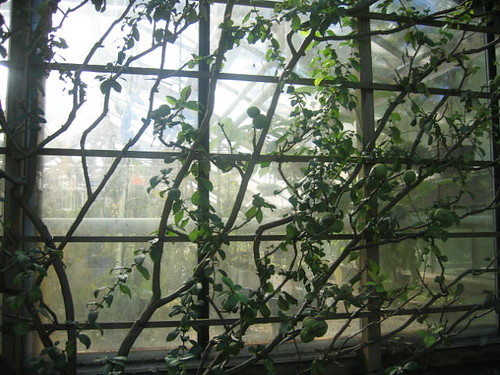
Beautifully espaliered quince by andrea_hall (on flickr)

TheGardenLady received this question from Elizabeth.

Can you tell me where I might be able to find a nursery/source for an espalier? I’ve been trying for years, to no avail, to espalier a quince. I would like to buy one that flowers.

Until you asked for a nursery to buy an espaliered tree, TheGardenLady
always thought that one had to create one own’s espaliered tree by training it yourself. Trying to check out your request, TheGardenLady discovered nurseries that sell already espaliered trees. But unfortunately, none that she called have espaliered quince trees for sale.

Espalier is when a tree, shrub or vine is trained to grow on a single plane and not allowed to deviate from it, that is known as the “espalier” style. Espalier stems from a 16th-century European practice.

Most people choose apple or pear trees to espalier not only to save space but to get more fruit in a small space. And there are nurseries that do sell espaliered apple and pear trees.

Quince can be espaliered but it can be trickier because many of the
shrubs have thorns.  See here.

There are many excellent sites on espaliering so that you might be
willing to try making your own espaliered quince tree.  See e.g. here.

TheGardenLady will continue to ask if there are nurseries that sell
flowering quince that is already espaliered and if she ever finds a place will post it on the blog; but thus far, she has not been able to find any nursery in the states that sell it already espaliered. Because Europe seems to do more with espaliered trees perhaps you can find a European nursery that sells
one.

Saving Potted Daffodils

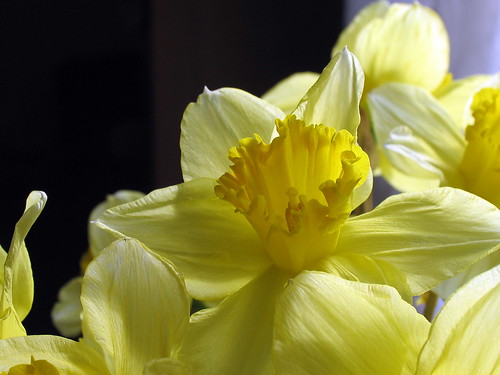
Daffodils by Poppins Garden (on flickr)
Daffodils by Poppins' Garden (on flickr)

TheGardenLady received this question from Cecilia.

I have some daffodils in pots and the flowers have already dried out. What do I need to do  to keep them healthy for next year? Or will theybe fine without my help?

When the flowers on your daffodils dry out, cut them off. This goes for daffodils growing outdoors, too. But NEVER cut off the leaves. After flowering the leaves continue to provide nutrients to the bulb. By cutting the flowers off you prevent the daffodil from setting seed. Unless you are a professional daffodil breeder or an avid amateur, daffodil seeds are more difficult to work with so you don’t want the plant to set seed. You want all the energy and growth to go into the bulb for next year’s bloom.

Now with potted daffodils, because the plant was forced- the bulb may no longer be any good. But you can try to save it and hope it is still ok. The daffodil you bought came in a small pot with limited soil which was depleted of nutrients when it was forced and bloomed. So even though the fall is the best time to plant daffodil bulbs, TheGardenLady would immediately plant the flowerless bulbs into the ground with the leaves still on. This way the bulbs may have a chance of living by getting some nutrients from the leaves as  well as from the outdoor soil. Mark where you planted the bulbs after the leaves die, so that you know where to look next spring to see if you saved those daffodils. Remember, plants want to live so that if you give them a good chance, they might comply. But, if they die, you know you tried.

Good luck.

Caring for Sick Peace Lilies

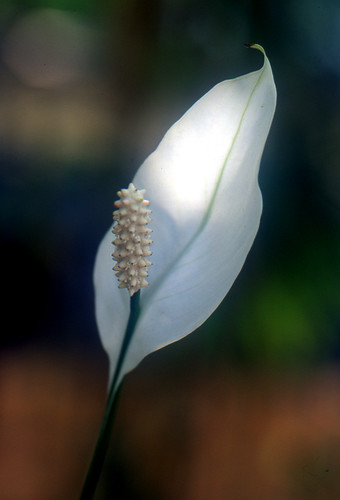
Simplicity by love_child_kyoto (on flickr)

TheGardenLady received this question from Linda.

I have a peace lily indoor plant which has sentimental value to me and over the past winter it has contracted a leaf condition – the leaves die from the tip towards the stem.  It’s as though a critter is “sucking” the life from it. It still flowers, but I am afraid as more and more leaves are infected I will lose the battle. Any suggestions?

TheGardenLady has to assume from your brief email that you have not changed anything in your plant’s environment- you haven’t moved your plant or changed the lighting, temperature, humidity or care. Usually most brown tips are caused by low humidity. And I also have to assume that you had not re-potted your Peace Lily Spathiphyllum improperly or put it in poor soil.

Or your Peace Lily might have to be re-potted. Sometimes a plant that has been in the same pot for a long time has a build up of salts in the soil from fertilizers and alkaline tap water. When you re-pot your plant, be sure you do not re-pot it too high or too low and use good potting soil (see here).

Continue reading “Caring for Sick Peace Lilies”

Lori Rubel’s Georgia Vines

TheGardenLady likes to write about nurseries or gardens that sell interesting plants; and if these places can save readers money in this economy, that is an added bonus. One such gardening resource is Georgia Vines What is unique about Georgia Vines is that their emphasis is on selling vines- and many of these vines are very unusual.

The owner of Georgia Vines is Lori Rubel who says that her passion is vines. She said that because she only had an ” urban backyard to work with, I decided many years ago to collect vines because I could grow them vertically and save room.” When Lori moved to Georgia from her home in upstate NY, she discovered “Passiflora- which is something that I could have never grown in upstate NY.” The more vines she got, the more she found were available. ” Lori says that she now has a large collection of about 140 different types of vines. Lori, who loves beauty, became interested in rare and unusual vines as well as other unusual plants. On her website she says “This is my garden of vines, angel trumpets, butterfly plants, and just about everything beautiful and unusual that I am able to find and plant.”

Because all gardeners love to share their passion with others, a couple of years ago Lori was encouraged by her grown sons to set up a website and share the vines and her passion and knowledge of vines with others.

And what makes Lori’s Georgia Vines a place to save money is that she sells many of the vines and plants as seeds but does NOT charge for postage anywhere in the US. (She does have a small international postage fee.) And many of the potted plants have no postage charge.

If you fall in love with any of the rare plants on the Georgia Vines site and want to order them, be sure that the plants will grow in your area (see here).

What’s Blowing Your Way

PhotonQ-Beauty on the Horizon of Complexity by PhOtOnQuAnTiQuE (on flickr)

TheGardenLady just wants to let her readers what’s in store.  Tomorrow there will be a post on Lori Rubel’s Georgia Vines.  And in 4 days from now, TheGardenLady will be posting an answer to a reader’s question about planting hostas under a dogwood.

So keep reading and asking questions.

Caring for Indoor Daffodils

Indoor Daffodils by Lisa 65 (on flickr)

TheGardenLady received this question about daffodils:

I have also recently received a small pot of daffodils for indoors [probably from the local grocery store. It has the colored foil around it]. They doubled in length in one day, look healthy, and have smaller buds about to come out. I keep them in my room which is fairly cool and can get sunny. I’m wondering if I need to move the bulbs to a bigger pot at any point as well as if I can share the bulbs with friends once they stop flowering.

Daffodils like coolish indoor temperatures, 50-75°F, 10-24°C, the cooler the temperature, the longer the blooms last: medium humidity- too wet and you might get bulb rot: and bright indirect sunlight coming from the South/East/West

Do not waste your time repotting the daffodil bulbs for this season’s indoor flowering. Repotting causes stress on the plant which may cause the flowers to die.

The daffodils in the pot may have been forced (see here) to bloom at a specific time. Forcing is done by using special lighting techniques, fertilizing techniques and temperature control (see here). Enjoy the flowers by putting the little pot in a cache pot (see here) and bringing the entire thing to the room where you are entertaining for all to enjoy.

Continue reading “Caring for Indoor Daffodils”