
TheGardenLady just discovered the Duke Farms Eagle Cam. You can watch Eagles hatch and then be raised.
Leguminous Plants
TheGardenLady received this question from arv:
I want to know what leguminous trees / shrubs I can plant in Jerusalem for nitrogen fixing . I want something longer lasting than lentils, beans, chickpeas etc.
This writer, from Israel, wants to know of leguminous trees or shrubs that he can plant in Jerusalem. For those readers who want to know what leguminous means, it is a Botany or Plant Biology term that refers to plants related to legumes like pinto beans, great northern beans, lentils, etc. that help fix nitrogen in the soil. Nitrogen (N)Â is essential for plant growth. N is the mineral element most demanded by plants.
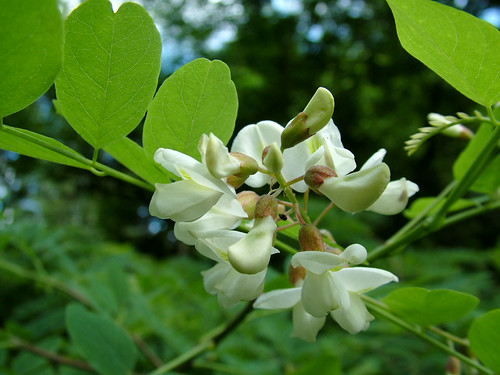
The locust tree is my favorite leguminous tree. See here.
It is the black locust, Robinia pseudoacacia, that is nitrogen fixing not the honey locust. See here. An article about the black locust is this.
But the locust tree can become invasive because the plant typically reproduces vegetatively by root suckering and stump sprouting. Root suckers arise spontaneously from established root systems, sprouting
new shoots and interconnecting fibrous roots to form extensive, dense groves of clones.
One tree that is short lived but is in the leguminous plant family is the Acacia tree. A scholarly article about the amount of N each type of Acacia tree fixes is this.
A complete list of leguminous plants is on this website.
Because this sounds like a scholarly endeavor that this questioner is asking to do, TheGardenLady has included some scholarly articles on nitrogen fixing that has been done on leguminous plants. I hope you can open these sites here, here, and here.
12 Things To Do In Your Garden In April
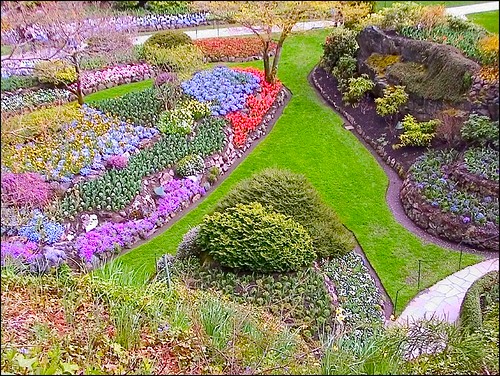
Eager to get out to work in your garden? There are many things one can do in April. This list is especially for those who live in the mid Atlantic states where the temperature range is from the 50’s to the mid 60 degrees Fahrenheit (approximately between 10 and 20 degree Celsius). If your area is still too cold or already too hot, some of these suggestions may be too early or too late .
1. Have your soil tested – best to go to your local Master
Gardener/Agriculture extension service for the test kit – see here.
2. Improve your soil with organic matter- use your compost if it is
ready – see here.
3. If you are using it, incorporate pre-plant fertilizer now – see here.
4. Plant roses – see here.
5. Prune roses as soon as buds begin to push – see here.
6. Plant perennials and cold tolerant annuals – see here.
7. Divide late blooming perennials – see here.
8. Plant trees and shrubs
9. Fertilize trees and shrubs if needed – see here.
10. Prune trees and shrubs but not the spring blooming trees and
shrubs- correct all winter damage by pruning – see here.
11. Start seeds indoors – read the seed packet (don’t start tomato
seeds too early- see here.)
12. Plant cool-season vegetables – see here.
How Much Light Does A Bonsai Tree Need?
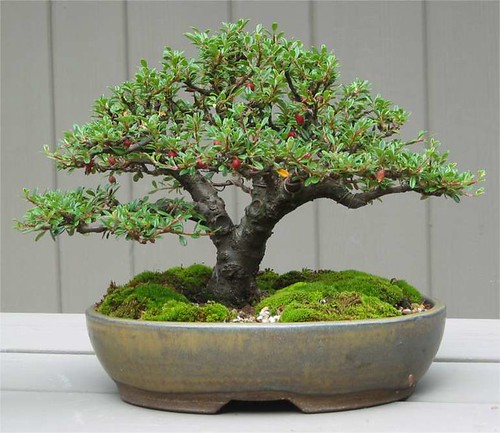
If you bought a Bonsai tree you might wonder, as one of my readers did, how much light it needs. The amount of light needed for aBonsai tree depends on the species. When you buy a Bonsai or create one, you should have directions on the amount of light it needs. If your bonsai flourishes better outdoors, pick a spot that provides six or more hours of sunlight. Though Juniper bonsai tree needs filtered or shaded light. You must allow your Juniper bonsai to get low intensity morning sunlight when possible and avoid the direct afternoon sunlight. Indoor bonsai need two to four hours of natural light near a window, or artificial light.
Because Bonsai trees are artificially created, they need special care and you should ask a specialist to advise you on the care of your particular bonsai.
Do You Have An Ant Problem? Try Terro Liquid Ant Baits

A new, excellent product to get rid of ants.
It is spring and the insects are starting to emerge. Ants are starting to come into the kitchen or you might find them in other parts of the house. TheGardenLady recently learned of a product that is excellent at killing a wide variety of ants. This product is called Terro Liquid Ant baits.
No, TheGardenLady does not make any money from telling you about this product. I just learned that this is a really good way to get rid of ants if they come into your house. And the baits are relatively safe; just not safe for the ants. Terro makes other products that kill ants or other insects, but TheGardenLady was only told about how good the liquid ant baits are. One of the sources who recommended the baits was from a lady in Texas.
Terro recommends that you ID the ants first because it works on many kinds of ants but doesn’t work on all types of ants. They said that you can send some of the ants to Terro to identify them. I know that you can also take some of your ants to your local Master Gardener office or Agricultural Extension Office to be ID’d.
Terro is NOT for termites. So be sure that what you see swarming are not Termites. Again, go to the MG office or send them to the Terro company for identification. (If you have termites you will need a professional exterminator.) Terro will answer questions if you email them.
The Nature of Glass: Chihuly Exhibit at Desert Botanical Garden outside Scottsdale

TheGardenGirls – two 7th grade girls, one of whom is the granddaughter of TheGardenLady – were in Scottsdale over Spring Break. They decided they were going to be photojournalists when they visited the Desert Botanical Garden, which is hosting an exhibit by the world famous glass artist Dale Chihuly. The exhibit lasts until May 31st of 2009. You definitely shouldn’t miss it. It’s wonderful.
You can visit Chihuly’s site here. Before you go please check out TheGardenGirls’ photos here, and let them know what you think.  Just click on a photo and it will enlarge.


Virtual Tours of Gardens

It is fun to start planning your garden now, before the real work of doing the actual gardening. But how does one begin?
A great way to plan one’s own garden is to visit beautiful gardens. Beautiful gardens can be private or public gardens. Sometimes one can join a docent led tour where you can ask questions. Get the 2009 Garden Conservancy book to know the dates some private garden tours are open in your area.
Even without a tour guide, good gardens usually have labels telling the names of the plants. When the plant (tree, shrub or flower) is happy, it will grow. So take notes of the plant’s environment. Are the plants you want growing in the sun or in partial or full shade. Good horticulturists will have the plant growing in its ideal environment.
When you come home you can start doing research about the plants you have chosen by going to your local library, by going on-line, by reading plant catalogs or asking questions of horticulturists, plant enthusiasts or when you go to nurseries to purchase the plants.
Carolyn’s Shade Gardens in Bryn Mawr

Carolyn’s Shade Garden
I first learned about Carolyn’s Shade Gardens in Bryn Mawr, PA, when a friend told me that the only plants Carolyn sold were really great quality. With that recommendation, I had to visit this garden. TheGardenLady’s garden is primarily a shade garden with huge sycamore trees. What could be better than to find excellent plants that thrive in a similar location? I went to this nursery and was delighted to see the lovely display gardens in the shade all happily in bloom. Many of the plants that were for sale had been dug out of these pretty gardens. And all the plants came with advice from their owner, Carolyn.

So this is another nursery that TheGardenLady decided to tell the readers about. As I wrote in another post, “People who love flowers and plants seem to be some of the nicest people on this planet. They love what they are doing and are generous with their knowledge”
The Silk Tree – Albizia Julibrissin

Photo taken by pizzodisevo
When TheGardenLady bought her property in the 1970s, one of the trees on the grounds was the tree Albizia julibrissin commonly called the Silk tree, Mimosa tree or Silky acacia. Who can resist the lovely feathery pink flowers? Butterflies, bees and birds are attracted to the flowers that seem to bloom almost all summer on the 20 to 30 ft tall trees.
The tree is not native to the US; it is from Asia and Africa. It was brought to the US as an ornamental tree in 1745 and is still sold in some plant nurseries. It grows in Zones 6 through Zone 9 with reports of its living in Zone 5 (though the coolness of this zone makes it a struggle to keep alive ).
Underwater Flower Arrangements
TheGardenLady received this question from Sally.
How would you condition daffodils that will be used in an underwater arrangement for 24 hrs? Once underwater, is there anything that can be added to stabilize the flowers?
TheGardenLady has never tried to make underwater arrangements and
wonder if the writer of this question is planning an underwater wedding with daffodils :-). Sounds interesting.
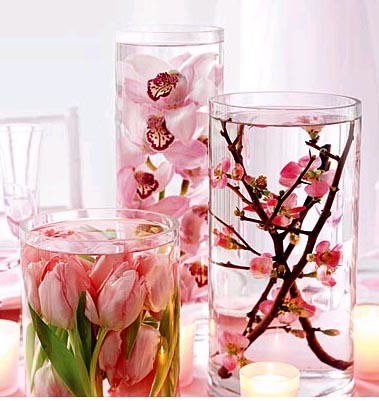
I do hope the person asking this question is willing to do some experimentation before she attempts the underwater bouquet. The one thought TheGardenLady has, but has never tried, is to put the daffodils in a vase with a little glycerin with water in the vase, let it sit for a while and then put the daffodils underwater. A second experiment is to put some glycerin in the water you will be putting the daffodils under. Other stabilizing substances to try can be found on this website to see what works best for daffodils.
Please let TheGardenLady and her readers know your results. A photo
would be appreciated.
Some other websites that give directions for making underwater floral
arrangements are here, here and here.