The 2008 Perennial Plant Conference

One of the best ways to learn about gardening is to learn from the Masters. And one of the best way to hear the Masters, if you cannot attend Horticulture Schools, is to attend plant conferences. These conferences are given all around the US as well as other countries and are generally open to the public.

An excellent conference is the Perennial Plant Conference co-sponsored by Chanticleer Gardens, the Hardy Plant Society/Mid-Atlantic Group, Longwood Gardens, The Pennsylvania Horticultural Society and The Scott Arboretum of Swarthmore College. These are all power groups in horticulture and the speakers they get for the conference are internationally known in the plant world. Also, the conference is part of the Continuing Education program of Longwood Gardens.

This year the Perennial Plant Conference will be on Friday, October 17, 2008 and will be held at the Lang Performing Arts Center, Swarthmore College in Swarthmore, PA.
Continue reading “The 2008 Perennial Plant Conference”

Diagnosing Marigold Problems


                           Photo taken by juggzy_malone

TheGardenLady received this question from Liz on her “Caring for Marigolds” post.

I am growing marigolds in tall (3″) pots in a very sunny location of my backyard. In the pots I have also planted white flowering bacopa, ivy and a browny spikey grass (not sure of the name).  Everything in the pots were growing well for a few weeks until recently when I noticed that the bacopa stopped flowering and the foliage and flowers of  the marigolds had turned into a daily meal for something.  I’ve checked in the soil, and around the marigolds both in the day and in the evening but can ft locate any insects other than the one lonely earwig.  I have read that the only pests that will feast on marigolds are slugs but I can’t find any in/around my pots. Can you offer any information on what may be causing my frustrations???

You write that you created a mixed pot of plants that includes bacopa and marigolds. Was it your idea of putting these plants together? TheGardenLady would not recommend combining marigold and bacopa in one pot. My understanding is that bacopa will stop flowering with severe drying out. Bacopa likes part sun. But marigolds like full sun and don’t need as frequent watering.

Not knowing the kind of ivy you have or what the grass is that you have, I cannot tell you the proper culture for those two plants.

Continue reading “Diagnosing Marigold Problems”

Where Have All The Butterflies Gone?

Photo taken by Martin LaBar

Is it just TheGardenLady, or have others noticed that there are very few butterflies in the garden this summer?

Yes, TheGardenLady saw one yellow swallowtail, one viceroy, one black swallowtail and a half dozen cabbage white butterflies on her flowers and she saw a fritillary in her friend’s garden. She also had a magical moment at a plant nursery where a yellow swallowtail clung to her arm as she carried away a plant she wanted to purchase.

Continue reading “Where Have All The Butterflies Gone?”

Acid for Hydrangeas

TheGardenLady received this question from Martha:

How can I add acid around my hydrangeas?

Because hydrangeas like an acidic soil – especially if you want the blue blooms- you can supplement the fertilizer and add acid.  Know that not all the hydrangeas will change color. Usually it is the pink and blue hydrangeas that can have their flowers change color, not the white or red hydrangeas.

Any of the following will help: aluminum sulfate (1/4 oz. per gal. of water) which can be bought in many garden stores, egg shells, coffee grounds which you can get free, TheGardenLady was told, at places like Starbucks,  ground up orange or grapefruit peels.

Continue reading “Acid for Hydrangeas”

Summer Care for Encore Azaleas

For those of you who are enjoying Encore Azaleas in your gardens, the Encore Azalea company sent TheGardenLady this email with advice on summer care. Encore Azaleas are the azaleas bred to bloom in spring and throughout the summer.

The heat of summer can be harsh on all plants, and we at Encore Azalea(R) would like to help you prepare.

Keep a watchful eye on the moisture level of the soil around your Encore Azaleas. The shallow fibrous roots like to be moist, but not saturated. A mulch of pine bark will help hold moisture near the roots, as well as protect the roots from the harsh rays of the sun.

This is your last chance to prune for the season. Any heavy pruning should be done immediately after your Encore Azalea’s spring bloom cycle. Remember only to prune lightly in high heat.

Best Regards,

From your friends at Encore Azalea(R)

Diseased Marigolds

                                              Alternaria

TheGardenLady received this question from Helen.

I just put in marigolds next to my tomatoes, as companion plants. I think I’ve overwatered them and it’s been rainy in Ithaca this year…White spots are forming on them. I don’t have a digital camera handy, or I’d show you what they look like. My daughter says they have the chicken pox! Do I dig them up and replace them with new ones or do I just try to dry them out? I worry if they stay, that they are diseased and will just get worse-maybe attracting pests… What’s your advice?

Not seeing your marigold plants TheGardenLady thinks you have diseased marigold plants. Heavy rains and winds can carry a disease called alternaria to ornamental plants. See here.

Even though TheGardenLady has not seen the marigold plant and the problem, TheGardenLady would pull out the sick looking marigolds which are cheap to replace. The reason for this suggestion is because you might get a similar fungus, a fungus in the same genus, on your tomato plants and this alternaria or Tomato Early Blight damages the tomato plants and fruits. See here.

Continue reading “Diseased Marigolds”

Flopping Daffodils


TheGardenLady received this question from Shelly:

My daffodils have grown, but after a few days, they fall over, should I put some bone meal in the soil? I have Tulips and day lillies in the same bed, around a tree.

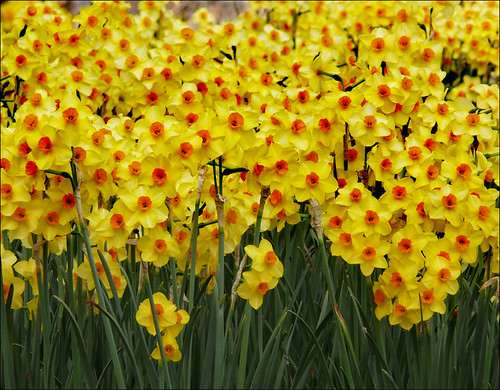
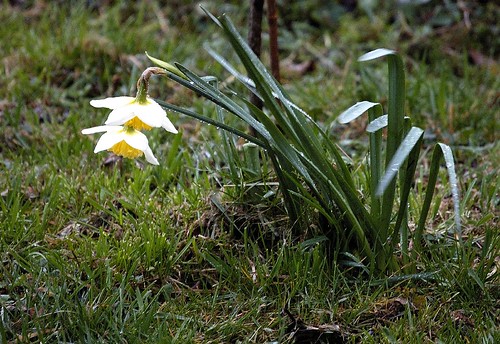
If your plants look healthy, no diseases on them, there are a few reasons that your plants are falling over.  Daffodils can be blown over by strong winds or if there are heavy rains, the rain can make the leaves and flowers flop over.

But generally, the reason the leaves and flowers of outdoor planted bulbs flop over is because of the planting depth. Planting depth and spacing are very important to the success of bulbs.

Continue reading “Flopping Daffodils”

The 2008 Philadelphia Flower Show – WOW!!!


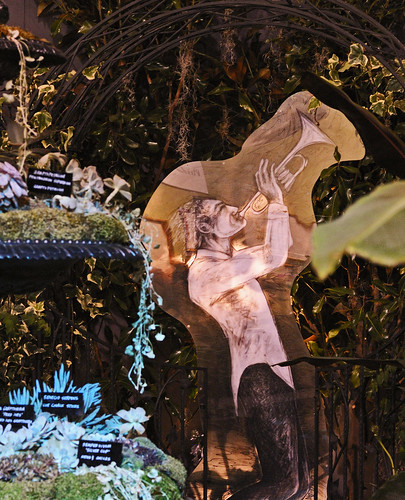
TheGardenLady spent Wed. at the 2008 Philadelphia Flower Show. Her reaction? WOW! What a show!

The Flower Show is always a spectacular show visually. And this year with the theme ‘Jazz It Up’  is no exception. From the minute you enter the show and walk under an archway of floating piano keys and exotic cut flowers such as allamandas and heliconias and then see more
amazing Garden Displays ahead, you know you are in for a treat.

Continue reading “The 2008 Philadelphia Flower Show – WOW!!!”

What Planting Zone Is Toms River?

TheGardenLady received this question from Beth:

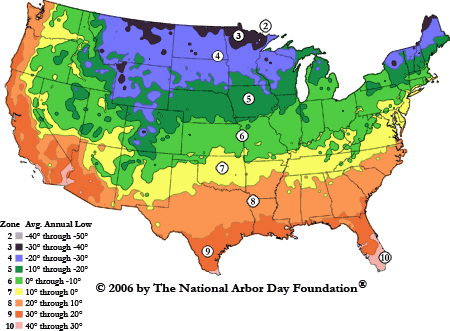
What planting zone is Toms River in? By the maps it appears to be inbetween 6 and 7.

Toms River is in Zone 7. The newest hardiness Zone Map clearly shows this.

In another location of the arborday.org site, it specifically shows Toms River as Zone 7.  See here.

To understand how these maps are made you can read the information on the American Horticultural Society site that also has a map that can be downloaded or bought.  See here.

And always consider contacting the Toms River, NJ local Master Gardener helpline at 732 349 1245- in the Toms River Area they are open from 9am-12noon during the week.
Â