Novalis® Plants that Work®

The following FAQ information was provided by the PR people from Novalis:

Frequently Asked Questions

What is Novalis®?

Novalis®, an alliance of top annual, perennial and woody ornamental growers who market exclusively to independent garden centers, re-wholesalers and landscape professionals, is making its mark in the green industry and changing gardening for plant lovers from coast to coast. Novalis®, which means “to cultivate new ground” in Latin, is a growing power in the horticultural industry today. A national alliance of wholesale nurseries whose plants are available in almost 2,000 independent garden centers across the country, Novalis® sells distinctive, high-quality plants under its Plants that Work® brand umbrella and provides consistent marketing and merchandising power to its network. This equates to plant solutions for home gardeners everywhere.

Continue reading “Novalis® Plants that Work®”

Two More New Plants Coming Out In 2008

In the last post, TheGardenLady reported about three plants that will be coming out in 2008, Hypericum ‘Mystical Beauty’, Philadelphus ‘Snow White Sensation’ and Hydrangea macrophylla ‘Mystical Emerald’.  Here are two more plants that are coming out in 2008, according to Novalis, the group that introduced the Double Knock Out and Pink Double Knock Out roses.

Gaillardia Commotion ‘Tizzy’

clip_image002.jpg

What’s all the Commotion? Another world class introduction from Skagit Gardens: a stunning pair of  new, vibrant, fluted Gaillardias! Skagit’s very own propagator, John Dixon, is a plantsman and visionary who set out to bring red color into fluted forms of Gaillardia. His push was toward double petals with  strong garden vigor. We are thrilled to report that his breeding efforts have been met with success, and with Skagit’s help, we are able to bring you the 1st 2 introductions in the Commotion™ Series. The Series shows strong, hybrid vigor, but still has a manageable, mounding habit. The petal count per bloom is higher than other fluted forms, giving a full, almost semi-double appearance. And color: well, that indeed stirs up a flurry of Commotion™! Early in the season, both varieties offer more red and burgundy tones, with hints of yellow. By summer’s end, orange plays into the red, making these beauties naturals for fall combination plantings. Whether you plant the pair in your perennial border, or use as bold, striking container centerpieces you’re guaranteed to enjoy the incredible number of blooms all season long!

  • Deep russet-red blooms open to flowers that range from red to rosy cotta
  •  Outlined with a hint of yellow
  •  Exposure: Full Sun Spacing: 24” Height: 18-24”
  •  Water: Allow soil to dry before watering Cold   Hardiness: Zone 5

Continue reading “Two More New Plants Coming Out In 2008”

Gardening In Maine Near Acadia National Park


Acadia National Park – Photo taken by beforethecoffee

TheGardenLady received this question from Clive:

I am a UK citizen and live in England.  Recently I purchased some waterfront land looking out towards Acadia National Park, in Down-East Maine. In the next year I hope to have an all-year-round house built on the land, which I hope to visit a few times each year. For the most part the land is wooded with some cleared areas going down to the tidal beach, with a deepish gulley as the boundary to one side of the land going down to the water. I am keen to find about any plants that I could introduce. I intend to keep the land (apart from a small grass-mowed area around the house) in a ‘wild’ state for the benefit of the plants and wild-life. Can you suggest any plants/shrubs/trees etc., that I might consider planting – given the fact that they will not be tended? The total area of land is about 7 acres. Any help that you can give would be much appreciated.

Congratulations on getting a summer home in one of the prettiest states in the US and wanting to garden there.  As a Brit. I feel certain that you will create a showplace. My suggestion would be to plant plants native to Maine. Of course, you can plant other, non-native plants, but this column will support planting native plants.

Continue reading “Gardening In Maine Near Acadia National Park”

Plants That Brighten Up The Dorm Room


TheGardenLady received this question from Chance.

I’m going off to university next school year, and I’d like to grow something in my dorm room (hopefully organically) to brighten things up.  I’d like to have something I can throw on salads or sandwiches and something else that’s a bit bigger (maybe flowering?)  I’m not too hot on having a bunch of vines, though…

TheGardenLady is so pleased to hear from so many college students or college bound students who plan on having plants in their dorm rooms. Nothing can be lovelier.

Because of the questions about appropriate plants that grow in dorm rooms, please let TheGardenLady direct her readers to the archives. Many plants that grow well indoors have been suggested and discussed in earlier posts.

For example What Flowering Plant is Good to Grow in a Dorm Room?. The plants mentioned in this column are favorite indoor plants like Amaryllis and paperwhite narcissus that are easy for the busy student to try.

Continue reading “Plants That Brighten Up The Dorm Room”

Planting Flowers in Maine


TheGardenLady received this question from Maryjane:

I summer in Maine under white and Norway pines.  The soil is acidic.  I want to plant flowers. What suggestions can you make for raised beds?

How lovely to summer in Maine and create your own flower gardens.

Your letter does not say whether you want to plant annual or perennial flowers to enjoy during the summer. Do you want a show garden or a cutting garden? Or do you want to plant flowering shrubs like azaleas, hydrangeas or roses?

There are many annual and perennial flower suggestions for flower beds. To decide what you would like that grows well in your area, it would be nice to walk around and see what is growing nicely in your neighborhood.  Besides the soil acidity,  you have to consider the amount of sun or shade where your beds will be located; so looking at your neighbors gardens or public gardens will let you know which plants are most successful and which plants you like. Since you are writing to TheGardenLady at this time, you apparently want to get an early start on choosing your plants or seeds and won’t have the time to look.

Continue reading “Planting Flowers in Maine”

Is There A Plant To Honor A Boy Named George?


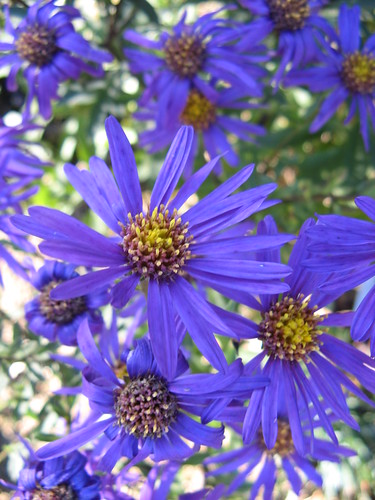
                             (Aster Amellus) 

TheGardenLady received this question from Helen:

I have a friend who has recently lost a little boy named George, and I was wondering if there is any flower or plant that represents this name.

I think your question is a beautiful one – to honor a little boy named George.

When plant breeders create a new cultivar, they often name it after someone.   See here or here.   Sometimes the name they give is for a person who is from royalty or someone famous; many roses are named after actors.

TheGardenLady presents a short list of plant cultivars with the name George in it.

Continue reading “Is There A Plant To Honor A Boy Named George?”

Outdoor Gardening Things To Do In The Winter


It is January and though it is winter for many of us there are still a few outdoor gardening things we can do.

If your ground is not frozen, you can still take soil tests  – take separate tests for lawns, vegetable and flower gardens or shrub borders. You can get your soil test from your local extension office.

And if you soil is not frozen you can apply lime as needed – your soil test results will tell you if you need lime (do not apply lime if your ground is frozen).

You should still be adding organics (your garbage) to your compost pile or bin see TheGardenLady10/24.

Whatever time of year, all year round, you can always prune Dead Wood on trees, shrubs and vines. Be sure the wood is dead when you are pruning in the winter and not just dormant.

But if the ground is frozen or there is lots of snow, this is the best time to be snuggled indoors reading all those gardening books you received this holiday season or borrowed from your local library. And now instead of fattening sugar plums dancing in your head, you can plan and have dreams of your garden in 2008.

Continue reading “Outdoor Gardening Things To Do In The Winter”

Christmas Themed Plants

Mistletoe

TheGardenLady received this question from Sally:

Are there any other Christmas themed plants other than the mistletoe?

There are numerous Christmas themed plants and there is a long and interesting history of the reasons for the use of these plants during the holiday season. Many of these holiday themed plants are used in the US today. TheGardenLady will touch on some of the most popular Christmas plants. Common holiday plants are listed in this website, where there is a lot of interesting information given besides the list of holiday plants. In other parts of the world they may also use different plants.

The first Christmas plant materials, as told in the New Testament, were Frankincense and Myrrh. Both are resins of trees used as incense or fragrances. They were the most expensive substances in early history and were therefore the highest tribute offered. Both were and are used today as fragrances. Franckincense is from the Boswellia sacra tree and Myrrh is from the Camphor tree, Commiphora myrrha. They are are found in Oman, Yemen and the Northeast part of Somalia. Oman still produces perfumes made of Frankincense or on Amazon.com you can get soap made of Frankincense and Myrrh- All Natural Bath Soap – Frankincense & Myrrh Zum Bar Soap by Indigo Wild, 3oz. or Frankincense and Myrrh can be bought as fragrant oils or for incense.

Continue reading “Christmas Themed Plants”

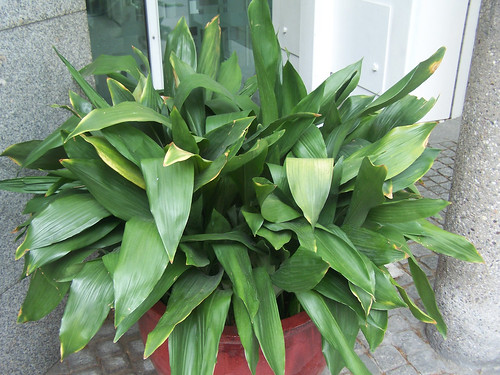
Aspidistra: The Cast Iron Plant


TheGardenLady received this question from Rachel:

I’m at college studying floristry and I’m trying to find the seasonal availability for Aspidistra but can not find it anywhere.  I was wondering if you could help me on that one please.

The Aspidistra is a plant that is a native of the Eastern Himalayas, Taiwan, China, and Japan.  In the US it is grown as a houseplant unless you live in Zones 7 (preferably 7b) and warmer climates.

In the warmer climates the Aspidistra plant is grown outdoors as an evergreen foliage plant.  (You can attempt to grow it in Zone 6b provided you don’t have temperatures dropping too low because a hard winter will knock the leaves off, or, although they probably will grow back by June because the root is so tough, will look ratty if frozen.) (In 6b you can attempt to grow Aspidistra outdoors if you put a wire container around it and fill it with a mulch of something like leaves or boughs of evergreens to a depth of a few feet during the winter.)

Continue reading “Aspidistra: The Cast Iron Plant”

Protecting Encore Azaleas from the Cold


TheGardenLady received this message from Encore Azalea:

Cold temperatures are quickly approaching and Encore Azalea® would like to help you prepare for winter’s frost.

Azaleas, like most plants, may need protection during freezes and extremely cold weather. If you feel that your Encore needs protection, any cloth material such as  burlap, old blankets, or sheets can be used to cover your plant.  It is recommended that you drive stakes in the ground around your Encore and drape the cloth cover over stakes.  Foliage in contact with the cover can be injured, so try to minimize cover contact with plant. 

Mulch heavily to protect the Encore Azalea’s roots.  Also, reduce water before the first frost.  Then, after a couple of hard freezes, water well to provide moisture.  This will help the plants to go dormant, or “harden off”. 
 
For more information on Encore Azalea®, please visit this site. Â