Preventing Herbs from Getting Leggy

TheGardenLady received this question from Sarah:

My daughter and I planted 3 herbs from a pretty herb kit we got as a gift –
basil, parsley and thyme.  They’ve come up, but are pretty spindly.  Are they
just not getting enough light?  Or, is there anything else we can do?


The Nov. 13th column on Indoor Herb Gardens stresses the need for sun. It says that herbs need a minimum of 4 to 5 hours of sunlight.  But a maximum number of hours of sunlight is preferable for the herbs to really thrive. More information on raising herbs can be found on this website. Many herbs are native to Mediterranean countries where the sun is bright for their growing season. Thus when you keep a plant indoors, you try to give the plant what it likes best. So if you have a sunny southern exposure, your herbs will be happiest.

To get the herbs to grow bushier, you should pinch off the terminal bud of the plants and pinch off any flowers you see. The more you snip off these buds, the better.

Herbs, native to the Mediterranean where it is dry, don’t like their roots to be too wet; so make sure the soil is well drained. You can let the soil dry between watering.

Let TheGardenLady know if you and your daughter can now coax your herbs to grow bushier.

Composting and Worms

TheGardenLady received emails from two people asking questions that are similar. I will try to answer both together as well as saying a few words separately to each.

Laura King wrote:

I wanted to know more about composting and what kinds of things I can put in it. I heard so many different things, I know what not to put in but not everything I could be adding.I also want to know if I can add my used tea bags to my rain barrel? Thanks for your help.I just found your web site, so tomorrow when the ids are gone I’ll be back.Thanks for a great site. Laura your friend in dirt.


Jay wrote:

Heard that putting worms in garden makes the garden grow better. true? How about in flower pots or boxes? inside?


Continue reading “Composting and Worms”

Caring for Daffodils

Fran asks TheGardenlady the following question:

My mother gave me a (small) pot of gorgeous and very leggy daffodils to take to my office. They have really brightened up my desk, but I am worried that I might have killed them. A few leaves are turning yellow/brown at the tip, and several new flower buds did not bloom, but turned brown and shriveled. I have been good about watering the plant and caring for it. Does it want more sunlight? Do office environments generally kill flowers like daffodils? Thank
you so much for any help you can give!                                                 

Not knowing about the culture of the bulbs before they were brought to you, nor seeing the plant’s condition, I cannot say much about the cause of their dying in your office.  Bulbs that were forced needed good, fertile soil as well as fertilizer in the soil when they were starting to send up shoots in order to have healthy flowers.
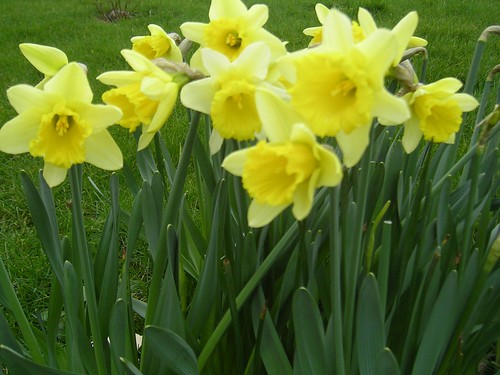
When the bulbs are in flower indoors they need a lot of  bright light, some say sunny spot or artificial lights to grow  properly and not leggy.  Office lights can be good for flowers if they are close enough to give light during the day and are shut off at night. Daffodils don’t want light 24 hours.

Continue reading “Caring for Daffodils”

Growing Roses in the Garden

Joe asks TheGardenLady the following question:

I would like to try to grow roses in my garden. I’ve heard some varieties are very difficult to grow. Can you recommend a variety that is fairly easy and what suggestions you may have to make them look their best?                                                    

Many roses are high maintenance. They generally want a minimum of 6 hours of sunlight. They like nice loamy soil – use your compost for best results. Roses want water, but the soil should have good drainage. And to avoid diseases, try not to do overhead watering. Water the roots not the leaves.  Roses like to be fed nutrients that might be missing in the soil. Roses get diseases – they like good air circulation, need pruning and need spraying for diseases. They attract insects like the Japanese beetle. And deer love to eat roses in spite of their thorns.

Continue reading “Growing Roses in the Garden”

Hostas: Plants that Need Little Sun

Joshua wrote:

I need a good, medium sized shade plant for a corner that receives very little sun. Any recommendations?

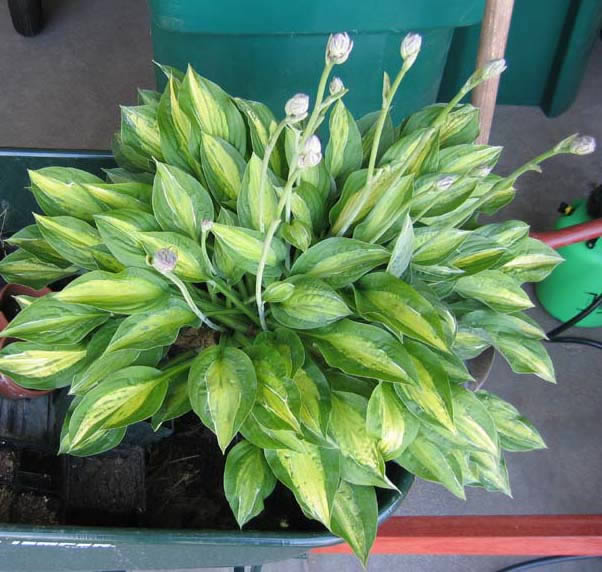
When you have a corner of your yard that does not receive much sun,
consider the Hosta – see pic. There are so many different leaf sizes, variations
in colors, textures and shapes in the Hosta family that you will have fun choosing a favorite. And you might even get them to bloom for you.
One shade garden I will be touring this summer has over 2000 varieties planted.

What’s In a Name?

The GardenLady received the following question from a Mr. Lima: 

I have a friend named Glaucia. I heard a few days ago about a flower with this same name.  Can you help me find something about this flower, perhaps an internet web site, even a link… Please!! I´ll be very happy if I can show my friend the flower with her name!!

Because Valentine’s Day is coming, TheGardenLady would like to help find a romantic link between a flower and a name.

Continue reading “What’s In a Name?”

Encroaching Lawns

I received this question from Rosita:

Cuento con un pequeño jardina frente a la casa como hacer una guarda
protectora para el cesped?

The Garden Lady was told that Rosita is asking for a way to protect
her lawn from encroaching into her garden. This can be a big job but
the end results will look very professional.

The Garden Lady thinks the simplest method yet a very attractive
solution is to use a manual or power edger and just cut a clean edge
between the lawn and the garden.

Continue reading “Encroaching Lawns”

Killing Parasite Vines

I received this question from Ms. Frye:

I need to know how to kill a parisite vine.  It has elongated,
heart shaped leaves, no blooms.  It has all but ruined my miniture
rose bush and my hydrangia. I try to pull it up by the roots, but it
is very fast growing and aggressive.

For the Garden Lady to identify a plant or a weed, a reader must send
in a clear, close up photo or a few photos of the plant in question .

There are many invasive plants with heart shaped leaves (see here and here).
Without seeing the plant, the Garden Lady would just be guessing what
the plant is.

When I first read your question The Garden Lady thought you were
speaking of one of the most invasive plants with heart shaped leaves,
Japanese Knotweed.  But the Japanese Knotweed does have flowers.  

If you live in the US , take a good sized sample of the weed in
question to your local Master Gardener Office where they will identify
the plant and give suggestions to get rid of the weed.

Pansies

The Garden Lady is really upset with herself. As I drive around town and see how lovely the pansies are that people had planted this fall, the Garden Lady wishes that she had planted them.

Are readers aware that pansies are lovers of cool nights and slightly warmer days? See here. In the past this had described the early spring when pansies were planted. The pansies planted in the spring would bloom their heads off
until the weather became warmer and other flowering plants bloomed. They are especially pretty in window boxes in New England where the spring weather stayed cool longer. But when the weather got hot, the pansies would die.

Then it was discovered that if people planted pansies in the fall, they would bloom twice. They would first bloom in the Fall when they were planted. They would go dormant in the winter. And then those fall planted pansies would bloom a second time in the early spring. The cool nights and those slightly warmer days were perfect for the pansies’ need. It is really heat that kills them not cold.

Well, with this warming winter trend, those people smart enough to plant the pansies in the fall are enjoying an extended bloom period of those fall planted pansies. It has been cool enough to meet the pansies need for a longer period yet not too cold nor too hot (see here). So the Garden Lady regrets that she didn’t plant pansies this fall.