Creative Gardening to Deal with Problems – Part II

Curbside flower bed by anarchitect

In the last post, TheGardenLady talked about creative ways of dealing with problems when gardening.  TheGardenLady mentioned “limbing up” of the trees on your property.  This means to cut the lower branches of your trees to see if enough light will now get to your plants.  If limbing up doesn’t work, find out if planting that strip is legal where you live. Some areas have outdoor restrictions.

If you are allowed to plant on the strip, the most important thing to do before planting on the strip or even on your front lawn is to utilize Safe Excavation Practices. Each state has a place where you can phone to know what is below where you are digging. This is your state’s Underground Damage Prevention Program. Most states have an 811 number. It is the law. Call them before you do any digging to be safe. Most flowering plants are fairly shallow-rooted, so there should be no problem. Still you cannot assume that underground facilities are at a certain depth.

Continue reading “Creative Gardening to Deal with Problems – Part II”

Creative Gardening to Deal with Problems – Part I

Creative Garden landscape Car by epSos.de

ThisGardenLady grew up on a farm where there were always flowers. Though my mother did not have a nursery, she raised so many flowers that she did sell bouquets of flowers in the summer months.

So when I bought the property where I now live, I wanted large colorful flowers. But I couldn’t find a good place to plant them on this property because the original owner had planted sycamore trees- two in the front yard and three on the side of the yard. And in the back yard along the stream the property looks more like an old forest type of land. It is very pretty to look at and the trees keep the property cool during the heat of the summer. But this kind of property is not the kind that big flowers like. It is not the kind of environment for roses, for example.

Very few people find a property that has it all- a perfect place for a flower garden and a perfect place for a vegetable garden, etc. We all have to compromise or make do in the most creative way we can.

Continue reading “Creative Gardening to Deal with Problems – Part I”

Flowers are Blooming Earlier than Usual – What Does this Mean?

A splash of colour in the gloom by Steve-h

It is obvious on our planet that the weather has changed. The earth is warming. Many parts of the US are seeing flowers in bloom approximately a month earlier than usual.

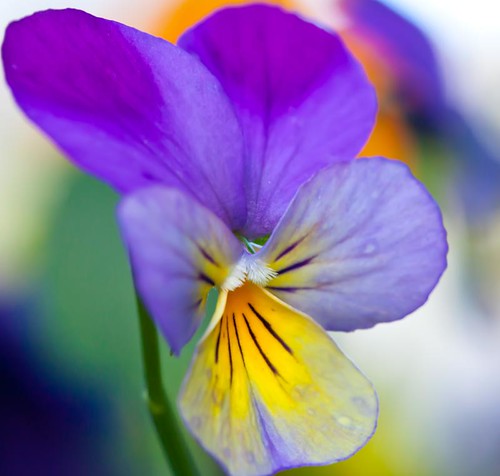
In my area, the hellebores have been in bloom for months. Snow drops and crocuses are flowering and now the daffodils are open or opening. Pansies are having their winter show. What this will mean for gardeners and farmers will have to be seen.

Gardeners seem to be advised to start planting some early crops already. Peas which were historically planted on St. Patrick’s Day in my temp zone, can be planted now. The Farmers’ Almanac has this year’s calendar for planting.  Besides earlier planting, what the temperature changes will bring will also have to be seen. We may be getting more pests, we may have less water to use on our plants or we may be able to grow bumper crops in areas certain crops were never grown before.

Continue reading “Flowers are Blooming Earlier than Usual – What Does this Mean?”

2012 Flower and Garden Shows

Kiev Flower Show, 2010 by Roads Less Traveled.

It is that time of year again – for Flower and Garden Shows.

An early one, starting on Thurs. Feb. 16th and running through Sun. Feb. 19 th is the New Jersey Flower Show.  It will be held in the New Jersey Convention & Expo Center in Edison, New Jersey 08837. If you have any questions I believe you can phone for up-to-date information, schedules and directions, 1-800-332-3976 and visit www.MacEvents.com where they say you can get two for one tickets.

For a more complete list of Garden shows around the United States, by state, check out About.com’s gardening section.  See here.

Or if you are traveling around the world, check out some of the flower shows in the country of your destination.

Continue reading “2012 Flower and Garden Shows”

TheGardenLady Wishes You a Happy New Year!

HAPPY NEW YEAR by rkramer62

I want to wish TheGardenLady.org readers a happy new year, 2012, of Glorious Gardening. May all your gardening wishes and dreams become reality.

TheGardenLady’s wish is that more of my readers share their gardening stories as well as photos with this blog so that we can enjoy your garden successes and even failures.

We want to share in your joys and sadness and learn with you.

How TheGardenLady Identifies Plants

ForageSF by Jaymi Heimbuch

What does one do if one does not know the name of a plant that has no label or tag on it?

Two friends came to me this week with just such a request. I am pretty good at identifying plants that grow in my temperature zone 6 and try to recall the Latin name as well as the various common names of these plants. I also pride myself on being able to identify many of the native wild flowers or plants in my area. But there are so many flowering plants in the world, that it is impossible for any person to be able to name them all.

For a scientific account on the number of plants in the world, you can read this article. One of the sources I use says it lists 15,000 ornamental plants in the book. So though I know a number of tropical plants or plants that grow in different temperature growing zones, there are too many for me to really know. But when friends come to me and ask me to identify a plant, I am challenged. Then I am like a bulldog with a meat bone tenaciously trying to find the name of the plant in question.

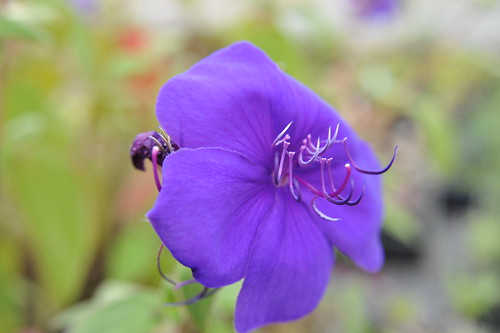
tibouchina urvilleana by nestmaker

This week one plant that was fairly easy for me to identify was the Tibouchina urvillieana- Princess flower or glory bush because I had seen it before.  See here.  This gorgeous flower is a native of Brazil but is a noxious weed in Hawaii. In our temperature zone 6 it has to be taken in for the cold weather because frost will kill it. It will grow in zones 9-11 and perhaps zone 8. If grown indoors, grow Tibouchina in a soil-based potting mix in full light with shade from the hot sun. During the growing season water it freely and feed it a balanced liquid fertilizer monthly but water sparingly in the winter. If you grow it outdoors, grow it in moist fertile soil in the full sun.

Continue reading “How TheGardenLady Identifies Plants”

Trying to meet the challenges of gardening

NOT ME!! I DID NOT EAT YOUR FLOWERS! by Snap-Smith

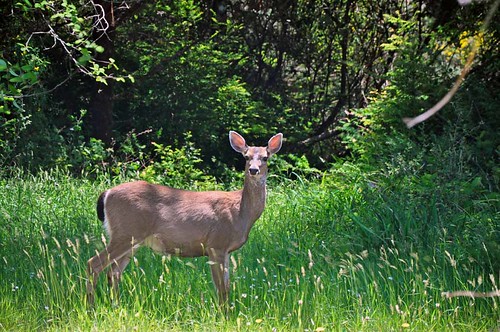
Gardening can be a serious challenge for the gardener.  Consider the weather.  Who knows what to do in a profound drought like the one the MidWest experienced this summer? You cannot water plants when the water level goes down too low. Who knows what to do in extensive floods like the ones the MidWest experienced earlier in the late spring/early summer? Consider the insects.  They either go after the garden, like Japanese beetles do, or they go after the gardener, like the mosquitoes or gnats.  Consider the wild animals.  Everyone knows about the problems caused by deer or rabbits.

But we humans are the smart creatures on this earth who should be able to solve these problems. Aren’t we?

We have had dry weather where I live, so I water my flowers daily. I am religious about this job. But the next day after I water my plants, they still look wilted and sad.  I tried holding some basil between my lips as I was told that Italian farmers did to prevent mosquitoes. I wasn’t bitten by the mosquitoes, so maybe the basil helped. And I sprayed my flowers with Liquid Fence to deter the deer and rabbits. But they, too, want what I plant.

Continue reading “Trying to meet the challenges of gardening”

Thanks for Your Comments and Questions

Red, White and Blue flowers by fayemozingo

TheGardenLady gets a number of interesting questions, comments and garden related links sent to the blog. I look forward to readers taking the time to comment or ask gardening questions. I am very appreciative of each and every thought that is sent to my blog. For example, I was appreciative of the lady who enjoys Agastache in her garden and enjoyed my comments on the plant, or the frustration of gardeners who have problems getting rid of the plant with the common name ‘Snow on the Mountain.’ This GardenLady not only finds out what readers are interested in when it comes to plants, but I learn from my readers.

Some of the comments are sent to older posts. So I hope the readers of TheGardenLady blog take the time to go through the archives and reread the posts and check to see if there are any new comments at the end of the posts.

Continue reading “Thanks for Your Comments and Questions”

Getting Rid of Squirrels

Basic Squirrel Information

Squirrels are one of the few wild animals that have learned to coexist with man. With over 365 species found throughout the world, squirrels live in virtually every park, forest, and backyard. The most common squirrels are the ground, the tree and the flying squirrel. They are omnivores, which means they will eat most anything, scavenging through garbage cans, open garage doors, and gardens. Squirrels come in a variety of colors, including shades of brown, gray and even pure white and pure black. Typically squirrels are most active 2-3 hours after sunrise and again before sunset, resting the time in between. Although when trapped in an attic, they are often active during the night. (Squirrels)

The Damage Squirrels Cause Inside and Outside the Home

Squirrels are on the list of some of the smartest animals, making them masters at the art of deceit. Plus, their specialized feet and claws allow them to climb vertical walls, including brick and aluminum-sided homes. They are persistent and learn quickly, making them especially suited to wreaking havoc inside and outside the home.

These intelligent creatures will work hard to gain access to homes, utilizing their razor sharp claws and teeth to gnaw their way in. Access points consist of damaged trim, exposed soffits, chimneys, gable vents, rooftop ventilation fans, and any other tiny hole. Because of their build, squirrels only need a hole the size of their head to squeeze into your home. Once inside, they will destroy whatever is in their path while searching for food, even breaking through sealed containers. They will eat almost anything made from natural ingredients, including holiday decorations, dried flower arrangements, and decorative pinecones. They will soil the area, making a mess for homeowners to clean and sanitize. Squirrels will even chew through pipes to get to water, which could create flooding and expensive repairs. They can also destroy homes because they start fires by chewing through electrical wires. (Squirrel Nuisance Problems)

Continue reading “Getting Rid of Squirrels”

Winter Flowering Plants – Part III

Hamamelis x intermedia ‘Primavera’ by Tie Guy II

In addition to winter-flowering flowers (see here and here), there are also winter flowering shrubs. Many of these shrubs are hardy in US hardiness zones 5 and warmer.

One of the earliest blooming shrubs is the witch hazel. Witch Hazel, Hamamelis intermedia “Pallida” is considered one of the best to open in mid to late winter.  See here.  Friends eagerly went to view the one that opened early in a local garden. Many of the Hamamelis have the added bonus of fragrance. Plus the witch hazel has fall interest with colored foliage.

Continue reading “Winter Flowering Plants – Part III”