Begonia Grandis

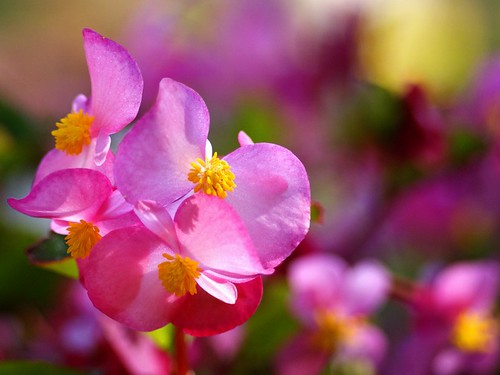
ベゴニア/Begonia grandis by nobuflickr

This past weekend TheGardenLady visited a lovely garden in Bryn Mawr, Pennsylvania. The owner wanted to show me what she had in bloom. Under the trees in the shade and growing in the pachysandra were her hardy begonias – begonia grandis. She especially wanted to show off these plants that were now in flower because she had learned about Carolyn’s Shade garden from the TheGardenLady’s recommendation. This is where she bought these begonias as well as all her other healthy shade plants. And these hardy begonias were not only hardy because they overwintered but because when they are happy and they were so happy in her garden that they are popping up all over. And the flower display was so lovely – flowers with the bonus of a light fragrance.

TheGardenLady had always loved begonias and was familiar with annual begonias, Rex begonias and tuberous begonias but it was only a few years ago that I learned that there was a hardy begonia that would overwinter in zone 6. This was when a friend gave me a baby begonia grandis plant. This plant grew in my garden for a few years but this year’s drought killed it. I am so sad and plan on getting another next year.

Begonia grandis originated in East Asia – China and Japan and is the most cold hardy of all the begonias. It grows as a perennial in temperature zones 6 through 9. In zone 5 it is considered a tender perennial which means that it might survive with a good covering of mulch but you would be safest to take it indoors for the winter. Hardy begonias bloom in late summer and autumn and will propagate itself by seed and bulbils formed in the leaf axils. The plant grows about 2 feet tall and likes part to full shade – it does not really want afternoon sun. It tolerates morning sun and this allows you to see the red veins in the leaves. Begonia grandis seems to tolerate all soil types but likes woodland soil best and tolerates all pH levels though it prefers neutral to slightly acid soil with good drainage and average watering. It can be used as a ground covering.

Continue reading “Begonia Grandis”

Spruce Up Your Garden for Less

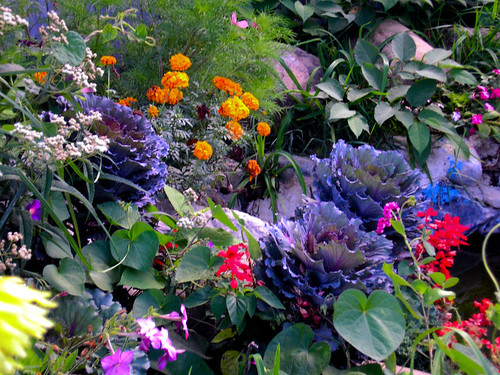
Julia’s Garden by Allie’s.Dad

TheGardenLady has invited people with horticultural interests and expertise to contribute posts to this blog. The following post is about saving money on gardening and was submitted by Rachael Miller. She is is part of the vouchers team at moneysupermarket.com, which sponsored this post.

A garden can be your sanctuary- a place to relax, to host parties and even to grow your own food.  The problem is that creating your sanctuary can take up a lot of time and be expensive.  If you have green fingers, doing a spot of gardening may be your idea of heaven, but the hefty price tags for flowers, plants, garden furniture etc, can be hell for your bank balance.  Read this guide on how to get gardening products for less.

  • Use vouchers.  You might not associate vouchers with buying gardening products, however seeing as the vouchers market has grown by 50% year on year since the beginning of the recession, more and more retailers are deciding to offer discounts.  Before buying any gardening equipment, be sure to check for vouchers for the specific retailer you’ll be buying from.  You might be able to get some B&Q vouchers, or money off discounts for other big gardening retailers.  You can save a lot of money by taking advantage of the growing vouchers market, so never buy anything without one!
  • Shop online – this is another thing you might not associate with gardening, but you can grab some great bargains by shopping for anything garden related online.  You can find some excellent products such as weed killer, compost, garden furniture and ornaments- things that you don’t necessarily have to see up close before you purchase.  Plants are a different matter as you’ll more than likely want to see these before you buy. Also, see what people are selling- you may find you can get great deals on auctions sites.  Shopping online is a great way to compare products and their prices.

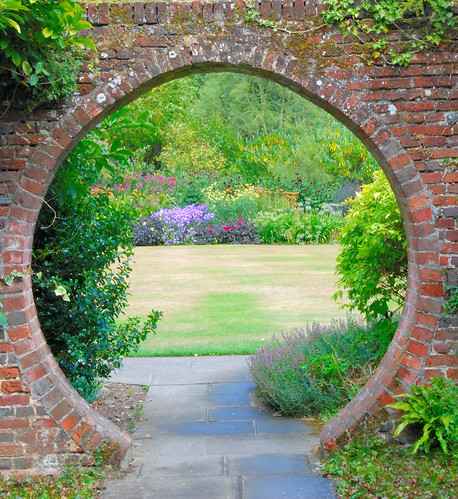
Great Comp Garden in the Round by antonychammond

Continue reading “Spruce Up Your Garden for Less”

The Amazing Effect of TheGardenLady’s Garden

TheGardenLady’s Garden in Bloom

TheGardenLady’s garden is a flowering garden. I attempt to have flowering plants for as long as the year allows flowers to bloom.  I recently found the book Continuous Bloom by Pam Duthie in the local library and was pleased that I had almost every plant she suggested blooming in my garden. (I have more than Duthie suggests because she only writes about perennials and I have a lot of flowering shrubs and add flowering annuals.)

The earliest plants to flower in my garden are Hellebores, which open in the winter. Can you believe that one Hellebore plant is still in bloom? From that first flower, I insist on having flowers in continuous bloom.  Some of the flowering plants blooming now are echinaceas, buddleias, brugmansia, phlox, among others.  These blooming flowers are mostly along the street where there is most sun and fewest tree roots so everyone who passes the house sees the flowers. This is not a hidden garden.

Because of the problems of the property, my garden is not a particularly beautifully landscaped garden. But because of the visibility of the continuous blooms, the most interesting sociological phenomenon has occurred. This GardenLady thinks the phenomenon is amazing.  She thinks that someone should do a study about it. What has happened that I find so amazing is that every day, more than once a day, mostly when I am out working in  the garden, people stop to tell me how much they love the garden and how beautiful the garden is. I say that it happens mostly when I am in the garden, because sometimes when I am in the house people come to ring my door bell to tell me how much they appreciate the garden. Many of the people are neighbors or people that I know but most of the people are complete strangers. People stop their cars to tell me of their enjoyment. Many of these people have become new friends.  People tell me that they love seeing the flowers so much they purposely drive out of their way to see what is in bloom. Complements have ranged from “You have created a little piece of paradise” to “It is another world walking past your garden”  to a two year old asking if any flowers had more than one color. I showed him my lantana flowers.

When I grew up in the small farming village, this was a common occurrence. People would stop over to discuss gardens and plants all the time. But in the town I have now been living in for about 38 years, people were more formal. People would never just drop over. I missed the friendliness of the town of my childhood. But now my gardens have brought this friendliness back. As I said, I am amazed. Neighbors now drop over and strangers stop and talk or ring my doorbell and talk. This garden attracts people as it does birds, bees and butterflies.  I have met such lovely interesting people of all ages. Today a young man who looked like he was in his twenties stopped. I have been invited to see other people’s gardens – people who don’t live in my town. I now can give plants to people when I divide plants instead of composting the overgrown plants. People have offered me plants that I don’t have.

I can not tell you how much I enjoy this phenomenon. In a more and more impersonal world, my garden is bringing people together. Who would have expected?

Things To Do When Gardening in July

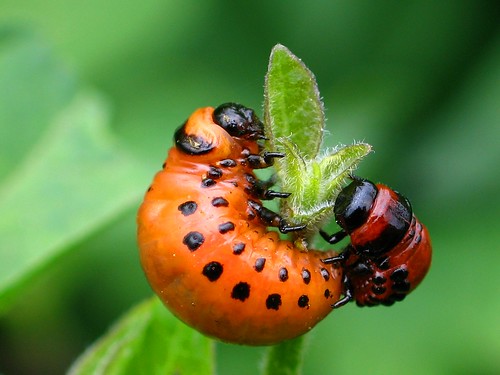
Colorado potato beetle larvae dining on nightshade leaves by imarsman

July is the time to work in the garden -  so get up early before the sun gets brutal.  A few of the jobs to be done in July are:

Water plants: If you live in an area that is having a drought, you will have to water. With the heat of summer and the drought,depending on your plants, many will need to be watered frequently. How to water correctly is often misunderstood. A good site for information on proper watering is this.  And because water is becoming more and more of a rare commodity, with a drought might come prohibitions from your township on using it outdoors on your grounds. So you will have to check with your local government to see if watering outdoors is being allowed.

In times when water is rationed you might want to use what is called gray water to keep the plants alive. Gray water is the water used in your house for washing, etc. – all but toilet water. The proper usage of gray water is explained here.

It is best to water before the sun comes up. It is best to soak the soil around the roots of the plants rather than to spray water over the tops of the plants. First, it saves water. Less water evaporates when you soak the root area. And for some plants, especially roses, watering the leaves can cause fungal problems like black spot – if the plants are susceptible to the disease.   When you water it is best to soak the plants deeply so that the roots stay down in the soil. Shallow watering can cause roots to more upwards.  See here.
Continue reading “Things To Do When Gardening in July”

TheGardenLady’s Love of Poppies

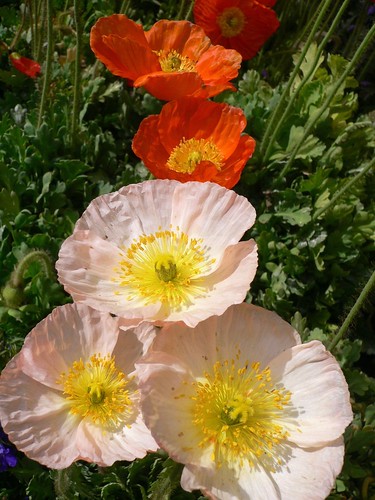
Papaver nudicaule (Iceland Poppy) by Luigi FDV

TheGardenLady hopes to write about each type of plant on her property. To start off the list, I would like to talk about the Iceland poppiesPapaver nudicaule.

I love poppies and have tried, unsuccessfully, to raise them for years. The major reason, I believe, I have not had success is because my property is mostly shaded. I may be wrong because a friend had poppies along the back of her house for years and I usually visited them when there was shade.  I just do not know the amount of sun she had in this location. If she had at least 6 hours of sun, then they would thrive. Poppies need a lot of sun.

My friend very generously gave me poppy plants.  I believe they were the oriental ones, but they always, sadly, left my garden after one year of bloom and never returned the second year. But I am persistent and try planting plants in different sites on my property in the hopes that one spot will make the poppies happy enough to return the following year. Mostly I have planted the Iceland poppies because I love orange and yellow in the garden. None has ever reseeded.

This year once again I planted Iceland poppies in three different sunny spots. This year I also planted seeds of the California poppyEschscholzia Californica. A neighbor has them and they reseed and bloom for him in the same spot every year. I hope some of the California poppies will take- I forgot where I planted them, so I am hoping one day as I inspect my garden some California poppies will appear to say, “We’re here.”

As I said, I had never been lucky enough for my poppies to reseed. But this year I saw a strange plant in one flower bed. To pull or not to pull was the question. It was such an unusual looking “weed” that l left it thinking that it didn’t look too difficult to pull if it later turned out to be an obnoxious weed. Then a second “weed” started growing across the walk from the first. The first “weed” kept growing and growing. I kept asking gardener friends if they could identify the plant. Most thought it looked like lettuce. So to really ID the plant, I needed the flower. The second plant grew much more slowly. Then, voila, one day I saw the buds on the first plant. They were the give away. Finally, after many years of trying, I had an Iceland Poppy that had self seeded. Now almost every day my “weed” produces a pink flower for me.

I read that pink is the recessive Iceland Poppy color. I had never planted a pink poppy. It is very exciting for me to see this 3 ft. tall poppy with its ethereal pink flower.  The second plant is just showing its first bud. I will be curious to see what color it is. And the three other Iceland poppies that I planted this year are orange and yellow.   Iceland Poppies are native to the northern parts of North America and Asia. They are said to like poor gravelly soil but the plants that self seeded for me are in an area richly mulched with aged horse manure.

I found some on-line sites that sell poppy seeds.  See here.  I plan on ordering the blue Meconopsis poppy next year.  See here.

The Importance of Pest Control in the Greenhouse

Spider mites by theGardenDeva

TheGardenLady has invited people with horticultural interests and expertise to contribute posts to this blog.  The following post  about the importance of pest control in the greenhouse was submitted by Ahmet Korkmaz.

In the last decade the field of agriculture has undergone many important changes and improvements. People from all over the world are interested in implementing the new ideas that are being advanced by researchers in this developing field.

Greenhouse plantation is one of the exciting advancements that that has been adopted by farmers from all over the world.  Some of the the fruits and vegetables that are commonly planted in a greenhouse include cherries, drupes, radishes, cabbages, and tomatoes. These fruits and vegetables require unique ambient conditions, which a greenhouse can facilitate.

In a greenhouse,  sunlight is amplified for the plants because it gets trapped under a glass cover with four walls, which shield the plants from the heat that is generated. This extra sunlight and controlled heat promotes plant metabolism and provides nice returns in the form of vegetables and plants.

There are other advantages of growing of plants in a greenhouse. The leaves and other shoot parts of the plant can be protected from different kinds of chemical attacks that are air-borne.  Also, many pests and insects can be avoided to some extent in a greenhouse.  But a greenhouse does not prevent all pests.

Common pests in a greenhouse

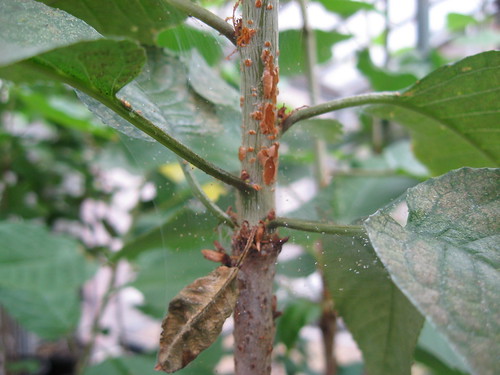
Spider mites (see photo above), weevils, white flies, aphids and leaf miners are common pests in a greenhouse, the most common of which are the spider mites. Weevils cause a lot of damage to the surface of leaves. White flies tend to attack the major part of root and shoot systems. Aphids can be deadly to the green parts of a plant by feeding on a pigment called chlorophyll. This drastically affects the plant’s overall metabolism.  Leaf miners cause damage in tomato plantation. These pests tend to bore into the leaf’s vegetative part, which renders the leaf unable to take advantage of sunlight.

Continue reading “The Importance of Pest Control in the Greenhouse”

Growing Plants is a Trial and Error Learning Process

Palouse Falls custodian -“Pete” by oldmantravels

When readers write to say how they struggle to save a marigold, I must tell readers that I have lost more than just one marigold given to me by a friend. There is a saying among gardeners that to learn one has to have killed one hundred plants. This may or may not be an exaggeration. My father-in-law jokingly said that being in the nursery business was the best business because plants were always dying and people were always replacing them. So though I came from a farm, the problems on this property where I have now lived for 35 years were so different from that sunny farm that I had to learn a lot.

For example, mine is a property with trees. Much of the property is covered with huge trees whose roots are wide and the tree canopy shades much of the ground. And where there weren’t native trees, the previous owners had planted sycamore trees that are huge. The farm was open and sunny all day long. You can’t really farm in the woods. Some of the trees on this property are black walnuts. Nut trees in general and black walnut trees specifically give off a toxin called juglone that kills many other plants. We never had one nut tree on the farm.

Continue reading “Growing Plants is a Trial and Error Learning Process”

The African Marula Tree

Here is a video in French that TheGardenLady thought was cute.

This is a video from a French documentary about a certain type of tree in Africa. TheGardenLady is not sure if the video is real and she believes that it is the African Marula tree (Sclerocarya birrea).  It’s also known as the Elephant Tree or the Marriage Tree.

Once a year, the African Marula Tree produces a very juicy fruit that contains a large percentage of alcohol. Because there is a shortage of water, as soon as the fruit is ripe, animals, big and small, belly up to the bar.

A 4th-grade student at the Lycee Francais de Chicago who goes by the name of Monkey Muesé translated the French for TheGardenLady. 

Selva means jungle forest.

“At the beginning of the season, the fruits are delicious but hard to get. You have to be really strong or very old (clever elephant). But after some weeks, the ripe fruits fall, so the animals come and eat them. But the fruit is very alcoholic and goes to their heads. So they all leave drunk.”

Despite the cuteness of the video, there’s no reason to believe that it represents what is true.  According to National Geographic News, there’s no evidence to support the view that elephants get drunk off of the fruit these trees.  Apparently, elephants’ biology makes them teetotallers.

Garden Landscaping for Beginners – Part II

This is TheGardenLady’s second post about basic garden landscaping.  If you’re interested in reading part I on basic garden landscaping click here.

When you’re doing your landscaping you will certainly want to check out the best nurseries in your area. Visit public and private gardens especially ones in your area to see what they grow and what you like. You can get into private gardens during Garden Conservancy Open Days.  See here. Find out what these gardeners recommend for planting in your area.  You can ask them if they had problems with the plants you are considering. Gardeners love to share their knowledge.

Clematis Vines Garden Landscape Arbor by Andrew’s Reclaimed Home…

Decide on plants that you might want to see growing in your garden. Do you want low maintenance plants or don’t you mind pampering plants?  Ask questions about the plants. One gardener might have a vine that you adore – so ask him if it gives him any problem, like the root sending out suckers ten feet from the planting that you might have to hack out someday.

Continue reading “Garden Landscaping for Beginners – Part II”

Garden Landscaping for Beginners – Part 1

Garden Landscaping by rainbow_landscaping

Because TheGardenLady has been asked about landscaping and/or choosing a good landscaper, TheGardenLady thought this would make an interesting column.

Below are a few suggestions for anyone who is interested in landscaping one’s property. There are many outstanding female landscapers as well as male landscapers. (The word “he” was used most of the time in this post just to make the writing of this column easier.)

Make sure you know your property or do what is called a site analysis.  Know where North, South, East and West are on your property. This is important because some plants prefer to get morning or evening sun and light. And when you plant, you want plants that will be happiest in a location. You want roses? They want sun, sun, sun; but some varieties will take just 5 hours of sun.  So if you write down notes to yourself telling exactly how much sun a spot gets, this will be very helpful in your planning. Know existing conditions on your property such as hills, or areas of elevation and if you have good or bad drainage. You may want to try to eliminate the problem or work with it.

Know the Temperature Zone in your area. Even within one state, there might be different Temperature Zones. Plants that grow in the Northern part of the United States might be unhappy in the South and vice versa and some plants might grow in a broad range of climates. A clematis that grows in Zone 9 or 10 won’t live outdoors in the winter in Zone 6. Or you might want a cactus garden, but if you live in NJ, it is trickier to plant cactus than it would be in Arizona. Yet there are some cactus that will survive in NJ, even in NJ winters. So be sure to check your temperature zone and be sure that when you buy plants, you buy plants that will survive and thrive in your area.  See here.

Most people want plants that are easy to raise in your area, but if you like a challenge like Wayne Daniels in California who raises tulips where they usually don’t grow (see here) you have to know the needs of the plants in order to accommodate them in your area.

Have your soil tested.  I cannot stress the importance of soil testing. And I really recommend using your local Master Gardening chapter or your local extension office. When you get it tested, get different areas where you want to plant different things tested in separate tests. For example, if you want a vegetable garden, test that area separately from an area that you might want to plant lawn. The tests will then send you back information for what to amend the exact amount for that need. Though the tests might cost a few more dollars than a soil kit you can buy in a store, you will get a thorough readout of what you have and what you need to amend your soil. And visiting the Master Gardeners with your questions and or problems is FREE. They will even explain your soil test results if you want – for FREE.

Examine your property and note what conditions there are. Note existing conditions on your property like hills, or bogs or areas of elevation and if you have good or bad drainage. Do you have walls blocking the sun or making a micro climate that might be hotter than the rest of your property? Are there trees?  If so what types of trees are on your property?  Few plants will thrive under nut trees and if you want perennials under the nut trees, be sure you get those plants that will live near a nut tree. You will also note, by the size of the trees or how large they can grow, how expansive a root mass it has or will get.

Locate wet or dry sites on your property to know what will live – for example land near a blacktop driveway or roadway may give off too much heat for some plants and might also be salted to remove snow – plants cannot tolerate excessive salt. And you would need different types of plants for under your rain spout.

Know your site boundaries and where the house is located on your property. When you are designing your landscaping, consider the views from both inside your house looking out as well as how the plants will look outside your house. You might even want to consider your neighbor’s house when you plant.  Do you want your neighbor to see your beautiful plants from his house? Or do you want to make a hedge so you and your neighbor can’t see each other’s house?

Check your soil consistency. You want soil that is friable, not compacted or if you live in a sandy area, you want to know what can grow in that type of soil. You can always amend the soil with the compost TheGardenLady knows you are saving.