Linden Hall Gardens


                                                Photo taken by Dara

I don’t know how much TheGardenLady’s readers enjoy visiting garden nurseries, but when TheGardenLady visits a really good nursery, she is like a child in a candy store. And when TheGardenLady recently visited
Linden Hill Gardens, she was in garden nursery heaven.  Here one can buy rare and current varieties of perennials and annuals as well as attend complimentary garden talks on special days (listed on their website.)


                    Photo taken by Dara

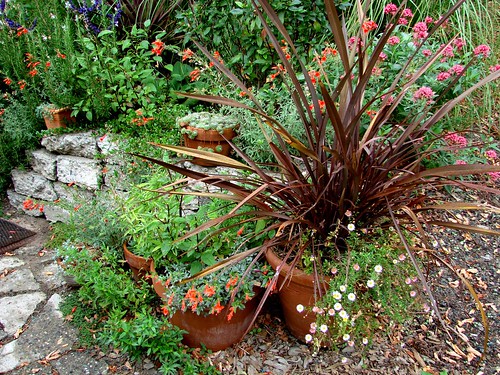
When one drives up to the entrance of Linden Hill, you pass masses of flowers in the Long Border edging the property on Route 611 and pass a very pretty Bucks County barn. Turning into the Nursery you pass another stunning garden, the Lower Parking-Lot Border. Then you get to the sales area of the nursery where you will pass through more delightful gardens surrounding the charming old buildings.

            Photo taken by Dara

Continue reading “Linden Hall Gardens”

Chicago: The Flower City

Chicago is one of the prettiest cities in the World. It is not only pretty because of the stunning location, the city edges Lake Michigan, and the interesting architecture both in the city and along the shoreline; but the city is beautiful because of all the flowers. It is a garden lover’s dream city. Flowers blanket the entire city, the roadways and cover the bridges. There seem to be flowers wherever one looks. Chicago should be renamed The Flower City. I read that as a priority Mayor Daley has a “long standing goal of making Chicago the most environmentally- friendly city in the world.” When taking a boat sightseeing tour we were told that whenever a new building goes up, at least along the waterways, the builder has to be sure to incorporate flowers along the frontage of these waterways. For flower lovers like TheGardenLady,  Chicago has to be the Flower City of the World.

Continue reading “Chicago: The Flower City”

The 2008 Perennial Plant Conference

One of the best ways to learn about gardening is to learn from the Masters. And one of the best way to hear the Masters, if you cannot attend Horticulture Schools, is to attend plant conferences. These conferences are given all around the US as well as other countries and are generally open to the public.

An excellent conference is the Perennial Plant Conference co-sponsored by Chanticleer Gardens, the Hardy Plant Society/Mid-Atlantic Group, Longwood Gardens, The Pennsylvania Horticultural Society and The Scott Arboretum of Swarthmore College. These are all power groups in horticulture and the speakers they get for the conference are internationally known in the plant world. Also, the conference is part of the Continuing Education program of Longwood Gardens.

This year the Perennial Plant Conference will be on Friday, October 17, 2008 and will be held at the Lang Performing Arts Center, Swarthmore College in Swarthmore, PA.

Continue reading “The 2008 Perennial Plant Conference”

Spigelia Marylandica

In the July 15th post, TheGardenLady wrote about her visit to Chanticleer. One of the pleasures of touring a garden is to discover “new” plants. TheGardenLady and her friends found a plant that they had never seen before.

Chanticleer has, at each of their gardens, a list of all the plants that are located in that garden and on their website they have a list of all the plants in the gardens. But long lists are difficult to use.

However, one page of the Chanticleer website has a special listing of what is blooming by date and TheGardenLady was able to locate the plant on the date when it was first blooming in the park at an area called The Water Wheel.

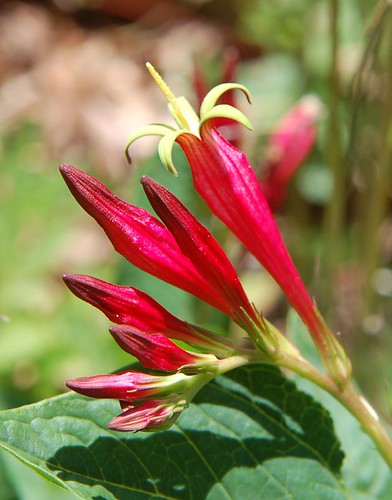
The plant is called Spigelia marilandica. Spigelia marilandica has upward facing, trumpet-shaped, brilliant red flowers (to 2″ long) atop stiff stems growing to 18″ tall. Each flower is yellow inside and flares at the top to form five pointed lobes which looks like a yellow star. Flowers bloom in June. It has glossy green, ovate to lance-shaped leaves that are up to 4″ long.  It is described as one of the most striking and beautiful of the native perennials. This is exactly how TheGardenLady and her friends felt when seeing the plant for the first time, even before they knew what it was.

Apparently this plant is a native plant of Southeastern US but websites say that it will survive as far north as Zone 5. There are common names for this plant such as Indian Pink or pinkroot. It likes a bright woodland in shade or partial shade or sun plus well drained soil. A surprisingly hardly plant, though it is best established by late summer for reliable success in gardens and containers. It has no known diseases or pest problems and Deer don’t
like it
.

It should never be taken from the wild. It can be bought in numerous
nurseries. TheGardenLady was able to buy Spigelia marilandica at Russell Gardens Wholesale, but they said the plant is very popular so they had few left. There are other places where one can buy Spigelia marilandica (e.g. here or here).

Let TheGardenLady know what you think of this native plant.

Chanticleer

Photo by Bluberd

TheGardenLady loves to visit gardens both public and private, and this summer she has been doing a lot of garden visiting.

Last week TheGardenLady went to tour a favorite garden in Wayne, Pennsylvania called Chanticleer. This 30 acre garden was donated by the owners’ son for the public to enjoy. It is a delight to visit because there is something in bloom from April to October.  And interspersed in the gardens are many unusual garden ornaments including the rooster -Chanticleer- from which the estate takes its name.

Photo by My aim is true

In 14th century Middle English Chanticleer is the rooster in verse narratives from Old French Chanticleer, the name of the rooster in the tale of Reynard the Fox. A cock, so called from the clearness or loudness of his voice in crowing. See here.

Continue reading “Chanticleer”

Topiary PowerPoint Presentation


TheGardenLady received an amazing PowerPoint presentation of topiaries, but doesn’t know who created it and would like to give credit for it.   Click this praxim1.pps,  hit open and then enjoy.

Does anyone know the location of these topiaries?

Does anyone know other photos of great garden sites?

Growing Plants in Containers


TheGardenLady received this question from Yoonsin Park:

I live in a condo with a small patio.  Due to that I can only have container plants.  I don’t want to get larger & larger containers as the plant grows.  I just want to get one container and the plant to retain itself in it.  What is the best way to do that?

Container growing is one of the hottest methods of having an outdoor garden. There are a profusion of books on the subject.  Amazon.com lists 1514 books on container growing. One authority on the subject is Sydney Eddison whom TheGardenLady had the good fortune to hear lecture and see the slide show of her container garden.  Read this article by Eddison.

This summer at the Perennial Plant Conference at Swarthmore College I had the pleasure of hearing, seeing her slide show and meeting, briefly, Rita Randolph of Randolph’s Greenhouses in Jackson, Tennessee. Rita’s canvases are her containers which she sells; some you can  see on her website.

Continue reading “Growing Plants in Containers”

A Great Garden Site: Plants Free For Life


TheGardenLady is fortunate to have her column read by people around the world.  One comment on my post Acid Loving Plants, was from Chris who lives in England. Chris has a lovely free website called Plants Free for Life that I think readers in any country would be happy to discover and read. Chris and his wife are self taught propagators of plants.
 
What does propagation mean? Nurseries, farms and gardens can get most of their next year’s plants by propagating them. The propagation of plants is chiefly by seeds, check out Caring for Marigolds in the 5/31 archive, but some plants will not breed true from seed and must be propagated by various vegetative methods, depending on the type of the plant, which  includes cutting, layering and grafting.   A propagator has learned ways of propagating different plants.  For a home gardener, propagating your own plants can save lots of money and is fun, too.  With your own propagated plants, you can get together with your friends and have a plant exchange so that your home and garden will enjoy more plants than you ever dreamed of having. Chris’s website will explain how to do the propagation yourself.   

The photo above is of a Fuschia called Anita.  It’s taken from Chris and Alison’s Fuschia Gallery.  If you’d like to use this photo, please contact Chris for permission at chrisecan@btinternet.com. 


Looking for a Beautiful Garden Tour?


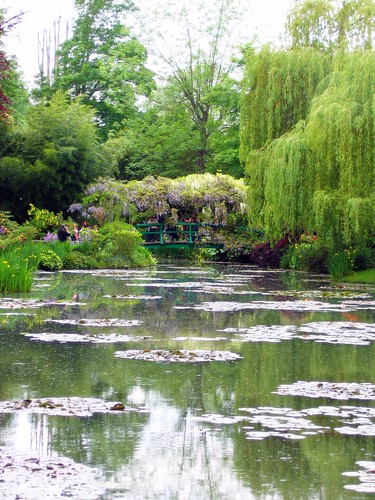
One of the things TheGardenLady enjoys is visiting places with plants or plant related material. These include gardens, parks, arboretums, nurseries, farms, flower shows, farmers markets, etc.  These places can be private or public. If TheGardenLady is in the vicinity and the places are open to the public, TheGarden Lady will try to visit. There are so many different types of gardens and each is a work of art. The artist Monet knew this when he created his garden in Giverny, France.   
 
So how does one find good places to visit? There are numerous ways.
 
Continue reading “Looking for a Beautiful Garden Tour?”