Hostas


TheGardenLady received this question from Kevin:

I have a very small front area,very small,2’x25′ with very little sun.  I was thinking about some kind of ornamental grass for height and some other colorful flowers. Any ideas?

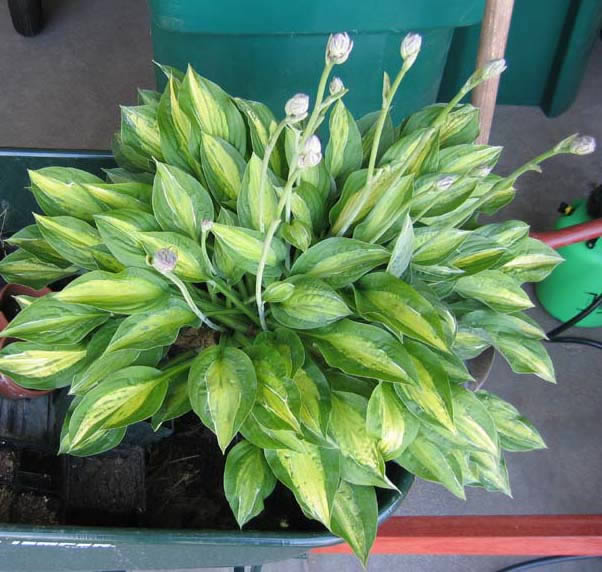
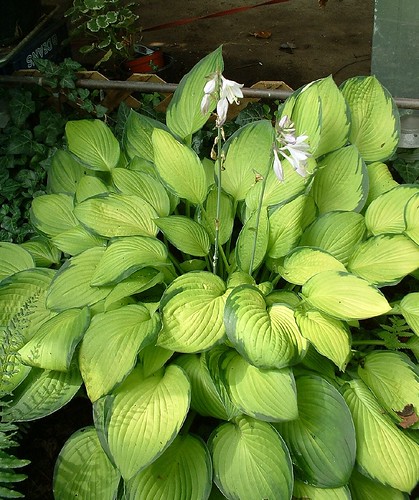
For a shaded, narrow, long garden, foliage interest might be what you are looking for. Hostas are definitely a plus for any shade garden.  Hostas have many leaf sizes. They are designated as tiny, dwarf, small, medium, large and giant. The leaves have a broad range of different green  colors-some of the leaves are yellowish and blueish as well as dark or light green or white with green, etc.- to make an interesting cool color palette. Many hostas send up flowers that are butterfly attractants and are fragrant. The hostas used to be considered in the lily family because of the flowers.  Check out the Hosta Library site for all the different hostas.  Or look at another Hosta website.

Continue reading “Hostas”

Romeo and Juliet Pansies


TheGardenLady received this queston from Samantha.

How do you grow (Romeo & Juliet mixed color) pansies? Are they a shade pansy?

Plant these fragrant pansies in the  Autumn/Winter.  They like cool weather to bloom. They hate hot weather.  In cool weather they will give you two seasons of bloom – first in the fall and then again in late winter.

They have high Frost tolerance- +++ (high)

Position them in full sun to part shade

Usage: Ideal for bedding, borders, rockeries and containers

Available as: seedlings

A good link that tells about planting Romeo and Juliet pansy seeds is this.

Hostas: Plants that Need Little Sun

Joshua wrote:

I need a good, medium sized shade plant for a corner that receives very little sun. Any recommendations?

When you have a corner of your yard that does not receive much sun,
consider the Hosta – see pic. There are so many different leaf sizes, variations
in colors, textures and shapes in the Hosta family that you will have fun choosing a favorite. And you might even get them to bloom for you.
One shade garden I will be touring this summer has over 2000 varieties planted.

What’s In a Name?

The GardenLady received the following question from a Mr. Lima: 

I have a friend named Glaucia. I heard a few days ago about a flower with this same name.  Can you help me find something about this flower, perhaps an internet web site, even a link… Please!! I´ll be very happy if I can show my friend the flower with her name!!

Because Valentine’s Day is coming, TheGardenLady would like to help find a romantic link between a flower and a name.

Continue reading “What’s In a Name?”

Plants in Crystal Pots

I received the following question from Sol:

How can I conserve mini plants in crystal pots?

Your question is not quite clear. Do you wish to plant miniature plants in crystal pots that have no drainage holes? What plants do you want to plant- miniature African violets, cacti, alpines?

Remember plants do best when you can put them into an environment that is closest to their indigenous environment. Most plants do not like to sit in water. They want the water to drain through the soil. So it is best to keep the plants in pots with drainage holes.

The Garden Lady’s suggestion would be to fill the crystal pot with glass beads, marbles or pretty pebbles. Then sink a miniature plant, in its own pot, in the center of the crystal pot. That way the pot that the plant is in will be hidden by the surrounding glass beads or whatever you chose to use, but the plant will appear to be planted in the crystal pot. Then when you water the plant, the water can seep through its own pot and settle in the bottom of the crystal pot. If the mini plant you are referring to likes humidity this water in the bottom of the crystal pot will keep the humidity level up.

Remember that as you water and feed any plant, excess minerals will leach out. These minerals can cause a hard film to form on the surface of the pot. Do you want this to happen to your good crystal? By leaving the plant in its own pot, you can easily remove it from the crystal pot and clean the crystal before the pot gets this build up of minerals.

Killing Parasite Vines

I received this question from Ms. Frye:

I need to know how to kill a parisite vine.  It has elongated,
heart shaped leaves, no blooms.  It has all but ruined my miniture
rose bush and my hydrangia. I try to pull it up by the roots, but it
is very fast growing and aggressive.

For the Garden Lady to identify a plant or a weed, a reader must send
in a clear, close up photo or a few photos of the plant in question .

There are many invasive plants with heart shaped leaves (see here and here).
Without seeing the plant, the Garden Lady would just be guessing what
the plant is.

When I first read your question The Garden Lady thought you were
speaking of one of the most invasive plants with heart shaped leaves,
Japanese Knotweed.  But the Japanese Knotweed does have flowers.  

If you live in the US , take a good sized sample of the weed in
question to your local Master Gardener Office where they will identify
the plant and give suggestions to get rid of the weed.

Plants that even children can take care of

I received a great question from Matt about plants that children can care for.  He wrote,

My kids (7 & 10) are showing a natural interest in raising their own plant or tree (similar to their interest in having an ant farm or collecting caterpillars) and I was hoping you could tell me of some plants that are fairly
robust and generally easy to care for – in other words, plants that would be ideal for a child to care for .

What an exciting question! The fact that the children are expressing the interest in growing plants tells me that raising plants will be a really meaningful project for them and could become a lifetime interest. Raising plants is a very popular hobby for people of all ages- starting  from early childhood.

Continue reading “Plants that even children can take care of”

Requesting seeds and plants from the Garden Lady

Pho_chan wrote the following to me:  

Bonjour Madame de Jardin, Je suis étudiante en biologie et je m’intéresse beaucoup à l’aconit napel,plante sur laquelle je suis en train de faire un mémoire d’études.  Pourriez-vous m’envoyer un échantillon de la plante ou quelques graines pour que je puisse la faire pousser moi-même? Je vous en remercie.

Since I don’t speak French, I had this question translated by a French friend.  It turns out that Pho_chan is making a request for Aconitum napellus- Monkshood- seeds or plants.

Continue reading “Requesting seeds and plants from the Garden Lady”

Taking care of plants when you are away for the holidays

I was asked the following plant-related question by someone named Sarah:

I saw a suggestion to bury used tea bags in your houseplant soil to retain water in winter.  Any other hints to help keep plants moist when we’re away for the holidays?

I had never heard of burying used tea bags in your houseplant soil to retain water in the winter.  However, it makes sense. Tea leaves help to make good compost and good composted soil is water retentive.  But it would seem to me that it might look unsightly to have your tea bag string hanging out of your flower pot or it might take up precious soil space with the entire tea bag.  Don’t ever throw out your tea leaves. Always save tea leaves because they are wonderful to add to your compost pile and tea leaves will  compost nicely in your potted plants. You can add the entire bag because it is all biodegradeable.  You can pour the cold leftover tea in your potted plants rather than down the drain. (If you use sugar in your tea, I wouldn’t add it to your indoor potted plants in seasons when ants are around.)   
 

Continue reading “Taking care of plants when you are away for the holidays”