How To Choose The Right Garden Furniture


Teak garden furniture and wooden decking by Crinklecrankle.com

Getting your garden furniture right is an important part of making your garden a place that you want to spend time. Having uncomfortable or ugly furniture can make you reluctant to relax and enjoy your garden, or make you embarrassed to bring people out into the garden. The furniture you choose can have an effect on the way that your garden feels and looks too, depending on the colour, material and style you go for.

What Do You Need?

Consider what you want out of your garden furniture, do you want to be able to hold dinner parties outside? Or do you just want to lie out and enjoy the sun? How many people will use it?

You should also make sure that you know how much space you have so you don’t buy something too big for your garden.


Continue reading “How To Choose The Right Garden Furniture”

Plants have minds of their own

I am convinced that many of my plants are shy. They have “minds” of their own. Some even jump to locations in my garden where they can hardly be seen. In my garden I see this happening repeatedly, so I have to be cautious when weeding a baby plant.

I am not just talking about plants that close their flowers in the heat of the sun as if coyly shutting their eyes. If you come to my garden in the morning, you will see lots of Tradescantia virginiana-spiderwort flowers of all colors open and pretty. This thug of a plant that is taking over my garden, is extremely colorful in the morning when just about every color- white, pink, blue, and purple flowers are open, But come after 11:30am on a hot sunny day when I usually get visitors and there is nary a Tradescantia flower open. My garden looks like a weed pile. Then I am tempted to compost every Tradescantia plant that is lying down. But come the next morning and once again I am charmed with a spectacular show.

Continue reading “Plants have minds of their own”

10 safe ways to eliminate weeds

If you consider a weed to be the wrong plant in the wrong spot and don’t want weeds in your garden and lawn, here are 10 safe ways to get rid of (most) of them.

1. Get a soil test for each area you want to plant are have planted. Some weed species are pioneers of degraded landscapes where the soil is worn-out or nearly destroyed. If you want to have a weed free lawn, test that area of the soil to see if your soil is healthy for the grass seed you want to plant. To help best grow flowers and/or vegetables, get the soil tested separately in those bed areas. You want your soil to be best it can be for the plants you want. (How often should a soil be tested? As a rule, test sandy-textured soils every 2 to 3 years and clay soils every 3 to 4 years. However, if  problems occur during the growing season, send in a soil sample for analysis. ) (see here)

Continue reading “10 safe ways to eliminate weeds”

Edible Weed Online Resources

aka “Maypop” by rittyrats

Besides books and videos, there are some interesting sites on using edible weeds.

Remember that some weeds were brought here by people who wanted the plants in their gardens for food, medicine or dyes. Other plants grow as weeds in some parts of the country or another country and are so pretty some clever person realized those weeds could be sold to others as flowers. An example of a weed that this GardenLady wants in her yard is a plant called  or hardy passion vine that grows as a weed in the Midwest but is considered a pretty flower that few people have on the East Coast. Also, Passion vine has a seed pod that is edible, a treat really.This particular Passion Vine will grow in zones 6 till Zone 9 or 10, but it can become a weed in warmer zones.

Continue reading “Edible Weed Online Resources”

Ground Ivy – Another Edible Weed

Ground-Ivy by klm185

TheGardenLady has been writing about weeds in one’s gardens and lawns; but the weeds I have selected to write about are all edible. Some of these weeds are also medicinal and some are used as dyes for fabric or yarn. Many of the weeds were brought to North America by early settlers because they felt these were important plants that they wanted in their gardens.

Unfortunately these plants felt so happy here and have so few natural predators that they not only grew outside the garden but they have become invasive plants, pushing out the native plants. “An invasive plant has the ability to thrive and spread aggressively outside its natural range.” And some of our North American native plants have become invasive weeds in other countries. (When I visited Japan, I was told that goldenrod, Native to North America, has become an invasive weed in Japan.)

One plant that was brought to North America for medicinal and salad usage but mostly to flavor ale was known as ground ivy or creeping Charlie or ground over the gill, Glechoma hederacea. This plant which has attractive leaves and a pretty little purple flower and would make a lovely ground cover but it has become invasive in yards and lawns where it does not let grass grow. Ground ivy is very difficult to get rid of because it spreads in numerous ways, by seeds and by the vining stems which root at their nodes.

Continue reading “Ground Ivy – Another Edible Weed”

How to Grow Beautiful Plants in a Conservatory

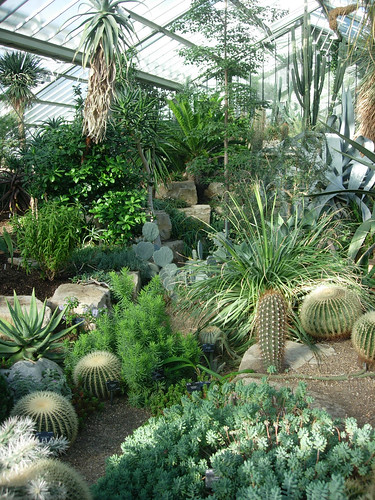
Cacti at Princess of Wales Concervatory by Suviko

Conservatories have long had a bad rap in the gardening world. Caught somewhere between a greenhouse and an extension, they have a reputation for being the refuge of the passive gardeners who like the idea of getting up close to nature but aren’t so keen to get personal.

What many people may not realise, however, is that conservatories can offer innumerable benefits to green fingered gardeners who are struggling to cope with the erratic behaviour of UK weather. Not only do they allow us to get some outdoor time without running the risk of being caught in a torrential downpour, they also allow us to grow plants which might not have survived being planted outside, but which aren’t suitable for a greenhouse. If you’re looking for conservatories Lancashire is home to several great providers, including the Lytham Window Company.

Continue reading “How to Grow Beautiful Plants in a Conservatory”

More on Weeds – Garlic mustard

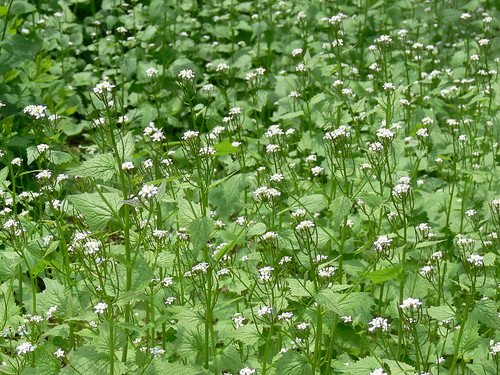
Garlic Mustard by archangelm

Another weed that plagues my garden and yard is yet another of the weeds that were introduced in North America. This one was introduced in the 1860s as a culinary herb and for medicinal purposes. However, once outside of Europe it became an invasive species. This weed has a number of common names, but the most common name where I live is garlic mustard, Alliaria petiolata. Garlic mustard, in the mustard family, also became an invasive weed in Africa, India, Sri Lanka, Australia and New Zealand. In Europe as many as 69 species of insects including the larve of some Lepidoptera (butterfly and moth)species feast on garlic mustard, but in other areas of the world garlic mustard has no insect predator. So Garlic mustard, an edible plant for some, has become a noxious weed.

It is a biennial- which means that it takes two years to flower and set seed. Because the first year the leaf pattern is so pretty, when TheGardenLady first saw the plant she let it grow. Unfortunately it looks unattractive when it sends up the tiny flowers. And its leaves smell like garlic and the taproot smells like horseradish.

Continue reading “More on Weeds – Garlic mustard”