Community garden helping feed the homeless
Thanks for checking us out. Please take a look at the rest of our videos and articles.

To stay in the loop, bookmark our homepage.

In depth gardening advice from an expert gardener

Community garden helping feed the homeless
Thanks for checking us out. Please take a look at the rest of our videos and articles.
To stay in the loop, bookmark our homepage.
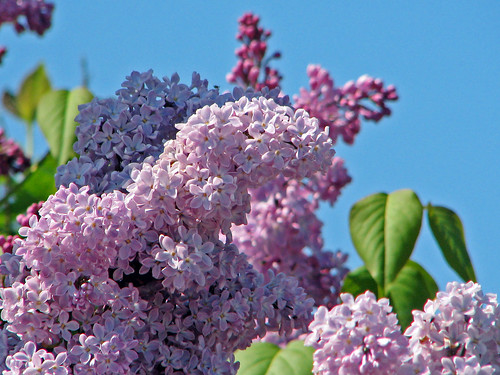
taas kukkia by Marko_K
My old fashioned lilacs, Syringa vulgaris, are blooming. For the first time in years, the flowers are blooming on my side of the yard as well as my neighbor’s side of the yard. Most years the flower display is best on my neighbor’s side. But, hey, what are good neighbors for?
The lilacs that I have that are in bloom are from my parents’ farm. These lilacs were babies from lilac shrubs that were on the farm for over 100 years. As far back as I remember the lilacs always had such a beautiful display of blooms every spring that my mother made huge bouquets of lilacs for us and for family and friends.
I have my lilac growing in between two Rose of Sharon shrubs, just as the lilacs had grown when on the farm so that I have lilacs in bloom in the spring and Rose of Sharon blooming in late summer.

Wild Violet by Mr.Mac2009
TheGardenLady has been writing a series about weeds in your garden that are edible. There are many videos showing the edible weeds. Remember only eat weeds if you are with an expert- unless you are absolutely certain that you know what you are picking. In many cases the plant has poisonous lookalikes so one has to be positive about identifying plants. Remember that not all plant parts may be edible. And just because the weeds are edible does not mean they will agree with your digestive system.
This GardenLady knows it is fun to get something for nothing. But she never advocates doing anything that is unsafe. So always beware and err on the side of caution. Only when you know what you can eat safely, then you will have a way of enjoying Nature’s true bounty while saving money.

NewsChannel 9’s Jeff Kulikowsky reports.
Thanks for checking us out. Please take a look at the rest of our videos and articles.

To stay in the loop, bookmark our homepage.
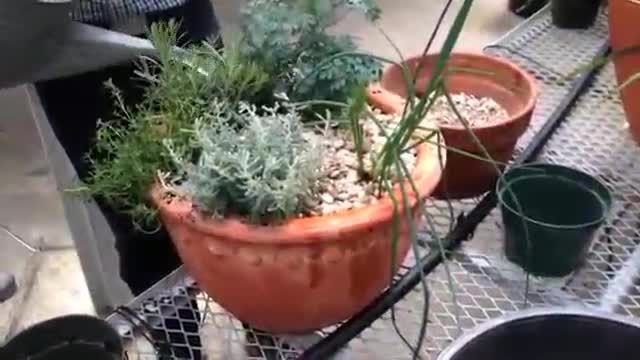
U.S. Botanic Garden Horticulturist Adam Pyle explains the benefits of potted herbs and demonstrates how to pot dry and moist herb gardens.
Thanks for checking us out. Please take a look at the rest of our videos and articles.

To stay in the loop, bookmark our homepage.
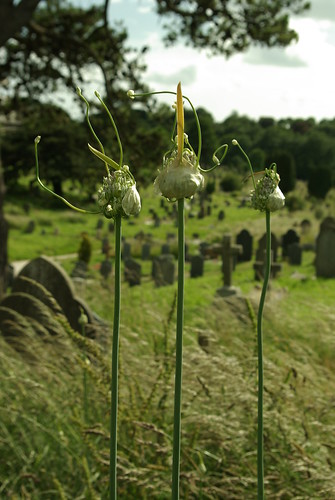
Allium vineale 3/4 by snappybex
Another weed that we have in North America that came from Europe did not seem to come here because early settlers brought it as food, but rather because the ships they came in brought soil as ballast and this weed stowed away in the soil. This is wild or field garlic, a cool season perennial that prefers drier areas. It grows in small grass-like clumps from late fall through early spring and is a nuisance in lawns, pastures and gardens. Wild garlic has an oniony smell. It can reproduce by seed, aerial bulblets, and underground bulbs. Wild garlic does not have a spreading root system and thus does not spread rapidly throughout fields. Dig up a clump of wild garlic foliage and you will find an assortment of bulbs and shallow roots.
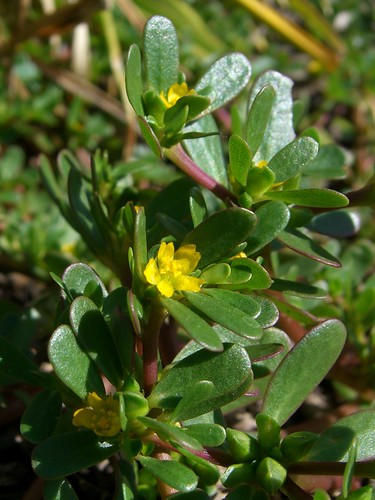
Common Purslane by pellaea
I have not seen it growing in my garden yet, because common purslane – Portulaca oleracea is a summer annual weed species that is abundant throughout the world invading vegetable gardens, bare areas, low-maintenance lawns, ornamental plantings, and agricultural areas. Though not a native, no one knows how common purslane arrived in North America. And though it is considered a weed here, it is used as a leaf vegetable in other parts of the world.
Common purslane is considered one of the most nutritious greens on the planet. It has more Omega 3 fatty acids than any other leafy vegetable plant, more beta carotene than spinach as well as high levels of magnesium and potassium. (see here)
If you don’t want common purslane growing n your garden, it is not a difficult weed to eliminate- if you have a small garden. Hand pulling is very easy especially when the plant is young. And using mulch to smother weeds is always a good idea. Though TheGardenLady does not recommend chemicals, there are many herbicides on the market that will kill purslane. Read instructions carefully and be doubly careful using chemicals near or in your vegetable garden.
Continue reading “We insult Mother Nature by referring to common purslane as “weeds””
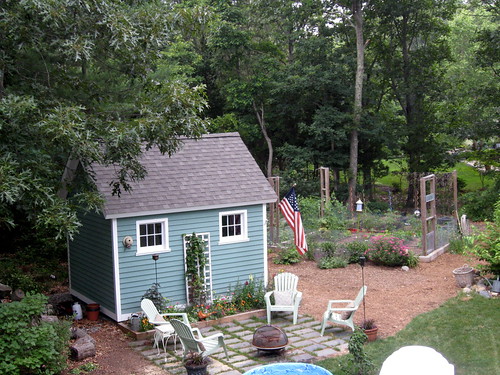
Garden Shed by cmkalina
Spring has arrived and it’s not just the season to de-clutter your closet and spring clean your kitchen. Your garden can often need just as much attention at this time of the year and as the weather gets warmer, de-cluttering your garden can prepare your outdoor space for summer. If your social calendar is filling up with barbeques and social gatherings, these tips will help you whip your garden into tip top shape.
Step One-Analyse your Space
The de-cluttering process should begin with taking a good look at your garden. Are there certain areas that have become overgrown? Can you see any areas that could be improved? When analysing your outdoor space, take a second to think about the bigger picture. What does your dream garden look like?
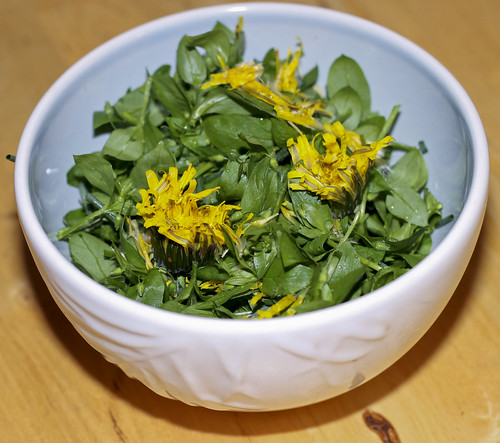
Spring Salad by badlyricpolice
Dandelions are good in salads and sandwiches. You can cook with the leaves. The flowers can be used to make lemonade, beer or wine. The roots are made into a tea. For interesting dandelion recipes check out this blog.
If you consider the dandelion a weed and want to get rid of them, to do so is difficult because the dandelion seed can be windborne for several miles. Also, the dandelion has a long, strong taproot that is capable of penetrating the soil to a depth of 10 to 15 feet, though it is most commonly 6 to 18 inches deep. Solitary new dandelion plants along fence rows, roadsides, flower beds, and in turfgrass should be dug out. There are tools specifically for digging out dandelions- Amazon.com carries a number of these.
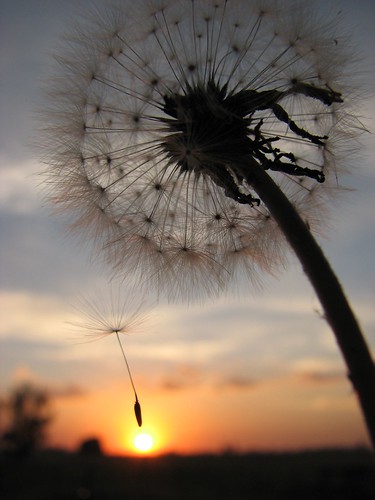
Abandonando el hogar by gonzalo_ar
Everyone knows the dandelion. And everyone knows that the common name dandelion is taken from the French word “dent de lion†meaning lion’s tooth, referring to the coarsely-toothed leaves.The Latin name is Taraxacum officinale.
The flowers at this time of year are quite lovely, but everyone knows the seeds will soon emerge and as soon as they do, dandelion seed will spread everywhere -by the wind, by children blowing the seeds, by animals rubbing against the seed ball or animals and birds. They say that the seed can spread as far as 5 miles from the original site.