Jasminum nudiflorum or Jessamine or Winter Jasmine

Winter jasmine – Winterjasmin (Jasminum nudiflorum) by Maggi_94

Is spring here already? We on the East Coast in Temperature Hardiness Zone 6, have not really had any real winter weather. And now many of the early spring flowers are in bloom or starting to bloom. Should we worry? No one can predict whether a snowstorm will wipe out these early flowers. I hope not.

One of the earliest flowering shrubs, one that I have seen flowering in my area, is Jasmine nudiflorum. It is also listed as Jasminum nudiflorum or Jessamine. The common names are winter jasmine or hardy jasmine. I first saw it blooming on a high overpass in Central Park in Manhattan. On first sighting, I thought it was a rare forsythia because the color of the flower was the same brilliant yellow of the typical forsythia. When I could get close enough, one could see that the flower is not really the same as the forsythia flower.

Continue reading “Jasminum nudiflorum or Jessamine or Winter Jasmine”
Thompson & Morgan: An Excellent International Seed Catalog

bug of the day by urtica

Most catalogs have a limited area they can ship seeds or plants because of all the different countries’ rules and regulations regarding seeds and plant material coming into their country. In the United States some seeds or plants cannot even be shipped into certain states.

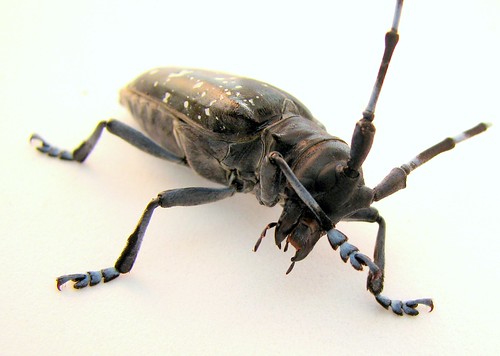
With all the international movement of people and things, countries fear invasive plants being brought in that will take over the native habitat or they worry about diseases or insects which, while being contained in the country of origin, destroy crops in their new “adopted” country. In the US we have many such problems caused by unwelcome pests coming in and it is a major economic problem. For example, one problem is an insect called the Asian Longhorned Beetle (see photo above) which came to the United states from China and is now decimating our hardwood trees like the Maple tree, the willow tree and the Elm tree (see here).

Continue reading “Thompson & Morgan: An Excellent International Seed Catalog”

Ideas on How to Decorate the Garden

Flinstone Chair! by Just Nick…

TheGardenLady will be going to some Garden Shows this Spring. Besides wanting to see the creative floral displays, I am looking for ideas to decorate my garden. I want to see the type of statuary or furniture they are showing. Of course, I prefer the decorations to be as inexpensive as possible, but I need the ideas first.

I was thinking of possibly putting more seating in my gardens. I already have a stone bench. But what about having sofas in my backyard garden? Something that will withstand all weather conditions and not be washed away by the flooding that sometimes occurs after heavy rains. And I want the furniture that has an artistic, funky quality.

Continue reading “Ideas on How to Decorate the Garden”

Pesticides for Ticks

Deer Tick (Ixodes scapularis) female, dorsal view by Michael Bok

TheGardenLady would love to have a party in my back yard. But my back yard is not typical or usual in that it is across from a stream in a wooded area. This area is lovely, but I fear insects, especially Lyme ticks, that might join the party to feast on the guests. I have never taken out any of the trees in this back yard, though previous owners had, so there is a lot of open space where a party would look lovely. Still most of the time, because there is some woodland around the open space, this is a haven for wildlife. Deer come out of the wooded area to cavort. I have seen a fox, turkeys, rodents, snakes and lots of birds in the yard. So if I do have a party back there I want to use the safest pesticides possible. I hate using any toxic substance on this land.

But it would be so pretty back there for a party. What can I do?
Continue reading “Pesticides for Ticks”

Tree of Life Web Project

Tree of Life in Spring by h.koppdelaney

TheGardenLady is always searching for great  websites that have to do with plants, animals and insects. I just discovered a great website for people of all ages- children will love the photos and videos as will college students or just interested older folks, like me. This website is called the Tree of Life Web Project.

The homepage says that “The Tree of Life Web Project (ToL) is a collaborative effort of biologists and nature enthusiasts from around the world. On more than 10,000 World Wide Web pages, the project provides information about biodiversity, the characteristics of different groups of organisms, and their evolutionary history.”

Everyone interested can participate. This is a site for you who love nature, gardens, wildlife. You can just use the site for your own information or can become involved. This is also great for school teachers or home school teachers. It is your own library of biology and botany.

Continue reading “Tree of Life Web Project”

Groundhogs in the Garden – They Do More Than See Their Shadows

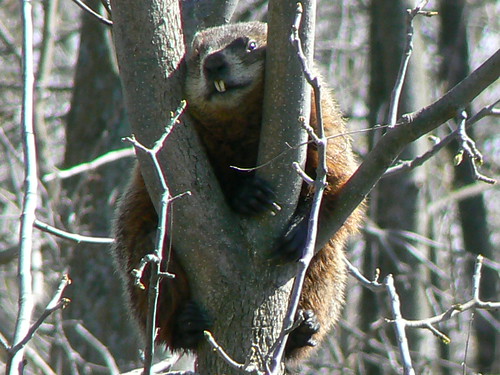
~Groundhog up a Tree~ by ~Sage~

Groundhog day just came last Tuesday.  As you may know, the Groundhog – Marmota marmax saw its shadow and let us know that we will have more winter. Since my area of the country has not really had winter yet, just two snowstorms that quickly melted, I was hoping that he wouldn’t see his shadow. I can’t wait for spring.

There are a few common names besides Groundhogs that people use. In certain parts of the country are called woodchucks, marmots, land beavers or even whistling pigs.

Continue reading “Groundhogs in the Garden – They Do More Than See Their Shadows”

The Dry Dip Method for Propagating Hardwood Plants, Trees or Shrubs

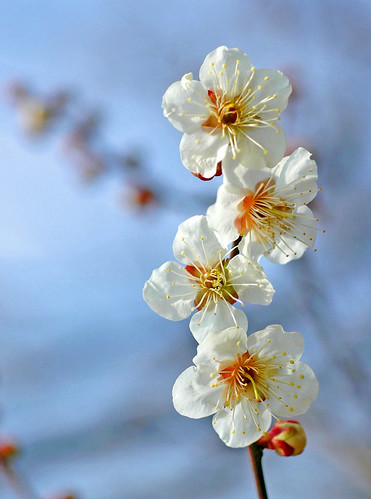
Ume, Japanese plum by autan

My favorite fanciful tree creators, Pooktre Tree Shapers, just notified TheGardenLady that they have put a new video on their website. This video shows how to propagate new trees from branches of the wild plum trees that they use for most of their living tree sculptures. They will be using these newly started trees for making more of their delightful tree sculptures. Readers will see how easy it is to propagate hardwood plants, trees or shrubs.

The method being used is called the dry dip method and is a very simple way to get more plants for your garden. You can use the technique to propagate other plants that you might want to grow in your garden. For example, if a friend has an old variety rose bush, you might want for your garden, you can try propagating some roses from the stems.  See here.  You want an older variety of rose to be sure it is growing on its own rootstock, so that your new rose will look exactly the same as the parent.  See here.

Continue reading “The Dry Dip Method for Propagating Hardwood Plants, Trees or Shrubs”

Announcing the 9th Annual Great Gardens and Landscaping Symposium

The 8th Annual Great Gardens & Landscaping Symposium

Are readers of TheGardenLady interested in attending Garden and Landscaping Symposiums? Here is a site that gives information about one symposium called the 9th Annual Great Gardens and Landscaping Symposium. It will be held in April (the 13th and 14th) in Vermont and looks like it has some outstanding lecturers. It is open to all garden lovers. You can read about all the speakers at the site.

Is This Plant a Dwarf Aloe?

Erica asked TheGardenLady to identify this plant in the photo above and below.

TheGardenLady thinks the plant looks like a miniature or dwarf aloe.  See here.  But which kind is difficult to know. I think it might be Aloe brevifolia. If you bought it at a nursery, see if they know the name of the plant you bought. If not check out some of the websites that sell the dwarf or miniature aloes, like this one.

If any of TheGardenLady readers can accurately identify this plant, let us know.

Jonn Scheepers’ Seed-Starting Timetable

Image from John Scheeper’s Website Kitchen Garden Seeds

One of the catalogs that this GardenLady has been poring over has been the John Scheepers “Kitchen Garden Seeds” catalog. But how does a reader know when to start plants indoors to have them ready to plant outdoors when nature in your Temperature Hardiness Zones tells you it is safe to plant outdoors? One doesn’t want to begin seeds indoors too early or they may grow “leggy” and not strong enough to set outdoors. Or one might start the indoor seeds late so they wouldn’t be far enough advanced when transpanting outdoors. And do you know which seeds are best to start indoors and which are best to sow directly into the ground outdoors?

Here is the general indoor Seed- Starting Timetable for seeds from John Scheepers and the information about which seeds should be sown directly into the ground outdoors. Also, there are contact numbers for more information that you can get directly from John Scheepers.

When growing indoors, make sure you have all necessary equipment; some plants may benefit from LED grow lights.