Battling Animals in the Garden – Part I

snoopy baby deer by AlicePopkorn

I wrote in a recent TheGardenLady column about the deer seemingly decimating my plants. For example, the hemerocallis or day lily shoots that have emerged this spring have been shorn aImost down to the ground. The same thing has happened to the leaves of the tulips that are emerging from the ground. It looks like they were mowed. I am hoping that the eating of the leaves will not affect the flowers which have not yet emerged. So I have sprayed a lot of Liquid Fence on these pathetic stumps of plants hoping to prevent more eating damage. There is other evidence of chewed plants. I based this blame on the deer because I have seen what looked like deer tracks in the mud and deer scat otherwise known as poop all over the lawn and garden.

But am I correct that it was the deer that ate my plants? I have a variety of wild animals residing in my gardens, so the blame could be on numerous animals. On the one hand, I am still excited whenever I see a wild animal on my property. But on the other hand, I am really upset when I see my plants eaten. I had written in one column that gardening is like a battle- a judicious battle.

Continue reading “Battling Animals in the Garden – Part I”

Pesticides

The Dangers of Chemical Pesticides

Pesticides are chemical substances that are used to kill, repel, or regulate the growth of biological organisms. This diverse group includes insecticides, herbicides, fungicides, nematicides, acaricides, rodenticides, avicides, wood preservatives, and antifoulants. The U.S. Environmental Protection Agency recently estimated that more than 1.2 billion pounds of pesticides are applied to crops, forests, residential areas, public lands, and aquatic areas in the United States every year. The release of these chemicals into the environment creates a potential for unintended adverse health impacts to both humans and surrounding wildlife. (Laetz, Baldwin and Collier)

Pesticide Regulation

Mixtures of pesticides are common in the human food supply. These mixtures are also common in the aquatic environment, including lakes, river, streams, and other surface waters that support aquatic life. Assessing the cumulative toxicity of pesticides in mixtures has been a difficult challenge for environmental health research, as well as ecotoxicology, for the past several decades. In 1996, the United States Congress passed the Food Quality Protection Act, which directs the U.S. EPA to assess the human health risks from cumulative exposures to pesticides that share a common mechanism of action. Consideration of mixture toxicity is also required when pesticide tolerances are reassessed under the Federal Food, Drug, and Cosmetic Act.

Continue reading “Pesticides”

Israeli Flower Websites

Gorgeous flowers on the hillside of the Hinnom Valley

Purple Flower by WKeown

This April people around the world will be celebrating both Passover and Easter. This year you might like to decorate your house with flowers that Moses or Jesus might have seen or trod on. You may want to buy flowers that are native to or are grown in Israel. If you wonder what flowers are native to Israel and much of the Middle East and what flowers grow in Israel, TheGardenLady thought some websites about Israel’s flowers might be interesting.

One of my favorite sites is called Spring Awakening in Israel.  The homepage says Flowers in Israel, “That they all may blossom in a beautiful world beyond war.” My wish completely. This site gives the Latin name, the English name, the Hebrew name and some have the Arabic name of each of the flowers. It gives the names of the flowers that were in the Bible. From flowers listed as native to Israel, some of the flowers that I believe we might find in our local flower stores to create more authentic bouquets for the holiday table could include Anemones, Madonna Lilies, Jack in the Pulpits, poppies and irises. To walk on the hills of the Galilee in the spring among the red poppies is a sight to remember. Put that on your “bucket list.”*

Continue reading “Israeli Flower Websites”

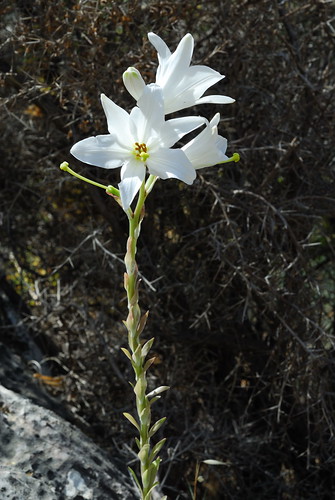
Madonna Lily – Lilium Candidum

lilium candidum by Giuliagas

Easter will soon be here and with it all the wonderful flowers of Spring will be appearing in the stores. Mostly we think of the flowers that are produced from bulbs like tulips, hyacinths and others. The most popular of the flowers is the Madonna lily, Lilium candidum. Not only is this flower spectacular but the fragrance is heavenly.

The oldest picture of this lily dates back 3500 years ago, found in Crete. Lilium candidum was a popular flower in ancient Jewish civilization and is mentioned in the Bible, both the Jewish Bible and the Christian Bible.

Lilium candidum by Nick Turland

This lily is considered to be most significant flower for the Christians and when you see early religious paintings, you will see the Madonna lily as one of the symbols.  See here. The pure whiteness of the flower is a symbol of purity, chastity,innocence, and sweetness associated with virgins and is the special flower of Mary, the Holy Virgin.

Continue reading “Madonna Lily – Lilium Candidum”

Alpine Plant Sales or Conferences

The Fells – Photo source: The Fells Chapter of NARGS

For readers of TheGardenLady.org who love alpine flowers and are interested in using them in their gardens or are planning on making a rock garden, or whatever, one of the best places known for their Alpine plant sales in the Eastern US is Stonecrop Gardens in NY.  See here. They will be having their annual Alpine plant sale and tour of their Alpine plants this April.

Saturday, April 23: 5th Annual Alpine Plant Sale with Wrightman Alpines, Evermay Nursery, Garden Vision and more, 9am-3pm, $5/members-no charge

Thursday, April 28: Guided Garden Tour featuring Alpine Plants, 6-7pm, $10/members-no charge

On April 17 The New England chapter of the North American Rock Garden Society will be having a rare plant auction at the Tower Hill Botanic Garden in Boylston, Mass.

See here.

Continue reading “Alpine Plant Sales or Conferences”

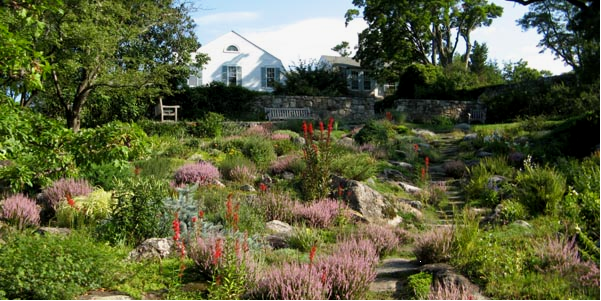
Wooden Garden Furniture

Bench in Double-walled Garden by Charles Stirton

It’s only the start of April, but already the temperature is a little bit warmer, the days are lighter for longer and the season begins to change from Spring to Summer. I absolutely love this time of year.  It’s the time of year when the difficulties of winter, such as the terrible ice and snow, become distant memories and I can really start to look forward to the warmer months.

While having sunny April may not always mean that the next few months will have good weather, I find this time so exciting and uplifting, as it means I can get out into the garden again, do some clearing, planting, and best of all, relaxing on my favorite garden bench.

Continue reading “Wooden Garden Furniture”

UK Gardens

Chelsea Physic Garden by europealacarte.co.uk

TheGardenLady loves to visit gardens. Spring is here and the urge is back.

A number of years ago, TheGardenLady created a tour of gardens of England for myself and garden lover friends- this is not a business that I do, just a labor of love. The tour that I had created included such fabulous gardens as the Chelsea Physic Garden, Kew, Sissinghurst, Wisley, The Great Dixter, Stourhead and other wonderfully gorgeous gardens. The gardens I visited were so wonderful that my friends have asked me to plan another such tour.

Continue reading “UK Gardens”

Winter Flowering Plants – Part III

Hamamelis x intermedia ‘Primavera’ by Tie Guy II

In addition to winter-flowering flowers (see here and here), there are also winter flowering shrubs. Many of these shrubs are hardy in US hardiness zones 5 and warmer.

One of the earliest blooming shrubs is the witch hazel. Witch Hazel, Hamamelis intermedia “Pallida” is considered one of the best to open in mid to late winter.  See here.  Friends eagerly went to view the one that opened early in a local garden. Many of the Hamamelis have the added bonus of fragrance. Plus the witch hazel has fall interest with colored foliage.

Continue reading “Winter Flowering Plants – Part III”

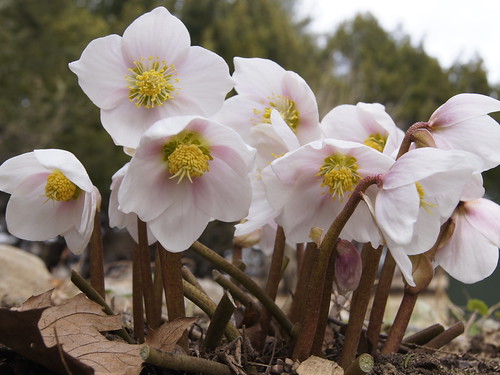
Winter Flowers – Part II

Helleborus niger ‘Praecox’by Tie Guy II

My very favorite winter flowering perennial plant is the very early winter blooming Hellebore. I cannot rave enough about this hardy perennial. The Hellebore is the plant that I greedily want more and more of growing in my yard. The earliest blooming ones are the Christmas rose Helleborus niger. Mine are spectacular and as they age, they are turning pink.

Continue reading “Winter Flowers – Part II”

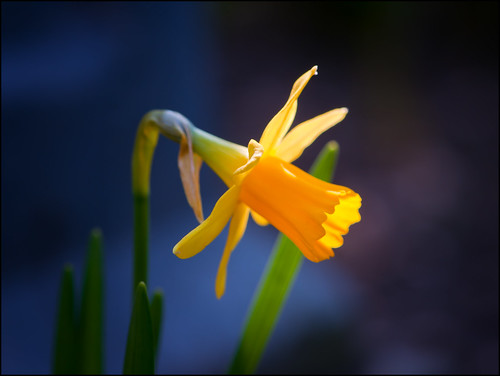
Plants that Bloom in Winter

Natural Light (Narcissus pseudonarcissus) by Nietnagel

The period between winter and spring always seemed the saddest time of the year. The landscape seemed so dull and muddy after the pretty snows of winter and before the flowers burst open in the spring. That was before TheGardenLady learned that there are some winter flowering plants that bloom in the “dark” of winter and that keep blooming well into spring. The plants I prefer are the hardy perennials, bulbs and shrubs. Of course, I still cannot wait for the real spring blooming flowers that always seem to be such a miracle when they open, reliably, every Spring.

Since I now know that there are winter-flowering plants, this Garden Lady has been adding more and more of these wondrous plants to my garden. This way when I go out to look in my garden, even before the last snows have fallen, there is something to delight the eye. And it is amazing to me when I discover the little bursts of flowers that distract from the barrenness of the landscape and are a harbinger of the more spectacular show of flowers that I know are just a few months away.

Continue reading “Plants that Bloom in Winter”