Do You Dead-Head Encore Roses?

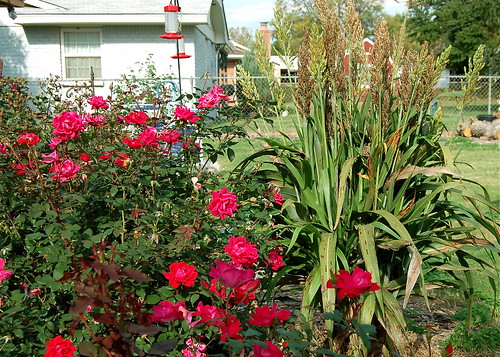
Gotta love those knock-outs!!! by perennialpal

TheGardenLady received this question from John.

Are you supposed to cut spent flowers on Encore Roses? Some say you are and others say don’t. Which is correct?

Cutting spent flowers is referred to as dead heading. Dead heading is like a minor form of pruning. People do it to most perennial flowers so that the plants look neater and it forces more flowering.

However, that being said, the Knock Out Roses are bred for easy maintenance and one of the things they have eliminated is making it necessary to deadhead. On their website it says “All seven members in The Knock Out® Family of Roses are self-cleaning so there is no need to deadhead.”

So though it is not necessary to deadhead spent roses from my Knock Out Roses, TheGardenLady will cut off the remains of the stem end of the roses that have died, but only for aesthetic reasons.

If you’d like to read a previous post on the issue of dead-heading Knock Out Roses, check this post out.

2010 Garden Conservancy Open Days

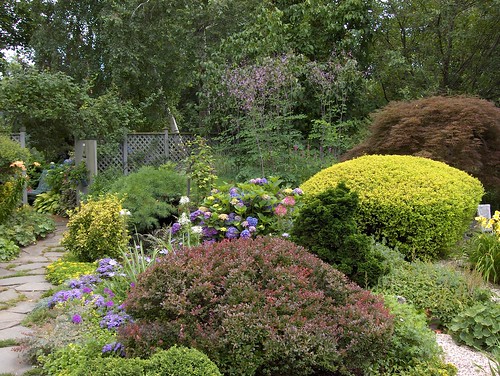
Garden Conservancy Open Days in Mattituck & Cutchogue, NY by justmecpb

This is the time of year to visit the Garden Conservancy Open Days private house gardens.  Please don’t miss taking advantage of this opportunity to visit America’s best private gardens. You are in for a treat. If you love visiting gardens, you get a peak at some of the most wonderful gardens in this country. If you want to landscape your property, you can get out to see how others have done it. If you want to just see novel plantings or to find something new for your garden, don’t miss these Open Days in your area. The Open Days are available in 20 states across the nation and in the District of Columbia.

The 2010 Open Days season began in early April and extends through the end of October. Usually you can get to see a few gardens on one date since many gardens are in the same area. Go online to see some of the dates.  See here.

Gardens are open in California on May 22nd. Philadelphia has some gardens open on May 23 in the Chestnut Hill area. Portland, Oregon has Open Days on June 5th.  Chicago, Il has Open Days in July. I have just mentioned a few of the open Days.

There is a small entrance fee that helps to support the Garden Conservancy Program.

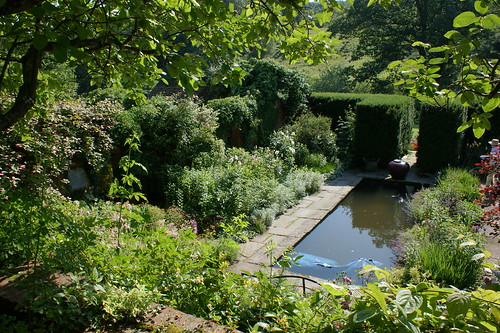
Hollister House (9) by KarlGercens.com

The Garden Conservancy has done more than any other national institution to save and preserve America’s exceptional gardens for the education and enjoyment of the public and by your visiting the Open Days Garden, you are helping to save and preserve these exceptional gardens. They support great gardens such as the Hollister House Garden one of the most beautiful English style gardens in the United States. How do they do this? One example happened in 2005 when George Schoellkopf signed an agreement with the Garden Conservancy and Hollister House Garden Inc. binding him to donate the entire property, including house, garden and twenty-five acres, either during his lifetime or through his will, to Hollister House Garden Inc. This magnificent garden is in the Litchfield hills of Conn.  See here.

If readers of TheGardenLady blog have visited or visit any of the gardens during Open Days, please let us hear what you think of the gardens. Your photographs would be greatly appreciated. So please send them for all to see.

Frugal Landscaping

TheGardenLady’s Curb

TheGardenLady can say with confidence, you do not have to hire a landscaper to create your own garden. And you don’t have to spend a fortune to have a beautiful garden. I have created my own garden. And I cannot tell you the amount of compliments I get for my garden. Just yesterday, one neighbor told me what an inspiration my garden is. She is inspired to start a garden. Another neighbor, came over for advice on plants for a garden at his new home. I have done the work on my garden by myself; though now that I am getting too old to dig that much or carry and lay the mulch, I have someone help me. But I still dig holes, plant, weed, feed and water.

Remember that everything doesn’t have to be done in one day. Your planting schemes can evolve as mine have. TheGardenLady keeps on enlarging her beds each year to put in more plants. It is a work in progress so that every year it is beautiful in a new way.

TheGardenLady doen’t spend a fortune on plants. In fact, I am most frugal when it comes to getting plants. The reason for frugality is that plants may die or they may be eaten by deer or rabbits or voles and even if they are perennials, they might not return the next year for some reason, maybe because of a severe winter. If I were to spend a lot of money on the plants and the plants were to die, I might feel upset. If I don’t spend much for my plants, I have only wasted my own time and effort – and that is still cheaper than going to a gym. Most of my plants come from family and friends. If these die, my friends who are gardeners understand. And if their plants die, they can always come back to me to get some of their plants – usually because they have to be divided and given away anyway.

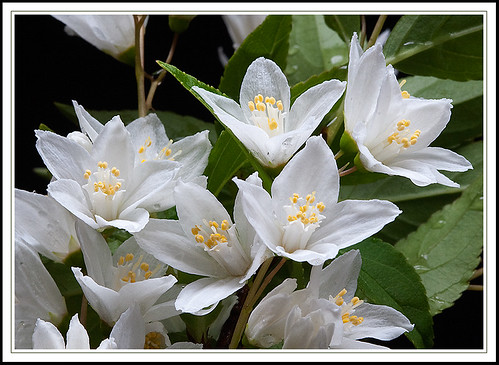
Friday’s Flower Power / Deutzia gracilis by Rainer Fritz

Many plants are bought at spring garden sales at this time of year. The Master Gardeners often have garden sales of plants donated from their own gardens. That is where I bought a Katsura tree Cercidiphyllum and my Deutzia gracilis. If the Master Gardeners sell the plants, you know the plants are healthy and hardy for your area and the Master Gardeners will give you directions on planting what you buy.

Many public gardens have plant sales. Some plant sales seem to be ongoing like at The Garden in the Woods near Framingham, Mass. or The New York Botanical Garden. And some public gardens like Bowman’s Hills Wildflower Preserve in New Hope, PA have both spring and fall sales. The end of the season is a great time for really good sales. Most nurseries want to get rid of plants so they don’t have to keep them over winter. And if you know what you are buying you can get great buys at local stores. I saw a sale at my super market for miniature rose bushes. At under $2.00 a small pot, I bought 5. I planted them and they have rewarded me for the last few years with loads of flowers. I later learned that these miniature rose bushes are among the hardiest of roses.

Continue reading “Frugal Landscaping”

Can Hay Help with an Oil Spill?

In this video CW Roberts employees demonstrate how hay can be used to help with the oil spill in the Gulf of Mexico.

TheGardenLady would like to know if this method will really work to clean up that massive oil spill. If this is Mother Nature’s way of a simple cleaning device, why not use it. If any scientists read this blog, please let the readers know your thoughts. And if it might work, please let all government people know.

The Importance of Pest Control in the Greenhouse

Spider mites by theGardenDeva

TheGardenLady has invited people with horticultural interests and expertise to contribute posts to this blog.  The following post  about the importance of pest control in the greenhouse was submitted by Ahmet Korkmaz.

In the last decade the field of agriculture has undergone many important changes and improvements. People from all over the world are interested in implementing the new ideas that are being advanced by researchers in this developing field.

Greenhouse plantation is one of the exciting advancements that that has been adopted by farmers from all over the world.  Some of the the fruits and vegetables that are commonly planted in a greenhouse include cherries, drupes, radishes, cabbages, and tomatoes. These fruits and vegetables require unique ambient conditions, which a greenhouse can facilitate.

In a greenhouse,  sunlight is amplified for the plants because it gets trapped under a glass cover with four walls, which shield the plants from the heat that is generated. This extra sunlight and controlled heat promotes plant metabolism and provides nice returns in the form of vegetables and plants.

There are other advantages of growing of plants in a greenhouse. The leaves and other shoot parts of the plant can be protected from different kinds of chemical attacks that are air-borne.  Also, many pests and insects can be avoided to some extent in a greenhouse.  But a greenhouse does not prevent all pests.

Common pests in a greenhouse

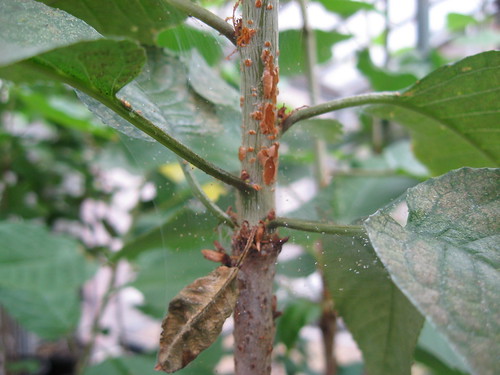
Spider mites (see photo above), weevils, white flies, aphids and leaf miners are common pests in a greenhouse, the most common of which are the spider mites. Weevils cause a lot of damage to the surface of leaves. White flies tend to attack the major part of root and shoot systems. Aphids can be deadly to the green parts of a plant by feeding on a pigment called chlorophyll. This drastically affects the plant’s overall metabolism.  Leaf miners cause damage in tomato plantation. These pests tend to bore into the leaf’s vegetative part, which renders the leaf unable to take advantage of sunlight.

Continue reading “The Importance of Pest Control in the Greenhouse”

Carolyns Shade Garden 3rd Open House – May 15th, 2010

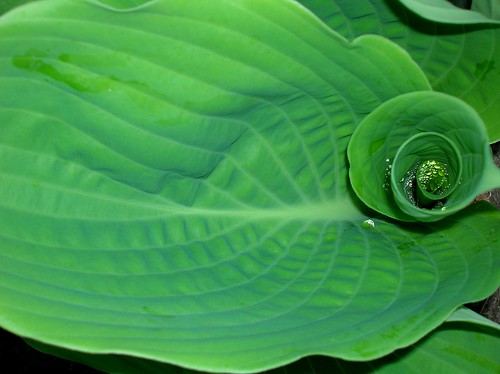
Large Hosta by WxMom

TheGardenLady is a big fan of hostas in the garden. They add such pizazz to any garden landscape. Mine are planted around trees to decorate the feet of the trees for a finishing touch. So in my garden, instead of just seeing a mound of mulch at the bottom of the trees, you see a sort of wreath of hostas that have pushed through the mulch. I think this adds such a pretty touch to the garden picture. If you want to buy hostas for your garden and are in the Philadelphia area on Saturday, May 15th, you should definitely visit Carolyn’s Shade Garden in Bryn Mawr.

Carolyns Shade Garden is having the third open house this Saturday, May 15, from 10 to 3, rain or shine, directions attached (checks and cash only). The display gardens are beautiful and full of great ideas, and the nursery has a huge selection of plants.

Appointment: Feel free to schedule an appointment during this week or next week if you can’t make it on Saturday. There seems to be a misconception that appointments are unusual. In fact, Carolyn does over half her business by appointment. Of course, if you only want a small amount of plants, the open houses are recommended.

Parking: For the convenience of my neighbors, please observe the no parking signs on Robinhood Rd and do not block mailboxes or turn around in driveways.

As promised, this is the best open house for hosta, ferns (10 varieties), and hardy geraniums, including hard-to-find and extremely desirable ‘Rozanne’.

There is also a great selection of phlox, foamflowers, bleeding-hearts, columbines, corydalis, lamium, pulmonaria, and, of course, hellebores (including the Lady Series, the Immanence Collection, and Christmas Rose ‘Jacob’). Japanese primroses and yellow corydalis are also ready.

Carolyn has some beautiful summer and fall-blooming shade plants, including white hardy begonia, ligularias, turtlehead, cardinal flower, great blue lobelia, Japanese anemone (six varieties), and yellow waxbells (Kirengoshoma).

A Word about Hostas: Carolyn has a great selection of hostas this year, including several varieties that she developed herself. She highly recommends that you walk around the gardens and look at the hostas in the landscape before choosing the type you want. Big-leaf hostas look totally different in a pot and often don’t develop their true leaf shape and gorgeous colors until they have been in the ground for a year. Smaller hostas cannot adequately portray their distinct habits in a pot.

When selecting hostas for your garden, you can’t go wrong by selecting a winner of the coveted Hosta of the Year Award from the American Hosta Growers Association. This award means a lot–only 15 hostas have received it out of the over 6,000 cultivars out there. I offer 1998 ‘Fragrant Bouquet’, 1999 ‘Paul’s Glory’, 2000 ‘Sagae’, 2001 ‘June’, 2002 ‘Guacamole’, 2008 ‘Blue Mouse Ears’, 2009 ‘Earth Angel’, and 2011 ‘Praying Hands’. Click here for gorgeous photographs:

Continue reading “Carolyns Shade Garden 3rd Open House – May 15th, 2010”

Another View on Using Compost for Potting Soil

On Monday’s post, TheGardenLady answered a question about using compost for potting soil, in which she suggested that this was fine to do.  Recently, she received a response to her answer from Carolyn of the famous Carolyn Shade Gardens in Bryn Mawr, a garden which TheGardenLady has written about in the past (see here).  Here’s Carolyn’s response and some photos of her beautiful flowers.

I would not recommend using straight compost as potting soil in a container. It will become too hard, impede root growth, and not drain well. I use my own compost in my containers, but I mix it approximately one part composted cow manure, one part compost, three parts Pro-mix. The compost improves the quality and fertility of the soil mix. However, container plants need a lot more fertilizer because water is running through them all the time. I add the cow manure for long-term fertility and also fertilize once every two weeks with a weak mixture of organic liquid fertilizer. The Pro-mix keeps the soil light and draining well and allows good root growth. I have attached some pictures of my containers.

Thanks Carolyn for your view on this question.  TheGardenLady is always open to different viewpoints, so if you disagree with TheGardenLady feel free to express your thoughts.

Using Compost as Potting Soil

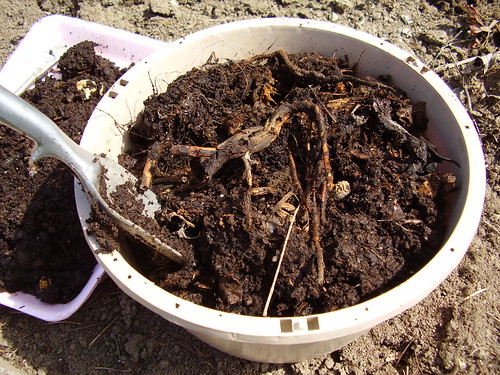
Compost by Fleurette Jardin

TheGardenLady received this question from Peggy.

I want to use compost as potting soil. I live on a 3rd floor so am limited to plants on a balcony, such as jasmine, monarda, some lobelia and other annuals to color the desk area and maybe a tomato plant or two. Any thoughts on using only compost? Will it hurt these types of plants?

The simple answer to the question, “can one pot plants directly into compost?”, is YES one can plant directly into compost.

Most people add their homemade compost to other soil because usually one does not have enough homemade compost unless you have a large property to add leaves to the household garbage- the combination forming compost.

Thus TheGardenLady wonders if the writer of this letter is planning on buying compost or making her own from her kitchen scraps. It seems that if one were buying bags of something to pot plants, it would be wise to purchase prepared potting soil in bags. Scientists have formulated their products for optimum plant growth and many of these potting soils come with added fertilizer. Everything is in one bag except for the plant and the water so that if you have limited space, buy something that has been made easy for you.

However if you have made your own compost from your household garbage, you must understand what the final product will look like before you use it. The garbage has to be completely decomposed. The finished product of compost is a black loamy soil that has no residue of any of the garbage that it was made from. There is no odor. If you see any bits of garbage or if your compost has any smell, your compost is not ready. When compost is not fully decomposed, plants planted in it may turn yellow and appear stressed.

If you are planning to make your own compost or have made your own compost, do you have enough homemade compost to plant the numerous plants you ask about? If you do have enough homemade compost, you can use it in pots and plant directly in it. But you must understand that you do not use compost until it is completely decomposed. An easy test to see if the compost is ready, is to put your compost in a couple of pots and plant some radish in these pots. If 3/4s or more of the radish seeds sprout and grow into radishes, then your compost is ready to use.  See here.

Tomatoes should have no trouble growing in your compost. In TheGardenLady’s compost bin, tomatoes and potatoes always seem to self seed and grow.

Jasmine should have no trouble growing in compost; but are you sure you want a plant that can grow into a 15 ft. shrub?  See here.

If you are using compost that is ready to be used, it cannot hurt any plants. It is the way nature makes soil. But you must be sure that the material you are using is completely decomposed.

Growing Plants is a Trial and Error Learning Process

Palouse Falls custodian -“Pete” by oldmantravels

When readers write to say how they struggle to save a marigold, I must tell readers that I have lost more than just one marigold given to me by a friend. There is a saying among gardeners that to learn one has to have killed one hundred plants. This may or may not be an exaggeration. My father-in-law jokingly said that being in the nursery business was the best business because plants were always dying and people were always replacing them. So though I came from a farm, the problems on this property where I have now lived for 35 years were so different from that sunny farm that I had to learn a lot.

For example, mine is a property with trees. Much of the property is covered with huge trees whose roots are wide and the tree canopy shades much of the ground. And where there weren’t native trees, the previous owners had planted sycamore trees that are huge. The farm was open and sunny all day long. You can’t really farm in the woods. Some of the trees on this property are black walnuts. Nut trees in general and black walnut trees specifically give off a toxin called juglone that kills many other plants. We never had one nut tree on the farm.

Continue reading “Growing Plants is a Trial and Error Learning Process”

The Home Garden as a Place of Personal History

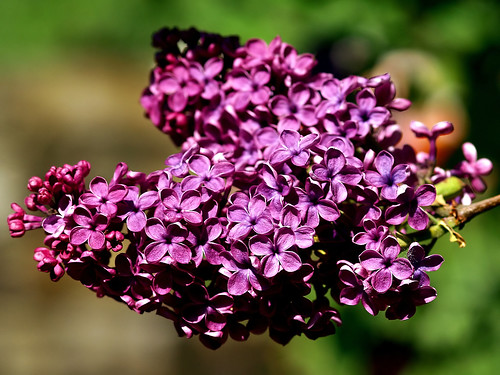
A flower stand of a Common Lilac. by Bienenwabe

The home garden is a joy for the present and is also something one plants for posterity. But when TheGardenLady walks around her garden, so many of the plants that she has were given to her from family and friends in the past and continues in the present. So for me my garden is a place of my personal history and so many of the plants bring back memories of loved ones or the beds recall the fun or pain of digging them in the past. I consider my garden as a living tribute to those whose plants are living here with me. So for me, being in this garden is a way of spending more time with friends and family even when they are not here in the garden themselves.

For example, many of the lilac shrubs Syringa vulgaris, the rose of sharon Hibiscus syriacus shrubs, the wisteria vine and some of the Japanese peonies Paeonia were on TheGardenLady’s parents’ farm. Since my parents were only the second nonnative people to live on their farm, these plants could be considered antique – which means 100 years old. Horticulturists call them heritage plants.

Galium odoratum (Sweet woodruff) by ngawangchodron

The sweet woodruff Galium odoratum was given to me by a dear friend who passed away.

My favorite double daylily, monarda and so many other plants were given to me by another friend who passed away. And my Magnolia grandiflora that I look at through my living room window was won in a raffle that this friend’s garden club had sponsored. The first raffle I ever won.

So many of my new personal favorite plants were given to me by friends who have spectacular gardens.

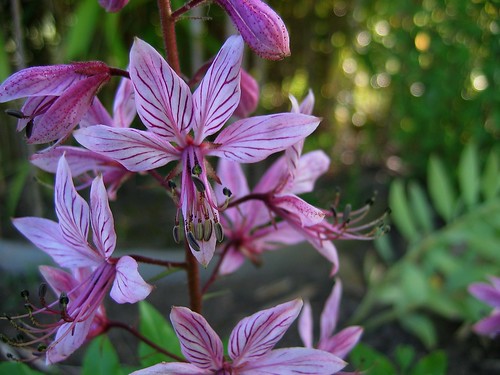
dictamnus by peltierpatrick

For example, my Dictamnus or gas plant was given to me by a lady whose garden is a show place. My French lilac and many of my giant hostas and other plants come from another friend with a show garden. I can go on and on about the different gardens and friends the plants come from.

Once when I took a tour of someone’s private garden, her labels not only gave the Latin name and common name of the plant but also included the name of the family or friend who gave her the plant. I thought this was such a clever idea that someday TheGardenLady wants to copy this idea in her personal garden.