Rain Gardens

A new concept in gardening that is ecologically and enviromnenally sound is called the Rain Garden. What is a rain garden?

“A rain garden is a naturally landscaped, shallow depression that allows rain and snow melt to be collected and seep naturally into the ground.” These are small gardens designed specifically to withstand extremes of moisture by taking advantage of rainfall and storm water runoff. These gardens are situated near the source of rain runoff from storm water like under a rain spout, driveway or sump pump. Rain gardens capture rainwater runoff to stop the water from reaching the sewer system and are designed to trap all the water that might possibly deluge the area; but plants have to be chosen that will tolerate both a lot or water as well as for times of drought and for all the times in between. To this end, mostly deep rooted native plants and grasses are planted- though one can find other plants that will work.  (See here)

The Rain Garden is a specialty garden that needs a special site- probably one place that you might have despaired of ever having a nice garden. Examples of rain garden design are here and here.

By building a rain garden you will not only enhance your landscaping with a garden that will attract native butterflies and birds but will help the water quality in your area and will provide storm water control.  (See here)

When looking for native plants to put in your rain garden check out your Native Plant Societies- each state has such a society.   Here or here and many states have a native plant public gardens.  See here.   In Pennsylvania a lovely native garden is Bowman’s Hill. These societies and native plant gardens can give you advice on perfect plants for your rain gardens and often have plant sales where you can buy these native plants. Bowman’s Hill has plant sales in the spring and in the fall and also sell seeds.  See here.

TheGardenLady would love to have photos of your rain garden. Please email photos.

Free Tickets for Botanical Gardens and Arboretums from Bank of America

Davidia involucrata by Jura Wanderer

When TheGardenLady learns of free tickets to gardens, she will share them with her readers. And she hopes that if TheGardenLady readers learn about free or reduced rate tickets to gardens, they will share this information with TheGardenLady blog.

The newest list is thanks to Bank of America.  See here.  Though it is ostensibly for museums, and most of the tickets are for museums, some of the places listed are for botanical gardens or arboretums. TheGardenLady also loves to visit museums, so I hope her readers do, too, and will take advantage of these wonderful offers.

Dorion by Bruce Beasley by Kaldoon

In Hamilton, NJ one of the best places to visit both for the sculpture and for the grounds is Grounds for Sculpture. This Sculpture Park has 35 acres of beautifully landscaped grounds with interesting trees and shrubs as well as some flowering vines, perennials and annuals. There are two indoor museums, 250 outdoor pieces of sculpture, two shops, two restaurants- one modest priced and one called Rats which is one of the best restaurants in NJ and certainly one of the most beautiful restaurants in the world. I call Grounds for Sculpture the Garden of Eden; though the landscaper, Brian Carey, insists it is more like an arboretum. Take advantage of these free tickets. Plan on spending an entire day on the Grounds- you really need that much time. Then let the GardenLady know if you agree- should it be called the Garden of Eden or maybe Paradise?

Winterthur ~ A Country Estate by Diana827

In Deleware , you can get tickets to Winterthur and visit both the museum and the grounds which has one of the best outdoor plantings of Galanthus (snopdrops) and other minor spring bulbs. And if you are lucky, you might get there during the spring when the Handkerchief or Dove tree- Davidia involucrata is in bloom. This Handkerchief tree is located near the main buildings. It is one of the most unusual flowering trees TheGardenLady has ever seen. The flowers look like handkerchiefs fluttering in the breeze. I have seen more of these trees in European gardens than in American gardens; it is fairly difficult to find these trees in many nurseries in this country. It grows in zones 6 through 8. It likes a protected site that has rich, high organic matter in moist, well drained soil, a site that has shade in the afternoon. I understand it takes 15 years to bloom.  See here.

Cheekwood Botanical Gardens by rbglasson

In Nashville, Tennesee you can visit the Cheekwood Botanical Garden & Museum of Art. And then take in some Grand ole Opry- sorry I couldn’t find free tickets for that.

The Living Desert Zoo & Gardens by Fritz Liess

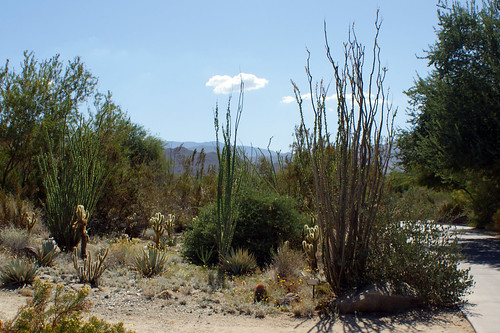
In Palm Desert, California you can visit the Living Desert which is a zoo and a botanical garden.

I didn’t check out every state to see where they are giving the free tickets. I will let my readers choose where they want to go. Have fun. And again, Thank You Bank of America.

Hellebore Seminars for the Totally Obsessed

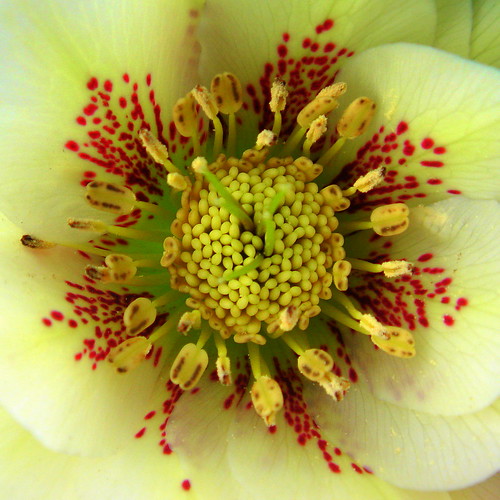
yellow hellebore by perseverando

Where: Carolyn’s Shade Gardens

325 S Roberts Rd

Bryn Mawr, PA 19010

610-525-4664

carolynsshadegardens@verizon.net

When: (Select One)

Saturday, March 20, from 10 to 11:30 am

Sunday, March 21, from 1 to 2:30 pm

Friday, April 2, from 10 to 11:30 am

Saturday, April 3, from 10 to 11:30 am

Cost: $25 per person

Attendance is limited to 15 people

Content: Using examples from my own gardens, I will cover everything and anything you ever wanted to know about hellebores, including:

+ How to grow and maintain them

+ How to propagate them by division and seedlings

+ How to pick the best plants

+ The difference between “species” and. “hybrid” hellebores

+ What makes a superior hybrid hellebore

+ What is special about the 15 or so species of hellebores

+ Some of the interesting new species crosses available

+ A special selection of hellebores will be available for purchase, including rare plants potted just for the seminars

The seminars are suitable for any level gardener as long as you can listen to discussions of the most esoteric qualities of hellebores without your eyes glazing over. Questions and observations from the group are encouraged. Feel free to bring samples for identification and discussion.

Registration: To register, please click on this address carolynsshadegardens@verizon.net and send me an email listing the seminar date, your name, and phone number. You will receive a reply confirming your registration and containing further details.

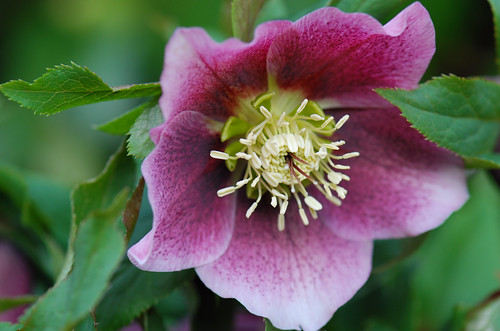
A Hellebore.....The Lenten Rose by keithhull

Companion Planting for your Garden

Photo of Marigolds planted next to Cucumber plants by Ellen Sousa at Turkey Hill Brook Farm

When planning your garden this year, consider companion planting.  What does it mean to do companion planting? Companion plants are the plants you should grow next to plants that you want in your garden. These companions assist because they have natural substances in their roots, flowers, leaves, etc. that can either repel and/or attract insects. The companions can also provide nutrients to the soil to help enhance the growth rate and flavor of the plants they are near. Companion planting has been used since the 14th century in small gardens as a way of helping to get rid of pests. Then in the 1970s organic gardeners started using companion planting to raise their plants without commercial pesticides. Companion planting is now included as one tactic in what is called Integrated Pest Management.

Why is Integrated Pest management also referred to as IPM? IPM is using a variety of methods that are benign and safe to get rid of plant pests. Companion planting is not the final solution to gardening problems; it is just one means of safe, benign pest elimination. So add it to your arsenal instead of just using synthetic pesticides, insecticides, or weedicides that can be dangerous to the user as well as the environment.

Continue reading “Companion Planting for your Garden”

Green Roofs: How to Start One

a desert grows in brooklyn by vfraiche

TheGardenLady received this question from Peggy.

I am doing a story on rooftop gardens in Fort Greene, Brooklyn, sort of a how-to piece.  Would you be able to assist me with information on how to start one/if there are licenses to apply for/if Brooklyn rooftop gardens are different from others in the city?

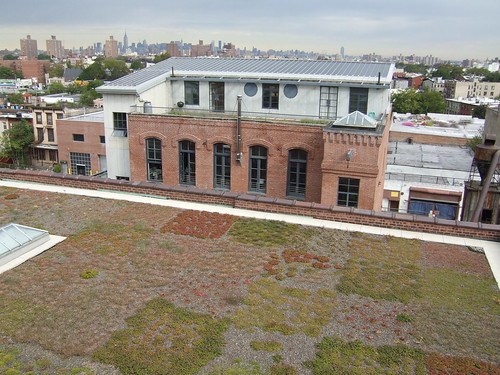
Green roofs are the way of the future. They are being created around the world. Wikipedia speaks of the various types of roof gardens with photos of these gardens around the world.

A Green Roof and Solar Panels in Brooklyn by Kieran K. Meadows

There are many rooftop gardens in New York and Brooklyn that I have read about in newspaper articles.  See here and here.   Even Zabars in Manhattan raises salad on their rooftops – in greenhouses. You should contact these gardens with your questions, especially the educational director of the New York Botanical Gardens.

I do not have any knowledge about the laws for installing the rooftop gardens in Brooklyn nor what licenses are needed. I think one should have an engineer involved. I would check with the Chamber of Commerce or a local roofing company to ask about licensing requirements.  See here.

By going online to various Agricultural Schools in this country you can find excellent information on how to build a greenroof. Rutgers has good information on green roofs.

Swarthmore College was one of the first rooftop garden that I had seen. I believe that they used Furbish Company to install their roofs.  The Furbish Company seems to be a leader in roof gardens on the east cost. I attended a lecture they had given and was impressed with their knowledge. Contact both of these places.

Another good source to go to is a website called greenroofs.  On this site American Hydrotech is offering a free waterproofing and roofing handbook that you might be eligible to get. And they have an excellent database of green roof projects.  See here.

Watermelon: where to find different varieties

A piece of watermelon.... by Rebeca Mello

TheGardenLady received this question from Bluelytes:

Would you know where I could obtain seeds of these russian watermelon varieties?:  Podarck Solatsa or Skorospelyi Sakharnyi

Watermelon is one of my favorite fruits -  if you can find them when they are ripe and fully sweet. That doesn’t seem to be the case these days. When shopping for a watermelon if you see the stem end still remaining on the melon, one can tell that the watermelon was harvested early. This is a clue that generally the watermelon will be a disappointment. Hopefully, also, when you buy a watermelon, you will get one harvested locally so that you know the melon could ripen longer on the field.

summer by carrie227

China is the number one producer of watermelons. If Chinese watermelon are sold in US stores, they were probably picked before they ripened.

Your question intrigued me. I imagine that you are requesting a watermelon that you know is super sweet. So I did some research to try to find the seeds you yearn for.

I learned that watermelons are thought to have originated in the Kalahari desert of Africa. That makes sense to me because when I was a child, my parents planted a field of watermelon in a year that had a severe drought. We were surprised to see that even when the plants seemed to be dying we had the best harvest of watermelons we ever had. We had so many watermelons we didn’t know what to do with them; so we children would break them open, eat only the heart and have watermelon fights with the leftover watermelon flesh. Pink snowballs in the hot summer. We had so many we couldn’t give them away fast enough.

Family from Philadelphia drove down to the farm one day and loaded their car with so many watermelons that the car could barely move. Later we learned that just before they reached Philadelphia, their car had broken down from so much weight. It happened on the Benjamin Franklin Bridge.

Continue reading “Watermelon: where to find different varieties”

How to Get Free Tickets to 2010 New Jersey Flower & Garden Show (Feb 18-21)

New Jersey Flower Garden Show by Free Of The Demon

Once again PSE&G is giving free tickets to the New Jersey Flower & Garden Show that is being held at the Raritan Center in Edison, NJ, starting Thurs., February 18 through Sunday, February 21st. You print the ticket yourself and it is a free pass for two.   Click here.

For a fresh whiff of Spring, TheGardenLady recommends your attending flower shows. Let GardenLady readers know if there are free or discounted garden show tickets for flower shows in your state.

New Jersey Flower Garden Show by Free Of The Demon

Red Clover: Pink Purifier

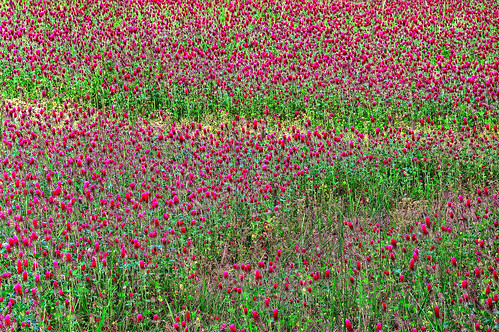
Clover Field in Georgia by JamesWatkins

Trifolium Pratense, otherwise known as Red Clover, is an herbaceous perennial member of the legume family that is native to Europe, Western Asia, and Northwest Africa. This gorgeous bulb-like flower with honey scented pink petals has been long revered for its cancer fighting properties, however today it is most often found as a leguminous crop to eventually be used for livestock fodder. The nitrogen fixing properties found in its deep roots has made it a favorite for gardeners and farmers alike, its ability to stop erosion and fix nutrient depleted soil has made it an invaluable resource for soil health.

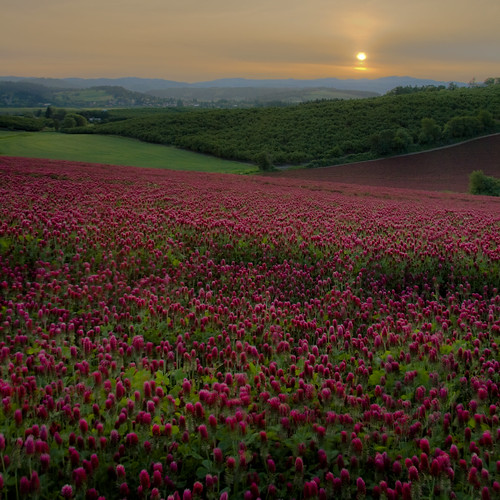
Crimson Clover by Jim-AR

Upon maturity Red Clover can rapidly reach up to 2 feet in height and this unassuming flower has a long history as a medicinal herb that may have been forgotten in contemporary times. The ancient Chinese would burn the dried plant as cleansing incense, the Irish used the hot tea made from Red Clover flowers as a winter cold deterrent, in the 1917 Health from Field to Forest it was listed as ‘one of the best blood purifiers on earth’, and in the 30’s concentrated concoctions of Red Clover were placed on tumorous growths to encourage the alleviation of cancer; in fact the National Cancer Institute has substantiated Red Clover’s cancer fighting properties.

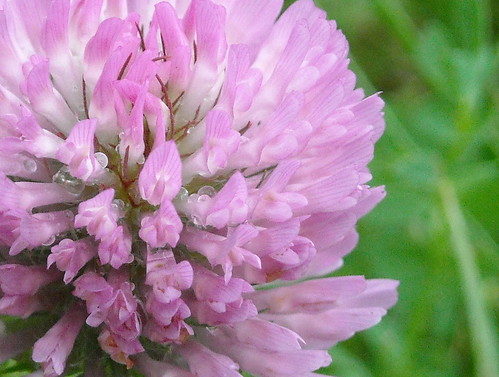
Red Clover - Trifolium Pratense by A. Walden

Red Clover is full of nutritional properties, containing significant levels of calcium, iron, magnesium, manganese, phosphorus, potassium, zinc, beta carotene and vitamins B3, C, and E. Red Clover stimulates the body’s eliminating systems, encouraging the production of bile and digestive fluids which helps liver and kidney function as well as increasing the efficiency of digestion and the elimination of waste accumulated within the stomach and intestines. Red Clover helps alleviate excess mucus, relaxes the body, relieves arthritis pain, is especially useful as treatment for menopause and the unwanted monthly symptoms of PMS. Red Clover has also been  successfully used in helping weakened immune systems, skin complaints, debilitating and invasive diseases.

Field View 6 by zircon100

Red Clover is overall a wonderful gentle tonic but should be avoided when using blood thinner medication. The best way to enjoy the benefits of Red Clover is steep the dried leaves creating a warm cup of tea at the end of the day (also tastes excellent cold for warmer months), sweetened to taste.

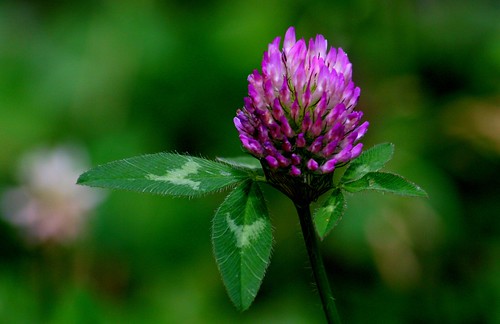
Red Clover by Carey Newton

Please Note: Information provided here is not to replace the medical advice of your physician and is for educational purposes only

Galanthus and Other Winter Plants To Buy From Carolyn Walker’s Shade Garden

More Galanthus and other winter interest plants that you can buy from Carolyn Walker’s Shade Garden

Potter’s Prelude

Charles Cresson’s Heirloom Snowdrop Collection

New G. ‘Atkinsii’: In Snowdrops, Matt Bishop says that ‘Atkinsii’ has “elegant elongated flowers that suggest the drop-pearl earrings of Elizabeth I”—if that description doesn’t portray a true English classic, I don’t know what does. It is a large-flowered cultivar (the largest I am offering) valued for its early bloom and particularly sweet fragrance. Selected in the 1860s by James Atkins of Gloucestershire, Charles got his bulbs from the famous Swarthmore bulb authority Mrs. Wister. She bought her bulbs in the 1960s from the Dutch bulb nursery, Van Tubergen, renowned for their well documented bulb collections. The authenticity of Charles’s stock has since been reconfirmed by Michael Hoog, the grandson of Van Tubergen’s founder. Charles’s plants have the appearance and documented lineage of true ‘Atkinsii’, a snowdrop almost impossible to obtain today outside of England. $25 (1 plant per pot).

G. elwesii var. monostictus ‘Potter’s Prelude’: This is a free-flowering and vigorous snowdrop with wide recurving blue-green leaves and large flowers similar to the best of the species except that it blooms from November to January. It was selected by Jack Potter in the 1960s, former gardener to Mrs. Wister and Curator of the Scott Arboretum. In 2004, Charles registered it with the KAVB (the international registration authority for bulb cultivars) in the Netherlands. Matt Bishop declared ‘Potter’s Prelude’ the best of its type and will include it in the revised edition of Snowdrops. I am honored to be the only source for this cultivar. $40 (1 plant per pot) (photo above).

New G. ‘Magnet’: The descriptions of this snowdrop are a joy to read, and I can see why after having it in my garden. The stem (or pedicel) of the substantial flower is long and thin causing it to sway in the slightest breeze and setting ‘Magnet’ apart from all other snowdrops (no magnifying glass needed). Selected in the 1880s, it may have been named ‘Magnet’ after the child’s fishing game with magnets and sticks, we can’t be sure. I do know that Matt Bishop says it defines garden-worthiness and is a mainstay of snowdrop collections throughout the world. $25 (1 plant per pot).

Continue reading “Galanthus and Other Winter Plants To Buy From Carolyn Walker’s Shade Garden”

More On Galanthus To Buy From Carolyn Walker’s Shade Garden

More on Galanthus that you can buy from Carolyn Walker’s Shade Garden

Galanthus ‘Potter’s

Galanthus elwesii

Early January bloom, unique green markings, naturalizes

Galanthus nivalis

Bears many flowers, spreads rapidly

Galanthus nivalis ‘Flore Pleno’

Double flowers

Galanthus nivalis ‘Viridi-apice

Green markings on outer petals, substantial plants, my favorite

Galanthus ‘S. Arnott’

Heart-shaped green marking, rounded petals

Galanthus ‘White Dream’

Late-blooming, rare

Galanthus woronowii

Continue reading “More On Galanthus To Buy From Carolyn Walker’s Shade Garden”