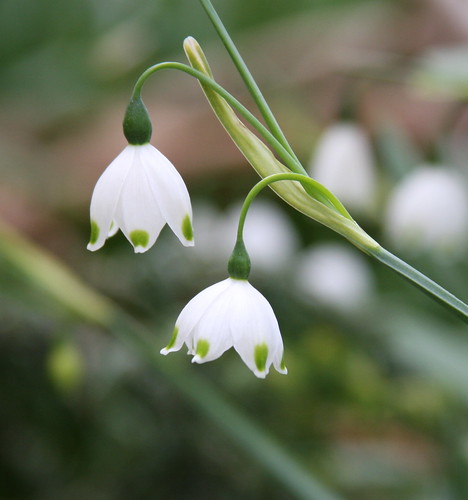
Galanthus Nivalis at Carolyn’s Shade Gardens

Calling all Galanthophiles

(That’s a British word for gardeners obsessed with snowdrops)

Galanthus nivalis at Carolyn’s Shade Gardens

Carolyn Walker of Carolyn’s Shade Gardens writes that ” buying snowdrops ‘in the green’ (as they say in the snowdrop world), rather than as bulbs in the fall, is the best way to insure vigorous healthy plants. You will also be able to enjoy the blooms immediately as most plants will be flowering when you receive them. ” She has teamed up with the famous Swarthmore gardener Charles Cresson to make available some of his exceptional heirloom varieties. Charles teaches the bulb course at Longwood Gardens (among other accomplishments) and has traded with numerous garden friends and snowdrop enthusiasts to amass an amazing collection of snowdrops, some of uniquely local origin.

Carolyn is also offering four additional winter interest plants: a miniature arum, a special crocus, a spectacular hardy cyclamen, and an early-blooming Christmas rose.”

GALANTHUS: Common snowdrops (G. nivalis) appear naturalized throughout Carolyn Walker’s garden. The wonderfully honey-scented, white flowers appear by the thousands from February through March-a signal that winter is ending. By adding unusual varieties, one can extend the snowdrop bloom season from mid-fall through spring. For example, ‘Potter’s Prelude’ blooms in the fall, while G. elwesii, ‘S. Arnott’, and ‘Atkinsii’ bloom in the winter before the common snowdrop. A great companion plant for hellebores, snowdrops grow in full sun to full shade and are usually not picky about soil. Deer resistant and summer dormant. For more photos, use Google images.

To Order: If you would like to order any listed in the above paragraph, please send Carolyn an email to carolynsshadegardens@verizon.net with the plant name, quantity, your name, and telephone number. Supplies are limited (except for G. nivalis) so order early. You will receive an email confirming your order, amount owed, and outlining pick up options for late February or early March. Any snowdrops purchased can be planted in your garden immediately or enjoyed in the pot until they are planted later in the spring.

More photos from Carolyn Walker’s Shade gardens that are for sale will appear in the next column.

US Fish & Wildlife Service’s Endangered Species Bulletin

TheGardenLady just signed up to receive US Fish & Wildlife Service’s Endangered Species Bulletin. “The Endangered Species Bulletin was created in 1976 to meet the growing demand for endangered species program news. Through the Bulletin, the U.S. Fish and Wildlife Service disseminates information on rulemakings, recovery plans and activities, conservation partnerships, research developments, and a variety of other issues. It is distributed on-line four times per year. ” Check out their information here. TheGardenLady readers might also be interested in receiving their mailings. Perhaps there is some way we can help in preventing more loss of endangered species and help to recover some of them from extinction.

And if you have children or grandchildren or know children, you can raise their awareness level by subscribing because there is a section for Kids called Kids Corner that is educational and fun as well as telling children how they can help. This is a site I want my friends, children and grandchildren to know about.

Where to get Spring Snowflakes, Leucojum

Leucojum by ajay77*

TheGardenLady received this question from Lisa:

I have been looking for spring snowflakes, but can’t find them here in the US. Do you sell them, or know where I might be able to find?

According to the Pacific Bulb Society, “Leucojum is an European genus with species commonly known as “snowflakes” and often regarded as the poor relation of Galanthus with species known as “snowdrops”.  Species are regarded as hardy in the south of England, New Zealand, Australia and the southern states of the USA. Leucojum is a member of the Amaryllidaceae family. ”

Beauty... is the shadow of God on the universe. ~Gabriela Mistral, Desolacíon by Abby Lanes

There are numerous nurseries that sell Leucojum. Two that I would recommend are Brent and Becky’s Bulbs and John Scheeper’s Inc.  They are both very fine bulb nurseries and they both sell two kinds of snowflake, Leucojum aestivum and Leucojum aestivum Gravetye Giant.

But they probably do not sell snowflakes at this time of year.  Leucojum have to be planted in the fall for spring flowering.

Scheeper’s fall catalog will come out in early June.

When you order from these nurseries, the bulbs will be shipped to your property at the proper time for planting in your temperature zone.

Good luck. And send TheGardenLady a photo of your snowflakes next spring.

Carolyn Walker’s Garden Catalog

Dear Readers, I am letting you read a letter I received from one of my favorite spring plant gardeners who also sells her plants and has a wonderful catalog – with Latin names – so you can order plants you want for your own home. This is Carolyn’s Shade Gardens.

If you live in or are visiting the area, by all means, visit Carolyn Walker’s home and charmingly delightful garden where you will see every plant she sells, happily growing and you can buy the plants you love seeing on her property. Carolyn’s Shade Garden sells quality plants and this GardenLady recommends them. If you meet Carolyn , tell her you read about her sale on TheGardenLady.

Happy New Year to you and your family!

I am sending out my catalog (here it is CATA2010) early this year to serve as a brief respite from the cold weather we have been experiencing. Curl up by the fire or in bed and enjoy this glimpse of warmer weather to come. I must admit, winter is not my favorite time of year. Even now though, I have plants in bloom: the snowdrop ‘Potter’s Prelude’ and the Christmas rose ‘Jacob’, among others. My gardens provide me with a restful sanctuary from the stresses of daily life and, this year, the difficult economic times we still face. I hope you can also seek solace in your gardens. For a small investment in plants, there is a big reward.

Plants can also be a positive step in sustaining the environment. When I read Doug Tallamy’s book Bringing Nature Home, I finally understood why native plants are not only desirable but crucial to the survival of our world. His book has inspired me to do more to promote native plants. When you read the attached catalogue, you will see that all native plants appear in green so you can easily find them. Look also for plants marked New to read about some exciting introductions to my list.

Please come to Carolyn’s Shade Gardens this spring to see what plants you can add to your own refuge from the cares of the world—your garden.

Enjoy the catalogue,

Carolyn.

Coastal Maine Botanical Garden

This past summer TheGardenLady went to Maine with her family. The first night we stayed in a lovely Bed and Breakfast called Snow Squall Inn that my son found serendipitously on line. The owner Paul Harris is not only a professional chef, but he loves to garden. He was originally from England where, I think, gardening is in the genetic makeup of the people. We arrived later than expected, but Mr. Harris came out to greet and welcome us. Upon learning that I was interested in Gardens, he told me about a new botanical garden in the area that he said shouldn’t be missed. How right he was.

The Coastal Maine Botanical Garden opened in 2007 on 128 acres of pristine land with 3,600 feet of tidal shore frontage in Boothbay. They were then gifted more land adjacent to the original 128 acres so that ” Coastal Maine Botanical Gardens is now comprised of 248 acres, which makes it the largest botanical garden in New England. The property boasts nearly a mile of tidal salt water frontage. It is also one of a very few waterfront botanical gardens in the United States. ”

Continue reading “Coastal Maine Botanical Garden”

More about Dandelions

Dandelion Fireworks-PHOTO 183-The halfway mark by aussiegall

TheGardenLady enjoyed Christy Baker’s guest post about dandelions that is on TheGardenLady blog. I hope the readers liked reading it, too.

Growing up on a truck farm, I am proud to report that the adjacent town to my town is known today as the dandelion capital of the world. Even the New York Times had an interesting article about Dandelion growing in Vineland, NJ.

Because dandelions were so prevalent, I always wanted to try a recipe for dandelion wine. Obviously lawns, when I was growing up, were not so pristine as they are these days. No one, that I knew, used any herbicides to kill dandelions. They may have been considered weeds even then. I can’t remember, but we children always loved them and loved blowing on the seed heads, dispersing more seeds to turn into yet more dandelions. And the flowers and leaves were always healthy to eat.

Wine recipes always read as an easy wine to make.  But I never tried. However, we had the dandelion leaves for salad.  No one that I knew ever heard of arugela in those days for the bitter green in a salad.

Someone observed that the healthiest diet is the one poor people had to eat in the old days. So consider adding dandelion greens to your diet for health reasons as well as a more diverse green palatte in the salad bowl.

Save the Monarch Butterfly – Create a Monarch Butterfly Waystation

Just released... by weedsforwildlife.com

Have TheGardenLady readers ever thought of having their garden become a Monarch butterfly Waystation? Let me explain.

Everyone knows that the Monarch follows a route of migration from Mexico up to Canada in the spring and then returns to Mexico every fall. This is a herculean task and the monarch butterfly needs lots of nutrients or places to lay its eggs to survive this rigorous flight. However, the population of monarch butterflies is deteriorating rapidly. The population is down to one-tenth of its peak in 1996. This is because of the destruction of farms and the urban building of too many houses, paved parking lots and the use of herbicide resistant crops as well as pesticides.

So how can you help? In 2005, insect ecologist Chip Taylor, of the University of Kansas in Lawrence came up with the idea of creating at least 10,000 “waystations” wherever Monarchs fly. This is how people who have a garden or flower bed can help: by planting plants that monarchs need to lay eggs, like milkweed and nectaring plants for them to drink, like zinnias; these are sun loving plants and butterflies love full sun,too. Also offer a little water in a birdbath type of vessel. Monarch butterflies can and will stop at your home for much needed sustenance. And you can have the pleasure of seeing butterflies fly in your garden.

Monarch in our yard on milkweed by rowrlm

You can get your own waystation kit online here or by calling 1-800-780-9986. Kits contain seeds for milkweeds and nectar plants. You can read more about the Monarch butterfly’s need here.

The Swamp Milkweed Asclepias incarnata is the best perennial plant for the Monarch butterfly. Another milkweed that Monarchs like is tropical Milkweed Asclepias Curassavica. New England asters Aster novae angliae is an excellent nectar plant for Monarchs. Zinnia elegans and Zinnia lilliput are also excellent nectar plants to raise. These seeds can all be purchased here.

And having these plants in your garden will also attract other butterflies besides the Monarch butterflies.

So, please, Dear Readers, won’t you plan and plant your garden with butterflies in mind?. Make your garden a “waystation” and send TheGardenLady photos of your waystation with its visiting butterflies. Help restore the numbers of Monarchs to the environment. Thanks.

Fruit Fantasy – Exotic Fruit From Around The World

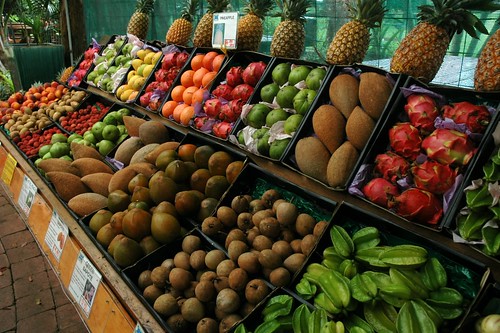
tropical fruit world by mralan

Winter is the time when TheGardenLady dreams of delicious freshly harvested fruit. We are lucky to live in an age when we can buy and eat fruit all year long. But between harvesting the fruits in countries like Chile and eating them when one buys them in the Supermarket here in the Northeast during the winter, leaves a lot to be desired, tastewise. Sadly, most fruit sold is tastless.

I recently read a book about people who travel around the world hunting for exotic fruits. The book is called The “Fruit Hunters” by Adam Leith Gollner.  The book is filled with fascinating facts about fruits and about people who are obsessed with finding them. Someone said that there are about 2 trillion different types of food in the world on the 7 continents. Even if there aren’t that many fruits and vegetables, there are just a handful of fresh fruits and vegetables sold in our supermarket with very few fruit choices ( with the new Asian food stores popping up around the country, there are a few more fresh fruits offered for sale.)

Continue reading “Fruit Fantasy – Exotic Fruit From Around The World”

Raising Plants in the Desert

Tomato Plants in the Negev

It may be winter here and across most of the US, but I think back to the terrible drought that Texas and other parts of the Southwest had this past summer and the potential for water problems in these areas and the West in the future.

I recently read an interesting article about new desert technology that is coming out of Israel.  There at the Center for Experiments in Desert Farming “researchers joined with scientists from the Ben-Gurion University, the Vulkani Institute, and the Hebrew University to figure out how to grow tomatoes using brackish water. At the experimental station, organic tomato plants are all irrigated with salt water mixed with floodwater and recycled waste water. Using sophisticated technology, researchers carefully monitor the plants to determine the correct percentage of salt needed for each species to thrive. ” Israel produces “15,000 tons of ‘Desert Sweet’ tomatoes in 250 acres of hothouses in the desert, ranging from organic tomatoes to especially small strains of cherry tomatoes that are sold at a high price to restaurants and hotels throughout the world.”

“In addition to preserving precious freshwater in this thirsty desert region, growing tomatoes with brackish water has a pleasant, if unintended, side effect: as a reaction to the pressure that the salt exerts on its cells, the tomato plants produce more sugar, making their flesh even sweeter than those grown in central and northern Israel.”

At the Yair Agricultural Research Station in Israel’s desert they are using what they call “popcorn” soil which is ” actually a stone that gets heated to 5,000 degrees, causing it to pop and act like a sponge. When wet, it can irrigate the plant continuously and is therefore much more efficient than sand.” In Israel’s desert, “an area with an average rainfall of only 20 millimeters a year, farmers manage to raise 60%” of Israel’s produce for export.”

I think it is important to learn from other country’s successes in agriculture so that we can improve our growing methods. If readers read about new agricultural improvements coming out of other countries, please let the readers of TheGardenLady blog know about them, too. We learn by sharing ideas.

Color in the Winter Garden – Red and Yellow Twig Dogwoods

Red-Twigged Dogwood by Mr. Danport

Winter is the time of year when people who live in climates where there is a barren landscape or with snow, would like to look out the window and see some color outdoors. Unless you have “planted” artificial flowers, no living flowers will bloom outdoors at this time of year. So those lucky or smart enough will have planted plants on their grounds with color interest. If you don’t have plants with color, consider adding them to your landscape in the spring so that they will brighten the view next winter.

Two popular plants for winter interest are the red and yellow twig dogwoods.

Red twig dogwoods such as Cornus alba cultivar ‘Elegantissima’ or the cultivar ‘Argenteo-marginata’ are native to Asia.

Red osier dogwoods (Cornus sericea or Cornus stolonifera) with a cultivar like ‘Cardinal’ are native to North America.

Bloodtwig dogwoods (Cornus sanguinea) with cultivars like ‘Winter Beauty’ or ‘Winter Flame’ are native to Europe.

Cornus sericea 'Flaviramea' by Caffinara

The Yellow twig dogwood is Cornus sericea with cultivars like ‘Flaviramea’ or ‘ Bud’s Yellow’ or ‘Silver and Gold”

Some of the cultivars are more orange than red or are yellow with red tips.

Both yellow twig and red twig dogwoods are shrubs, which mean they grow about 10 feet tall. They have berries and flowers so they have all year interest, but they are both grown mainly for their wintertime twig color. Some grow in temperature zones as low as zone 2 and as high as zone 8. They like sun for most twig color but can take slight shade. These are showiest and most effective if you have a location where you can plant a few shrubs in one area that you can see out the window.

If you are interested in these shrub dogwoods, check out the best nursery in your area. See which cultivars they recommend for your area. You don’t have to buy the plants at this nursery; but you will get an idea of what the best nursery recommends. Then see what the lower priced nurseries have available. See if you like what you see. The price might just be lower because they sell a smaller tree. Google up the Latin name of the plant with the cultivar and see if you have the best environment on your property for the plant.

If you plant the yellow and/or red twig dogwoods, please send TheGardenLady blog a photo of the colored twigs next year in the winter. The photo would be especially appreciated surrounded by snow- like most of the country is getting this year.