Excellent Flowering Plants for Your Garden and Garden Containers

Flossflower – photo is courtesy of ProvenWinners

In planning your garden for next year, TheGardenLady wants her readers to consider a brand of plants that is sold under the Proven Winner label.  The Proven Winner brand calls themselves “the leading brand of high quality flowering plants in North America.”

The Proven Winner company was founded in 1992 and is owned by “three leading U.S. plant propagators” and “together with 3 licensees in Canada” produce top quality plants. They also sell a complementary brand, “Proven Selections®, which consists of regional favorite varieties.” Proven Winner plants are sold in almost every garden center in North America.  Proven Winner plants can also be purchased around the world. There is a Proven
Winners Europe
, Proven Winners Asia and Proven Winners Aussie.

Proven Winner’s  goals ” are to introduce the best, most unique, high performing plants, to produce them under the highest quality standards, and to market the plants innovatively. Proven Winners brand plants claim they are unsurpassed in terms of flowering, growth habit, disease resistance, and garden performance.” This GardenLady has been delighted with her Proven Winner plant purchases and always looks for the Proven Winner label when she goes shopping for plants. Many of the best nurseries in TheGardenLady’s area carries this brand.

For 2010 Proven Winner lists 166 new plants with photos and information about each plant. Place the cursor over the photo area and more info about each plant will come up. Proven Winners is not quite finished putting all the photos of the new plants on their site- but they promised TheGardenLady that all the pictures are going up. Proven Winner also has lists of the other plants they have introduced over the years. Their excellent website has answers to both gardening and container gardening questions. And there is even a place for you to contact them with your personal plant questions.  The website also lets you know where you can buy Proven Winner plants in your zip code area.

Spring Basket – photo is courtesy of ProvenWinners

Flower and Garden Shows Around the Country

Now is the time to mark your calendar so that you won’t forget to buy tickets to attend the flower and garden shows that are coming to your area. Or if you want, you can travel around the country attending wonderful flower shows before you start planting your own gardens. Here is a list of some of the Flower and Garden Shows in the US in order of the dates they are happening. It is incomplete so let TheGardenLady know of shows that she missed that will be in your area.

Rochester garden show 2009 by savage gardener


The Northwest Flower & Garden Show
– Seattle, Washington, will be held Feb. 3-7, 2010. http://www.gardenshow.com/seattle/thegardens/

Southeastern Flower Show Atlanta – Georgia  Feb.4th-6th http://www.sehort.org/

The Yard, Garden & Patio Show – Portland, Oregon, Feb. 12-14, 2010. http://ygpshow.com/

The NJ Flower and Garden Show http://www.macevents.com/show.cfm/eventID/121 is Feb. 18th through Feb. 21st

The Rhode Island Spring Flower and Garden Show Feb. 18th through Feb. 21st http://www.flowershow.com/

Connecticut Flower and Garden Show Feb. 18 through Feb.21 http://www.ctflowershow.com/

The Philadelphia International Flower Show http://www.theflowershow.com/Showinfo/index.html is Sunday, February 28th through Sunday, March 7

Epcots International Flower and Garden Festival http://allears.net/tp/ep/flogar.htm March 3 -May 16

Wichita Garden Show – Kansas March 3 through March 7th http://www.wichitagardenshow.com/index.html

Nashville Lawn & Garden Show. March 4 – 7, 2010 http://www.nowplayingnashville.com/event/detail/162485

Southwest Flower and Garden Show March, 5,6, 7 Phoenix, Arizona http://www.swflowershow.com/

Chicago Flower and Garden Show by Jim Frazier

The Chicago Flower and Garden Show will be at the NAVY PIER | MARCH 6-14, 2010http://chicagoflower.com/

Gardenscape – The Rochester Flower Show
http://www.rochesterflowershow.com/ March 11-14

San Francisco Flower & Garden Show March 24-28 http://www.sfgardenshow.com/

Boston Flower & Garden Show March 24-28, 2010.http://www.masshort.org/Blooms-2010

Boise, Idaho Flower and Garden Show March 26-28 http://www.gardenshowboise.com/

The Cincinnati Flower Show April 17th -April 25th http://www.cincyflowershow.com/

The Cleveland Botanical Garden Flower Show is supposed to be on Memorial Day Weekend

2010 Award Winning Flowers

Happy New Year- 2010. This is the time of year that plant associations are choosing the best of the best new plants for the year.

AAS the All America Selections has chosen 4 plants for 2010 that they count as award winning. They recommend these plants for gardeners to plant in their gardens.

Mesa Flower

The first is a Gaillardia x grandiflora  or blanket flower called Gaillardia F1 ‘Mesa Yellow’. This is the first hybrid blanket flower that has a controlled plant habit that does not get tall, loose and floppy; starts blooming a few weeks early and blooms all summer; and is relatively maintenance free.

Twinny Peach

The second AAS Award winner is Antirrhinum majus Snapdragon F1 ‘Twinny Peach’. It is a snapdragon without the jaws that snap- what they call a double or butterfly flower form. It is a blend of peach tone colors that are unique. These snapdragons are easy to grow, will flower all season with little care and has exhibited some heat tolerance.

Endurio Sky Blue Marien

The third AAS winner is Viola cornuta F1’Endurio Sky Blue Marien”. This delicate looking, spreading/ mounding sky -blue flowering plant AAS says is tough as nails.

Zahara Starlight Rose

The last AAS winner is the Zinnia marylandica ‘Zahara Starlight Rose.’ This is a bicolor zinnia that has resistance to leaf spot and mildew- two diseases of zinnias that are ugly and can kill the plants. Try to always buy disease resistant plants. Besides being disease resistant, Zahara Starlight Rose provides generous color all season, is heat and drought tolerant, easy to grow in gardens. AAS says that this is a ” perfect plant for the novice or experienced gardener because it is so undemanding with a maximum number of blooms.”

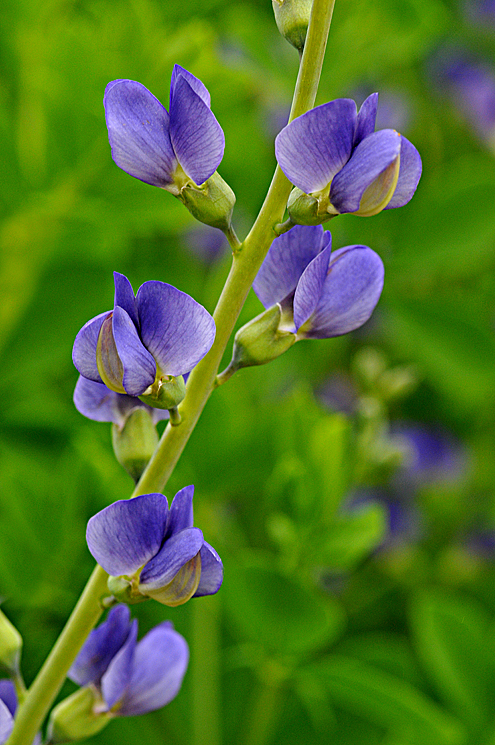
Baptisia australis blue false indigo

The Perennial Plant Association has chosen Baptisia australis blue false indigo as the perennial plant of 2010. This native American plant is an excellent choice for sunny gardens all over the continent. It attracts butterflies and makes a great cut flower.

First Frost

The 2010 Hosta of the year is called ‘First Frost.’  Hosta First Frost features intense blue-green leaves with irregular, jetting, yellow margins that turn white in summer. A beautiful plant that looks great until the first frost, thus the name.  The Hosta Society also has named the Hosta of the year for 2011. This is called ‘Praying Hands.’

Planning for the Planting Season – A Problem with Some Gardening Catalogs

Fragrant Viburnum

It’s that time of year again. The time to be dreaming and planning for the planting season.

The first of the plant and seed catalogs arrived in my mailbox already and this GardenLady has been going over and over the plants in it deciding on what should be planted come spring. I would like to order plants from this first catalog. But Caveat emptor! This catalog leaves something to be desired: Latin names are missing. The catalog only has a common name for most plants; though they do have some trade-marked names. How can buyers be sure that they are getting what they want or if they are getting the newest plants without proper classification of plants? When purchasing any plant, there should be the genus, species,and at least the plant cultivar. This way a buyer can check out the plant he or she is buying to see if it is really what is wanted.

For example, I would like to buy a viburnum. There are more than 150 plants in this genus. The one this catalog sells is called White snowball viburnum. So Is the viburnum in the catalog I received a Viburnum macrocephalum -Chinese snowball viburnum or Viburnum x carlecephalum – the fragrant viburnum that I would love? Or is it some other kind of viburnum? The catalog says the viburnum it is selling is fragrant. But other descriptions in the catalog don’t match with what is written about Viburnum x carlecephalum.

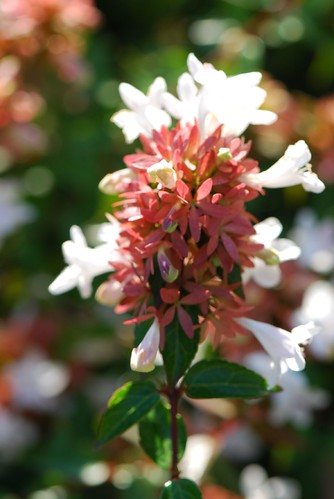
DSC_0819 Abelia x grandiflora shrub by debsteinberg

Another shrub I would love to own is a fragrant abelia. This catalog lists one for sale. There are about 15 to 30 species of abelia, so how is a buyer to know which one is being sold in the catalog? Are they selling one of the recommended varieties?

If only the catalog would add the proper plant classification this GardenLady would feel more comfortable ordering. I think their sales would increase. Unless they are selling overstocked or outdated plants and don’t want people to know. Still, because they are offering a special coupon for the order so that you are basically paying just for shipping, people will buy. But customers still want to know what they are getting; even to just let their friends know what they have planted.

If you want to start receiving gardening catalogs in your mailbox, here is a site for you to contact to get the catalogs you want.

Where You Can See Snowdrops (Galanthus)

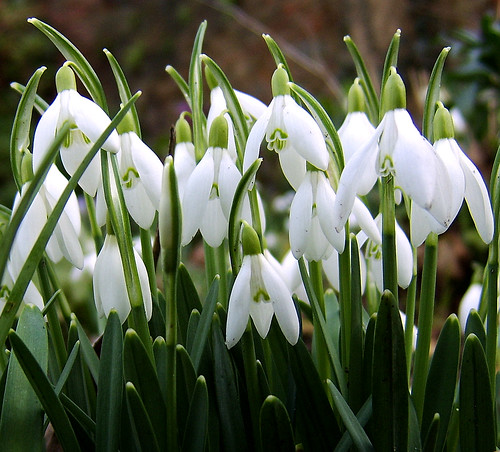
snowdrops, ghiocei - Galanthus by john stanbridge

TheGardenLady received this question from Charlotte.

Can you tell me where you can see snowdrops (galanthus) in the US – I cannot seem to find any listings except yours for Winterthur – if you can help, I’d be really grateful.

Check out the public Botanical gardens in your area to see if they have spring flowering bulb gardens and call them to see if they grow Galanthus-Snowdrops. Gardens that have spring show gardens should have Galanthus. Gardens such as the Denver Botanic Gardens (see here)  or the New York Botanical Garden may have them growing among their spring bulbs. Or contact the Missouri Botanical Gardens to see if they can recommend a garden with Galanthus. If you call any of the Botanical Gardens you should be able to ask for a list of the plants they exhibit.

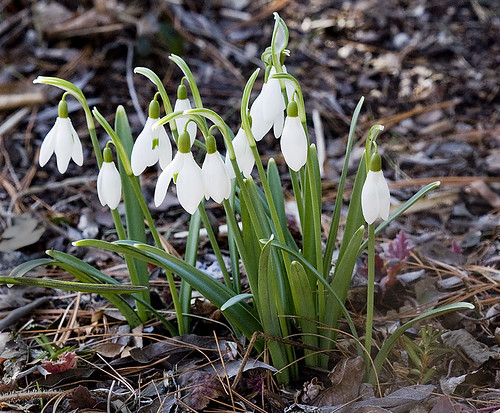
Snowdrops in the perennial garden at the NY Botanical Garden - First spring flowers by annabelleny

Join the American Horticultural Society and contact them to take tours of gardens or learn of spring gardens you can visit to see Galanthus. Or contact the Horticultural Society in your area. The Pennsylvania Horticultural Society, for example, gives great tours of gardens that you could take to see spring bulb gardens.  See here.

Join the Garden Conservancy and visit gardens during their open gardens days. Private gardens are often open to the public on these days. One of the gardens that often shows during open garden days is David Culp’s private garden. Culp, a famous breeder of Helleborus, loves Galanthus and has them growing in his delightful garden in Downingtown, Pennsylvania.

Castle Rock State Park – Part IV

This is the fourth and final post in a series about Castle Rock State Park, submitted by a reader named Jonathan.  In the first post, Jonathan explained why he chose to write about Castle Rock State Park and he also showed where it’s located.  In the second post, Jonathan discussed the geologic history of the park.  In the third post, Jonathan discussed Castle Rock and surrounding outcroppings.  In this fourth and final post on Castle Rock State Park, Jonathan discusses the Falls Overlook, outcroppings along Saratoga Gap Trail and Ridge Trail, and Goat Rock.  Jonathan also makes some concluding remarks.

Figure 15

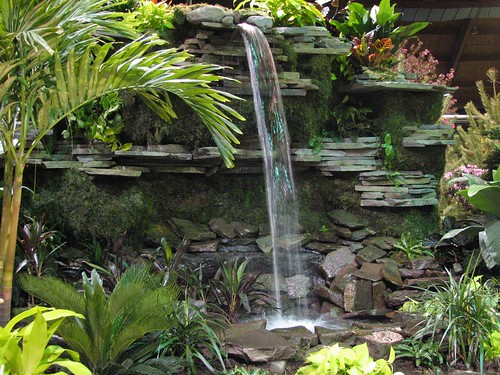
Approximately 1 mile from the Park’s main entrance is Castle Rock Falls and the Falls Overlook (figure 15). According to the Park’s brochure, this formation is roughly 100 feet tall. This sheer wall of Vaqueros Sandstone is somewhat of an anomaly because it doesn’t contain any of the pockmarks of tafoni found on most other formations. Since the formation is located in the Kings Creek Canyon, perhaps it is better protected from dry winds that might otherwise wick absorbed water to the rocks’ surface and bring with it the dissolved carbonic acid and calcium carbonate.

Along the roughly 2 mile stretch of the Saratoga Gap Trail, between Castle Rock Falls and Russell Point,  there are multiple outcroppings that tower over the San Lorenzo Valley (figures 16 and 17).

Continue reading “Castle Rock State Park – Part IV”

Castle Rock State Park – Part III

Figure 7                                                                                  Figure 8

This is the third post in a series about Castle Rock State Park.  It was submitted by a reader named Jonathan.  In the first post, Jonathan explained why he chose to write about Castle Rock State Park and he also showed where it’s located.  In the second post, Jonathan discussed the geologic history of the park.  In this post, Jonathan discusses Castle Rock and surrounding outcroppings.

Castle Rock (figure 7) is one most popular outcroppings, or bosses, in Castle Rock State Park. The Park’s brochure claims the formation is roughly 50 feet tall with caves that are as much as 15 to 20 feet wide, 10 to 20 feet high, and 8 to 10 feet deep. These caves, or tafoni (figure 8), are so large that in the late 19th century, when the Castle Rock School opened in this area, the first teacher, Miss Ida M. Jones, lived in a cave for 6 weeks as her cabin was being built.

Three processes of weathering play important roles in shaping these rocks: chemical weathering, mechanical  weathering, and biological weathering.

The tafoni are a product of chemical weathering whereby carbonic acid in rainwater seeps into the interior of rocks where it dissolves calcium carbonate, which cements together the grains of sand that make up Vaqueros Sandstone. Dry summer winds then wick this water to the rocks’ surface, bringing with it the dissolved carbonic acid and calcium carbonate. As the water evaporates, dissolved calcium carbonate is left to form a hard crust at the exterior of the rock. The interior of the rock continues to erode as the cementing calcium carbonate is removed, allowing for caves, cavities, or pockets to form when the outer crust is broken by a falling tree branch, hail, windblown debris, passing animals, etc (mechanical weathering).

Tafoni appear as both caves (figure 9) and intricate honeycomb-shaped latticework (figure 10). So unique are these formations that they inspired John Steinbeck to write in his short story, “The Murder,” “This happened a number of years ago in Monterey County… At the head of the canyon there stands a tremendous stone castle, buttressed and towered like those strongholds the Crusaders put up in the path of their conquests. Only a close visit to the castle shows it to be a strange accident of time and water and erosion working on soft, stratified sandstone.”

Figure 11
Mechanical weathering also impacts the structure of Castle Rock and its surrounding outcroppings. Take, for example, a Pacific Madrone that split an outcropping in half as it rooted itself in the rock’s cracks (figure 11). Finally, biological weathering is seen where lichens (combinations of fungi and algae) live on rocks and slowly eat away at the rocks’ surface (figure 12).

Figure 12

Chemical, mechanical, and biological weathering processes result in jointed outcroppings that sometimes appear as if they are not bedrock, but erratic boulders transported to their current locations by unknown forces (figure 13).

Some of these cannonball-like formations are likely the result of the same chemical process that form tafoni; the collection of calcium carbonate at a rock’s crust creates better-cemented areas called concretions (figure 14).

Dandelion: The Unappreciated Medicinal Warrior

Sinfonía de cristal (Taraxacum officinale) - Dandelion by Arbego

With the dawn of a new year and the approach of spring this is the perfect time to do some internal spring cleaning. Clearing out the buildup of winter feasts is a great way to jump start your system and ensure optimal health.

Dandelion - All Things must pass by Batikart

TheGardenLady has invited people with horticultural interests and expertise to contribute posts to this blog.  The following post  was submitted by Christy Baker, a certified Family Herbalist and Consulting Herbalist.   Christy is currently pursuing a certificate in Horticulture Therapy and a second Master’s in Landscape Architecture.

With a 30 million year history originating in Eurasia, Dandelion, Taraxacum Officinale, was once revered for its healing properties. Today however, most people think of it as a brightly colored nuisance, especially gardeners; the self fertilizing herbaceous plant does a very good job evading eviction. Instead of relentlessly fighting the Dandelion, try embracing its presence, for as many herbalists and naturalists know this small unassuming plant is a nutritious wonder.

Continue reading “Dandelion: The Unappreciated Medicinal Warrior”

Castle Rock State Park – Part II

Climbing at Castle Rock State Park by ...Rachel J..

This is the second post in a series about the geology of Castle Rock State Park.  It was submitted by a reader named Jonathan.  In the first post, Jonathan explained why he chose to write about Castle Rock State Park and he also showed where it’s located.  In this post, Jonathan will discuss the geologic history of the park.

According to geologist Richard Stanley, the rock formations of Castle Rock State Park are a component of the tertiary strata of La Honda basin, a “marine embayment that persisted through much of Tertiary time in the area of the modern Santa Cruz Mountains.” In his paper, ‘Evolution of the Tertiary La Honda Basin, Central California’ (1990), Stanley summarizes the history of this area:

The complicated geology and geologic history of the La Honda basin reflect the fact that, throughout its history, the basin has been located at or near the tectonically active plate boundary between the North American continent and various oceanic plates of the Pacific basin. The La Honda basin originated during the Paleocene, perhaps during an episode of wrench tectonism associated with oblique subduction and arrival of the Salinia terrane. Major restructuring of the basin during the Oligocene—including uplift and erosion of the basin margins, movement along the Zayante-Vergeles fault, and deposition of two sand-rich deep-sea fans—apparently resulted from the approach of the Farallon-Pacific spreading ridge and its collision with the California continental margin. During the late Oligocene and early Miocene, widespread volcanism and marine transgression accompanied an episode of regional transtension along the San Andreas fault system. Deposition of shallow marine sandstones and deeper-water siliceous mudstones occurred during much of the Miocene and Pliocene but was interrupted at least three times by brief episodes of uplift and erosion associated with transpressional wrench tectonism along the San Andreas fault. Marine deposition ended and uplift of the modern Santa Cruz Mountains began during the late Pliocene in response to the most-recent episode of regional transpression.

Stanley refers to ‘sand-rich deep-sea fans,’ which, in ‘A Dictionary of Earth Sciences’ (A. Allaby & M. Allaby, 1999) is defined as a “fan-shaped body of sediment that accumulates at the lower end of a submarine canyon, either at the foot of the continental slope or on the continental rise” (figure 4). In other words, a deep-sea fan can be thought of as an underwater version of alluvial fan.

Figure 4

According to Stanley, the sandstone, mudstone and conglomerate that were deposited by these deep-sea fans formed sedimentary rock, which was uplifted in the Santa Cruz Mountains as Vaqueros Sandstone that we see today in Castle Rock State Park.

Geologic maps of Castle Rock State Park and the surrounding region indicate that most of the Park’s outcrops are Vaqueros Sandstone (figure 5).

Figure 5

Additionally, because fossils contained within sedimentary rocks vary from the bottom to the top of layers, fossils found within the Park’s outcrops allow geologists to date the rock to be approximately 23 million years old (figure 6).

Figure 6

Castle Rock State Park – Part I

"Easter at Castle Rock" 28. by Madonovan

This is the first post in a series about the geology of Castle Rock State Park.  It was submitted by a reader named Jonathan.  In this post, he explains why he writes about Castle Rock State Park and where it’s located.  In the next post, Jonathan will discuss the geologic history of the park.

I chose to write about Castle Rock State Park because of its unique rock  formations, including the Park’s namesake, Castle Rock.  These formations are most dramatic near the Park’s main entrance where, in addition to Castle Rock, you can find Castle Rock Falls and Goat Rock. The Park’s attractions are not limited to its geology; its 35 miles of trails for hiking, rock climbing, camping, and spectacular views of the San Lorenzo Valley and Pacific Ocean are also major draws. Moreover, the Park’s close proximity to Stanford and the Greater San Jose Area makes it a regular destination for afternoon visits.

The Park’s most popular hike—a 6-mile loop along the Saratoga Gap Trail and Ridge Trail—pass and climb over the above-mentioned formations as well as numerous other outcroppings. The following review of Castle Rock State Park’s Geology covers 5 general regions of the park (figure 1):

1. Castle Rock and Surrounding Outcroppings

2. Castle Rock Falls and the Falls Overlook

3. Outcroppings along Saratoga Gap Trail

4. Outcroppings along Ridge Trail

5. Goat Rock

Where is Castle Rock State Park:

Castle Rock State Park is sandwiched between CA-35 and CA-9 in Los Gatos, CA; roughly 20 miles south of Stanford University (figure 2).  From Stanford, travel approximately 11.5 mile south on Page Mill Road to CA- 35/Skyline Blvd, and then travel just under 9 miles south on CA-35/Skyline Blvd to the Park’s main entrance, which is on the west side of the road. Many of the Park’s trails and dirt roads are also accessible further north on CA-35 and along CA-9.

Castle Rock State Park is adjacent to several other parks, including—from east to west—Sanborn Skyline Country Park, Saratoga Gap Open Space Preserve, Long Ridge Open Space Preserve, and Big Basin Redwoods State Park. Accordingly, many of Castle Rock’s geologic features are similar to those in nearby parks.

The featured 6-mile loop hike along the Ridge and Saratoga Gap Trails covers the western and central parts of the park (figure 3). The elevation of this region ranges from 2,600 feet to 3,200 feet above sea level.