TheGardenLady’s Childhood Experience with Chickens

garden by theshutdoor

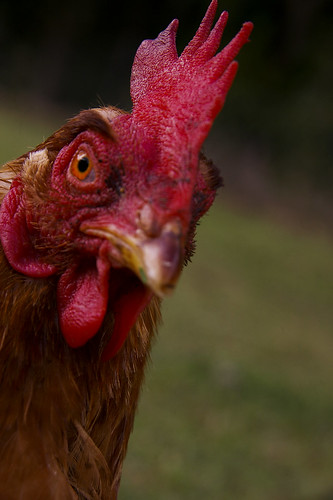
When I was a child, as I told early readers of this blog, my parents had a small farm. They had bought it just before the depression. My father, a romanticist, always dreamed of being a farmer. It was a small farm and the primary reason for its being was to raise produce. But we had two horses to plow the fields and pull the wagon. We had goats. We had two cows so that with all the milk my mother decided to make a small dairy business out of it. Besides the milk, she sold heavy and light cream, sour cream and her delicious homemade cottage cheese. We had pet ducks and of course, we had chickens.

We raised the chickens for ourselves; either Rhode Island Reds or White Leghorn chickens. We ate eggs almost daily and, I am sorry to tell you, we ate the chickens when they were too old to lay eggs or we needed food. After all, the depression hit and everyone needed to eat. But we did not raise chickens as a business.

Baby chickens hatched out:-) by ♥ Lala ♥

Every spring my mother would get a huge carton of darling, cuddly yellow chicks. I loved it when they brought the chicks into the house for warmth. I would play with them. Today I guess you would say I bonded with the chicks. But when they grew real feathers, they went out to the chicken coop and the friendship ended. Still I have never enjoyed eating chicken, I guess because of my bonding.

Continue readingTheGardenLady’s Childhood Experience with Chickens”
Growing Food Plants in the Dorm Room

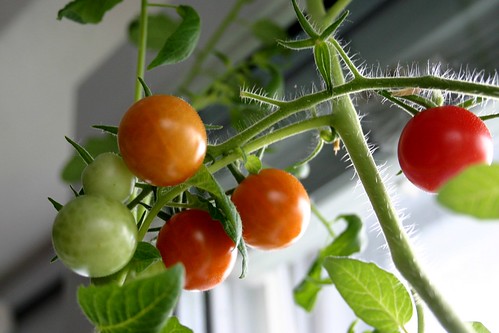
Indoor tomatoes, 2nd part by tillwe

TheGardenLady received this question from Daniel:

I would like to grow a food plant of some sort in my dorm room. I was wondering what kind of plant you would suggest. I don’t have a lot of time or gardening skill, so an easy to care for plant would be ideal. Also, our room has a window, but does not get direct sunlight. It stays around room temperature year round. Finally, it would be nice to be able to harvest something before the year is over. I don’t know if anything fits the bill, but suggestions would be great!

Wouldn’t it be wonderful if we could grow our own food in our home or dorm room? I think most of us would convert a floor to a garden just to have fresh produce year round. I know that I would create a garden in my lower level which has lots of windows that are on the West and North sides of the building so they get no sunshine. And to have harvest fresh vegetables at the end of the year, for Christmas dinner, would be a gourmet’s delight. But alas, this dream has not quite been realized in my lifetime. Many of the Dick Tracy comic book inventions have come true (Dick Tracy, a popular comic strip in the 1940’s and 1950’s) and I imagine that some day growing vegetables or food easily in a dorm room will also come true. But today one really needs a green house to have success. Food plants want lots of SUN to produce food- usually at least 6 hours of sun. That is how nature created them. People who have a glass or plastic greenhouse can attempt to raise food indoors. But without that sunlight indoors, you are asking for difficulties.

I am not sure what temperature you say your dorm room is when you say “it stays around room temperature year round.” People regulate the amount of heat in their rooms and it can usually be from approximately 68 degrees to 78 degrees in the rooms. Some plants like it warmer that is why they grow in the hot summer though plants like lettuce prefer a cooler environment. And also, because a plant is in a pot, you will have to be sure that you water the plants enough. Some plants might even need humidity around them as well as to be watered. To get added humidity, put the pot in a tray with water and stones. Site the pot above the water, on the stones not in the water. In many cases the plants will need a pollinator to produce fruit. People do help pollinate when insects aren’t available to do it.

Continue reading “Growing Food Plants in the Dorm Room”

Red Plants at the Perennial Plant Conference

Helianthemum ‘Hartswood Ruby’

At the Perennial Plant Conference held at Swarthmore College TheGardenLady enjoyed seeing and learning about red plants

The nursery Green Leaf Plants have a Helianthemum ‘Hartswood Ruby’ that is new. It has a red flower with a yellow center and grows in zones 6,7 and 8. Check out the look of this flower on the Green Leaf Plants site and call them to find out where it can be bought.

Hibiscus Red Flyer
Hibiscus 'Red Flyer'

Beverly Fitts an instructor at Longwood Gardens recommended a Hibiscus called ‘Red Flyer.’ She said the flower is so spectacular that people stop to comment on it or to ask her what the plant is.  See here. This is a monster plant, towering to 12′ in height, so you need room to have it. It is resistant to insects and is a vigorous plant that starts flowering in mid-July and continues until frost. Plenty of nutrition and moisture will produce the best results. It won’t become invasive because it is a sterile plant.

Another red flowering plant that appealed to me was recommended by Carrie Wiles of North Creek Nurseries. This was a honeysuckle, Lonicera sempervirens ‘Major Wheeler.’

Lonicera sempervirens Major Wheeler Trumpet Honeysuckle
Lonicera sempervirens 'Major Wheeler' Trumpet Honeysuckle

Many honeysuckles have become very invasive. They say that this lonicera will not become invasive because it is a native honeysuckle. And the reason the nursery recommends ‘Major Wheeler’ is because of its red flowers -the plant is COVERED in red trumpet flowers in late spring and keeps producing flowers all summer long, especially with a post-bloom trim. Carrie Wiles said that hummingbirds will find it from miles around.

These are some of the wonderful recommendations of plants for your garden from people in the know.

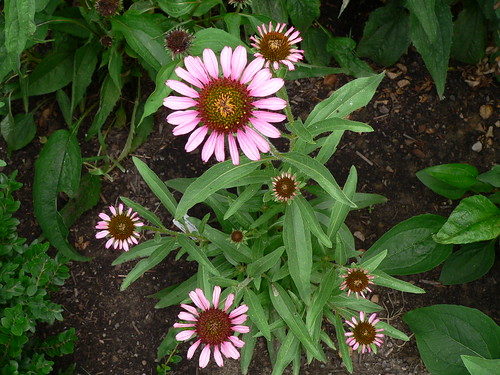
Echinacea – The Purple Coneflower

Echinacea Pixie Meadowbrite by fdr2164

Every year one of the best plant conferences on the East Coast is the Perennial Plant Conference held in the fall at Swarthmore College. This conference is co-sponsored by Chanticleer Garden, Longwood Gardens, The Hardy Plant Society/Mid Atlantic Group, The Pennsylvania Horticultural Society and The Scott Arboretum of Swarthmore College.  (If you haven’t visited Chanticleer, Longwood Gardens and The Scott Arboretum, you should. Each garden is fantastic in its own right.)

This year on October 16th a group of friends and this Garden Lady joined what looked like a sell out crowd for this 2009’s excellent, informative conference. I hope to be writing about what some of the excellent speakers had to say in future posts.

Right now I want to talk about one of my favorite features at the conference and that is what is called the Promising Plant Forum. Five people who are either from top nurseries or who work at top gardens give a 7 minute presentation of 3 of their favorite choices for best new plant or underused excellent plant for your garden.

It was interesting that of the 15 plants recommended, 4 were Echinacea plants. Echinacea which are commonly called purple coneflowers are native to eastern and central North America, where they are found growing in moist to dry prairies and open wooded areas. Echinacea are generally long lived plants that have large, showy flower heads and are in bloom from early to late summer.

Continue reading “Echinacea – The Purple Coneflower”

Whiteflies are Annoying Plant Pests

whitey the whitefly =) by ProDigi

In the last post, TheGardenLady explained one reason why this time of year makes her sad.  Here’s another reason, the fear of bringing in plant pests.

Whitefly is of special concern.  See here.  Whitefly can get on your plants when they are outdoors. But it is a major problem of greenhouses or homes. One of the plants that I bring in for the winter is my Brugmansia or angel trumpet. This is a plant that  is prone to whitefly. Friends have thrown out their Brugmansia plants because of the infestation of whitefly on them. Sometimes one has to get rid of plants when the infestation is extremely large but there is no room to properly care for the plant. My house is not very large and some of these plants have become enormous trees which I can’t really spray indoors should they have an infestation. Or you might have to get rid of a pest ridden plant if you fear the infestation will spread to other plants. This is also a fear I have with two dozen other plants in my relatively small place. I have been lucky. In all the years that I have had plants indoors and in the three years I have been bringing my Brugmansia indoors, my plants have never had any pests.

Continue reading “Whiteflies are Annoying Plant Pests”

Why this Time of the Year Makes TheGardenLady Sad

sad plants and glitter platforms by A.J. Kandy

The flowers in my garden are still blooming their heads off. It is amazing to see the garden at this time of the year as cold weather is coming. The impatiens are spectacular; I think this has been one of the best years for impatiens. The roses seem to look loveliest at this time of year. Is it because these are the last roses of summer? The chrysanthemums are filled with flowers. I usually like to see flowers with leaves. But to see all the chrysanthemum flowers covering the plant, the leaves are not much needed. My daughter thinks the flowers at this time of year are the prettiest of the entire flowering season. So why does TheGardenLady feel so sad when she looks at her garden?

As I brought my indoor plants indoors, I thought how much this GardenLady dislikes this time of the garden year.

Every year in the spring when the leaves are formed on the trees, in this area that is the month of May, TheGardenLady can’t wait to take the indoor plants outside where they are left on the deck or planted in the ground and remain all summer and part of fall. The plants are not brought back into the house until a week or so before the heat in the house is turned on. The plants seemed so happy when they were taken outside in the spring. I felt that I could hear them thanking me.

But now in the Fall the plants seem to know that they will have to go back indoors where the light is so much dimmer and the forced air heat will be drying. I believe my plants are not happy to have to come in. Oh yes, they know they will be warm and cared for. But their freedom is over.

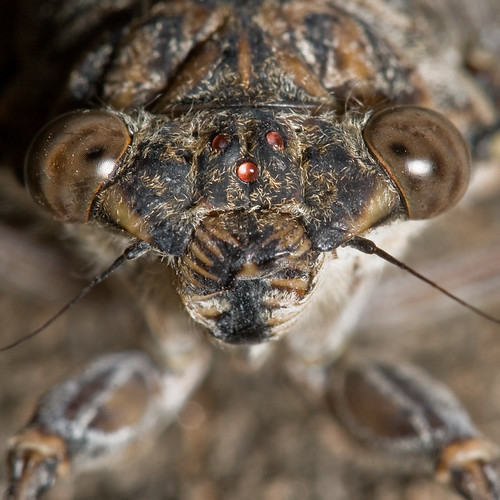
Cicada portrait by macropoulos

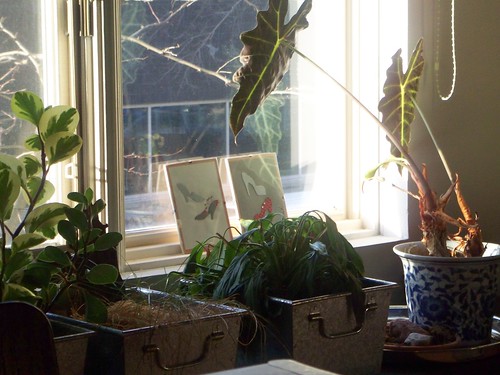
Now the work of caring for plants really begins for TheGardenLady. All those pots of plants have to be carried in. And after a summer in the sun and rain, they have grown a tremendous amount. Some of the plants are quite large. Finding spots for them, let alone good spots, is a major challenge. And before they get placed in the house all the plants have to be cleaned off. There are leaves that have fallen into the pots or maybe nuts buried there by the squirrels. The pots are muddy from water splashed onto them from summer rains. TheGardenLady hopes that no pests are carried in with the plants. Last year a cicada had buried itself in the soil and emerged from the pot in the warm house. It was so surprising to hear cicada noise in the winter and to find a cicada gripping a branch of the plant. Many years I have brought in plants with tiny crickets- crickets with the shrillest, high pitched screeching. These little black crickets are relatively tiny and difficult to find even with all the noise they make.

Burning Bush

Burning Bush, a.k.a. Winged Euonymus (Euonymus alatus) by derAmialtebloede

TheGardenLady received this question from Patty:

What can I do to make my burning bush turn red?

The Burning Bush Euonymus is also known as Winged Euonymus or Spindle Tree.

If your burning bush is in enough sun, it will turn color in the fall when the weather is cool enough. Your burning bush should have been planted in soil that has good drainage; it does not like to be in excessively wet sites. For optimal fall foliage it likes full sun. If it is in partial shade it won’t have the brilliant red color. In shade the leaves might be more pinkish. The burning bushes start turning red in late summer to late fall. So if your bush grows in full sun you might still have your red bush. Full sun means that sun shines on your bush for a minimum of 6 hours each day. The Euonymus are just beginning to turn color in my area.

Replanting Marigolds

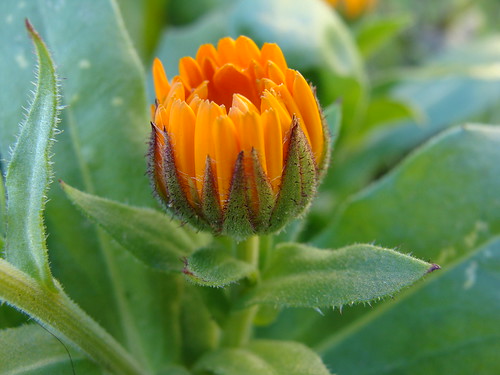
Pot Marigold by Rachael Hickling

TheGardenLady received this question from Susan:

I have marigolds in a pot which have died.  Can I replant them in an outside garden? If so shall I just take the whole plant out of the pot and dig a hole in an outside garden and put them in it.

Have the marigold flowers died? Or is the entire plant- the flowers, the leaves and stem- dead?

If only the flower has died, the dead flower contains the marigold seeds which, when dry, can be planted in the ground – or planted in pots indoors. Or if the plant is alive and just the flower is dead, you can snip off the flower and plant the entire plant in the soil.

Not knowing where you live, I can not tell you the planting time. Marigold seeds need warm weather and lots of sun to grow. So if you live in a hot climate where there is no winter, you can plant the seeds now. But if you live in a climate where it is now fall, save the seeds to plant in the late spring after the last frost.

HOWEVER, if the entire plant has died, you cannot save it by planting it outdoors. You will have to toss it out.

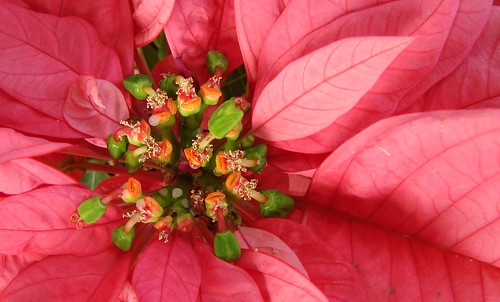
Getting Poinsettias to Turn Red

Poinsettia flowers, after blooming by Martin LaBar

TheGardenLady received this question from John:

I have a Poinsettia that I kept outside in a 12″pot from last Christmas. The plant has gotten pretty big and nice green color with no pruning. What can I do to this Pointsettia to get it to turn red?  Or am I too late?

You may be just a little late in starting to acclimate the Poinsettia to enable the bracts (those are the leaves that look like petals ) on your Poinsettia to turn red by December and to get flowers. Even if you start now and are lucky, the plant may not have the red bracts and flowers until Valentine’s day. Since having a healthy plant is part of the battle, it is worth, at least once, to try to convince the plant to give you the color you want even if you start late. If you don’t have success this year and the plant continues to be healthy and has no insect infestation, don’t toss the plant, but try again next year. Try starting the regimen a little earlier to see if you can do it.

It takes some effort and pampering to make the plant get those red bracts and bloom a second time – something that nurseries do in light and temperature controlled greenhouses where they have the needed equipment and a crew to do the work; but some people have had success in the home.

Continue reading “Getting Poinsettias to Turn Red”

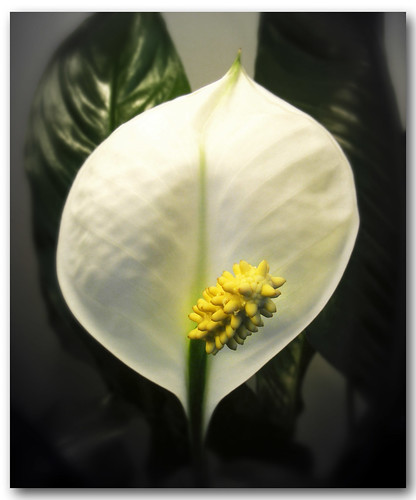
Saving a Sick Peace Lily

Spathiphyllum by PiccolaTerry

TheGardenLady received a question from Billie on her post  “Caring for Sick Peace Lilies”.

I have a peace lily that has sympathetic value.  And it looks awful. I have not moved it. It has been in same spot since april. The leaves are wilting and just hanging over the edge of pot and the leaves are starting to turn brown. It has been like this a couple months. I tried watering it, putting it outside under ashade tree and fertilized it. I recently re-potted it. But thats not helping. I dont know what to do. Please help

Peace Lilies, Spathiphyllum, like well-drained soils that are relatively acidic and like warm temperatures.  (see here) You should be fertilizing the Peace Lily plant regularly during the growing season to maintain a dark green foliage color.Usually the Peace Lily is a plant that is resistant to most problems. However, occasionally mites, scales, and/or mealy bugs may be a problem. So check your plant leaves. If you have properly cared for your Peace Lily and have ruled out any insect problems, a last try is to repot the plant in new soil. Try one of those brands of potting soils that have slow release fertilizer. (see here)

One problem for plants kept in pots is that there is so little soil in the pots that the soil might not be able to do its job after a while. For example salts can build up in the soil from the fertilizers that were used over the years. (see here)  Fertilizers are salts and if you do not water thoroughly, salts can become concentrated in the soil in pots. High soil-salt concentrations are toxic to roots and can kill a plant. Peace Lilies are one plant that cannot tolerate any salt build up.

Continue reading “Saving a Sick Peace Lily”