Creating a Roof Garden in NYC

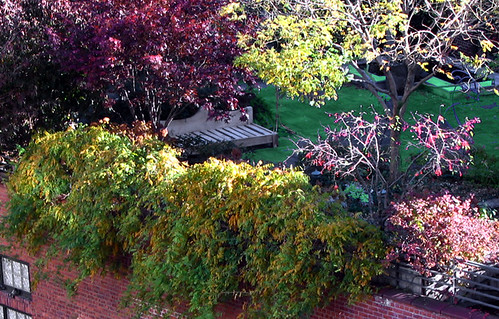
Terrace Roof Garden Img_1126a by Lanterna

TheGardenLady received this question from Michelle.

I live in NYC, and would love to plant flowers and herbs outside my apt. Outside our kitchen window is a blacktop roof. I’ve tried to grow basil and parsley, but they never stay moist enough–sun is too strong. But, I would like to build something bigger to include many flowers and herbs. What would you suggest?

What a lovely idea to use the roof for a garden. However, in your case, living in NYC, one has to be concerned about the weight of plants on an old roof. Your landlord might object. If you think the landlord does not object, TheGardenLady recommends using light weight things for planting.

Plastic pots weigh less and don’t dry out as easily as clay pots or aren’t as heavy as ceramic pots.  Also, if you will be watering the plants, you have to be sure that the water will run off and not seep into the roof – down into someone else’s apartment. You don’t want plants that need a lot of watering.
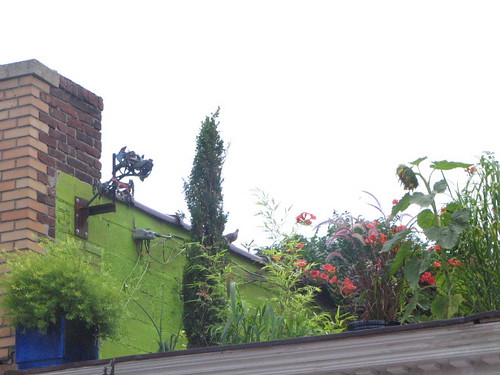
rooftop garden by bondidwhat

Attempting to grow herbs is a good idea because herbs do love sun. Most herbs come from the Mediterranean area where they get lots of sun which is needed for the herbs to have strong herbal flavors. But growing in a field is different than growing on a roof. TheGardenLady imagines that it is probably due to the blacktop roof that your herbs are drying out too quickly. Getting all that heat from the sun plus the heat from the black bottom under the pots might create too intense a heat and cause the small amount of soil in the pot to dry out too quickly.
Continue reading “Creating a Roof Garden in NYC”

Gardeners in the Northeast: Beware of Late Blight

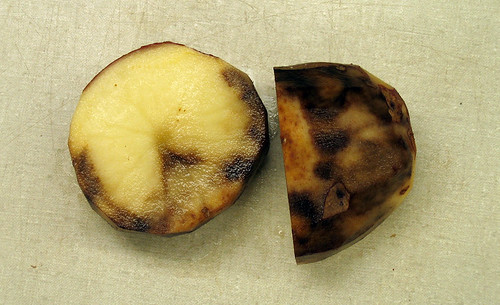
Late blight of potato by Ben·Millett

The following article was not written by TheGardenLady, but she thinks it’s a valuable one that the public should know about.

Irish Potato Famine Disease affecting Gardens and Farmers throughout the Greater Northeast

Revised by A. Wyenandt, NJAES, Rutgers University and M.T McGrath, Cornell University – Original article by Thomas A. Zitter, Cornell University, Ithaca, NY – Updated July 15, 2009

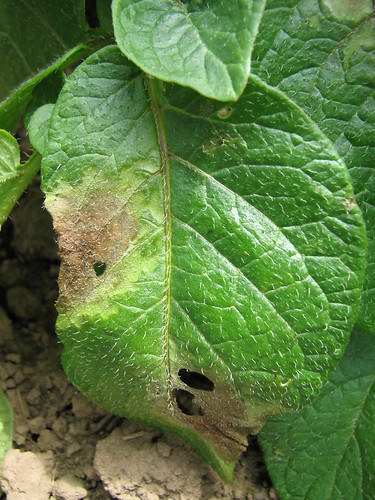
Late blight, caused by Phytophthora infestans, is a serious disease that affects tomato plants and potato plants around the world.

 late blight by ospud 	 late blight by ospud
late blight by ospud late blight by ospud

Late blight can become a serious problem because it can quickly kill affected plants and its spores are easily carried in wind currents to infect other susceptible plants in even the most remote areas in our region.

Late blight occurs sporadically in the Northeast in any given year because farmers diligently use methods to prevent the pathogen from surviving overwinter. Since our summer thus far has been cool with frequent rains, weather conditions have been very conducive for late blight development.

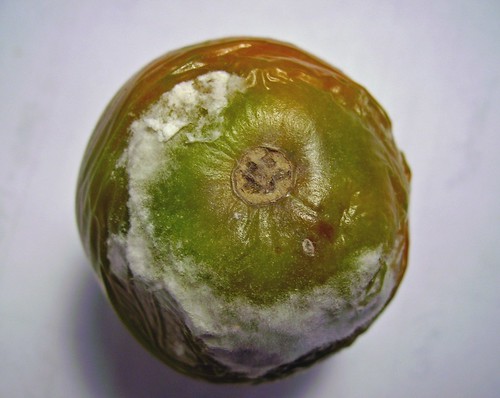
Late Blight on Plum Tomatoes by Franknsteen
Late Blight on Plum Tomatoes by Frank'nsteen

Currently, all tomato and potato plants grown in home gardens and in commercial fields are susceptible to late blight!

Commercial growers are able to respond to reports of the disease by spraying fungicides to prevent its spread, which otherwise would mean certain death of their entire crops. Unfortunately, many homeowners may not be as aware of this important disease, and if no corrective actions are taken in a timely manner, home gardens can provide a source of inoculum (i.e. spores) for their neighbor’s gardens and for commercial interests.

The occurrence of late blight in 2009 is different compared to most seasons. This is the earliest the disease has been reported over such a broad region of the country. More tragic for the Northeast, is that infected plants have been distributed to large local retail stores throughout the region (Ohio to Maine). Never before has such an extensive distribution of infected plants occurred.

Continue reading “Gardeners in the Northeast: Beware of Late Blight”

Preparing the Garden for a Drought

Summer is here. The main jobs in the garden are weeding, WATERING and deadheading.

Those of us in the Northeast have been having the mildest summer this GardenLady has ever experienced. July feels like May; the weather is so Springlike.

TheGardenLady has been watching the weather reports for many parts of the country that are having a major heatwave. She does not know how to best advise gardens experiencing 100 degree plus days in your area where watering plants is prohibited.

Contact your local county extension office to see if they have any special suggestions.

There were some things one could do before the drought. Should things straighten out and you want to plant new plants, consider them when you plant.

Water Jelly Crystals by Baok

Water crystals or beads (hydrogels) are sold as a means to help hold moisture in potting media. They can absorb multiple times their weight in water. Usually they are hydrated (beads or crystals are put in water before putting them in the soil) and mixed into the medium before planting. One company that sells this product is Plant Health Care Comapny.

Continue reading “Preparing the Garden for a Drought”

Shade Loving Plants

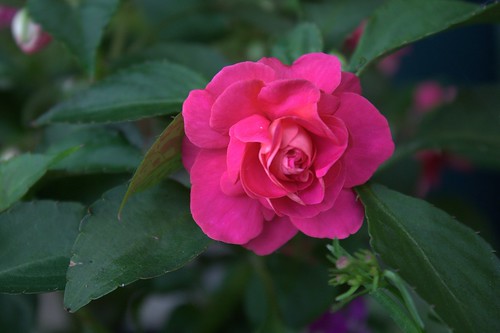
Pink Double Impatiens by Judes Jewels
Pink Double Impatiens by Jude's Jewels

TheGardenLady received this question from Kevin.

I have a very small front area, very small, 2′x25′ with very little sun. I was thinking about some kind of ornamental grass for height and some other colorful flowers.  Any ideas?

In order to give you a more precise answer, TheGardenLady would need to know your temperature zone and the amount of dryness or moisture in your front area.  Without this information, here are some suggestions:

You seem interested in grasses. Most ornamental grasses need sun. Many are shade INTOLERANT. A few will tolerate light shade.  See here.   But these do not bloom as well in shade. Sedges seem to be more tolerant of shade but some can grow too aggressively for your small area.

Koeleria macrantha, Junegrass and Melica imperfecta by edgehill

For a drier site there is Koeleria macrantha (syn. K. cristata) June grass which is a small, green, native clump grass with showy white flower panicles in June. A host for butterfly larvae. Shade tolerant and soil tolerant.

For a moist area there are two plants that might work:
Carex muskingumensis or Palm sedge is a slowly spreading plant with palm-like foliage that requires shade and moist conditions.

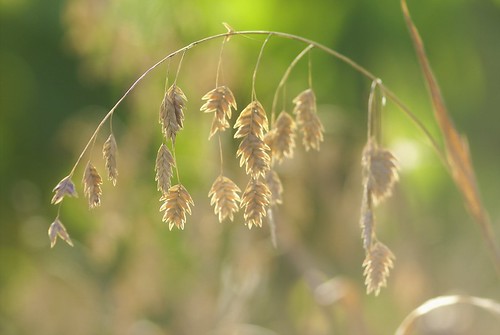
Chasmanthium latifolium by nobuflickr

Also, Chasmanthium latifolium or Northern sea oats which is noted for its showy, drooping flowers and light green, upright, bamboo-like foliage. Flat green flowers will turn copper. Blooms well in shade and reseeds.

Also, consider hostas. The number of different hosta plants is so numerous that you can create a unique garden just with them alone. For your small area you can find miniature or small hostas. Plant variaged hostas or gold colored hostas to brighten the dark area.

Best shade tolerant colorful flowers would be annuals like impatiens and begonias.

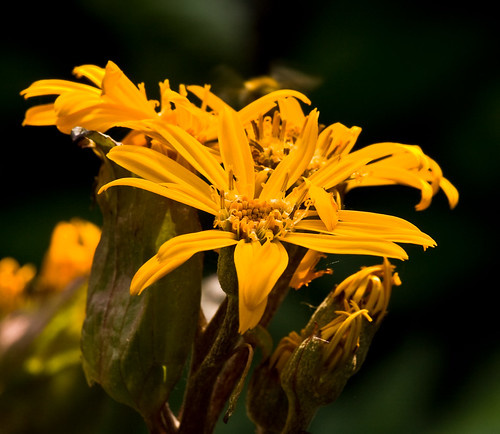
Ligularia Dentata by robelsas

If you want perennials consider Astilbe varieties, Greater Celandine (check to see if it is invasive in your area), Dicentra spectabilis (Bleeding Hearts), helleborus orientalis (Hellebore) and Ligularia dentata or Elephant ears. One doesn’t see Ligularia very often. It has large leaves. There is one with maroon-black leaves. Showy golden daisy like flowers appear in midsummer.

Lastly, consider an azalea. Azaleas will grow in shade.

Sansevierias: Where to Keep Them – Inside or Outside?

Untitled by *n*o*o*r*

TheGardenLady received this question on her post “Taking Care of Your Mother-In-Law’s Tongue Plant“.

I’ve had the Mother-In-Law plant for about 3 yrs, and kept it outdoors. I’ve been told its good to have these types of plants indoor, say, the office, as they give out plenty of oxygen.  Please advise whether it’s a good idea to put this plant in the office and what care should be given to it.

Green plants give off oxygen. That is why they are so important. Any and all green plants give off oxygen both indoors and outdoors. So plants would be good to have in your office environment as well as in your home.

If you decide to dig up your Sansevieria and bring it indoors, whether you bring it into your office or into your home, treat it with benign neglect. Don’t over water it. Keep it out of direct sun.

But most people bring the plants indoors that don’t grow outdoors or that only grow outdoors part of the year. Since you live in a zone where Sansevieria grows outdoors, let it give off oxygen outdoors and bring a plant to your office that is more exotic. Hopefully you have a window in your office that is near your desk. Check your local nursery stores to see which plants they would recommend for an indoor office space. Let them know what direction the window faces where you will put your plant – noth, south, east or west. Is it a sunny window sunny or is it shaded by something like a big tree outdoors or another building? How cold is the temperature kept in the office? Some plants don’t like it too cold or too hot. Will someone water the plant if needed when the office is closed or you are on vacation? And be sure that no other office worker has any allergies to plants. Though TheGardenLady does not know of any allergic reaction to plants that just sit on a windowsill, today so many people have allergies, it is best to check.

Let TheGardenLady readers know about your choice of plant for the office. A photo would be nice.

How To Kill Weeds in St. Augustine Grass

Bubble on St. Augustine grass by jmorgan90

TheGardenLady received this question from Mary.

Will Round Up or Weed-Be-Gone kill my St. Augustine grass? The oxilis is mixed in with the St. Augustine.

Ortho Weed b Gone can NOT be used on St. Augustine grass.  Roundup is a systemic that will kill any plant so that it also can NOT be used on a lawn without killing the grass.

However, there is a special product to kill the weeds in St. Augustine grass. The product is called Weed B gon Spot Weed Killer for St. Augustine grass.

It can be bought at nurseries or at places like Home Depot. This is a granular product which has to be watered when applied. READ THE INSTRUCTIONS ON THE PACKAGE AND FOLLOW DIRECTIONS EXACTLY. Keep pets out of the area where the product is used until the lawn is dry. For any questions contact the manufacturer. They have people on the phone who will answer all questions including where to buy in your area.

Herbicide Damage

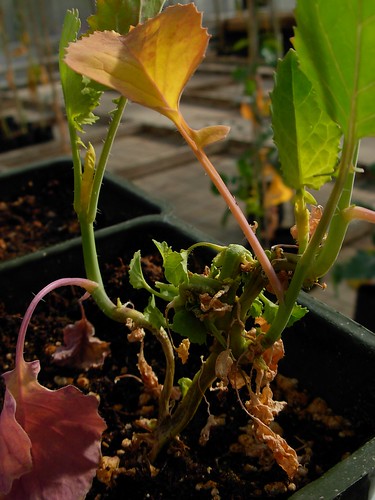
Herbicide damage by Effloresco

TheGardenLady received this question from Mary Anne.

My roommate bought some Round Up (gross, I know!) to spray on weeds, and she sprayed it all over some lovely yucca plants. 🙁 Despite my efforts to revive them through pruning off all the dead leaves and fertilizing and watering, they are sad little stumps that look quite dead. I am so sad! Do you have any idea if I might be able to save them?

Roundup is what is called a systemic weed killer. That means it goes down to the very tips of the roots of a plant to kill it. It doesn’t know which plant is good or what plant is bad. It just kills any plant it comes in contact with and is very effective in killing the plant.

That is why, whenever one buys any herbicide or pesticide product to use, you MUST!!!! READ THE INSTRUCTIONS ON THE PACKAGE CAREFULLY AND FOLLOW THE DIRECTIONS EXACTLY AS THE PACKAGE SAYS.

So, to answer your question: It is with regret that TheGardenLady has to say that she does not think you will be able to save your yucca plants. Roundup killed it all the way to the tips of its roots.

TheGardenLady has never used any herbicide on her property. She hates chemicals in her garden or lawn.

Now she knows that there are times when people have to use herbicides. TheGardenLady has been lucky that she hasn’t had to use any. She pulls her weeds by hand. Her garden isn’t as pristine as it could be; there are weeds. She would rather live with weeds than with chemicals in the soil or getting into the water in the stream on her property. Even poison ivy is pulled by hand- pulled carefully using plastic bags so that the ivy can not touch skin. She tries to get the poison ivy when it is young.

If TheGardenLady readers feel that they have to use a herbicide, PLEASE USE CAUTION! Remember that so many of yesteryear’s herbicides which were once considered safe- are now banned.

PS Thank you, Mary Anne, for enjoying TheGardenLady site. I love readers like you.

Plant a Tree for Free

Double A trees by Bеn

Would you like to plant a tree for FREE?  TheGardenLady discovered this site and wants her readers to know about it.

“Odwalla is planting trees in state parks, and will plant one for you too! All you have to do is click on this link and choose your state. Then pass it on to a friend. Happy planting!”

TheGardenLady chose to plant a tree in another state because her state wasn’t listed.

Helping Pollinators

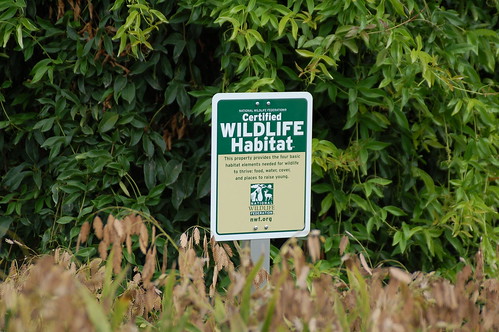
Certified Wildlife Habitat by Amber King Austin

The National Wildlife Federation wants you to create a Wildlife Habitat which you can then get certified. Find out how to create your own Wildlife Habitat by going on their website. You will be helping the environment as well as making a lovely garden for yourself that is beloved by birds, butterflies and other wildlife.

Check out this website on how to help pollinators:

Clematis or Akebia?

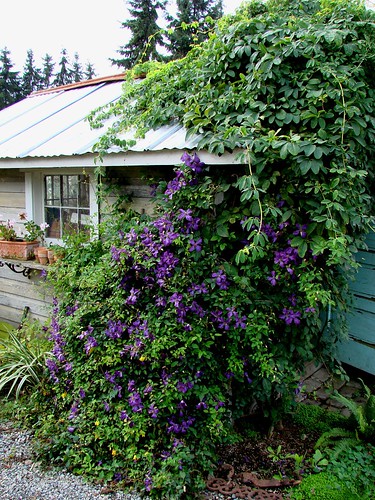
Clematis and Akebia by edgeplot

TheGardenLady received this question from Rose.

I saw a gorgeous plant at a person’s house and thought it was a clematis. She said it wasn’t and said a name like “boca via” or something. I tried to do a search and couldn’t find anything like that. It is a very tall plant in a huge pot with a trellis type thing to hold it up. Just beautiful! Any ideas what is was?

Trying to find a plant without knowing its Latin name or even a common name, with no description of the flower and its color nor having a photo of the plant- even a photo of its leaves if not a photo of the flower, is asking a lot of TheGardenLady.

I will guess that your friend might have an Akebia Trifoliata known as the three leaf chocolate vine. This has a pretty flower. with a fragrance. It doesn’t like its roots disturbed and can be planted in a container or in the garden. It grows tall.

BUT Akebias can be INVASIVE.   See here.  If this is the vine you are seeking, when buying BE WARY! What does invasive mean? It means that the roots or seeds of the plant will spread all over and for the rest of your life you will be trying to kill the plant all over your yard and your neighbors’ yards. Invasive plants do not allow other plants to live and because the Akebia is not native, it will probably not allow native birds or good insects like butterflies to have sufficient foods that they need. Especially the Akebia quinta (the five leaf chocolate vine) which is definitely said to be VERY invasive. I’ve read of a new variety of Akebia quinta called Silver Bells Chocolate vine. TheGardenLady thinks that this vine will also be an invasive. Just because something is sold does not mean that it is ok.

Please, if this is the vine you are looking for, check out your state’s invasive list or call your local Master Gardener office to check on the plant’s invasiveness. I would worry about the invasive quality of any Akebia and buy a beautiful clematis instead. There are so many clematis to choose from.

If the Akebia is not the vine you are looking for, contact Georgiavines. The owner has made it her life’s work to raise vines of all kinds. She might even suggest a vine for you that the person whose vine you loved will find even more enticing. Two other vine nurseries are here and here.