Lori Rubel’s Georgia Vines

TheGardenLady likes to write about nurseries or gardens that sell interesting plants; and if these places can save readers money in this economy, that is an added bonus. One such gardening resource is Georgia Vines What is unique about Georgia Vines is that their emphasis is on selling vines- and many of these vines are very unusual.

The owner of Georgia Vines is Lori Rubel who says that her passion is vines. She said that because she only had an ” urban backyard to work with, I decided many years ago to collect vines because I could grow them vertically and save room.” When Lori moved to Georgia from her home in upstate NY, she discovered “Passiflora- which is something that I could have never grown in upstate NY.” The more vines she got, the more she found were available. ” Lori says that she now has a large collection of about 140 different types of vines. Lori, who loves beauty, became interested in rare and unusual vines as well as other unusual plants. On her website she says “This is my garden of vines, angel trumpets, butterfly plants, and just about everything beautiful and unusual that I am able to find and plant.”

Because all gardeners love to share their passion with others, a couple of years ago Lori was encouraged by her grown sons to set up a website and share the vines and her passion and knowledge of vines with others.

And what makes Lori’s Georgia Vines a place to save money is that she sells many of the vines and plants as seeds but does NOT charge for postage anywhere in the US. (She does have a small international postage fee.) And many of the potted plants have no postage charge.

If you fall in love with any of the rare plants on the Georgia Vines site and want to order them, be sure that the plants will grow in your area (see here).

What’s Blowing Your Way

PhotonQ-Beauty on the Horizon of Complexity by PhOtOnQuAnTiQuE (on flickr)

TheGardenLady just wants to let her readers what’s in store.  Tomorrow there will be a post on Lori Rubel’s Georgia Vines.  And in 4 days from now, TheGardenLady will be posting an answer to a reader’s question about planting hostas under a dogwood.

So keep reading and asking questions.

Hummingbirds are Arriving

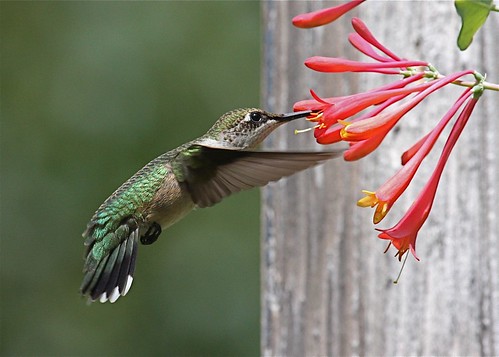
Ruby-throated Hummingbird (female) by rwolfert (on flickr)

TheGardenLady is sure that one of the reasons you like to have flowers is because you hope to attract or already attract hummingbirds to
your garden (see here).

People keep track of when they arrive in your state. For example, they are already starting to arrive in New Jersey (see here)

And sometimes when they arrive they need you to help feed them by putting up hummingbird feeders (see here).  You can buy hummingbird feeders in your local hardware store. Or you can make your own hummingbird feeders (see here).

Remember hummingbirds are territorial. Once they find your garden they will return each year. If you want to attract more hummingbirds, place more feeders throughout your yard. But don’t forget, YOU MUST CLEAN the feeders frequently so the birds don’t get sick.

Continue reading “Hummingbirds are Arriving”

Encore Azalea – Possible Cold Damage

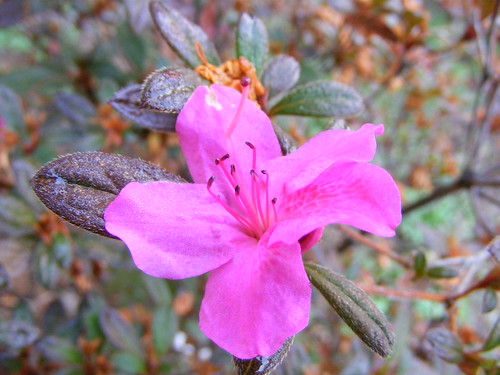
12-20-08 - Encore azalea by jennymunro (on flickr)

TheGardenLady received the following question about Encore Azaleas.

We live in Belews Creek North Carolina. We planted 3 Encore Azaleas last spring, they bloomed all summer and fall, they lost their leaves in the winter and now we have no leaves, or buds. The limbs are bare but green, I have cut several and checked for dead signs but have found only green. This is spring and was looking foward to seeing their flowers. Any help will be appreciated.

Here is the answer from Encore Azaleas.

Cold damage can take a while to show up, causing the bark to split which interrupts the transport of water and nutrients throughout the shrub. Loss of foliage, especially during extremely cold weather, may occur, but doesn’t necessarily mean that the shrubs won’t bounce back.

If you have not already fertilized this spring, use a slow release granular fertilizer that is right for your area. Make sure the mix is well-balanced – the three numbers on the packaging are the same or similar. These numbers indicate the amount of nitrogen (promotes plant growth and for foliage), phosphorus (promotes blooms), and potassium (strengthens roots and stems). If your fertilizer contains more nitrogen than phosphorus, your azaleas will concentrate on growing rather than blooming.

Cold Hardiness
In a recently completed three-year cold hardiness study undertaken by the University of Tennessee, 19 of the 23 varieties of Encore Azaleas trialed in USDA Zone 6 demonstrated positive results.

Five varieties (Autumn AmethystTM, Autumn CheerTM, Autumn RoyaltyTM, and Autumn RubyTM and Autumn TwistTM) consistently exhibited solid cold hardiness throughout Zone 6A.

Autumn Sangria and Autumn Sweetheart showed success in protected locations in Zone 6A.

In Zone 6B, 18 varieties consistently exhibited solid cold hardiness:
Autumn AmethystTM, Autumn AngelTM, Autumn CarnationTM, Autumn CarnivalTM, Autumn CheerTM, Autumn ChiffonTM, Autumn DebutanteTM, Autumn EmbersTM, Autumn EmpressTM, Autumn MonarchTM, Autumn PrincessTM, Autumn RougeTM, Autumn RoyaltyTM, Autumn RubyTM, Autumn SangriaTM, Autumn SunsetTM, Autumn SweetheartTM, Autumn TwistTM (Autumn BelleTM, Autumn MoonlightTM, Autumn SundanceTM were not trialed.)

As your Encores mature and get more established in their environment, they will be better able to withstand cold temperatures. Young plants are more susceptible to sudden, drastic drops in temperatures, and sustained cold weather (25 degrees or below).

Cold Protection
Mulch well (about 4 inches deep) in the fall. Reduce water for a month or so before the first frost. Then, after a couple of hard freezes, water well to provide moisture. This will help the plants to go dormant, or “harden off”.

As you would with any outdoor ornamental plants, Encore Azaleas may need some extra protection during sudden freezes and extremely cold weather. Sudden, drastic drops in temperature are more damaging than a gradual decline, especially to newly planted shrubs.

Burlap, old blankets, or sheets (any cloth material) can be used to cover upper plants. It is recommended that you drive stakes in the ground around your Encore and drape the cloth cover over stakes. Foliage in contact with the cover can be injured, so try to minimize cover contact with plant.

I hope you find this information helpful; keep me posted on your progress and let me know if you have any other questions or concerns.

Caring for Indoor Daffodils

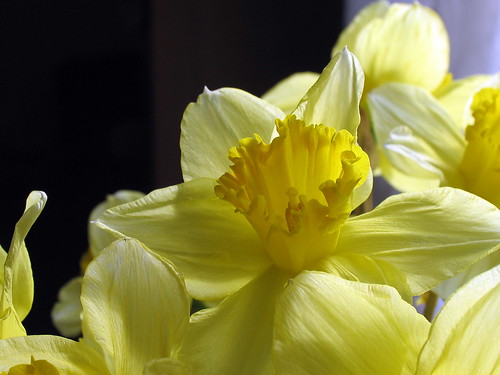
Indoor Daffodils by Lisa 65 (on flickr)

TheGardenLady received this question about daffodils:

I have also recently received a small pot of daffodils for indoors [probably from the local grocery store. It has the colored foil around it]. They doubled in length in one day, look healthy, and have smaller buds about to come out. I keep them in my room which is fairly cool and can get sunny. I’m wondering if I need to move the bulbs to a bigger pot at any point as well as if I can share the bulbs with friends once they stop flowering.

Daffodils like coolish indoor temperatures, 50-75°F, 10-24°C, the cooler the temperature, the longer the blooms last: medium humidity- too wet and you might get bulb rot: and bright indirect sunlight coming from the South/East/West

Do not waste your time repotting the daffodil bulbs for this season’s indoor flowering. Repotting causes stress on the plant which may cause the flowers to die.

The daffodils in the pot may have been forced (see here) to bloom at a specific time. Forcing is done by using special lighting techniques, fertilizing techniques and temperature control (see here). Enjoy the flowers by putting the little pot in a cache pot (see here) and bringing the entire thing to the room where you are entertaining for all to enjoy.

Continue reading “Caring for Indoor Daffodils”

The Western Painted Lady Butterfly

b1

A reader of TheGardenLady blog wrote this column about an exciting happening in California on Sat., March 28, 2009.

If we were questioning the calendar, residents in the Bay Area of California knew for certain that Spring had arrived on Saturday, March 28. By late morning, it was well into the 70s and supposedly some thermometers hit low-80s mid-day. The balmy weather, blue skies, and gentle breeze sparked our mass exodus from behind TVs to local parks where all were eager to hit the hiking trails on the East Bay hills. But aside from the hoards of people on the trails, it was for the most part a typical day; while unseasonably warm it was the kind of day that we Northern Californians expect for the next 8 months.

Continue reading “The Western Painted Lady Butterfly”

Leguminous Plants

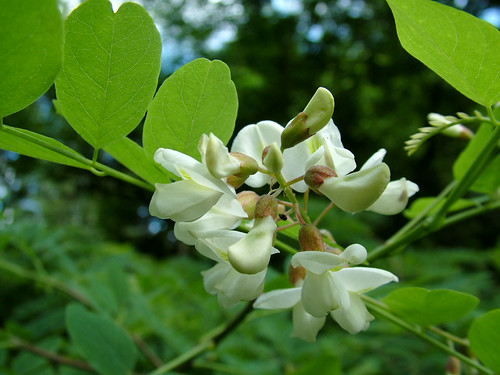
Black Locust - Robinia pseudoacacia by maxi millipede (flickr)

TheGardenLady received this question from arv:

I want to know what leguminous trees / shrubs I can plant in Jerusalem for nitrogen fixing . I want something longer lasting than lentils, beans, chickpeas etc.

This writer, from Israel, wants to know of leguminous trees or shrubs that he can plant in Jerusalem. For those readers who want to know what leguminous means, it is a Botany or Plant Biology term that refers to plants related to legumes like pinto beans, great northern beans, lentils, etc. that help fix nitrogen in the soil. Nitrogen (N)  is essential for plant growth. N is the mineral element most demanded by plants.

The locust tree is my favorite leguminous tree.  See here.

It is the black locust, Robinia pseudoacacia, that is nitrogen fixing not the honey locust.  See here.  An article about the black locust is this.

But the locust tree can become invasive because the plant typically reproduces vegetatively by root suckering and stump sprouting. Root suckers arise spontaneously from established root systems, sprouting
new shoots and interconnecting fibrous roots to form extensive, dense groves of clones.

One tree that is short lived but is in the leguminous plant family is the Acacia tree. A scholarly article about the amount of N each type of Acacia tree fixes is this.

A complete list of leguminous plants is on this website.

Because this sounds like a scholarly endeavor that this questioner is asking to do, TheGardenLady has included some scholarly articles on nitrogen fixing that has been done on leguminous plants. I hope you can open these sites here, here, and here.

12 Things To Do In Your Garden In April

Butchart Gardens in April by mmmee (on flickr)

Eager to get out to work in your garden? There are many things one can do in April. This list is especially for those who live in the mid Atlantic states where the temperature range is from the 50’s to the mid 60 degrees Fahrenheit (approximately between 10 and 20 degree Celsius). If your area is still too cold or already too hot, some of these suggestions may be too early or too late .

1. Have your soil tested – best to go to your local Master
Gardener/Agriculture extension service for the test kit – see here.

2. Improve your soil with organic matter- use your compost if it is
ready – see here.

3. If you are using it, incorporate pre-plant fertilizer now – see here.

4. Plant roses – see here.

5. Prune roses as soon as buds begin to push – see here.

6. Plant perennials and cold tolerant annuals – see here.

7. Divide late blooming perennials – see here.

8. Plant trees and shrubs

9. Fertilize trees and shrubs if needed – see here.

10. Prune trees and shrubs but not the spring blooming trees and
shrubs- correct all winter damage by pruning – see here.

11. Start seeds indoors – read the seed packet (don’t start tomato
seeds too early- see here.)

12. Plant cool-season vegetables – see here.

The Good Ant

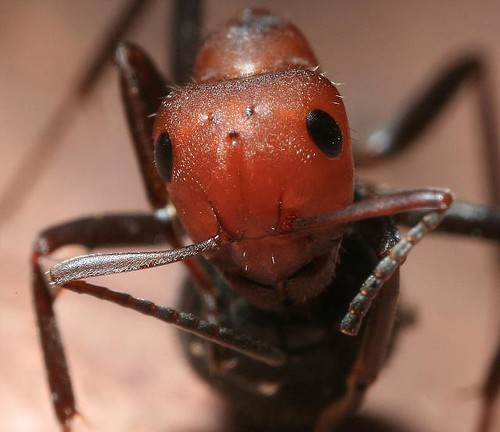
Ant, Head-On 2 by The Bald Eagle1 (on flickr)

TheGardenLady received an excellent comment from someone named the GartenGrl.  On this post about Terro Liquid Ant Baits she pointed out the following:

Just remember your peonies need ants to bloom…so don’t put it near your peony bushes or you won’t get any flowers this year!

Ants do have value in the greater scheme of things. And as you point
out, peonies have a need of ants for the plant to flower.  As this quote suggests, ants are extremely important for our environment.

In many ways ants are our friends and allies, and we need them. In China, ants have been used for thousands of years to help control pests in orchards, making them the first insects known to be used for biological control. Ants actually help control pests that we haven’t always been very successful controlling on our own. Both indoors and out, they eat the eggs and larvae of fleas, flies, spiders, bed bugs, and probably silverfish and clothes moths. They also go after cockroaches and other bugs. In addition, ants patrol the perimeters of our houses and keep termites, their mortal enemies, from establishing colonies in our homes. If we let them do their job, that is. Ants are also scavengers that clean out lots of debris. The earth would be a
dirtier place if we didn’t have ants.

TheGardenLady should have suggested using ant traps only where a person doesn’t want them in the house. She appreciates GartenGrl’s comment.

Keep reading the blog and keep comments like this coming.