This is the time of year when everyone living in cold wintry areas want to rush the gardening season. To that end, to help with your dreams of your own gardens, there are Garden Shows coming up all over the country – and world. Plan your vacation around some of these Garden Shows. For example, the Philadelphia Flower Show in Philadelphia, PA and/or the Chelsea Flower Show in London, England are two flower shows everyone should attend at least once in your lifetime.
As garden lovers are sitting around their hearth dreaming of the gardens they want, many of us have to consider the deer that can decimate their plantings. To that end there is a new website listing 300 plants that seem to be deer proof. Of course, if the deer are starving, they seemingly will eat anything. This site is interactive in that they would like you to tell them if these plants really work or don’t work in your garden and yard. Here is their website.
The list is particularly good because it tells you much about the plant besides whether it is deer proof of not. For example, it tells you the color, where to plant – full sun or not – or height of the plant. Looking at the list superficially, TheGardenLady found that those plants that they said were deer proof were consistent with her findings. For example, TheGardenLady loves her Helleborus orientalis, Lenten Rose, Polemonium caeruleum, Jacob’s Ladder, Iris (several varieties tested), Lavandula angustifolia (‘Hidcote Blue’, ‘Munstead’, ‘Tucker’s Early Purple’ ) and English Lavender. They are among all the plants on the list. These plants are especially loved by TheGardenLady because they are never touched by deer on her property. And on this list they are listed as plants Never Browsed.
TheGardenLady also loves such plants as Hemerocallis (several varieties were tested) which is the day lilly. She knows how the deer love this plant so that if she wants it in her garden, she has to over spray it with a deer repellent or put a fence around the plants. This site tells you that Hemerocallis is FREQUENTLY Browsed. So, unless you like challenges when you create your garden, you won’t waste money buying Hemerocallis.
Check out this site which gives you other information about deer and their habits. For example, you can spray deer repellents on plants so that the deer learn to change their destructive path.
Every reader of TheGardenLady knows the importance of pollinators to pollinate (pol·li·nate- definition of the verb; To transfer pollen from an anther to the stigma of (a flower) flowers, vegetables and other plants, shrubs and trees.)
All agriculture depends on pollinators. “Pollinators are essential to Life.” We’ve read numerous articles about the problem called bee Colony Collapse Disorder (see here and here). Or the drastic decline, globally, of butterflies (see here and here). There is even a global bat decline (see here and here and here). All pollinators seem to be on the decline around the world.
TheGardenLady and her readers should try to do everything they can do to help the pollinators. One of the ways to do this is to grow plants that pollinators like and need. If the pollinator is an insect, the plants you grow should encourage insects from the egg stage through the end or their lives. If the pollinator is a bat, the plants that bats would need are crucial.
Toward that end, a new website is out there. This is a new Ecoregion planting guide to attract pollinators from www.pollinators.org. On the website, the co-founder of the Pollinator partnership says “Farming feeds the world and we must remember that pollinators are a critical link in our food systems.”
This website is for the US. TheGardenLady hopes that this type of website would expand for the rest of the globe. She wishes readers would let her know what similar websites are available in your part of the world.
Check out the website:Â www.pollinator.org/guides.htm for plants you can put in your garden or farm.
TheGardenLady had recently written a column about some of the benefits
of plants.
She recently read, in Science Daily, the results of a study done at Kansas State University published in the October 2008 HortTechnology that showed that hospital ” patients with plants in their rooms had significantly fewer intakes of pain medication, more positive physiological responses (lower blood pressure and heart rate), less pain, anxiety, and fatigue, and better overall positive and higher satisfaction with their recovery rooms than their counterparts in the control group.”
TheGardenLady feels that plants in one’s house or rooms has beneficial
effects on their owners and those living with them whether they have had surgery or not. So, bring potted plants into your rooms!
”]TheGardenLady received this question from Donna:
I have a that is turning yellow. I have had it for over ten years and it’s been in the same pot since. It has always done well, but here recently it is becoming sick. There hasn’t been any change to it to cause it. Any suggestions?
Since you say that you have had your Sansevieria Trifasciata plant, commonly called Mother-In-Laws Tongue or Snake plant, for over 10 years, I doubt that you have a gold variety like`Vandal Gold`, a Sansevieria that I have read about but do not know where to buy.
And I am amazed that you have a plant or anything that hasn’t had any change in all that time. There is nothing in TheGardenLady’s house that hasn’t changed in 10 years- including TheGardenLady.
The strongest flavored tea made from the Camellia sinenses leaves is called black tea or red tea. Black tea is the tea which was most commonly sold over the years in the US by brand names like Tetley, Lipton or “Good Morning” organic. Black teas are made from “fermented” tea leaves.
What is called fermentation is really oxidation because it takes place when Camellia sinensis leaves are spread on trays in a cool, humid atmosphere to oxidize the leaves. This changes the chemical structure of the leaf, and allows the tea’s characteristic flavor to emerge. The longer a tea is allowed to ferment, the stronger flavor it will have and the darker it will become. To retard the fermentation process the leaves are dried. After drying the leaves are graded - longer leaves are used for loose teas and leftovers and dust leaves are used for tea bags.
Connoisseurs think of tea like great wines or coffees, each with its special flavor. Aged tea is considered a great delicacy in the Chinese culture. TheGardenLady was invited to a Chinese tea ceremony where she tasted 50 year old black tea. This was a first for TheGardenLady who has attended a number of Japanese Tea Ceremonies.
It is cold outside, especially if you live in an area where it is frigid or snowing or raining. This is the time of year for drinking lots of hot tea, the world’s second most popular beverage after water. And now that there are so many articles about the health benefits of drinking tea, such as the antioxidants, anti-cancer content of tea , or tea helping to cure diabetes, people will probably be drinking more tea – both hot and iced.
Tea is one of the oldest beverages known to civilization- thought to have been discovered as a beverage in (probably western) China in 2700 B.C. It was brought to Europe in the 1600s. We, in the American colonies, first got it from Europe and then were forced to buy it only from England who then foisted high taxes on the tea it exported. So the early colonists fought this high tax in a battle called the Boston Tea Party.
As the winter wears on, many of us dream of spring and the return of flowering plants. Some of us are lucky enough to have flowers open or opening indoors. My amaryllis bud is opening and I eagerly await the brilliant red flower. But if you don’t have flower buds and dream of your outdoor or indoor plants in bloom, you can watch time lapse shots of flowers opening or plants growing on your computer. There are many sites to watch (see here). Or perhaps you can take your own time lapse photos and send them to TheGardenLady (see here). YouTube has a lot of these videos and they are free. Sit back and enjoy.
A few that I enjoyed are these:
Showy lady slipper – Cypripedium reginae – flower opening
Hibiscus Time Lapse
Time lapse radish seeds sprouting, top and roots growing
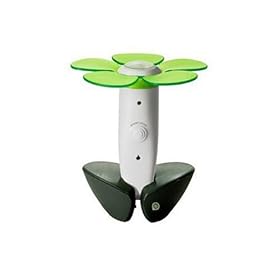
Today on televsion, TheGardenLady saw a new product that the company that invented it thinks might revolutionize gardening. It is called The EasyBloom Plant Sensor. The company claims that this device that looks like a plastic flower on a stick which is selling for
approximately $56 to $60 will:
1 Â Â Â Determine which plants will thrive in a specific spot in your yard or home.
2 Â Â Â Diagnose an ailing plant so you can bring it back to health.
You stick the device into the ground near an ailing plant or at a gardening site where you want to plant and leave it in the ground for 24 hours. Then you take it out of the ground and insert a part of the stick into your computer which will give you a read out. I don’t know whether the software costs extra money – you seem to sign up for it on the EasyBloom.com website to activate it. I would be curious to know how much information it gives out. And I hope the device is reusable.
Presently the way to get this type of plant or gardening information in the US and Canada, is to buy a soil kit at numerous places that sell gardening supplies or on the computer or at the local Master Gardener office.
At the Master Gardener Office you buy a soil kit for $10 to $20, take it home and follow the directions in the kit which tells you how to dig out some soil, fill the bag with the soil and send this bag with soil to your state agricultural school where it is diagnosed and the results are mailed to you. You can always go to your Master Gardener office with the sheet of results if you need help understanding what the results mean and what you have to do to correct or amend your soil.
But the EasyBloom website seems excellent just for their library because they say they have and you can “Access detailed plant information on over 5000+ plants; create a custom plant library of your favorite plants.”
If any readers do purchase this high tech gardening device, please let TheGardenLady and her readers know what you think of it.
One of the things TheGardenLady always wished for was to have a Greenhouse. Perhaps TheGardenLady‘s readers have also had that wish for themselves. I have a friend who built one for her orchids.
Where to start seemed to be one problem and cost seemed to be another. But with the computer as your library, there are many sites to check for easy to build cheap greenhouses.
Surfing and reading on the internet TheGardenLady discovered a site that said a person could build a greenhouse using their empty discarded plastic bottles. Growing up TheGardenLady read on Ripley’s Believe It or Not about a man who built his house using discarded bottles. I went to see that house and since then have seen numerous such uses of bottles in construction on HGTV. With today’s bad economy building a greenhouse by recycling old plastic bottles sounds intriguing and cheap. The photo of the finished bottle greenhouse looks interesting and the plans cost either $4 or$5 dollars.
After this plastic bottle site, TheGardenLady found numerous sites that tells what is needed for a greenhouse project. See here, for example.



![Sansevieria - Mother-in-law tongue or Snake Plant [Photo by Green Acres Nursery and Supply]](http://farm4.static.flickr.com/3282/2629831760_9308c4313e.jpg?v=0) TheGardenLady received this question from Donna:
TheGardenLady received this question from Donna: