Protecting Encore Azaleas from the Cold


TheGardenLady received this message from Encore Azalea:

Cold temperatures are quickly approaching and Encore Azalea® would like to help you prepare for winter’s frost.

Azaleas, like most plants, may need protection during freezes and extremely cold weather. If you feel that your Encore needs protection, any cloth material such as  burlap, old blankets, or sheets can be used to cover your plant.  It is recommended that you drive stakes in the ground around your Encore and drape the cloth cover over stakes.  Foliage in contact with the cover can be injured, so try to minimize cover contact with plant. 

Mulch heavily to protect the Encore Azalea’s roots.  Also, reduce water before the first frost.  Then, after a couple of hard freezes, water well to provide moisture.  This will help the plants to go dormant, or “harden off”. 
 
For more information on Encore Azalea®, please visit this site.  

How You Can Better Help TheGardenLady So She Can Better Help You


Dear readers,

I love hearing from you and receiving all your questions.  I love that my readership is from around the world. For all these reasons, I thank you for being part of TheGardenLady.org.

However, some of the questions sent to me are often so vague that it is sometimes very difficult to feel comfortable answering them.  When the question is vague, TheGardenLady does not have a magic lens to know exactly how to help.  Even if you were to take your problem or question to your local extension office or nurseryman, they would need to get a little more information from you to best answer your question.

So, when sending a question, be as specific as you can.

Please:

If you can, get the Latin name of your plant. Knowing the Latin name would be most helpful. Because common names are different in different parts of the US and different parts of the world, a scientist by the name of  Carl Linnaeus,  approximately 270 years go, started a system for naming in Latin, ranking, and classifying organisms that is still in wide use today. This makes it easiest for everyone to be sure they are speaking about the same plant.

Continue reading “How You Can Better Help TheGardenLady So She Can Better Help You”

Topiary PowerPoint Presentation


TheGardenLady received an amazing PowerPoint presentation of topiaries, but doesn’t know who created it and would like to give credit for it.   Click this praxim1.pps,  hit open and then enjoy.

Does anyone know the location of these topiaries?

Does anyone know other photos of great garden sites?

8 Things To Do For The Garden In December


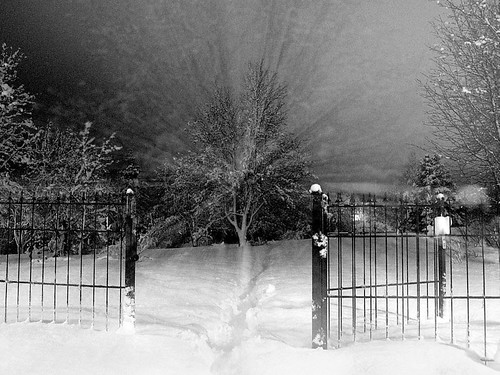
                                      (Photograph by Daniel Starrason)

Here are 8 things you can do for the garden in December:

1. Plant bulbs until the ground freezes or during a thaw.

2. Put burlap on stakes for winter protection of broadleaf evergreens or shrubs like roses that you want to protect.

3.  Apply winter mulches to bulbs, perennials, strawberries or shrubs AFTER the ground freezes.

4. Divide spring and summer blooming clumping perennials (Those that are fall bloomers can be divided in the spring or season opposite to bloom time.)

Continue reading “8 Things To Do For The Garden In December”

Hardiness Temperature Zones: What Zone Will Make My Plant Happy?


TheGardenLady has been writing about a hardinessTemperature Zone Map for use when planning and planting your gardens. For those readers who wonder what TheGardenLady is writing about, let me explain.

There are a number of factors/needs that are involved in growing plants. For example, each plant has its special water needs, special soil needs or special fertilizer needs, etc. to allow it to grow to its optimum best. One of the important factors in raising plants outdoors is the temperature plants need to allow them to metabolize properly.  Plants grow best within a range of temperatures; for some plants the temperature range will be narrow and for others the range can be wider. Plants also differ in their ability to survive frost.

Continue reading “Hardiness Temperature Zones: What Zone Will Make My Plant Happy?”

Winter Care of Knock-Out Roses

TheGardenLady received this question from Julia.

How do I prepare my KNOCK-OUT Roses for winter?

KNOCK-OUT Roses were bred to be almost maintenance free. So, if you live in zone 5 or a warmer climate, winter maintenance is minimal.

The KNOCK-OUT rose site says that “Knock-Out Roses were bred with greater cold weather tolerance to relieve the northern gardener of the need to apply and remove winter protection materials and the necessity to replace winter killed plants when protection failed.”

That being said, mulch the roses with leaves or hard wood AFTER the first hard frost – you want the ground to be frozen solid.*   If you want, you can burlap the rose plant. Burlaping will also prevent the deer from eating the rose bushes.  If the roses are in pots, the pots should either be buried in the ground or brought into the garage. The pot does not give adequate protection to the roots during the cold, freezing winter.

Continue reading “Winter Care of Knock-Out Roses”

How to Deal with a Sick Mother-In-Law Plant


TheGardenLady received this question from Dawn:

Someone gave me a mother inlaw plant and said it lives outside and that I couldnt kill it, but it looks like its dying now…will it die in the winter and rebloom in the summer?

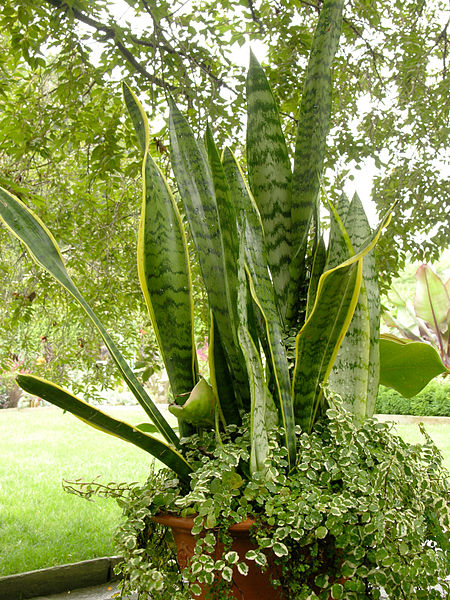
Plants that will grow outdoors all year long come from a place that has a similar climate to the one that you live in.  Sansevieria comes from Tropical Africa.

Zone 6, where I live, is too cold for the Sansevieria trifasciata (Latin name) or mother-in-law’s tongue plant (one of the common names for this plant) to leave outdoors in the late fall, winter and spring.  As tough as the plant is, it cannot tolerate very cold or freezing weather and in colder zones is used primarily as an indoor plant.

Since you do not tell me what temperature zone or area of the country/world you live in, I cannot tell you if the plant can be outdoors over winter in your area. Do you live in a tropical zone?

Besides not being able to live outdoors in cold weather where it will die, Sanseviera cannot tolerate overwatering or it will get root rot and also die. See TheGardenLady.org column Mother-in -Law Plant here.

Growing Plants in Containers


TheGardenLady received this question from Yoonsin Park:

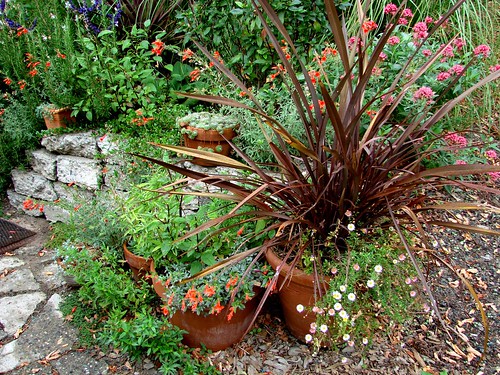
I live in a condo with a small patio.  Due to that I can only have container plants.  I don’t want to get larger & larger containers as the plant grows.  I just want to get one container and the plant to retain itself in it.  What is the best way to do that?

Container growing is one of the hottest methods of having an outdoor garden. There are a profusion of books on the subject.  Amazon.com lists 1514 books on container growing. One authority on the subject is Sydney Eddison whom TheGardenLady had the good fortune to hear lecture and see the slide show of her container garden.  Read this article by Eddison.

This summer at the Perennial Plant Conference at Swarthmore College I had the pleasure of hearing, seeing her slide show and meeting, briefly, Rita Randolph of Randolph’s Greenhouses in Jackson, Tennessee. Rita’s canvases are her containers which she sells; some you can  see on her website.

Continue reading “Growing Plants in Containers”

Making a Garden Bed when there is Sod


TheGardenLady received this question from Karen Meadows:

How do you layer over sod to make a garden bed?

To make a garden where one has sod, you must remove all the sod just as you would have to remove any type of grass. This can be back breaking work.  A slow, easier approach would be to layer over the area with several layers of black and white (no color) newspaper that you cover with a deep layer of mulch.  This approach can take up to a year to work. Either way the directions for getting rid of sod are on this DIY website.

When you have finished this task – removing all roots and stones - take a sample of the soil (as one would where ever one is making a garden) and have the soil tested. You can either buy your own soil testing kit or take the kit to your local Master Gardener office or your Agricultural Extension office where they will have it tested.  When the test results are in, follow directions for amending the soil for the type of garden you wish to make. You should also always amend the soil with compost.

Fallen Leaves – A Fine Fertilizer


TheGardenLady received this question from Ruth:

Is it true that fallen leaves can make good fertilizer? If the leaves can be used as fertilizer what are the benefits? Is it wise to mow/use as mulch the fallen leaves?

Fallen leaves make excellent fertilizer. This is nature’s way of making fertilizer without help from mankind; fallen leaves provide the nutrients that trees need and will enrich the soil – this includes increased soil organic matter, improved soil moisture holding, soil tilth (the physical condition of a soil), structure and fertility plus it helps the community dispose of leaves.  See this link about recycling and mulching.

But the leaves left on a lawn or home garden have to be mulched unless you compost the leaves:Read The Garden Lady’s column Would You Throw Out Your Old Gold. It is very wise to mow your fallen leaves if you want to make the leaves into mulch and it is a lot easier than raking leaves. There are mulching lawn mowers or mulching attachments for lawn mowers the mulching easier. There are also mulchers – machines that you can buy to shred leaves. But you can use a regular mower, going over the leaves a few times to be sure the leaves are finely cut. It is easiest to mulch them by mowing them every few days so they don’t accumulate. You don’t want any more than 6 inches of leaf mulch. If the grass is visible after mowing, no other steps are necessary. If there are clumps of chopped leaves, either re-mow in the other direction to chop the leaves further, or rake them up and put them in your compostpile.  And if you have too much mulched leaves for your lawn you can put them in your garden beds, flower beds and around trees and shrubs.