Touring Other People’s Gardens – The Garden Conservancy

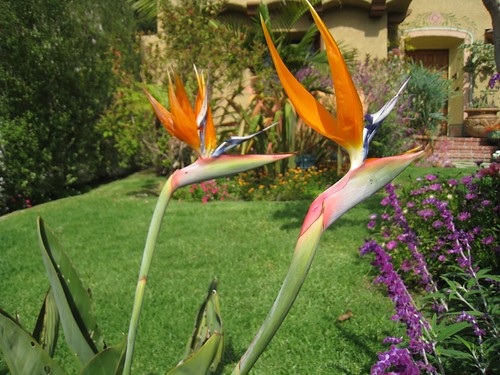
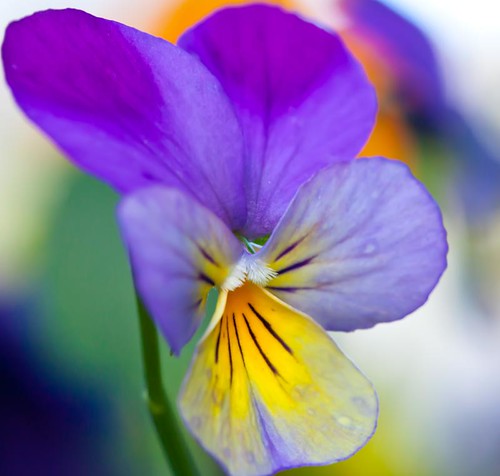
Untitled by edanastas

Not only is this the time to enjoy your garden and its flowers, but this is the time to start thinking about visiting other gardens to see what others are doing in their gardens. Some of the garden ideas you see in others’ gardens can sometimes be brought home and used in your gardens.

How do you get into other people’s private gardens if you don’t know the people? There is a wonderful organization that allows you to do this. It is The Garden Conservancy. They have convinced gardeners around the country to open their private gardens for a few days each year so that the public can visit.

Continue reading “Touring Other People’s Gardens – The Garden Conservancy”

2012 Centennial National Cherry Blossom Festival – March 20th through April 27th

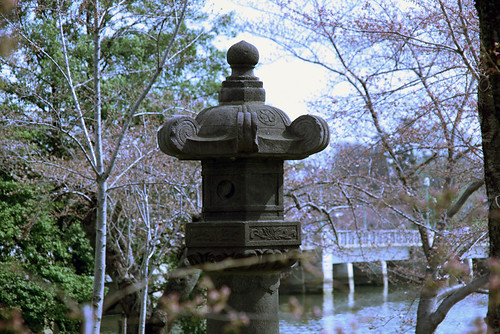
Stone Lantern detail – cherry trees – Tidal Basin – Washington DC – 2012-03-15 by dctim1

The cherry blossoms have opened already in my area. I was amazed when I saw the first tree in bloom on Monday, but now I see other cherry trees in flower.

This morning TheGardenLady heard from her Japanese pen pal that it is the 100th anniversary of the giving of the cherry trees to Washington, DC from Tokyo.

So this year, the cherry blossom festival in Washington, DC should be awesome. The festivities will begin on March 20th and go through April 27th, 2012. You can delight in the flowers on about 4,000 trees. What a spectacle that should be! To read about the event, go here.

Continue reading “2012 Centennial National Cherry Blossom Festival – March 20th through April 27th”

5 Fruit-Bearing Shrubs that do Best in Acidic Soil

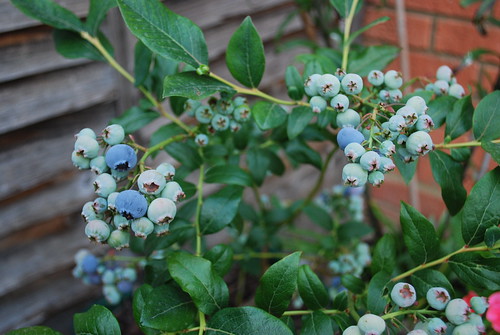
Our Blueberry Bush by martinrstone

When you plant your garden, the first thing you should do is have the soil tested. The test will include the soil pH of the area of your garden where you want to plant. The pH is a scale from 0 through 14. From 0 to below 7, the soil is acidic. Above 7 the soil is alkaline. 7 is the neutral range where most plants will grow. Those soils that fall in the middle range can be changed a bit with soil amendments to make them more acidic or alkaline. To understand pH check out this site.

TheGardenLady gets soil kits that are sold through the Master Gardener office or county agricultural extension office because I believe they do the most comprehensive testing. Of course you can buy soil testing kits and do it yourself. The results of the extension’s test tell you what your soil type is and what amendments you need to get the garden soil ready for the type of plants you want to grow. Soil pH affects the solubility of minerals or nutrients that in turn affects the plant’s growth.

If you use the Master Gardener or extension soil test kits, after you receive your test results you can go to the Master Gardener or extension office to have them explain your test results and they will give you free advice on amending your soil to make your soil meet the soil pH requirements the plants need. You can amend soil that is in the neutral pH range but you should know that there is a limit to how much you can change the soil pH. If your soil is very alkaline, it is expensive and not practical to change the soil pH to make it acidic.

If you know that your soil is acidic below are five fruit-bearing plants that do best in acidic soil:

Continue reading “5 Fruit-Bearing Shrubs that do Best in Acidic Soil”

Building a Cold Frame for Planting Seedings and Cold Weather Crops

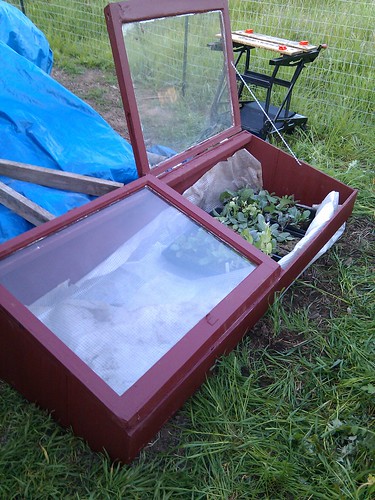
Cold Frame by terriem

Recycling is the hot word these days. And gardeners are doing more of it. You can, too. For example, if you have external doors made of glass or storm windows that are no longer used, reuse them to build your own cold frame.

What is a cold frame? A cold frame is a bottomless box with a hinged glass door or window on top that is used for planting seedlings and cold weather crops to extend the growing season. It grows cool loving plants for a longer period in the year and helps acclimate plants started indoors in the spring so they warm up (harden) to be planted later in the season.

Continue reading “Building a Cold Frame for Planting Seedings and Cold Weather Crops”

Philadelphia Flower Show 2012

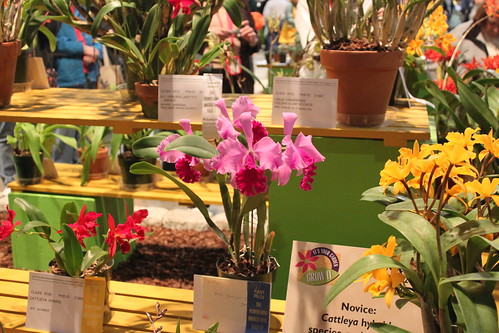
Philadelphia Flower Show 2012 by Knitting Zeal

I went to the Philadelphia Flower Show on Tuesday.

I had not really wanted to attend this year for a few reasons. One is that as much as I love orchids, these are not flowers that grow locally so it would not be much of a learning experience. I have no greenhouse and do not really have room to raise many orchids in my house- I do own about a half dozen. And from some of the advertising I had read, I feared the show was going to be more commercial than usual. But since friends wanted to go to the flower show, I went along.

The major exhibitor of orchids, I believe, is Waldor’s Orchids. I have visited Waldor’s Orchids Nursery in Linwood, NJ, one of the finest orchid nurseries on the East Coast. I don’t believe one can go wrong if you purchase orchids from Waldor’s Orchids. So of course, I was curious to see their orchid exhibit.

Continue reading “Philadelphia Flower Show 2012”

Neomarica (Apostle Plant)

Iris ‘Neomarica’ – Brazilian Walking plant

This morning I was greeted with the first flowering of my Walking Iris plant Neomarica, sometimes called an Apostle plant.  See here.  Neomarica is a genus in the Iris family (Iridaceae) of about 15 species found in Central and South America. It was given the common name Apostle plant because it was believed that 12 leaves were needed before it flowered.

I own Nomarica gracilis, a plant that grows in Brazil, which grows outdoors in plant hardiness zone 8 and warmer. I live in Hardiness zone 6 so it is one of my indoor plants. It is referred to as one of the ” pass along” plants because one rarely sees it for sale in nurseries but is easily passed along to friends and family members. It is a hardy plant with few pests or diseases. The plant has more leaves than flowers with the flower growing at the tip of a leaf. After it blooms, the stem with the flower will bend and form a baby plant that can be started as a new plant. The way it bends and starts new plants makes it seem like it is walking- thus the common name Walking Iris.

Continue reading “Neomarica (Apostle Plant)”

Flowers are Blooming Earlier than Usual – What Does this Mean?

A splash of colour in the gloom by Steve-h

It is obvious on our planet that the weather has changed. The earth is warming. Many parts of the US are seeing flowers in bloom approximately a month earlier than usual.

In my area, the hellebores have been in bloom for months. Snow drops and crocuses are flowering and now the daffodils are open or opening. Pansies are having their winter show. What this will mean for gardeners and farmers will have to be seen.

Gardeners seem to be advised to start planting some early crops already. Peas which were historically planted on St. Patrick’s Day in my temp zone, can be planted now. The Farmers’ Almanac has this year’s calendar for planting.  Besides earlier planting, what the temperature changes will bring will also have to be seen. We may be getting more pests, we may have less water to use on our plants or we may be able to grow bumper crops in areas certain crops were never grown before.

Continue reading “Flowers are Blooming Earlier than Usual – What Does this Mean?”

Organic Fertilizers – Part II

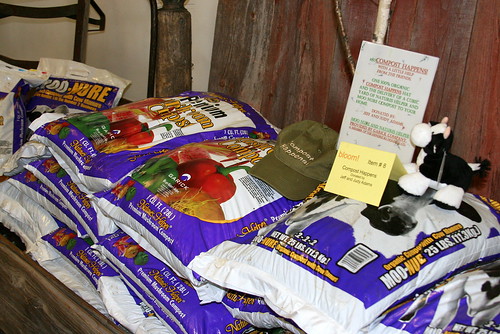
Moo-Nure by OldOnliner

Cow manure is a good all purpose organic manure with a good balance of nutrients. It is lower in Nitrogen than other manures so it doesn’t burn plants. It might have a high salt content because cows are given salt to lick, so don’t use too much at one time. If you have a dairy or beef farm near your property, see if you can get some of their cow manure. Again, ask if it is aged or composted because you should wait at least a month before planting with cow manure. It can take up to a year to compost manures, depending on the climate. Colder, wet climates require more time for the manure to sufficiently decay to be safely used for gardening. Aging or composting manures kills the pathogens in it, making it safe for home gardens. Fresh cow manure is high in E. coli and protozoa that the plants can take up from their roots, or the bacteria can splash on their leaves from watering or rainfall.Composting cow manure involves spreading it into shallow piles and letting it decay.

Read more: Cow Manure for Plants | eHow.com

Continue reading “Organic Fertilizers – Part II”

A Beautiful Garden in Mmathethe, Botswana

My dear friend Lynn Deutsch, who is a Peace Corps member,  has written another post about a garden she discovered in Mmathethe, Botswana.  You can read her previous post about her horticultural experience in Mmathethe, Botswana here.

I thought you may be interested in looking at some of these garden photos. As I was walking way up to my primary school, I noticed this beautiful garden. I went in, and this woman, Margaret, told me she was from South Africa and came here about a year or so ago when her mother died. The woman doesn’t live close to me, so I don’t know her well…just that when her mom died, she took over her house and felt compelled to keep her mom’s garden going and make it even more beautiful. She spends about 3 hours each day, waking at 5am, to get out before the heat of the day comes. She has several kids, and wants to pass on the art of gardening, and the importance of growing your own veggies to stay healthy.

Continue reading “A Beautiful Garden in Mmathethe, Botswana”

Adding a Conservatory or Greenhouse to your Property

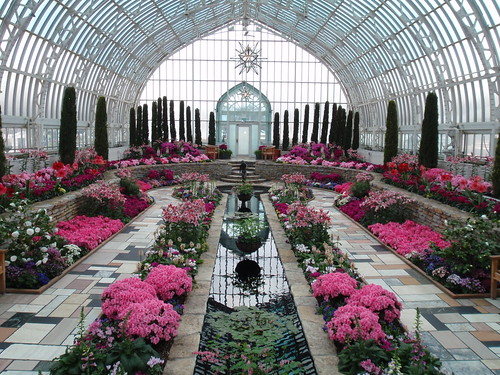
conservatory by lert

This GardenLady always dreamed of having a greenhouse. Other terms for the same or similar buildings are hothouse, conservatory or even sunroom.

Historically the concept of having a building that can be used to grow vegetables indoors even during the cold of winter goes back to the Romans. Apparently Tiberius was said to have eaten a cucumber-like vegetable every day. But the first modern greenhouses were built in Italy in the 13th century to keep the exotic plants that explorers brought back from the tropics. From there they spread to other European countries. Today, the Netherlands has many of the largest greenhouses in the world, some of them so vast that they are able to produce millions of vegetables every year. The conservatory at Kew Gardens may be one of the largest conservatories in the world, but I believe that the Eden Project in Cornwall England is the largest in the world.

Continue reading “Adding a Conservatory or Greenhouse to your Property”