Encore Azalea Contest

Encore + bonus by Vicki’s Nature

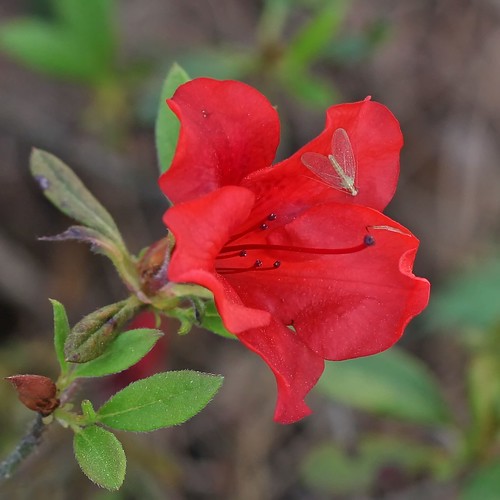
Once again readers of TheGardenLady.org can participate in the naming of a new flower.

Encore Azalea is having a contest (see here) to name one of their newest azalea varieties that will debut in the fall of 1012.

The winner gets 10 Encore Azaleas.

TheGardenLady would be so proud if the winner was one of her readers.  So I am hoping that readers will put their thinking caps on and show the Azalea world how clever you are. Submit your creative ideas before Nov. 25th.  Then let us know if you are a winner.

Book Review: The Brother Gardeners

I believe TheGardenLady can make the statement that Everyone Loves English Gardens! And who is it who doesn’t love floral arrangements? Or are you allergic and love artificial flower arrangements or silk flower arrangements?

But have you ever wondered how this love started? And who started all this interest in flowers and plants, whether real or artificial?

An excellent, exciting book that tells the story of gardening and gardens and all the people involved in their creation, that you must read is “The Brother Gardeners: Botany, Empire & The Birth of an Obsession” by Andrea Wulf.

This book tells about the relationship and interrelationships of all the big characters who were involved in early plant history. These are people like the Ameican, John Bartram, who collected the plants from the American colonies that were sent to English plant lovers. And Bartram’s relationship with Ben Franklin and what Franklin had to do with plants in America that is an additional facet of an amazing multi-interest life.

Continue reading “Book Review: The Brother Gardeners

Asters in My Fall Garden

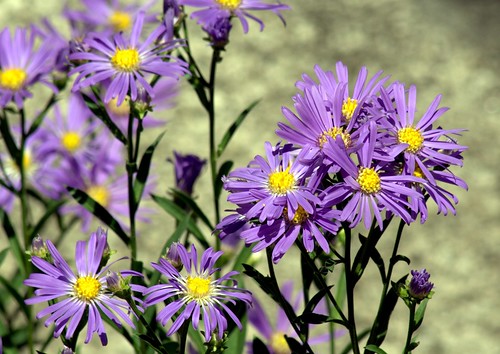
20110706 aster by martius

I wrote that Chrysanthemums and perennial asters are in my fall garden. Those seem to be the main flowers when one thinks of fall flowers- those and goldenrod. Because I grew up with wild asters in meadows, I never thought of asters as an interesting plant for a garden. I always preferred chrysanthemums. But nurseries have been coming out with such pretty new asters and they seem so easy to raise and such a delightful addition to the fall garden, that I am having a change of heart about them.

These herbaceous perennials are better known in the UK as Michaelmas Daisies because the peak season of flowering is September and October, with Michaelmas day  falling on the 29th September. Gardeners and horticulturists are becoming more and more excited about asters. Hundreds of species and cultivated varieties are grown in gardens throughout the temperate regions of the world because they grow from Hardiness Temperature zones 2 to 9.

Most asters are native to North America, so if you like to grow native plants asters are a must have. Those who enjoy encouraging wildlife to come to your gardens, asters host a number of insects and animals. It is a food source of Monarch butterflies, painted lady butterflies, and the honey bee as well as the goldfinch and others. Some sources say that deer and rabbits don’t eat asters- other sources say they do. I haven’t seen my asters eaten yet. Asters are shelter for the painted lady butterfly, the goldfinch, the northern Bobwhite, the American toad among others.  See here.  If you would like seed to sow a meadow with asters, check out this.

Continue reading “Asters in My Fall Garden”

Review: New Encyclopedia of Gardening Techniques

I love to visit our local library to see what books are new in horticulture, gardening, landscaping, plants, insects, etc. During my last visit I found a book that I think readers of TheGardenLady will really find valuable. Put out by the American Horticultural Society, it is the “New Encyclopedia of Gardening Techniques” which calls itself  “The Indispensable Illustrated Practical Guide.” This book contains both photos, they say there are over 1000, and wonderful color illustrations that are very clearly drawn for understanding. The book tries to cover planting techniques for all Temperature Hardiness Zones.

Of course this book is not all inclusive, no single book can be. That is why every year more and more books are written about plants or landscaping or gardening. There seem to be more and more new plants each year, and more ideas or changes in landscaping or new techniques developed that gardeners want to learn about. But at 4 1/2 lbs, this book packs a lot of basic information. Some books are quite classic in that they give information that is always useful, always timely even many years after the publication. This “New Encyclopedia of Gardening Techniques” is one such book. It gives clear, explicit information about so many of the How to Do things with plants or in a garden. For example, do you want to reduce your lawn but aren’t quite sure what to plant in its place? There is a chapter devoted to this topic of lawn alternatives. Are you curious about the pests enjoying your fruit before you do? There is a chapter on Common Problems. Do you want to trim your shrub roses or wisteria? Check this book our of your library just to see how to prune with their clear illustrations. It explains things about your garden in a concise, simple and clear way with those wonderful illustrations.

Continue reading “Review: New Encyclopedia of Gardening Techniques

Annuals for the Fall Garden: Morning Glory and Mexican Sunflower

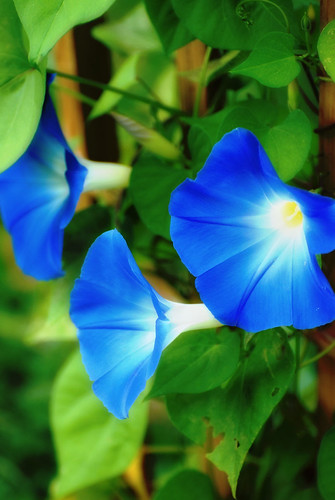
morning, glory by Aunt Owwee

Two other plants that I love in my fall garden are annuals. I planted the seeds directly into the ground outdoors, so they got a slow and late start. But they are finally taking off.

One is the morning glory. I planted a few seeds on either sides of my arbor hoping that they would cover it. I planted a few seeds near a tree that I wanted them to climb. And I planted a few seeds near a sign on my sidewalk that says, No Parking on This Side of the Street. The township was unhappy that the morning glory vine might obstruct their sign, so they tore half the vine off. But it didn’t matter. The morning glory vine climbed back up. But now I check the vine every morning to remove any tendrils that want to cover the face of the sign. And the vine is starting to bloom.

The morning glory seeds planted near the sweet gum tree that I wanted to climb had a mind of its own and refused to climb the tree. But no matter. The mound of morning glory vine in front of the tree is producing lots of morning glory flowers. But the pièce de résistance is the arbor. The vine has grown over the arbor in such a lush covering that with its heart shaped leaves and stray tendrils swirling around, it is a sight to behold even without flowers. But when the flowers open it is truly a sight to behold. The flowers seem to be opening slowly but there are tons of buds. Here’s hoping for a late frost.

Continue reading “Annuals for the Fall Garden: Morning Glory and Mexican Sunflower”

Cyclamen In The Fall Garden

Cyclamen hederifolium by andreasbalzer

One of my favorite house plants that usually is sold in my area in late fall through winter, a great Christmas present, is the Cyclamen plant.  I love the flower and wish I could grow it outdoors because it is one of those plants that also has pretty leaves going for it. But alas, it wants to live in a warmer climate than I live in. Cyclamen persicum grows in Temperature Hardiness zones 7 and above.

So when I learned that there is a perennial cyclamen that will grow in my area, I had to have it. There are a few different cyclamens that bloom outdoors in the fall. I bought Cyclamen hederifolium.   It is such a delightful plant; I am so happy with it in my fall garden. It grows in Hardiness Temp. zones as low as Zone 4.  It has virtually no pests plaguing it. This is my perfect type of plant.

Continue reading “Cyclamen In The Fall Garden”

Toad Lily: Flowers that Bloom in the Fall

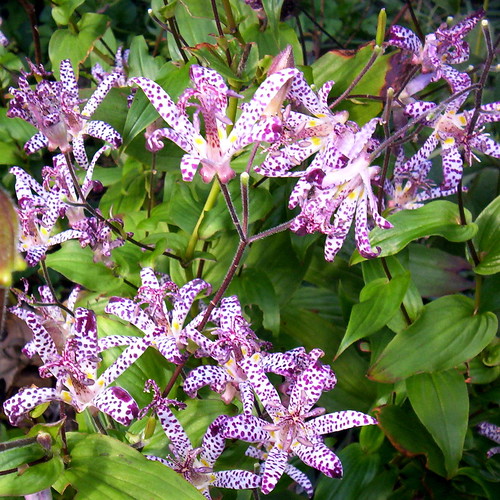
Toad_Lilies by zhurnaly

Most people, when they think of flower gardens, think of spring gardens and summer gardens. Fewer people seem to think of fall as a great time for flowers. Maybe this is because with the arrival of fall we know that winter is around the corner and are preparing for the cold weather or are too busy raking leaves to notice the many flowers that are showing off. Or maybe it is because one anticipates and is eager to see the beautiful fall foliage which can be so spectacular that the scene overshadows everything else. Whatever the reason, you are missing out if you do not plant flowers that bloom in the fall.

I love the flowers that are now open in my fall garden. It is not just the chrysanthemums and the asters that are stunning in the fall. There are some lesser known flowers that bloom in the fall with such pretty flowers.  I want to write about a few of the flowers that are favorites of mine.

One really special fall flower that is presently blooming in my garden has the silly common name of Toad Lily. The Latin name is Tricyrtis. This perennial is in the lily family. To read how the plant got the unflattering name of Toad Lilly, read this. This year’s rainy weather has been wonderful for my toad lilies and the floral display is the best I have ever had. When I showed them to my daughter, she thought I had orchids.

Continue reading “Toad Lily: Flowers that Bloom in the Fall”

Dealing with Animals in the Garden

Fox searching – 6 by iglooo101

Living in nature is beautiful, but it can seem so defeating. TheGardenLady has written columns about how she lives and has to practice good wildlife management to enable her garden to grow successfully. All the animals want to enjoy her garden to the extent that if allowed, there would be no garden.

Every gardener has this problem. If it is not deer, then it is rabbits or squirrels or…. you name it. One friend was happy when foxes moved into the culvert near the front of her driveway. She never saw a deer or rabbit on her property after that. But one can’t allow foxes to live on your property for a variety of reasons, so she had to have them removed. So far I haven’t seen foxes living on my property, but I have seen opposums, raccoons, woodchucks and at night, coming home sometimes I have smelled skunks. Those animals are all living harmoniously together, I hope, with Bambi and all his relatives as well as the numerous squirrels that live in my black walnut trees or hickory nut trees all inherited with the house when I bought it.

chipmunk by Dawn Huczek

But at least, I told myself, I didn’t have chipmunks on my property. As cute as chipmunks are they can cause a lot of serious problems including coming indoors where they can do damage. I knew that there were chipmunks in my county because I had seen one at the big hardware store about 5 miles away. There a little chipmunk was being fed by one of the cashiers who thought it was “sooo cute.” But I hadn’t seen chipmunks in my town or on my property until I looked out this morning. I saw my first chipmunk scurrying across my deck. And where there is one, I know there are many.

Continue reading “Dealing with Animals in the Garden”

Brugmansia – My Little Shop of Horrors Plant

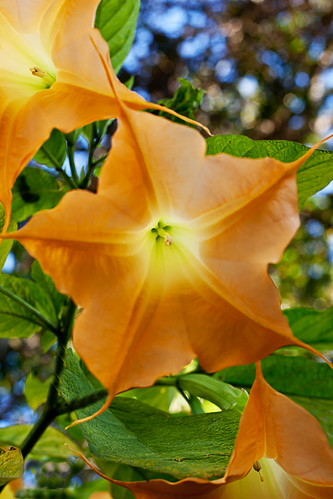
Brugmansia by mythlady

As I wrote in a previous post, I get a daily bit of pleasure going out to my garden to see what is in bloom. Today it is my Brugmansia that is in bloom. And when I say, in bloom, I mean it is exploding with flowers.

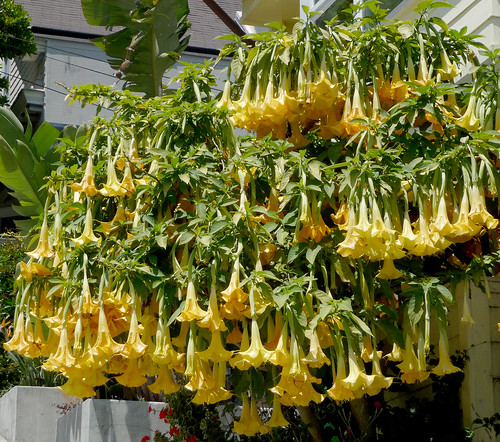
Brugmansia ‘Charles Grimaldi’ #1 by J.G. in S.F.

I consider my Brugmansia my “Little Shop of Horrors” plant. (check out the movie if you haven’t seen it) My Brugmansia tries to dictate my life. Instead of saying “feed me” it constantly screams, “Water me.” This is not a plant for a drought region. It must have kept my property from flooding during the hurricane, sucking up all the water that poured down. I am just kidding, but knowing how much water this plant likes, maybe there is a kernal of truth in it. If I let a day go by without watering the brugmansia, the huge leaves tell me by drooping or turning yellow.

Continue reading “Brugmansia – My Little Shop of Horrors Plant”

Hummingbird Moths

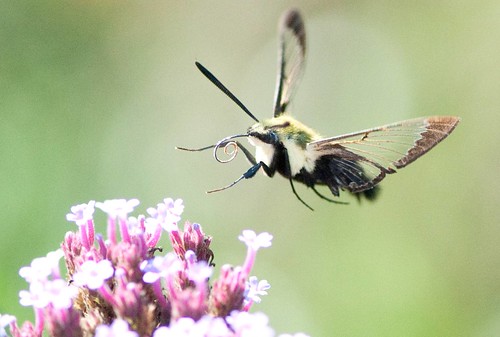
Hummingbird Moth by photofarmer

Every day when I go out to check on my garden I find something pleasant to note for my satisfaction. I might be happy to see a lot of bees. I am especially thrilled when I see a few honey bees in their midst. I am always looking for butterflies. And of course, I look to see which flower is now open.

One insect flying in my yard, I had first seen when I was a child. I was so excited thinking it was a hummingbird that I called my parents and neighbors to come see. Then an elderly neighbor, Matilda, told me it was not a hummingbird, it was a Hummingbird moth, also called hawk moths or sphinx moths. Though most moths come out at night, this moth is diurnal or flies in the daylight. According to Wikipedia there are around 1200 species of hawk moths.  Here are some other diurnal moths.

Continue reading “Hummingbird Moths”