Turkey’s Botanical Treasures

Flower bed at Topkapi Palace, Istanbul by John Picken

In spite of the number of lovely flowers that I have already growing in my garden, this GardenLady always dreams of more flowers. Which ones should I add to the garden when I divide and transplant or give away those that have overgrown their stay? As I have been going through some catalogs deciding on some more bulbs that I want to add to my garden, I realize that so many of my favorite flowers come from Turkey. For example, tulips are native to Turkey as are some of the fall blooming crocuses. See here. Now that Liquid Fence stops deer and rabbits from eating my tulips and crocuses, I am ordering more of both of these bulbs.

When this GardenLady traveled through Turkey in the early 1970s, especially driving through the eastern part of that beautiful country, I was amazed with the number of wild flowers I saw there. They were so many wildflowers, that I decided I would concentrate on seeing how many different flowers of one color that I could find each day I traveled. This was not a difficult undertaking, the wild flowers were so prolific. I had a cup holder in the car and I would fill a cup with a different color of flowers daily.

Though cutting the flowers does not hurt the plants, since this is what one does when one dead heads to encourage more blooms, if everyone did what I did, there would be few wildflowers for others to admire. Though I did this before this type of thing was prohibited, we know better these days and I would never recommend picking wildflowers. I recommend just looking and photographing the flowers. I wished I had a book with me for identifying flowers so I could know what the names of those flowers were. These days, I wonder if there are good books in English on the names of the Turkish flowers.
Continue reading “Turkey’s Botanical Treasures”

More about the farm TheGardenLady grew up on

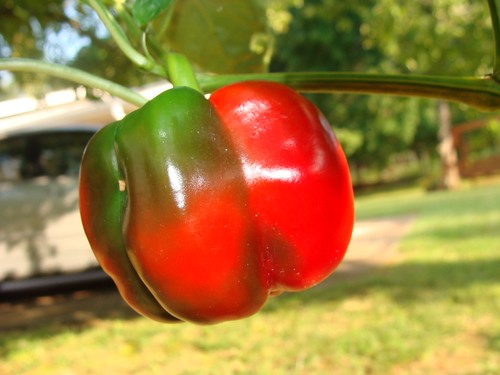
Bell pepper, with both green and red colors, natural color by Martin LaBar

My parents’ farm was small. They raised the usual crops that everyone in the area who wasn’t a chicken farmer raised. And some of the chicken farmers also had small farms that raised the usual crops – tomatoes and strawberries were the basics for sale. These were called truck farms because farmers could truck the produce to the big cities- in our case it was Manhattan or Philadelphia- to try to sell. Or we would truck the produce to the canneries that were in our county. Ritters and Seabrook Farms were the two big tomato purchasers. These companies made ketchup and canned tomatoes.

Canned tomatoes by Unhindered by Talent

There were a lot of truck farms. That was why New Jersey was given the name The Garden State. Competition was fierce so the prices for the harvest was usually low. If everyone raised tomatoes and the season was good, the tomatoes were plentiful and the price the farmer got was low. Those years we had tomato fights. My mother canned a lot of tomatoes.

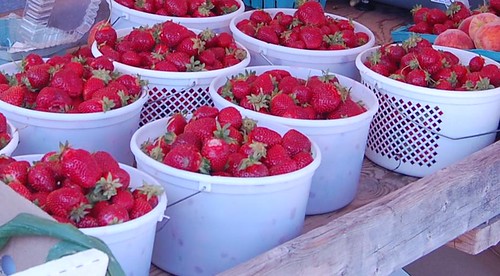
strawberries by Donald Lee Pardue

My mother started her own farm stand. Mostly she sold strawberries and flowers. Neighbors copied her. There were so few cars on the road in those early days that the farm stand did not bring in much money. What little was brought im, though, was greatly needed and appreciated. What didn’t sell became strawberry jam.

Continue reading “More about the farm TheGardenLady grew up on”

TheGardenLady’s Parent’s Farm

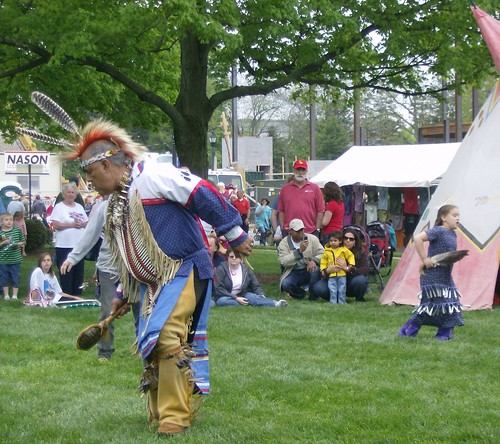
Lenni Lenape dancer by impulse2c

As a child, I wished I knew about the original people who lived on the land that my parents’ farm was on. I wanted to know about the Lenni Lenape Indians that preceded my family to that area. But there were few books in our local library- and very few books on the Lenni Lenape.

I spent many hours of my childhood poring over the ground looking for Indian artifacts. Findings were best after the fields were plowed. It seems that each time the field was plowed it turned up more Indian artifacts. My sister and I, trailed by the family dogs, would slowly go up and down the field looking. We children found lots of flint and arrowheads or pottery shards. (sadly my collection was stolen when I took it to school) We also found clam shells. The closest clams were about one hour drive away from the farm, yet there were clam shells in the fields. So I imagined that the Indians had Pow Wows where they ate clams. But what else did they eat that they found in the area where the farm was?

Continue readingTheGardenLady’s Parent’s Farm”

Climbing Hydrangea

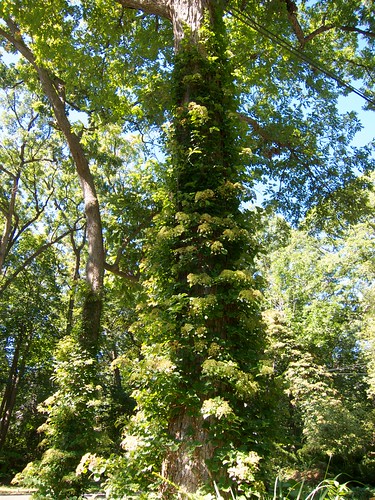
Climbing Hydrangea Vines by beautifulcataya

When the TheGardenLady was asked for the name of a good vine to grow along the wall of a house, my first suggestion was to check the amount of sunlight that side gets. Depending on the amount of sunlight will determine the vine you want to choose. Also, it would be wise to have a soil test of the area where you want to plant anything. The concrete from the base of the house might leach into the soil to change the pH making it very alkaline. This might not affect the plant you want; but it is best to be sure.

My favorite vine for shade is the climbing hydrangea, Hydrangea anomala petiolaris.  See here.   This is a vine that will grow even in a northern exposure though it likes some sun or dappled sun. It grows in zones 4 or 5 and warmer. It will grow in full sun, too but in the Deep South and in western Zones 9 and 10 it needs shade in the afternoon.

Continue reading “Climbing Hydrangea”

On Weeds

Purslane by A. Drauglis..

TheGardenLady has not spent much time writing about weeds. But weeds are something that TheGardenLady spends a lot of time pulling as well as thinking about. (I have read Weeds of the Northeast by Richard H. Uva. )

Whenever I pull the wild purslane- Portulaca oleracea or the Lamb’s Quarters -Chenopodium album or any of the other edible plants that are considered weeds like chickweed- Stellaria species or dandelions-Taraxacum officinale and toss them, I feel really guilty. I know I should really be harvesting these plants not composting them, even though composting means I am recycling these plants.

I have eaten purslane, a popular healthy green used a lot in Middle Eastern cooking.  And one time, I did want to try to make some dandelion wine since I grew up near the Dandelion capital of the world, Vineland, NJ.

Continue reading “On Weeds”

The Pyracantha Shrub

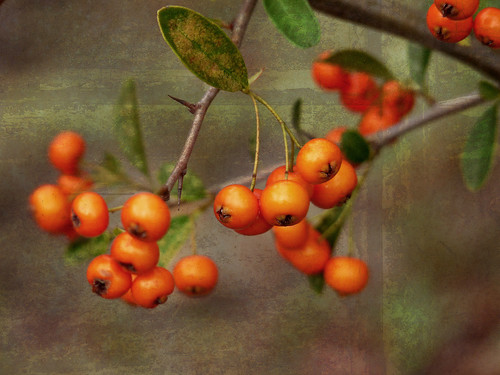
Orange Pyracantha Berries by vns2009

TheGardenLady received this comment from a Dr. Rothberg.

Lilac!  Thanks very much for the garden tour.  I’m full of new ideas, some of which will be used in Nancy and David’s new garden in Chatham….What I was trying to think of (for a climbing plant along a sunny wall) is Pyracantha (firethorn).

Dr. Rothberg was interested in a Pyracantha shrub, a spiny, evergreen-spreading to erect shrub, that can be trained to climb up a sunny wall or espaliered. Though Pyracantha has small fragrant white flowers, it is mainly grown for its lovely yellow, orange or red berries.

TheGardenLady does not have a Pyracantha shrub, but neighbors who had one of the most outstanding gardens in my town had one climbing up a trellis near the wall of their house. The wife used to carefully and meticulously prune the plant. With good reason -  she had to be careful because most Pyracantha shrubs have nasty thorns (there is one that has fewer thorns). These thorns can cause an irritating rash or a burning sensation from the prick. The burning sensation from the prick is one reason people say it was given the common name Firethorn. Not only are the thorns sharp, but some people have had a severe or allergic reaction to a prick from the Pyracantha thorn and had to seek medical treatment; though I do not think this is a common occurrence. But when pruning, it is wise to wear protective clothing and leather gloves. The good thing about the thorns is that deer rarely eat this shrub. Birds will build nests in the shrubs and birds, especially cedar waxwings, will eat the pyracantha berries. The birds first choice seems to be the red berries.

Continue reading “The Pyracantha Shrub”

How to Stay Safe and Cool in the Hot Weather

Please Keep Clean Water in Shallow Dishes to Help Birds Survive The Current Heat Wave!! by Koshyk

My heart bleeds for the parts of our country and the world where people have been under a heat wave for such a long time. Here on the East coast where I live, we had a week of the hot weather but only 3 days of the really brutal weather that others are experiencing. I worry about all of your gardens and farms that have had to suffer this heat wave.

But most of all I worry about you- the gardeners and farmers. I hope you are taking every precaution to prevent succumbing to this heat. After all, if you get sick from the heat, the gardens or farms will not have anyone to help in the future.

Noel Coward wrote the famous song that said, “Mad dogs and Englishmen go out in the midday sun.” I will have to review the lyrics of the song, but I imagine that if Englishmen go out in the midday sun, they must be concerned about their gardens as all gardeners are. And a dog has to venture out in this heat when “nature calls” whether it is mad or not. But they do have products to keep dogs cool.   See here.

Continue reading “How to Stay Safe and Cool in the Hot Weather”

Mulch and Compost – Use Horse Manure

The Magic Of Horses by Big Grey Mare

Another thing to do to your garden to prevent water loss in the time of drought, is to be sure that all your plants have mulch around their roots. Mulch keeps weeds down and helps retain water. There are many different types of mulch that you can use.

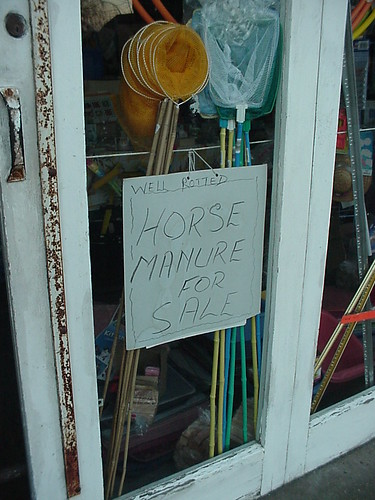
Must be gardeners near by by pollyalida

l use aged horse manure as mulch. I am lucky that I know someone who raises horses, ages their manure at least 6 months and then delivers it to my house. The woman said that her horses, who are retired, earn their keep this way so that she “never has to put them out to pasture” so to speak. The adage to never use fresh horse manure on your plants or you can burn them is said with a caveat. I have heard that a thin layer will not burn. But I have never tried it because I would think that even if it didn’t burn, the fresh manure would stink.

Continue reading “Mulch and Compost – Use Horse Manure”

Watering the Garden

Rain Barrel by grifray

The dry days of summer are here. Since I want flowers whether they are annuals, perennials, shrubs or trees, I have to take care of them by watering. But water is a special commodity- clean water is becoming more and more a rare commodity. Water is also becoming more and more expensive. So I try to do watering the right way.

I do not use a sprinkler system which wastes water by sprinkling indiscriminately, or loses water from evaporation as the water sprinkles in the air. I have too many flowers to use a drip system or to figure out where to best place one or many drip hoses. So I stand and water my flowers either early in the morning or after the sun goes down. Really, I water their roots. I try to water deeply enough so that the roots grow down for a stronger root system and healthier plants. Spraying water on the leaves is really not good for the plants in sunny weather, especially not for roses which can get a disease called black spot.

Continue reading “Watering the Garden”

Shrubs, Perennials and Trees with Chartreuse or Gold Leaves

In the morning light by Quite Adept

Since the email arrived asking for recommendations of plants with burgundy leaves, TheGardenLady has been thinking that some readers might be interested in plants with Chartreuse or golden foliage. When TheGardenLady first saw chartreuse leaves on plants, she couldn’t understand why people would want leaves that look sick. But as the plant producers have created more chartreuse-leaved plants, I have gained a greater appreciation of this color in the garden. The landscape with green, burgundy and chartreuse plants makes for more visual interest, with flowers being almost a gilding to the proverbial lily.

When looking at the name of a plant, if there is the word Aurea in it, it is the Latin word for gold. Of course, the Aurea may refer to the flower, not the leaf.

One example is the Catalpa Tree, Catalpa bignonioides ‘Aurea” This easy to grow Catalpa tree has big, yellow leaves with white flowers.

Then there are a number of golden Chamaecyparis or False cypress:

  • Chamaecyparis obtusa ‘Tetragona Aurea’ the Golden fernleaf cypress
  • Chamaecyparis pisifera ‘Filifera Aurea’ the Golden threadleaf sawara cypress; Golden threadleaf or Lemon Thread Sawara
  • Chamaecyparis pisifera ‘Plumosa Aurea Nana’
  • There is Corylopsis spicata ‘Aurea’ the Spike Winter Hazel that not only gets chartreuse new leaves, it has fragrant yellow flowers as well.
  •  Another example with Aurea in the name is the Cryptomeria japonica the Golden Japanese Cedar Elegans Aurea.

Many of the shrubs or small trees that come in burgundy also come in chartreuse or gold. But there seems to be more chartreuse or golden shrubs than burgundy shrubs.

Because all my friends have the burgundy Smokebush, TheGardenLady had to be different. So I bought Cotinus coggygria ‘Golden Spirit’ Smokebush. I think I prefer the burgundy leaves and wish I had the burgundy smokebush instead; but a friend who has four burgundy Smokebushes (3 came from the mother shrub) she wanted one like my chartreuse smokebush as well. Plant lovers want them all. I am limited because my property has so many huge old trees.

Acer shirasawanum ‘Autumn Moon’by nestmaker

 There are several Japanese maples in chartreuse. Acer shirasawanum ‘Autumn Moon is just one of them.

A short list of shrubs with golden or chartreuse leaves are Buddleia ‘Evil Ways’, Tiny Gold Barberry, Hydrangea like Hydrangea quercifolia ‘Little Honey’, Spirea “White Gold’. There are many others.  See here.

Of course, there are also many gold or chartreuse leaved perennials and grasses like Dicentra spectabilis ‘Gold Heart’ bleeding heart or Golden Japanese Forest Grass (Hakenachloa macra). And don’t forget all the hostas with golden leaves. See here.  TheGardenLady has some Hosta ‘Bright Lights’ that are chartruese with a dark green border that brightens up a dark spot.

For an extensive list of chartreuse as well as burgundy shrubs and perennials check out the Monrovia website.

Monrovia is a company that produces excellent garden plants- they list 2300 in their catalog. They do not sell directly to the customer but if you type in your zip code on their site, they will tell you where their plants are sold in your area.