Wine and Roses Weigela and Purple Plants Similar to Them

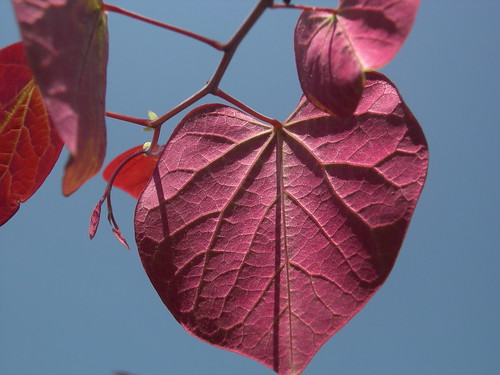
Forest Pansy Redbud by jillmotts

TheGardenLady received this question from Phil.

I am looking for a plant that is similar to a wine and roses wiegela, same color, same leaves but not a root ball shrub. Any ideas?

Wine and Roses Weigela is a lovely addition to any garden and now there seem to be many more plants that have the burgundy or “black” colored leaves. Some of the plants get their best dark leaf color when grown in full sun.

For those who like the dark leaves of Wiegela ‘ Wine and Roses’ there are other dark leaved wiegela to consider. Herman Geers in the Netherlands seems to be one of the major hybridizers of these purple leafed Wiegelas. One charming new burgundy leaf wiegela is ‘Midnight Wine’ This is a low mounding, dwarf version of ‘Wine and Roses’ that can be used as a ground cover. A few other burgundy wiegelas are Wiegela ‘Victoria and Wiegela florida ‘Purpurea’ For a list check out this site.

Continue reading “Wine and Roses Weigela and Purple Plants Similar to Them”

Thanks for Your Comments and Questions

Red, White and Blue flowers by fayemozingo

TheGardenLady gets a number of interesting questions, comments and garden related links sent to the blog. I look forward to readers taking the time to comment or ask gardening questions. I am very appreciative of each and every thought that is sent to my blog. For example, I was appreciative of the lady who enjoys Agastache in her garden and enjoyed my comments on the plant, or the frustration of gardeners who have problems getting rid of the plant with the common name ‘Snow on the Mountain.’ This GardenLady not only finds out what readers are interested in when it comes to plants, but I learn from my readers.

Some of the comments are sent to older posts. So I hope the readers of TheGardenLady blog take the time to go through the archives and reread the posts and check to see if there are any new comments at the end of the posts.

Continue reading “Thanks for Your Comments and Questions”

Allium

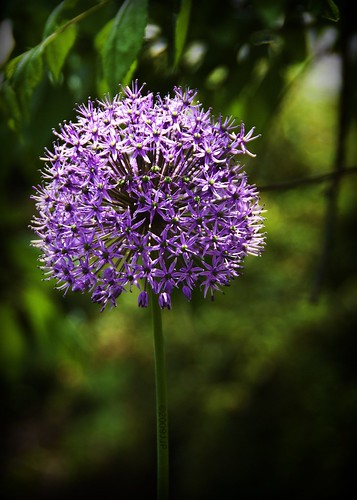
purple explosion by Tattooed JJ

One of the most unusual flowers, with its “architectural” shape, is the Allium. My favorite Alliums have flowers that look like a ball, but if examined closely the balls are made of miniature florets. The flower continues to give interest even when it goes into seed. When you think the flower seed looks ratty, just tug on the stem of the flower- it gives no resistence when pulled.

TheGardenLady has the purple Gladiator Allium, Allium Bulgaricum and the white Mount Everest Allium. Because I find these plants add so much interest to the spring garden, this year I am ordering the purple Globemaster Allium with flower heads that are 10 to almost 12 inches in diameter.

Continue reading “Allium”

Agastache

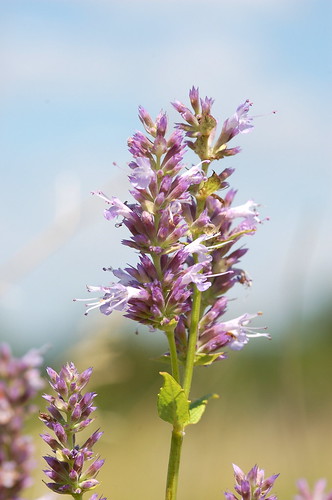
Agastache foeniculum by squamatologist

One of the herbs that I bought at Russell Gardens Wholesale was Agastache foeniculum – Giant Hyssop or Anise Hyssop ‘Blue Fortune’. Though I bought the plant, it is easy to grow it from seed. And if you have friends who have Agastache, I feel certain that they will be happy to give you some plants since it spreads easily when planted where it is happy.

There are about 30 species of Agastache and most are native to North America. The Agastache I have grows in Temperature hardiness zones from 4 to 9, is over 4 feet tall and blooms from late June through September. I bought Agastache, an aromatic perennial, not so much for its flowers but because it is a rich source of nectar so that it attracts bees and butterflies and is supposed to attract hummingbirds; though I think the flowers make a nice addition to an indoor bouquet.

Continue reading “Agastache”

Flowers In TheGardenLady’s Garden with a Few Photographs

Garden Bust by Dara Mina Ceramics with plant in head behind and primroses that are in seed in front.

I try to have flowers blooming as long during the year as flowers will bloom. That means that only when there is snow on the ground is my outdoor garden without flowers. Most of my flowers are in the sunny part of my property-in the front. The photos you see of my grounds are mostly taken on the sides to show how wooded and shady the property is.

People passing TheGardenLady’s yard have asked how many different flowers I have planted in my garden. I have never kept track. But since so many people have asked, I forced myself to sit down to make a list of plants on my property this year. I mostly have perennials growing.

Each year I plant some new perennials and some favorite annuals. I may plant new plants because some of the perennials plants do not return. For example, I have planted numerous heuchera but they didn’t seem to like where I put them and have never returned the following year. I love Spigella marylandica and have tried planting it twice but it never came back. One nurseryman told me it is a tricky plant in my area. The first year I planted the Trillium grandiflorum, it came back for a few years. Beginners luck. Since it disappeared, I have tried to replant it a few times but have not had success. But I don’t give up easily and will replant all these plants with the hopes that they will one day be happy in my garden. I replant those plants I love, but lost. I like to get new plants that I have never had or are new to the market. And I like to add annuals to the mix to be sure that I have flowers all summer long. Some of my favorite annuals are the common ones like marigolds and zinnias.

As I age, I want big flowers that will be show-offs in my garden. As much as I like the small gems of flowers that surprise when they are discovered, I want flowers that explode like fireworks. I enjoy it when walkers or drivers tell me they must go past my yard every day just to see what is in bloom. I am flattered beyond belief when I get compliments; like when my sweet French neighbor called my garden the Giverny of my town. But I also love it when birds-and hummingbirds- as well as butterflies and bees love what I plant. I love to watch the bees sucking furiously on the lavender, oregano, bee balm and other nectar plants.

My property is basically a woodland property. There are lots of trees and wild shrubs. And a stream bisects the property. So how do I get flowers if I have woods? Some plants tolerate some shade. I do get partial sun, about 5 hours, along the front of my property. Then I learned that my town allows planting between the sidewalk and the curb. Since this is where the sun shines on my property all day, this is where I plant most of my flowering plants. Since my property is a right triangle with the longest side along the street, I have a long strip to plant. The only problem is dragging hoses to water the plants at the bottom of the strip.

Right now the ‘ fireworks’ in my garden are the lilies, like the Asiatic lilies and the Hemerocallis or day lilies. Besides the lilies the most showy flowers are the hydrangeas, both blue and white. And though these beautiful blooms are the most striking, other flowers are in bloom like zinnias,marigolds,verbena, Albizia julibrissin- Mimosa tree, Echinacea, etc., etc., etc.

None of this would be possible without the products in the market that keep the deer away. I use lots of Liquid Fence. So far the stinky stuff has prevented the deer and rabbits from sampling my plants.

Continue reading “Flowers In TheGardenLady’s Garden with a Few Photographs”

Good time to buy garden supplies

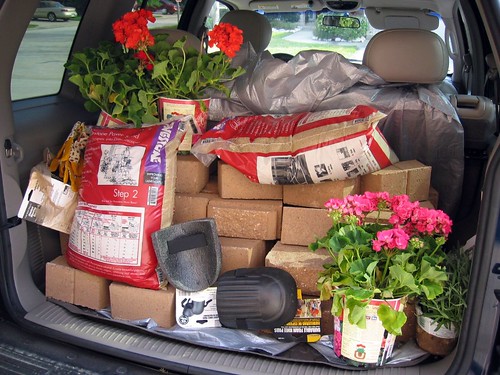
Supplies from Home Depot by cybertoad

I have been surprised to find plant nurseries offering sales already. In my area a favorite nursery is having 50% off on everything in the nursery. It seems really early in the gardening season for these sales. I don’t know the reason for such early sales; there seem to be many reasons such as overstock, anticipated drought or the economy. Whatever the reason, sale time is the time that TheGardenLady adds more plants to her garden. Summer has just started, so the summer flowering plants will be blooming for quite a while. I notice that catalogs are also sending me 1/3 to 1/2 price off plant sale flyers and online plant nurseries are also advertising their sales.

Continue reading “Good time to buy garden supplies”

Information on Acid Loving Plants

TheGardenLady received this question from Joan.

I have been trying to get a complete list of acid loving plants, trees, bushes, etc., but am only getting partial ones. Can you please help me? I would greatly appreciate it.

A number of readers have been interested in getting information on acid loving plants. There are many lists of acid loving plants, trees and bushes, but unfortunately TheGardenLady does not know of a complete list. Perhaps someone should compile such a list. Not only am I not aware of any single list as you are requesting that is complete, but “authors sometimes give different pH preferences for the same crop.” This site has a starting list. Unless a reader of this blog knows a source, this GardenLady believes that you will have to do your own research to create such a complete list because there are too many plants to find a complete list on line and most lists generally serve only as a guide since many other plants may grow well in acid soil conditions besides the ones on any list.

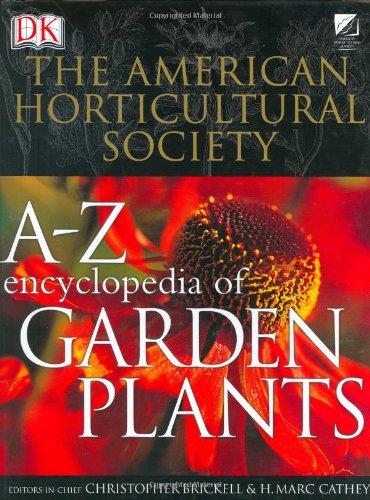
The best and most extensive list of plants with the plant’s cultivation requirements such as soil pH and other information about plants is The American Horticultural Society A-Z Encyclopedia of Garden Plants by DK publishers (there is also the English edition) This huge tome is over 1000 pages of plant listings. Otherwise you may have to use the many partial sources on line and start combining the information to create your own list.

Project BudBurst Answers Your Ecological Questions

As we are experiencing unusually hot weather for June on the East Coast and in other parts of the country, like Chicago, one wonders what will be the best choice in plants for the garden. Will those plant hardiness zone charts be valid as they presently are or will there be changes to the recommendations about which plants will successfully grow where you live? Are plants starting to bloom earlier? What is happening and what advice should be given?

A research project is looking for citizen scientists who will help scientists answer these questions. This is a project called Project BudBurst where US residents, gardeners and plant lovers around the country can help in the collection of important ecological data based on the timing of leafing, flowering, and fruiting of plants (plant phenophases).

Continue reading “Project BudBurst Answers Your Ecological Questions”

Good Companian Plants to Deter Bean Beetles

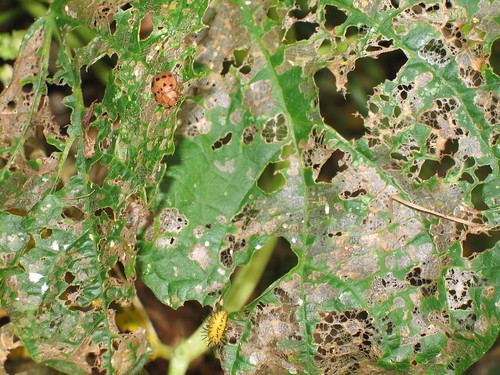
Nasty beetles eating everything. by Jason Riedy

A reader asked which plants would be good companion plants to grow with her beans to deter bean beetles.

TheGardenLady would plant a variety of plants that deter bean beetles, if you have the room in your garden. Then you can hope that at least one will work.

Sage is a good companion plant for beans and it also has insect-repelling properties, especially against beetles. Sage is a strong aromatic–it may be this that repels some insects.

Plant rosemary where you will put your beans next season as this is also an effective beetle deterrent. Summer savory repels beetles, I am not sure which kinds, and encourages good growth and good flavor.

Continue reading “Good Companian Plants to Deter Bean Beetles”

Epsom Salt – Great for your Body and for your Plants

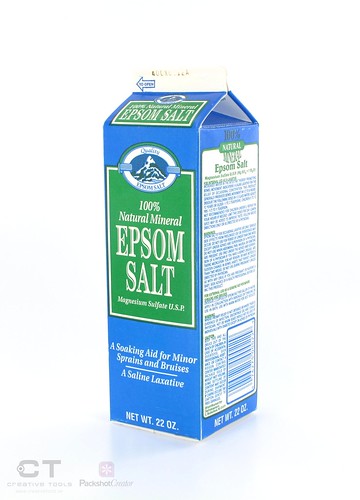
CreativeTools.se – PackshotCreator – Epsom salt by Creative Tools

After a hard days work in the garden, do you fill a warm bath for yourself and add Epsom salt to the water to soak those sore muscles? It is a nice treat to refresh yourself. According to the Epsom Salt Council this is a healthful remedy that people have known about for years. But it doesn’t seem like enough people know of its health benefits.

And even if you have known about Epsom salt as a treat for your body, did you know that it is also an excellent nutrient for your plants? Epsom salt is magnesium sulfate, a mineral humans and plants need to survive and grow. It is used by commercial growers around the world and “the National Gardening Association confirmed that roses fertilized with Epsom Salt grow bushier and produce more flowers, and it also makes pepper plants grow larger than those treated only with commercial fertilizer. ” (see here)

Continue reading “Epsom Salt – Great for your Body and for your Plants”