Two Knock Out Rose Problems

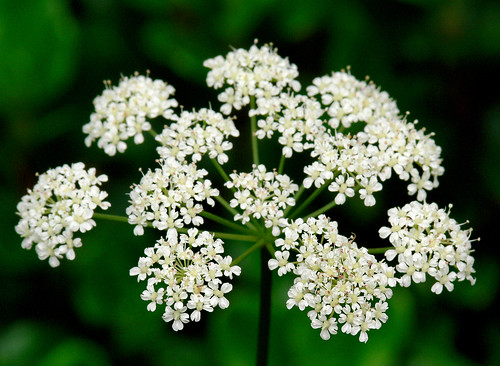
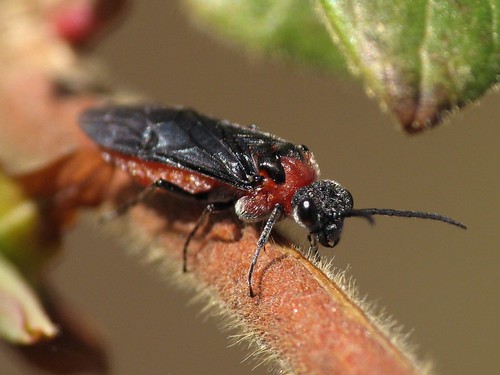
Sawfly by Mean and Pinchy

TheGardenLady received two questions from two people who were having problems with knock out roses.  Here is the first question.

I am very upset with my knock out roses. They have small green worms covering the leafs and eating holes in them. They also get on the perennial hibiscus. Is there anything I can use to get rid of the pest without using pesticides.

Here is an answer to this problem from the Knock Out Rose people:

Sounds like Rose slug or sawfly – they usually hang out on the underside of the foliage. You may want to try hand picking them off as you see them or try spraying a horticultural oil or a soap and water solution to suffocate the worms.

Here is the second question.

This is the second year for my roses. I have just had a few blooms to open but I have noticeable problems with them. Most of the leaves have very small holes and it seems like the blooms are smaller and ligher in color than last year’s. The leave problem is also on my older roses. I have treated them once with a spray of 1 tsp. each of baking soda, insecticical soap and horticultural oil in a qt. of water. I do not see any insects on either side of the leaves. Can you tell what the problem may be and how to help fix it?

Here is an answer to this problem from the Knock Out Rose people:

It sounds like your roses may be affected by rose slug or sawfly. The larvae is small and typically green in color (they usually hang out on the underside of the foliage; and are sometimes very hard to detect) They are usually a problem in early spring. It sounds like the treatment you are using is appropriate & it should work to help control the problem.

 

Trade Secrets at Little Rock Farm

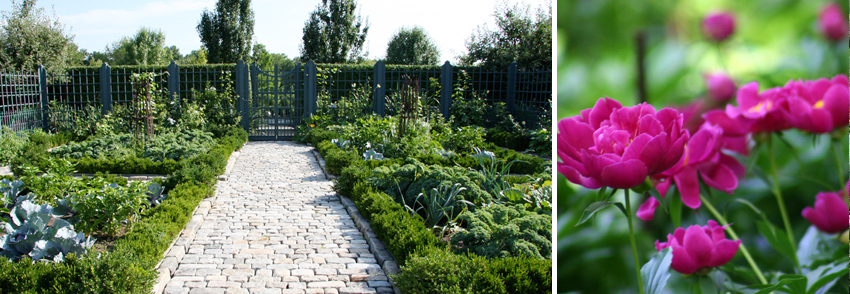
formal garden by jahansell

The weekend that this Garden Lady chose to visit Connecticut was based on the weekend when an event called Trade Secrets was being held. Trade Secrets, a two day weekend event was created as a charity to benefit the local Women’s Support Services that is trying to eliminate domestic violence and abuse of women in their area. I was told they help women both in Connecticut and New York.

According to Amnesty International, 1 in 3 women across the world is abused. WSS literature said that in 2001 Trade Secrets “was developed as an annual garden antique and rare plant sale with the help of community member Bunny Williams and her head gardener and former WSS Board member, Naomi Blumenthal.” Since TheGardenLady had only heard rave reviews of Trade Secrets that was designed for garden lovers and knew how beautiful that part of Connecticut is, she asked a friend to join her. Off we went not knowing what to expect.

Well, now I have to add my rave review. Trade Secrets exceeded my expectations! My friend and I cannot wait until next year to return.

Continue reading “Trade Secrets at Little Rock Farm”

Visiting Cricket Hill Garden

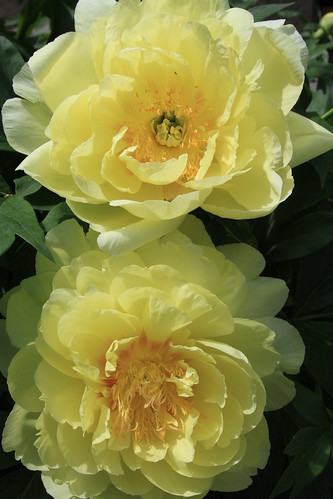
peony intersectional

Double Vision by thegardenbuzz

It may look dismal outside and the rains are not letting gardeners work in their gardens, but this GardenLady is still “high” from a long weekend spent looking at gorgeous gardens and outstanding nurseries in the Northwestern corner of Conn. Let me explain.

This past weekend, I convinced a gardening friend to visit some of the gardens I have written about on TheGardenLady.org blog and other gardens or nurseries I wanted to visit to enable me to write about them. The added bonus was that this weekend there was a charity event to raise money for battered women and the charity was an event featuring top notch plant businesses and garden furnishing businesses that were selling their wares to those who attended and a second day of visiting private gardens. You paid the entrance fee, all money went to the charity, and spent two days in garden lovers paradise.

I wanted to visit Cricket Hill Peony Garden, a garden that I have written about and recommended in past posts. The owners of this garden carved a number of acres out of wooded hilly Connecticut to make their peony nursery and 7 of those acres are a show garden of just peonies; though they have other flowers mixed in with the peonies which I suggested that they should also sell.

Continue reading “Visiting Cricket Hill Garden”

Getting Rid of Squirrels

Basic Squirrel Information

Squirrels are one of the few wild animals that have learned to coexist with man. With over 365 species found throughout the world, squirrels live in virtually every park, forest, and backyard. The most common squirrels are the ground, the tree and the flying squirrel. They are omnivores, which means they will eat most anything, scavenging through garbage cans, open garage doors, and gardens. Squirrels come in a variety of colors, including shades of brown, gray and even pure white and pure black. Typically squirrels are most active 2-3 hours after sunrise and again before sunset, resting the time in between. Although when trapped in an attic, they are often active during the night. (Squirrels)

The Damage Squirrels Cause Inside and Outside the Home

Squirrels are on the list of some of the smartest animals, making them masters at the art of deceit. Plus, their specialized feet and claws allow them to climb vertical walls, including brick and aluminum-sided homes. They are persistent and learn quickly, making them especially suited to wreaking havoc inside and outside the home.

These intelligent creatures will work hard to gain access to homes, utilizing their razor sharp claws and teeth to gnaw their way in. Access points consist of damaged trim, exposed soffits, chimneys, gable vents, rooftop ventilation fans, and any other tiny hole. Because of their build, squirrels only need a hole the size of their head to squeeze into your home. Once inside, they will destroy whatever is in their path while searching for food, even breaking through sealed containers. They will eat almost anything made from natural ingredients, including holiday decorations, dried flower arrangements, and decorative pinecones. They will soil the area, making a mess for homeowners to clean and sanitize. Squirrels will even chew through pipes to get to water, which could create flooding and expensive repairs. They can also destroy homes because they start fires by chewing through electrical wires. (Squirrel Nuisance Problems)

Continue reading “Getting Rid of Squirrels”

Rubber Plant

Rubber Plant by endenizen

TheGardenLady received this question from Becky, who had written in the subject line of her email “rudderplant”.

Can it be put out side if not in sun light ?

I think you mean a Rubber plant- Ficus. It grows outdoors in USDA hardiness temperature zones 10b and 11 and can grow into a tree that is 50 or more feet tall. In cooler temperature zones it is kept indoors as a house plant. But it can be taken outdoors when all signs of frost are past and brought back indoors before the first frost of winter.  Keep it on the East or North Side of the house so that it doesn’t get too much sun.

For more answers about the rubber plant check out Hortiscope, an agricultural extension website.

How to Deal with Snow on the Mountain

Aegopodium podograria #1 by J.G. in S.F.

TheGardenLady received this question from Janet.

I was given some hostas and there were some pieces of Snow on the Mountain mingled with them, which is taking over everything.  How can I kill the snow without killing the rest of my plants? I have dug until I’m blue in the face.

There are quite a number of plants that were brought to this country because they looked pretty and horticulturists or gardeners wanted to plant them in their gardens in America or wherever they moved; then these plants became invasive. Unfortunately Snow on the Mountain, ‘Aegopodium podagraria Variegatum’, also known as Bishop Weed or Goutweed is one of them.

One nursery touts it as the number one seller for a ground cover. So it is still being sold. It is advertised to use for difficult sites. Many people say they love the plant and it isn’t invasive for them. However, some people rue the day that this plant entered their yard. One lady said when she sold her house she didn’t tell the new owners all they were getting. The government lists this plant as an AGGRESSIVE invasive (see here).

People who buy plants should check the invasive plant list before buying plants or buyer beware. Even nurseries don’t seem to keep on top of the invasive plant list, so they might not be aware of the problem. Always check pots when buying plants to be sure that you are not getting an unwanted guest, whether weed, disease or pest. But you seemed to have the misfortune of inheriting it when you got your hosta plants from a friend.

Continue reading “How to Deal with Snow on the Mountain

A Gardener’s Event in NJ this Saturday: Earthly Delights

Hear Ye, Hear Ye,

Come one, come all to A Gardener’s Event.

Gardeners within driving distance of NJ should not miss Earthly Delights, a gardeners event this Saturday (see here) where merchants of rare and unusual plants will sell their plants and merchants with distinctive garden antiques will have garden products for sale. There will be lectures and demonstrations from nationally known horticulturist speakers.

It is this Saturday, rain or shine May 21st, 2011

Early Buyer 8:00-4:00

General Admission 9:30-4:00

WHERE

The home and garden of Andrea Filippone

129 Pickle Road, Pottersville, NJ 07979

Is it a Sambucus?

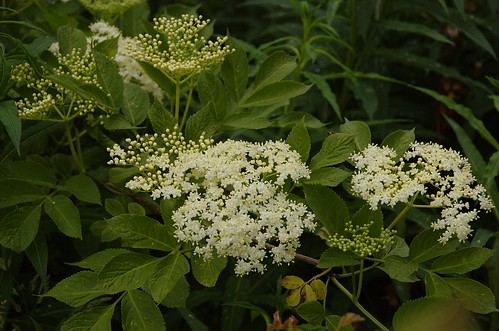
Sambucus nigra – vlierbloesem by AnneTanne

TheGardenLady received another request from Linda to identify one of her plants from this photo below that she sent.

What plant is this?

TheGardenLady had no difficulty identifying Linda’s cactus.  The Epiphyllum or Orchid cactus was easy to identify because of its unique leaf and also because there was a small flower showing in the photo (see here).

This photo of a plant is a more difficult plant to identify without the flower. The leaves are opposite so that limits the number of plants it could be. But if you had sent a good photo of a flower, that would make identifying the plant easier.

Continue reading “Is it a Sambucus?”

How to Propagate Dutchman’s Pipe

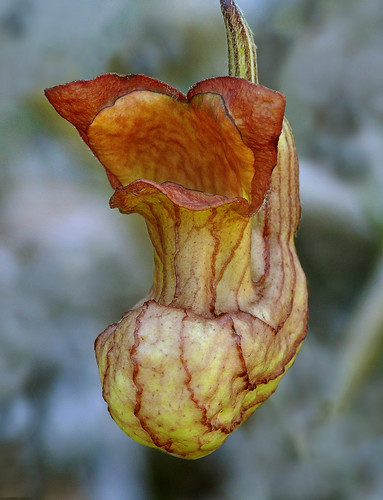
Aristolochia californica #2 by J.G. in S.F.

TheGardenLady received this question from Neil.

I have taken a shoot off an old vine where I grew up in CT. I want to plant in Georgia. It sits in a glass of water. Looks healthy. Have you any hints on how to get it to make roots for planting? Suggestions for planting? Incidentally, I nver remember seeing any fancy flowers on that vine, rather just green pipes. Could that nbe a matter of nutrition? Vine has been cut back near the grouns every year.

Perhaps you did not see flowers on your Dutchman’s pipe because some species have the flowers blooming under the leaves. Most find it easiest to propagate this plant by seed.

Though articles say that one should be able to propagate Dutchman’s Pipe -Aristolochia– by putting a shoot in water, many people have not had success doing so.

You should try rooting softwood cuttings of climbing Dutchman’s Pipe Vine in early spring. When rooting these vines, it is best to submerge at least three nodes under water. Plants root better in distilled or rain water.

Continue reading “How to Propagate Dutchman’s Pipe”

It Looks Like an Epiphyllum cactus or Orchid cactus

Epiphyllum – Susan Lynn by epiforums

TheGardenLady received this question from Linda.

I have a cactus plant with long flat ears. It sprouts little ones all along the sides. I am writing to you to ask if you might know the name of a cactus that looks like that.  Here is a photo of it.

From the photo it looks like an Epiphyllum cactus or Orchid cactus.

There is a Epiphyllum Society of America if you want to try to find your cultivar or variety or join to learn more about the plant.

It is considered a fairly easy care cactus.  (see here and here)