Winter Flowers – Part II

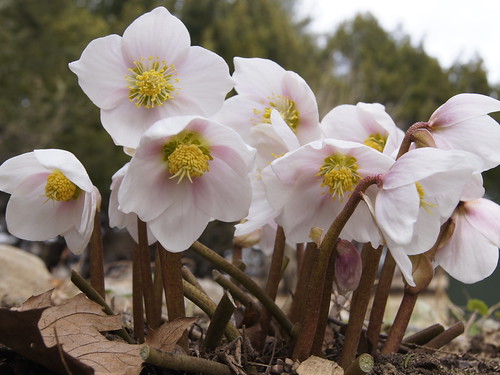
Helleborus niger ‘Praecox’by Tie Guy II

My very favorite winter flowering perennial plant is the very early winter blooming Hellebore. I cannot rave enough about this hardy perennial. The Hellebore is the plant that I greedily want more and more of growing in my yard. The earliest blooming ones are the Christmas rose Helleborus niger. Mine are spectacular and as they age, they are turning pink.

Continue reading “Winter Flowers – Part II”

Plants that Bloom in Winter

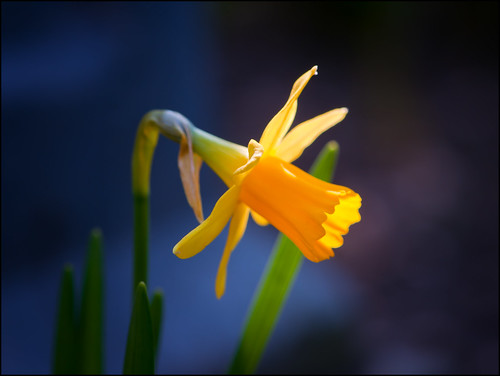
Natural Light (Narcissus pseudonarcissus) by Nietnagel

The period between winter and spring always seemed the saddest time of the year. The landscape seemed so dull and muddy after the pretty snows of winter and before the flowers burst open in the spring. That was before TheGardenLady learned that there are some winter flowering plants that bloom in the “dark” of winter and that keep blooming well into spring. The plants I prefer are the hardy perennials, bulbs and shrubs. Of course, I still cannot wait for the real spring blooming flowers that always seem to be such a miracle when they open, reliably, every Spring.

Since I now know that there are winter-flowering plants, this Garden Lady has been adding more and more of these wondrous plants to my garden. This way when I go out to look in my garden, even before the last snows have fallen, there is something to delight the eye. And it is amazing to me when I discover the little bursts of flowers that distract from the barrenness of the landscape and are a harbinger of the more spectacular show of flowers that I know are just a few months away.

Continue reading “Plants that Bloom in Winter”

The Science of the Exotic Fruit World

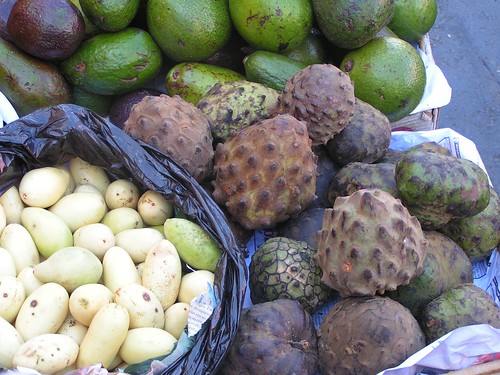
Annona cherimola (Cherimoya) by Arthur Chapman

TheGardenLady had written a post about exotic fruits found around the world. Today’s post is an update in what is happening in the science of the exotic fruit world.

The cherimoya or custard apple is said to be “the most the most delicious fruit known.” The reason it wasn’t commercial is because it had too many seeds. But plant scientists may be able to get rid of the seeds. They compare the custard apple to the banana. All the bananas in the market are seedless but did you know that in its native state the banana had 100 seeds?

Continue reading “The Science of the Exotic Fruit World”

Euonymus Japonicus

Japanese Spindle (Euonymus japonicus) cultivar leaves by mauroguanandi

TheGardenLady received this question from Carol.

I just bought a golden euonymus.  Is that an acid living plant.

What a pretty accent shrub you will have with your golden Euonymus (probably Euonymus japonicus ‘Aureo-marginatus’). This pretty shrub is easy to grow in that it likes average soil and can adapt to most soils. It is not fussy about soils or pH. For this reason it is considered a low maintenance shrub.

What it needs is well draining soil. It does not tolerate wet, swampy conditions. During the first year, you should water your euonymus weekly unless you have a period of heavy rain. But if there is a drought it should be watered more frequently. As it matures the euonymus will tolerate more drought. But it does not like drought, so if there is a long period without rain, you should water even the mature plant.

Continue reading “Euonymus Japonicus”

The Garden Conservancy


Photo credit: Mark F. Heffron

As I walk around my property to see what spring flower has newly opened or think about what new ideas to try to incorporate into my garden, I think about visiting other gardens. And the thought of visiting gardens, both public and private, to look at for the sheer beauty of the gardens or to see what others do with the plantings and get ideas for my own garden is something that I find very appealing. I especially enjoy the opportunity to see private gardens to see what other plant lovers are doing. I feel as if I am visiting secret gardens and am one of the privileged few.

Photo credit: Mark F. Heffron

To visit these gardens, I want to encourage TheGardenLady readers to become members of The Garden Conservancy. The Garden Conservancy provides access to some of America’s finest private gardens. Last year they allowed visitors into more than 360 private gardens in 21 states So what better way of seeing these gardens and having the pleasure of visiting gardens, many that one would not otherwise have the opportunity of visiting, than joining?

Continue reading “The Garden Conservancy”

Cherry Blossom Festivals

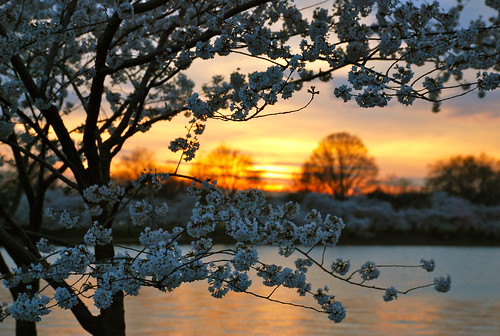
Cherry blossom sunset by afagen

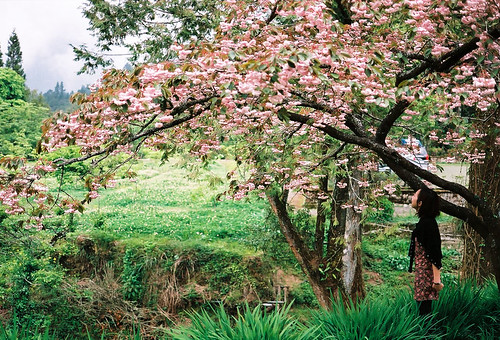
Two enduring memories this GardenLady has are of the cherry blossom festivals in Washington, DC and the one in Newark, NJ. If you would love to see the cherry blossoms in bloom, there are Cherry Blossom Festivals throughout the United States. Some festivals have already started with other related events. The festival in Hawaii is almost over when I write this.  See here.

There are many species of Japanese cherry trees but the one that seems to be in many of the American parks are the Yoshino cherry tree Prunus x yedoensis which is a fast growing but short lived tree- 10 to 20 years. These have fragrant flowers and very small fruit that is popular with domestic and migratory songbirds and small mammals. Their flowers provide pollen for bees. You can purchase cherry trees to plant in your own yard through the Arbor Day foundation. See here.

Continue reading “Cherry Blossom Festivals”

The Cherry Blossom Tree and the Situation in Japan

Untitled by wakingphotolife

This is the time when the Cherry Blossom Festival in Japan usually begins.  See here. The Japanese word for cherry blossom is Sakura. This ornamental tree is known in Latin as Prunus serrulata.

During the Cherry Blossom Festival, there is the beauty of the experience of seeing all the trees in bloom at the same time. But the flowers last only a brief time before the petals fall delicately to the ground. Watching the petals fall so quickly, the Japanese ponder the nature of life. To the Japanese, these falling petals are a metaphor for the ephemeral or fleeting nature of life.

The most recent earthquake and tsunami in Japan shows how ephemeral life really is.

Continue reading “The Cherry Blossom Tree and the Situation in Japan”

Callaway Gardens: Weekend Azalea Getaway

Azaleas by Wilson (Army Gal)

Are you an azalea lover? Would you like to to see what is billed as the world’s largest azalea display? The azalea display is at Callaway Gardens located in Georgia. This beautiful garden was conceived and created by Cason J. Callaway and his wife Virginia Hand Callaway for the benefit of mankind. The purpose of the gardens is to provide a wholesome family environment where all people who visit may find beauty, relaxation, inspiration and a better understanding of the living world.

Callaway Gardens by jen and joe

TheGardenLady loves people who have such a noble purpose in life. And she hopes that readers of TheGardenLady have the opportunity to visit such a breath-taking garden.

Continue reading “Callaway Gardens: Weekend Azalea Getaway”

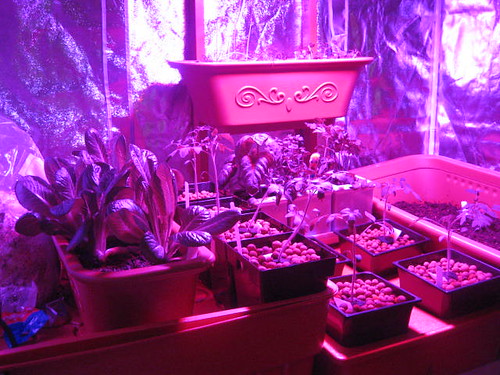
Grow Lights for Growing Food in the Dorm

Indoor Gardening with LED Grow Lights by Rachael & Zane Ross

TheGardenLady received this question from Kayleigh.

I really want to grow food in my dorm room. It doesn’t have a particularly large amount of sunlight. Is there a type of lamp I could buy? I want to plant some sort of easy-to-grow vegetable and/or some herbs.

Before considering any lamp for raising plants indoor, please CHECK with your college or university and dorm to find out what is and what is not allowed. They may reject having lamps for growing plants in the dorm room for a number of reasons including: extra electricity costs, insurance restrictions, light pollution and fear of fire.

For vegetable plants to grow successfully, electric lights have to be on for long periods of time. Even if your college and your dorm will allow lights and will allow them to be on for extended periods every day, will your roommate/s want to sleep with lights on in the room? And will you want to sleep with the light on? Grow lights have to be on for up to 16 hours each and every day.

Scientists seem to recommend that for best rest, one should sleep in a totally dark room; some scientists say that even light from your phone or digital clock may not be healthy. One article said that sleeping with your TV light on may lead to depression.  See here.

Know also that raising plants indoors is tricky in that the plants can attract insects. You may be lucky and not get any insects; but most greenhouses use insect traps- another thing to think about when raising vegetables in a small space like a dorm.

Continue reading “Grow Lights for Growing Food in the Dorm”