Using Compost as Potting Soil

Compost by Fleurette Jardin

TheGardenLady received this question from Peggy.

I want to use compost as potting soil. I live on a 3rd floor so am limited to plants on a balcony, such as jasmine, monarda, some lobelia and other annuals to color the desk area and maybe a tomato plant or two. Any thoughts on using only compost? Will it hurt these types of plants?

The simple answer to the question, “can one pot plants directly into compost?”, is YES one can plant directly into compost.

Most people add their homemade compost to other soil because usually one does not have enough homemade compost unless you have a large property to add leaves to the household garbage- the combination forming compost.

Thus TheGardenLady wonders if the writer of this letter is planning on buying compost or making her own from her kitchen scraps. It seems that if one were buying bags of something to pot plants, it would be wise to purchase prepared potting soil in bags. Scientists have formulated their products for optimum plant growth and many of these potting soils come with added fertilizer. Everything is in one bag except for the plant and the water so that if you have limited space, buy something that has been made easy for you.

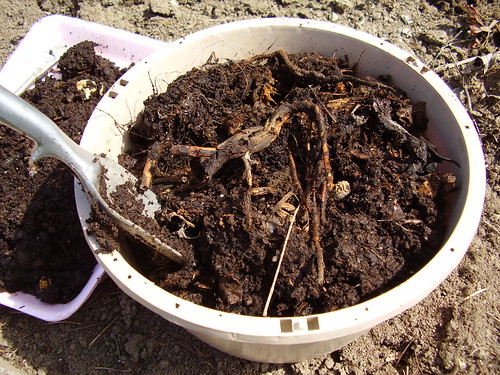
However if you have made your own compost from your household garbage, you must understand what the final product will look like before you use it. The garbage has to be completely decomposed. The finished product of compost is a black loamy soil that has no residue of any of the garbage that it was made from. There is no odor. If you see any bits of garbage or if your compost has any smell, your compost is not ready. When compost is not fully decomposed, plants planted in it may turn yellow and appear stressed.

If you are planning to make your own compost or have made your own compost, do you have enough homemade compost to plant the numerous plants you ask about? If you do have enough homemade compost, you can use it in pots and plant directly in it. But you must understand that you do not use compost until it is completely decomposed. An easy test to see if the compost is ready, is to put your compost in a couple of pots and plant some radish in these pots. If 3/4s or more of the radish seeds sprout and grow into radishes, then your compost is ready to use.  See here.

Tomatoes should have no trouble growing in your compost. In TheGardenLady’s compost bin, tomatoes and potatoes always seem to self seed and grow.

Jasmine should have no trouble growing in compost; but are you sure you want a plant that can grow into a 15 ft. shrub?  See here.

If you are using compost that is ready to be used, it cannot hurt any plants. It is the way nature makes soil. But you must be sure that the material you are using is completely decomposed.
The Home Garden as a Place of Personal History

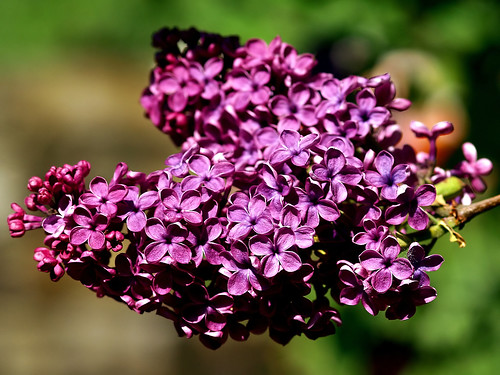
A flower stand of a Common Lilac. by Bienenwabe

The home garden is a joy for the present and is also something one plants for posterity. But when TheGardenLady walks around her garden, so many of the plants that she has were given to her from family and friends in the past and continues in the present. So for me my garden is a place of my personal history and so many of the plants bring back memories of loved ones or the beds recall the fun or pain of digging them in the past. I consider my garden as a living tribute to those whose plants are living here with me. So for me, being in this garden is a way of spending more time with friends and family even when they are not here in the garden themselves.

For example, many of the lilac shrubs Syringa vulgaris, the rose of sharon Hibiscus syriacus shrubs, the wisteria vine and some of the Japanese peonies Paeonia were on TheGardenLady’s parents’ farm. Since my parents were only the second nonnative people to live on their farm, these plants could be considered antique – which means 100 years old. Horticulturists call them heritage plants.

Galium odoratum (Sweet woodruff) by ngawangchodron

The sweet woodruff Galium odoratum was given to me by a dear friend who passed away.

My favorite double daylily, monarda and so many other plants were given to me by another friend who passed away. And my Magnolia grandiflora that I look at through my living room window was won in a raffle that this friend’s garden club had sponsored. The first raffle I ever won.

So many of my new personal favorite plants were given to me by friends who have spectacular gardens.

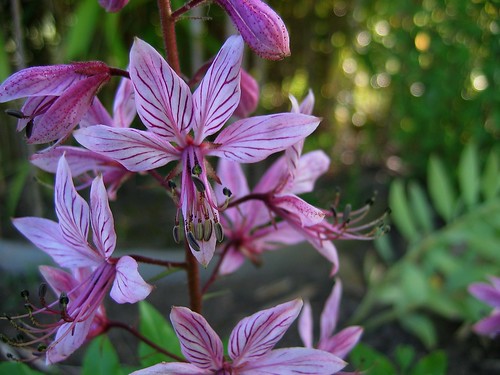
dictamnus by peltierpatrick

For example, my Dictamnus or gas plant was given to me by a lady whose garden is a show place. My French lilac and many of my giant hostas and other plants come from another friend with a show garden. I can go on and on about the different gardens and friends the plants come from.

Once when I took a tour of someone’s private garden, her labels not only gave the Latin name and common name of the plant but also included the name of the family or friend who gave her the plant. I thought this was such a clever idea that someday TheGardenLady wants to copy this idea in her personal garden.

Do Gardenias Like Diluted Vinegar?

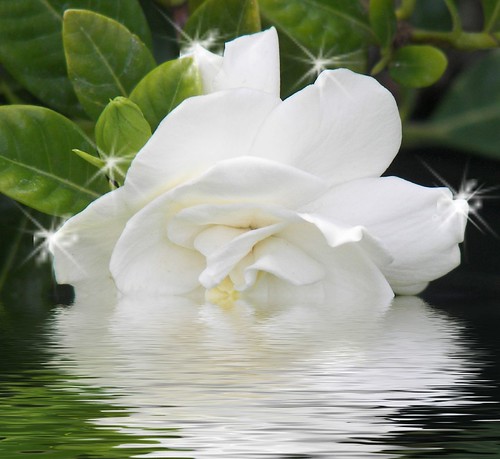
Gardenia Love by ClaraDon

TheGardenLady received this question from Mable.

I was told to dilute vinegar in water and use that on gardenia’s with yellowing leaves. Do you agree?


Gardenias by Jim-AR

Gardenias love acidic soil. If they are indoors, gardenias should be planted in an acidic soil that has a pH level of 4.5 to 5.5. If growing outdoors, have the soil tested before planting the gardenia to see that it has the right pH.  See here.

Gardenias can have a host of problems. They are difficult plants to raise, especially when indoors. They suffer from a number of problems, yellow leaves just being one of the problems. Of three common things that can cause yellowing leaves is improper watering, too low light and the plants needing acid fertilizer.

Overwatering can cause the leaves to yellow.

The gardenia plant should be fertilized monthly between April and November with an acid fertilizer especially if you are using well or tap water. Some people recommend using distilled water because it is not alkaline.  See here.

It is fine to use diluted vinegar on your gardenias. The Vinegar Institute recommends using diluted vinegar on gardenias (also azaleas and rhododendrons) in hard water areas at a rate of 1 cup of vinegar to a gallon of tap water (see here). The vinegar will help to release iron in the soil.

On Garden web, a reader has suggested another  solution to get iron into your plant that she says has been proven successful for her plant.

The African Marula Tree

Here is a video in French that TheGardenLady thought was cute.

This is a video from a French documentary about a certain type of tree in Africa. TheGardenLady is not sure if the video is real and she believes that it is the African Marula tree (Sclerocarya birrea).  It’s also known as the Elephant Tree or the Marriage Tree.

Once a year, the African Marula Tree produces a very juicy fruit that contains a large percentage of alcohol. Because there is a shortage of water, as soon as the fruit is ripe, animals, big and small, belly up to the bar.

A 4th-grade student at the Lycee Francais de Chicago who goes by the name of Monkey Muesé translated the French for TheGardenLady. 

Selva means jungle forest.

“At the beginning of the season, the fruits are delicious but hard to get. You have to be really strong or very old (clever elephant). But after some weeks, the ripe fruits fall, so the animals come and eat them. But the fruit is very alcoholic and goes to their heads. So they all leave drunk.”

Despite the cuteness of the video, there’s no reason to believe that it represents what is true.  According to National Geographic News, there’s no evidence to support the view that elephants get drunk off of the fruit these trees.  Apparently, elephants’ biology makes them teetotallers.

Garden Landscaping for Beginners – Part II

This is TheGardenLady’s second post about basic garden landscaping.  If you’re interested in reading part I on basic garden landscaping click here.

When you’re doing your landscaping you will certainly want to check out the best nurseries in your area. Visit public and private gardens especially ones in your area to see what they grow and what you like. You can get into private gardens during Garden Conservancy Open Days.  See here. Find out what these gardeners recommend for planting in your area.  You can ask them if they had problems with the plants you are considering. Gardeners love to share their knowledge.

Clematis Vines Garden Landscape Arbor by Andrew’s Reclaimed Home…

Decide on plants that you might want to see growing in your garden. Do you want low maintenance plants or don’t you mind pampering plants?  Ask questions about the plants. One gardener might have a vine that you adore – so ask him if it gives him any problem, like the root sending out suckers ten feet from the planting that you might have to hack out someday.

Continue reading “Garden Landscaping for Beginners – Part II”

7 Easy to Care for Flowering Shrubs

Hibiscus syriacus, “Rose of Sharon” by ConanTheLibrarian

TheGardenLady was asked to recommend some less commonly known flowering shrubs that are easy to care for and will create a hedge or shrub border between two houses in temperature zone 6. “Easy care: to TheGardenLady means that the shrubs are pretty much pest free including pesty deer as well as needing little maintenance after planting. Nothing is completely pest free, deer will try tasting anything and when starving will eat just about anything. And one may have to prune dead or broken branches even if you aren’t interested in shaping the hedge. Though there are other shrubs, here are 7 of TheGardenLady’s favorites that grow fairly quickly, fairly densely and easily.

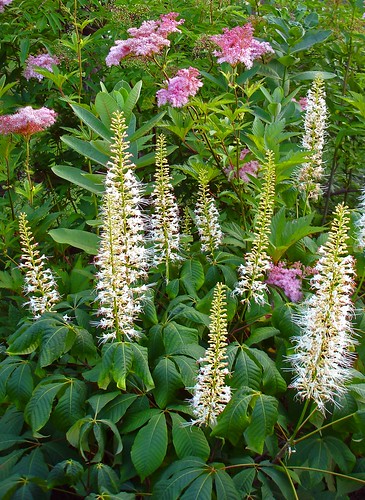
Bottlebrush Buckeye by Calendar Garden

Aesculus parviflora Bottlebrush Buckeye is a deciduous shrub that will grow 9 to 12 feet tall and up to 15 feet wide -you may get away with planting just one plant. It likes sun to part shade in zones 5 -8. It likes Acidic, well-drained organic soil . This is a deciduous shrub with interesting flowers. It has received the Pennsylvania Horticultural Society’s Gold Medal award.

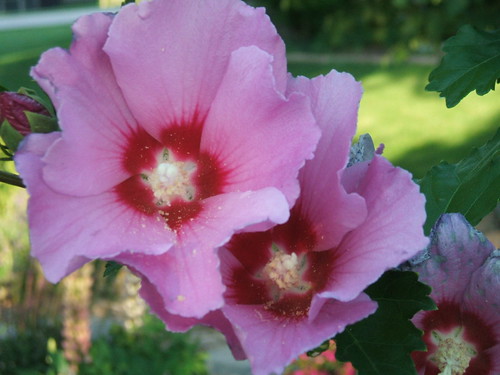
Rose of Sharon hibiscus by heart in hawaii

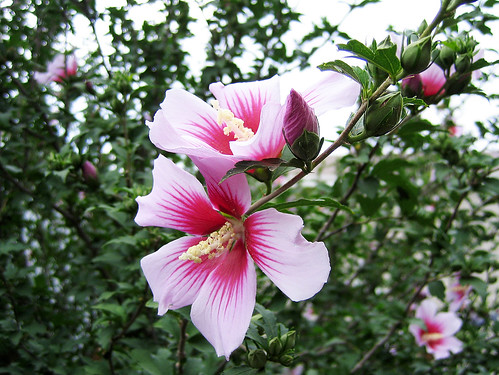
Hibiscus syriacus Rose of Sharon cultivars (Be sure to ask for the noninvasive types ). These deciduous shrubs grow in zones 5 to 9 in full sun. They grow to 10 feet tall and about 5 feet wide. They like almost any soil but prefer neutral to alkaline soil, sun and heat. These bloom late in the summer. Some of the selections that might not be so invasive are ‘Aphrodite”(dark pink), ‘Diana’ (pure white and a Pennsylvania Horticultural Society award winner) , ‘Helene’ ( white with a red “eye” ), ‘Minerva’ (lavender with a red “eye”) and ‘ Blue Satin’ which is a “proven winner.”  See here.

Japanese Andromeda / Pieris japonica by carsten de

Pieris japonica Japanese Pieris will grow to 12 feet and up to 8 feet wide. It will grow in zones 5 -7 and will take full sun in the North and part shade in the warmer zones. They like well-drained organic, acidic soil. This is an evergreen shrub with up to 6 inch long panicles of what looks like lily of the valley flowers. Flowers can be either white or pink. You can get more compact sized shrubs.

Continue reading “7 Easy to Care for Flowering Shrubs”

Daffodil Advice

Eyes on the Sun by Handcanons

TheGardenLady received this question from Fran.

I was given some daffodils at my garden club meeting this week.  They had bloomed already and there were just bulbs with green leaves on them. I live in zone 8 in Florida and was told that I could grow daffodils in Florida. I was not aware of this. Is this true and how did this lady grow them here in Florida?

Daffodils are grown throughout most of the US.  And Florida is no exception. There is an American daffodil society and there are regional daffodil societies including a Florida daffodil society.  See here.

Since you received the plant from someone who grew them in your area, that bulb should grow for you and re-flower. In one of the popular catalogs that sells bulbs from Holland it seems that all their daffodil bulbs are guaranteed to bloom in zones 3 through 8.  And if you go online or go to your garden stores, there are even daffodils that will bloom for those who live in warmer zones.

Continue reading “Daffodil Advice”

Letting Go of Dying Marigolds

Lifeless by Rodrigo Neves

On Monday, TheGardenLady wrote a post that answered a question from a Cassie about getting marigolds to bloom.  Here’s a follow-up question from Cassie.

So should I just throw away the pathetic looking stems and the root ball?

Cassie, I would not waste any more of your precious time on the pathetic looking stems and root ball of your dying or dead marigold. TheGardenLady would let your marigold plant go to plant heaven where all beloved plants, I hope, some day end up. Don’t just throw away the pathetic looking plant but add it to your compost pile so that it can become rich compost material that will help in creating great new soil to help grow the new beautiful plants you will now plant. Go to a local garden store where they sell marigold plants or buy a seed packet of marigold seeds and start anew. It will be much more of a rewarding experience starting over with new plants or seeds. It is relatively cheap to buy marigold plants. You will be much more assured of success with the new plantings whereas trying to nurse a pathetic looking plant back to health can be very frustrating. With rarer or more expensive plants it might be more of a worthwhile challenge to doctor them. But even the best gardeners would not work so hard to rescue a marigold unless it was a very, very rare marigold.

Pruning the Butterfly Bush

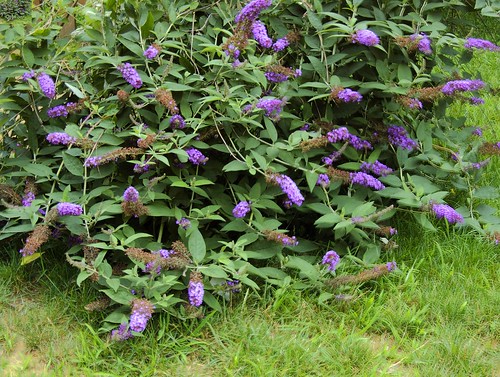
Red Admiral Butterfly (Vanessa atalanta) on Buddleia (Buddleja davidii) by Steve Greaves

TheGardenLady received this question from Jocelyn.

I have just returned to the Vineyard after being away for 6 months. My butterfly bush has already sprouted leaves. Is it too late to do a deep pruning? If it’s not too late, how low can I go? Thanks. Looking forward to “spending” Saturday mornings with you on the radio…hope you had a great winter.

There are those who like to keep their Buddleia or butterfly bushes in their natural state and do not prune them. So if you missed the pruning season, you don’t have to worry. Usually Buddleia davidii, the more common buddleia, is pruned in late winter or early spring before new growth starts. When your forsythia and daffodils are blooming they tell you that it is a good time to prune your buddleia davidii. So I think you are not too late if this is the type of butterfly bush you have. Also, TheGardenLady does not know whether this season on the Vineyard has been unseasonably warm and your daffodils and forsythia have finished blooming.  See here.

Butterfly Bush – White Bouquet by donsutherland1

“Shrubs that bloom after spring usually do so from buds which are formed on shoots that grow the same spring. These shrubs should be pruned in later winter to promote vigorous shoot growth in spring.” The butterfly bush is a shrub that blooms on current season’s growth. TheGardenLady likes to prune her buddleia so that she can dead head the flowers easily when they die to encourage more blooming.

Butterfly Bush HDR 2 by Julianne Photography

The buddleia is a hardy plant so late pruning won’t kill the plant, but it might not have as many flowers. If you feel that you must prune but your plant has started sending out new growh, try not to prune the new growth which is where the blooms emerge but prune out some of the older stems.  See here.

PS You are confusing two garden ladies. This GardenLady does not talk on the radio.

Getting Marigolds to Bloom Again

Slowly… by Dialed-in!

TheGardenLady received this question from Cassie.

I recieved some  marigolds from a friend. They were orange and did not seem to be as big or sturdy as usual marigolds are. They bloomed well until it got too cold out.  I kept saving the flowers for the seed pods, and they grew very well, but they did not do too well during the Fall and Winter; so now I just have what looks like 3 long, thin sticks coming out of the ground.  Is there anything I can do so they will bloom again?

Marigolds are a hot weather flowering plant. They only do well in the Fall and Winter if you live in a zone like Mexico. If you live in an area that has cold or freezing Falls and Winters, your marigold plants will die. Then you will have to replant marigold seeds or the plants in your garden when the weather is warm enough next late spring. If you had taken the plants into your house to try to overwinter them, you would need a warm house with loads of sunshine shining on the marigolds. Without the ideal conditions indoors your marigold plants will look long and leggy and not very nice if they live. Most houses are not sunny enough to grow marigolds well indoors. You really need a warm greenhouse to grow them properly.

On a cold morning in October by joeke pieters

When the weather is warm enough – which means no more frost in your area – you should buy more seeds or marigold plants. If you buy a packet of seeds, you can start them indoors about six to eight weeks before the frost is estimated to be out of the ground in your area and then plant the seedlings outdoors after the last frost. Frost will kill marigolds. Or you can wait and plant Marigold seeds directly in the soil when the ground is warm enough. Generally the seed packet will tell you the best time to sow the seeds outdoors in your area. If you want to buy marigold plants, they are sold in plastic containers.  Your local nursery will sell them when it is time to plant them outdoors in the late spring or early summer.

TheGardenLady thinks you should toss the pathetic looking stems that remain of your friend’s marigolds. Of course, if you have some reason to want to save them- because your friend gave them to you- you can always try to salvage them. Provided the stems are not dead, when the weather is really warm you can stick what is left of your Marigold plant in the soil in your garden in a sunny location. If those pathetic plants live, you will be lucky, and if they die, you can tell your friend you tried. But it seems like a waste of time when marigolds are really one of the least expensive flowering plants to buy.