Lands’ End Hosts “Way to Grow” Twitter Party

TheGardenLady just received this email from a Katie Kiefer who works for Lands’ End:

I wanted to share some news with you about how Lands’ End is growing education through “Way to Grow: Plant a Seed, Make a Difference.” As we approach the 40th Anniversary of Earth Day, this initiative connects kids, parents and schools through gardening and teaches that even the smallest steps can make a difference to help the environment.

“Way to Grow: Plant a Seed, Make a Difference” details:

  • The “Way to Grow” sweepstakes gives schools the chance to win up to $2,500 for gardening and science projects.
  • Now through May 14, 2010, parents and teacher can visit www.landsend.com/thehub to enter and vote for their schools. The schools with the most votes win!

“Way to Grow” Twitter Party

As part of the campaign Lands’ End is hosting a Twitter party with Seeds of Change on Wednesday, April 14th from 7 to 9 p.m. CDT. Seeds of Change is an organization that promotes the use of sustainable organic agricultural practices and preserves biodiversity through their extensive line of 100% organic seeds.

The event will feature 20 fun giveaways ranging from 100-percent organic seed collections from Seeds of Change, gardening totes, gardening books and Lands’ End gift cards. More details are included below:

Lands’ End “Way to Grow” Twitter Event

Date: Wednesday, April 14, 2010

Time: 7:00 p.m. until 9:00 p.m. CDT

Location: #landsend

Join the fun and follow:

@LEprMichele, @LEprMolly, @LEprLibby, @LandsEndChat, @Seeds of Change1

First 50 Pre-Event Garden Blog Posts Win!

Want to win a Lands’ End $50 gift card? Here’s how in three easy steps:

Step 1: Share Information about Lands’ End “Way to Grow” Sweepstakes with Followers – Simply visit Lands’ End’s The Hub at www.landsend.com/thehub and enter to win. Discover fun facts, activites and a chance for schools to win up to $2,500 for gardening or science programs.

Step 2: Promote the Twitter Event – Don’t forget to promote the Twitter Event to your followers. Please be sure to disclose that you are participating in the Lands’ End “Way to Grow” blog promotion.

Step 3: Send a Link – To be entered for a chance to win, you must send a link of your post to katie@feddorukinc.com.

The first 50 to post and send a copy of their link with contact information to the email above will receive a $50 Lands’ End gift card.

If you have any questions about the “Way to Grow” sweepstakes or Twitter event, please be in touch. I look forward to working with you!

Best regards,

Katie Kiefer

For Lands’ End

(612) 886-1767

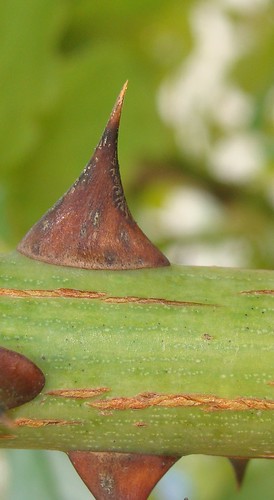
Getting Pricked by a Rose Thorn

Serious rose thorns by Martin LaBar

TheGardenLady received this question from Donna:

My sister-in-law was stuck by a thorn from a Knock Out Rose. The area is very red and swollen. Are the thorns poisonous? What to do?

When gardening, it is always advisable to USE gloves.

One can get an infection from any cut. However, in all the reading and lectures on plants, TheGardenLady has never heard that rose thorns in Knock Out Roses or any other roses are poisonous. But rose thorns can give a nasty cut. Because one can get cut when out in the garden and any cut can become infected, it is best to do any type of gardening – even cutting flowers – with gardening gloves on. And then after gardening you should always wash your hands. See here.

Besides cuts, thorns can give what are called “puncture wounds.” A puncture wound goes deeper into the skin and can push dirt and bacteria into the skin. Because it’s not on the surface and not an open cut, washing doesn’t clean out the wound as well, so it can become infected more easily.  As well, when you’re gardening outside, you’re exposed to all the dirt and bacteria out in nature, so there’s a wide range of what could be causing an infection.  Read this.

If an area is still red and swollen after getting a cut, one should consult a physician. Tell the physician how the area became infected so that one can get the best treatment to remove the infection.

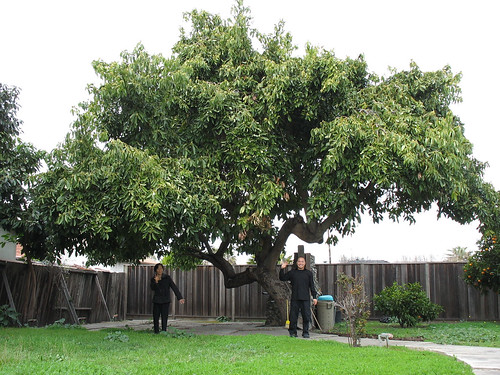
Caring for Avocado Trees

the avocado tree next door by emdot

TheGardenLady received this question from Greg from Vientiane, Laos.

I am living in Vientiane, in Laos and we have a well established avocado tree in the front yard. This January, it began it’s typical loss of 30% of leaves, but now it is going into massive over-production of fruit. Small fruits are dropping off the tree every day and the leaves seem constantly droopy. It is watered regularly and has been fertilised. Should some of the excess fruit be pruned off the tree?

We are in the dry season in Laos with almost no rain for almost five months. Temperatures are generally in the early to mid 30’s (celsius) but lately they have climbed and a typical day will peak at about 38 – 40 degrees. Please indicate if you need more information. I’ve only been at the house for one year so I don’t know much and the seasons and growing in Laos are very different from New Zealand.

Dear Greg, How exciting to learn that TheGardenLady.org has a reader in Laos.

Avocado trees are not really grown in the part of the states where TheGardenLady lives other than as an indoor decorative plant. So to answer your question, I went to one of the main Avocado growing regions in the US to get some answers for you and to give you some resources for future questions.

I contacted the Master Gardeners of San Diego in California and spoke to someone who had raised avocados. The San Diego area has had drought situations, so in that case there is a similarity with your locale.

Avocado Tree by joeysplanting

Continue reading “Caring for Avocado Trees”

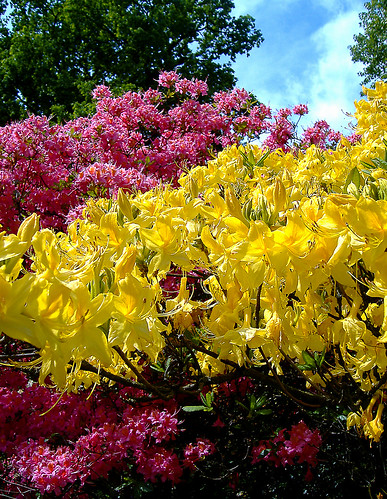
Planting Azaleas and Rhododendron

Azaleas & Rhododendrons by Stones 55

Spring is a great time to plant azaleas and rhododendron. If you can’t plant them in the spring, early Fall planting is also recommended.

When you buy rhododendrons or azaleas, make sure you give them a good drink. They can remain in the pot or burlap for a long time if you give them a drink every couple of days or as the need exists.

RHODODENDRON BUSHES by m.m b

Choose the site carefully.

“Rhododendrons and azaleas are healthiest in light shade, especially under oaks and pines with the lower branches trimmed up. Do not choose a location near maples, elms, ashes or other trees with shallow competitive root systems. Some varieties of azaleas and rhododendrons may survive in full sun, but avoid planting them in a south, southwest or west exposure, especially if heat and light are reflected on the plants from a nearby building. In dense shade the plants tend to grow spindly and do not bloom profusely. Protection from winter’s cold drying winds is also desirable.

Planting soil should be acid with pH between 4.0 and 6.0. Avoid areas with old builder’s debris, particularly mortar which can raise the soil pH above the desirable range. Rhododendrons and azaleas require a well drained soil, free of any standing water. Do not plant rhododendrons under down spouts or at the edges of sidewalks and driveways because poor drainage, lime or salts may kill them. Do not plant in places where other rhododendrons have wilted and died because the site may still be contaminated with disease organisms. ” See here.

If you are planting a balled and burlapped plant, remove the wrappings. They used to say that you can leave the burlap on the root when planting, because the burlap will rot. But to really give your plant a good start, remove any wrappings, especially plastic or wiring. If you buy container-grown plants be sure to make several vertical slits about 1/2 ” deep cuts from top to bottom, evenly spaced around the root mass. This encourages new root growth.

Continue reading “Planting Azaleas and Rhododendron”

Planting Native Trees and Shrubs

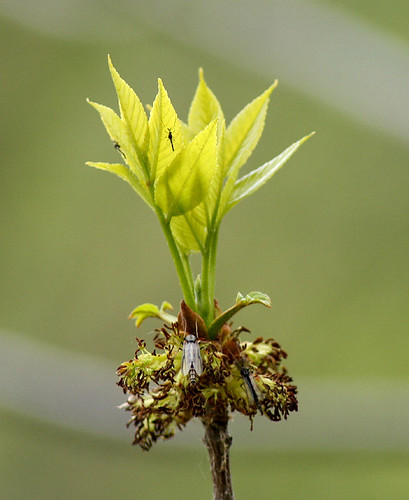
new green ash 3 by withrow

Are readers of TheGardenLady thinking of planting native trees and shrubs in your yards? Are you willing to plant them as seedlings? Especially now, after the terrible storm that blew so many trees down, you might be considering replanting your property.

A place to get them is a nursery in Jackson, NJ that has been in business for 100 years- so they know their native trees and shrubs. This is the only state run nursery in NJ. See here. This nursery raises native trees and shrubs from seeds. If you have a large enough property, this is a place to get your planting done quickly and cheaply. The NJ State Forest Nursery (732) 928-0029 will sell you a bundle of thirty tree seedlings- 3 or 4 different kinds in each bundle depending on where you want to plant these seedlings.

There is a:

Watershed Packet: These species like moist soils and prevent runoff.

Wildlife Packet: These species provide food and habitat for wildlife.

Beautification Packet: These species are aesthetically pleasing.

The trees in the groups include:


Green ash by Fr Antunes

Green Ash (Fraxinus pennsylvanica) – Fast growing tree to 50-60 ft tall
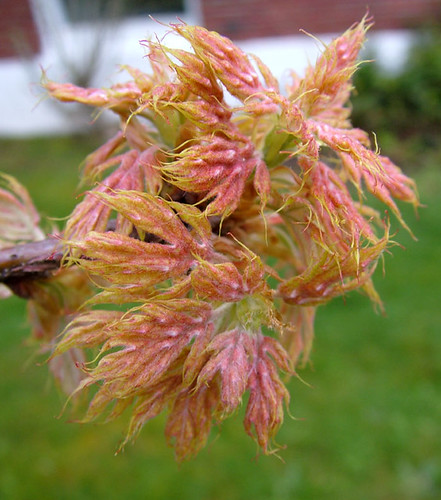
Pin Oak Leaves – Quercus palustris by maxi millipede

Pin Oak (Quercus palustris) – Grows to 60-70 ft, 25-40ft ft wide, red fall color

Silky Dogwood (Cornus amomum) – Grows 6-10 ft, 6-10 ft wide. Creamy white flowers in spring
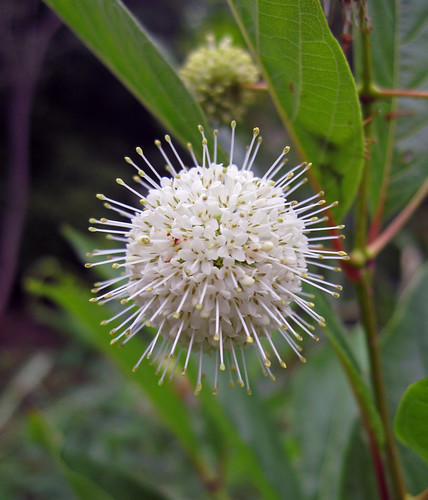
Cephalanthus occidentalis, Common buttonbush, Roanoke, Virginia by shyzaboy

Buttonbush (Cephalanthus occidentalis) – Shrub grows to 12 ft. Small, white flower clusters in late summer
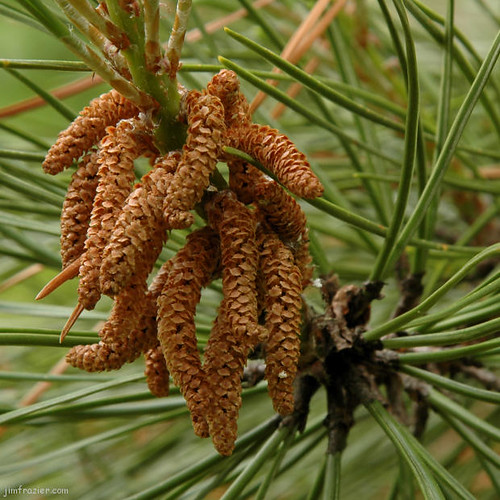
Pitch Pine by Jim Frazier

Pitch Pine (Pinus rigida) – Grows to 60ft. Hardy and fire tolerant

White Pine (Pinus strobus) – Grows to 50-80 ft, 20-40 ft wide. Fast growing

Silky Dogwood (Cornus amomum) – Grows 6-10 ft, 6-10 ft wide. Creamy white flowers in spring
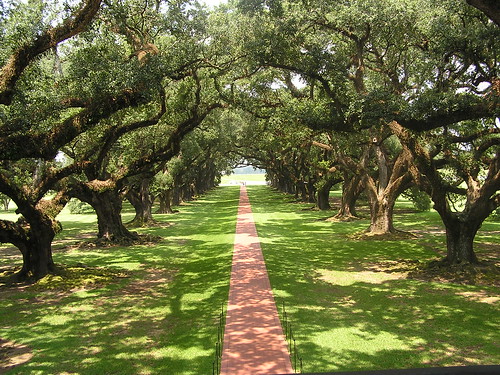
Oak Alley by Lake Fred

Oak (Quercus spp.)

White Pine (Pinus strobus) – Grows to 50-80 ft, 20-40 ft wide. Fast growing
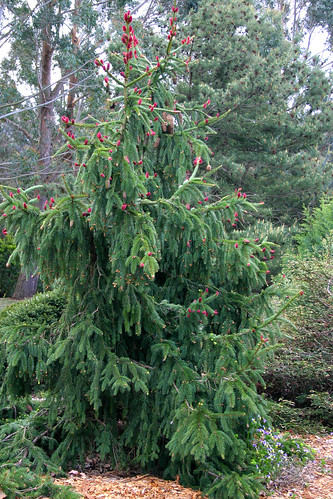
Picea abies ‘Acrocona’ 031012-063 by Tony Rodd

Norway Spruce (Picea abies) – Hardy, aromatic, and fast-growing to 60 ft tall

The seedlings have to be ordered no later than March for an April or May delivery or you will have to wait for next spring for delivery. Though this is basically for NJ residents, when I called them to see if they would sell these bundles to people in other midAtlantic states, they seemed to say they would. Tell them that TheGardenLady recommended them. Out-of-staters have to phone or visit the nursery. If you live in NJ you can order on line here.

This nursery also offers all sorts of interesting classes about trees such as how to identify trees and tree care. Classes are for children and adults. And if you drive to their nursery, they have miles of hiking trails. Make this a day’s outing.

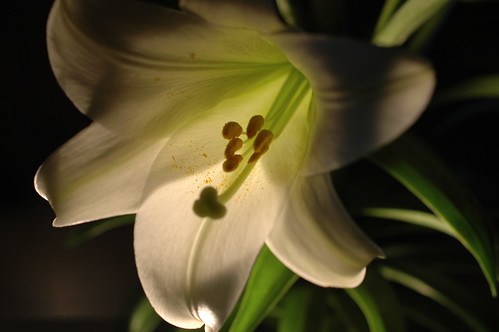
The Easter Lily Plant – Easter Lilies-Lilium Longiflorum

Easter Lily by **Mary**

Easter is coming and so are the Easter Lilies-Lilium longiflorum. Did you know that ten growers, most located along the California-Oregon border, produce 95 percent of all bulbs grown in the world for the potted Easter lily market?

If you purchase an Easter Lily plant, check to see that it is a healthy plant. At home, keep your lily away from drafts and drying heat sources such as appliances or heating ducts. Bright, indirect light is best with daytime indoor temperatures of 65 to 75° F. Water the plant only when the soil feels dry to the touch.  NEVER over water. Pour out any water in the saucer under the plant. To prolong the life of the blossoms, remove the yellow anthers (pollen-bearing pods) found in the center of each flower.  See here.

On this Easter Sunday…. by calamityjan2008

Easter Lilies are one of the loveliest flowers and the fragrance is ambrosial so one hates to discard the plant when it stops blooming. Since Easter Lilies are forced to bloom at Easter time in hothouses by professionals, they are difficult to keep in pots at home for another season of bloom. But you might have some success if you plant the bulb outside after the plant finishes blooming. Remember that forced blooms are not always successful for replanting. But it is worth the try.

Continue reading “The Easter Lily Plant – Easter Lilies-Lilium Longiflorum”

Earth Hour – March 27, 2010, 8:30pm

Earth Hour by lemmingstone

On March 27, 2010 at 8:30 p.m., join millions of individuals, governments, businesses, and other organizations around the world in celebrating Earth Hour by turning off your lights for one hour in a symbolic action to bring attention to climate change.

This simple act is intended to deliver a strong message about the need to implement immediate solutions to what is believed to be the greatest threat our human species has ever faced. Switching off lights for one hour will unite us in a commitment to stop climate change.

If every household in New Jersey turned off the lights for one hour, New Jersey would save 508 MW of electricity and $1.9 million in electricity costs. In addition, during that same hour we could avoid emitting 230 metric tons of carbon dioxide, which is equivalent to planting 5,897 trees or taking 16,050 cars off the road for one day.

Earth Hour began in 2007 in Sydney, Australia with 2.2 million homes and businesses shutting off their lights for one hour. In 2008, this event became a global sustainability movement with about 50 million people in 35 countries participating. Nearly one billion people turned out for Earth Hour 2009 – involving 4,100 cities in 87 countries on seven continents. In the United States alone, 80 million Americans and 318 U.S. cities officially voted for action with their light switch.

A number of iconic landmarks from around the world that went dark for Earth Hour last year includes: Empire State Building, Brooklyn Bridge, Broadway Theater Marquees, Las Vegas Strip, United Nations Headquarters, Golden Gate Bridge, Seattle’s Space Needle, Church of Latter-Day Saints Temple, Gateway Arch in St. Louis, Great Pyramids of Giza, Acropolis and Parthenon in Athens, Christ the Redeemer Statue in Rio de Janeiro, St. Peter’s Basilica in Vatican City, Big Ben and Houses of Parliament in London, Elysee Palace and Eiffel Tower in Paris, Beijing’s Birds Nest and Water Cube, Symphony of Lights in Hong Kong and Sydney’s Opera House

This year, organizers hope that over 1 billion people in 1,000 cities around the world will participate in this awareness event. Well known landmarks will dim their lights, including: the world’s tallest hotel building in Dubai – the Burj Dubai, Toronto’s CN Tower, Moscow’s Federation Tower, Australia’s Sydney Opera House, the Eiffel Tower and Cathedral of Notre Dame in Paris, and Table Mountain in Cape Town.

We can do this in fun ways by going star watching with our kids, having a candlelight dinner at home with family and friends, throwing a neighborhood block party, or doing something more with your town and local businesses to encourage them to shut off non-essential lighting.

For more information, please visit: http://www.myearthhour.org/

Should Blueberries be Planted Near a Wall?

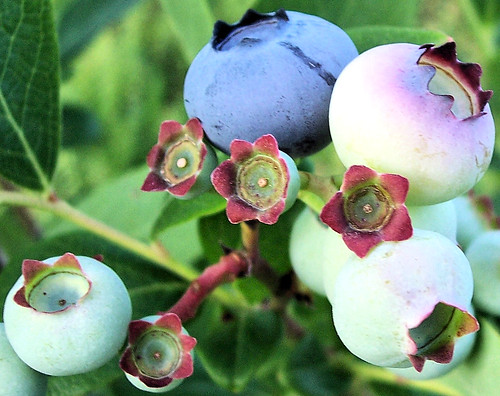
Ripening in the Sun by Isadore Berg

TheGardenLady received this question from Mui.

I have a flowerbed that is about a foot wide, 15 feet long and it is right next to the wall of my house. Can I plant blueberry shrub there? My concern is that as the plant grows bigger, the root will damage the wall and the foundation of the house.  Please advise.

There is a possibility of growing blueberries in your flower bed if it is a sunny spot – read to the end of the post for suggestions. However, TheGardenLady would recommend other plants than blueberries in the site you describe. Let me explain.

There are two main types of blueberries, high bush blueberries Vaccinium corymbosum and low bush blueberries Vaccinium angustifolium. High bush blueberries are the kind you buy in the stores. Low bush blueberries are the wild blueberries or the blueberries you buy in Maine or Canada. Both blueberries like sun, acid soil and good air circulation.

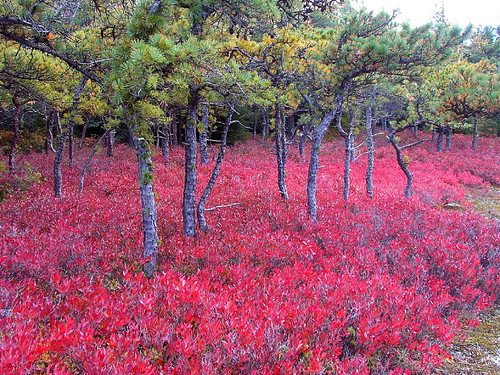
Blueberry bushes Lake Minnewaska by natureluv

Planting near a wall may have major problems for the plants. You might have shade. (Blueberries need a minimum of 6 hours of sun. They tolerate partial shade but won’t produce as many blueberries.) And you might not get good air circulation.

You definitely don’t have room enough in a 1 ft wide bed flower bed for high bush blueberries. A flower bed that is only one ft. wide, is really too narrow to plant the high bush blueberries especially if it is so close to a wall. I am more concerned about the shrub than the wall of your house when I say this. A high bush blueberry shrub at maturity can become 5 to 6 ft wide. A one foot wide area right next to a wall would not allow room for the plant or its roots to expand. And being this close to a wall will not allow good air circulation for the plant which will mean not only deformed plant growth on one side of the shrub, but can cause the plant to be more susceptible to plant problems. And with the wall, there might be shading of the plant part of the day. Blueberries do need full sun. Or the wall might bake the roots or one side of the shrub which can damage the plant.

Continue reading “Should Blueberries be Planted Near a Wall?”

2010 Orchid Show at Longwood Gardens, March 26, 27 & 28

Longwood Gardens second Orchid Show (2) by KarlGercens.com

A wonderful orchid show will be held at Longwood Gardens this coming Friday March 26th, Saturday March 27, and Sunday 28th, from 9am-6pm daily. In orchid growers’ opinions, this is the best show on the East Coast, filled with outstanding orchid exhibits, judged by American Orchid Society judges, educational orchid lectures, and numerous orchid vendors from around the world offering orchid plants and supplies for sale. For more information, go to www.longwoodgardens.org and click on International Orchid Show and Sale for detailed information. Stony Brook Orchids will be there all three days, so please stop by and say hello. Say TheGardenLady sent you.