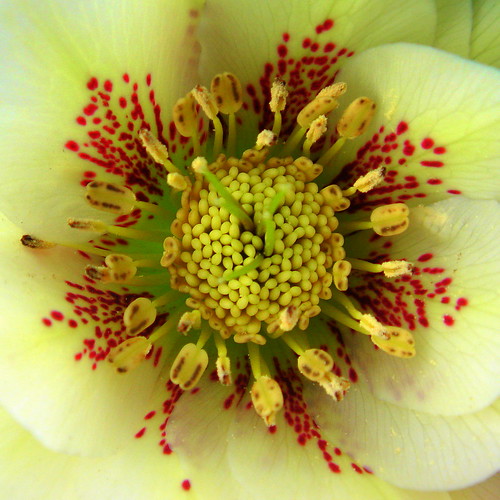
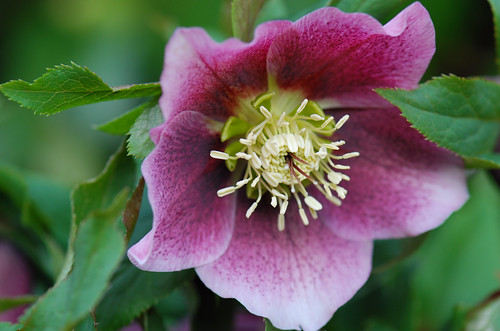
Open House at Carolyn’s Shade Gardens Nursery, Saturday, March 27

Carolyn’s Shade Gardens Nursery is having its first spring open house on Saturday, March 27, from 10 to 3, rain or shine (checks and cash only). Directions are attached. For the convenience of her neighbors, please park on the right side of Robinhood Rd only and do not block mailboxes and driveways.

Feel free to schedule an appointment if you can’t make it on Saturday—you won’t want to miss all the exciting plants described below! Carolyn is available days and evenings this week. Just send her an email with a suggested time.

Carolyn Walker has an excellent assortment of top quality shade plants available right now, and her gardens are beautiful. Here are descriptions of some of the exciting offerings:

Continue reading “Open House at Carolyn’s Shade Gardens Nursery, Saturday, March 27”

The Debate over Naked Gardening

Naked Garden by LORENA CEJUDO

To garden with or without clothes (or a minimum of clothes) that is the question that even Shakespeare hadn’t pondered. But we gardeners will have to wait ’til April for the sages in the City Council in Boulder, Colorado to find out what they decide.

Check out this article: Topless gardening: A human right or wrong? Neighbors’ complaints prompt rule change; thong-clad couple vows to fight

Now I don’t think the radishes or tomatoes care what one wears to plant or harvest them. Or is that why they are red? Because they are blushing. So perhaps you can only go about in minimal or no garb when planting lettuce and spinach.

I had read that Ruth Stout, the guru of easy gardening “The Ruth Stout No-Work Garden Book: Secrets of the year-round mulch method” liked to garden in the buff.

So readers, let TheGardenLady.org blog readers know what you think on this most important horticultural issue. Will this gardener use the argument that she does wear more than meets the eye? That she wears mosquito repellent and/or suntan lotion.

Taking Care of Your Sansevieria (Mother-in-Law’s Tongue)

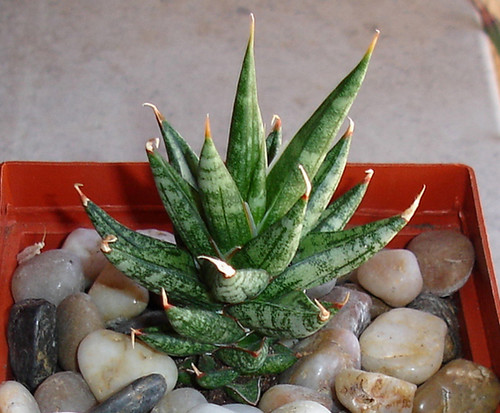
Sansevieria francisii by allloe

TheGardenLady has received a number of questions about Sansevieria or Mother -in- Law’s tongue. Two of the questions are listed here. Two others relate to keeping the Sanserieria alive after freezing and what to do if the plant has root rot.

My wife has a snake plant that’s starting to bloom, and it has a sticky liquid coming from the pod clusters. I’d like to know what it is and what it’s for?

I am caring my for my mother-in-law’s mother-in-law tongue. I of course don’t want to kill it, but it looks awful. I think it was over-watered at one time, and kept in the dark, damp, cool basement, over the winter months. I have recently brought them upstairs, where it is warmer and can dryout a little. It appaers the soil never dried out. The leaves at the soil line are yellowing and going up the plant leaf itself. They are falling over and nothing I do can keep them standing up. I think originally they were potted in Miracle grow potting soil. I would like to save these plants, but I not sure what I can do? Can I just cut the top portion of the leaf off and place it in soil to re-root?

There is no question that Sansevieria is a very popular plant. One of the reasons that the plant is so popular is because it is such a tough plant that is so easy to grow with so few problems or pests. There are about 70 species of sansevierias to have a variety of leaves to choose from. Because of its popularity there is an international Sansevieria Society in England. If you are interested, you might want to join or order some of their journals. Or you might want to join one of the many cactus and succulent plant societies in the US and around the world.

White milkglass with Snake Plant by sunshinesyrie

Sansevierias come from tropical and subtropical areas. Therefore a minimum temperature of about 50 degrees Fahrenheit is recommended. Short periods of lower temperatures may be tolerated as long as the plants are dry. They die if left out in the frost. If your plant has frozen, there is little hope that it will survive. But you can cut off the mushy parts of the leaves and leave the roots in the ground. If the roots are not frozen, they may push up new leaves. Leave them in the pot for a while and put the pot outdoors when the weather is warm and see if anything grows. You can always throw the pot out if nothing emerges by the end of the summer and start over with new plants. They are a relatively inexpensive plant to buy or maybe a friend will give you one of her plants.

I cannot stress enough the fact that Sansevierias thrive on neglect, especially in the cold months. If potbound and under stress ( usually in the summer), the plant will send up a stem with small, inconspicuous flowers. The plant is not grown for its flowers, it is grown for its leaves. But the flowers are an exciting thing to see and they are very fragrant. The sticky liquid on the stem is the nectar.

Continue reading “Taking Care of Your Sansevieria (Mother-in-Law’s Tongue)”

Stunning Japanese Gardens

Shinjuku garden

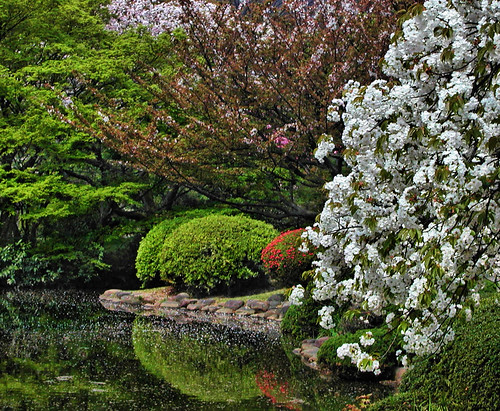
Spring Finale by NatashaP

TheGardenLady corresponds with a Japanese lady she met while in Fukuoka. As we in the US are still under a blanket of snow, my Japanese friend writes how spring has come to her area. Circulating on the computer are some beautiful photos of what spring looks like in Japan. I hope they are real and not enhanced.  Click here for some stunning photos.

Hummingbirds: A Lecture by Eileen Boyle

TheGardenLady attended a lecture given by Eileen Boyle, the education coordinator at Mt. Cuba Center. The talk was on HummingbirdsTrochilidae family.

There are 328 species of Hummingbirds in the world, mostly in the Tropics but in the Eastern half of North America there is only one breeding hummingbird. This is the Ruby Throated Hummingbird- Archilochus colubris.  In the western half of North America there is a hummingbird called the Rufous -Selasphorus rufus that sometimes gets lost and winds up in the Eastern half of the country, but that is rare. Hummingbirds migrate to Central America for the winter and return about mid April to the mid-Atlantic states.

Hummingbirds eat nectar and bugs. I thought that Hummingbirds have to eat half their weight in food each day, but I read online that “Hummingbirds must eat more than their weight in food each day, and they fulfill this need by eating often. They eat approximately every 10 minutes. Because their survival depends critically on eating frequently, more than any other animal – they continually face the danger of starving.”  Hummingbirds have to eat a lot. So you will be helping Hummingbirds by providing their food needs.

To attract hummingbirds to your property, put out hummingbird feeders. Be sure to change the sugar water in them and clean them every 2 or 3 days- washing in the dishwasher is best. Put up multiple feeders, because if you start attracting hummingbirds, you will attract a lot of them and they are very aggressive and territorial. They like feeders where they can perch while sipping. Plant flowers to attract hummingbirds to your property. Hummingbirds love red, yellow, orange and blue tubular flowers. They are not attracted to fragrances. They need early to late blooming flowers to sustain them. They like wetlands and use the down of cattails, spider webs and down of pussy willows to line their nests. They need water to drink and need water to wash in- they even enjoy a gurgling fountain.  Watch this.

A list of basically native plants given by Eileen Boyle

Red buckeye Aesculus pavia

Wild columbine Aquilegia canadensis

Butterfly weed Asclepias tuberosa or any kind of Asclepias

Trumpet creeper Campsis radicans

Spike gayfeather Liatris spicata

Canada lily Lilium canadense

Turk’s cap lily Lilium superbum

Cardinal flower Lobelia cardinalis

Trumpet honeysuckle Lonicera sempervirens (this is the native honeysuckle that is not invasive.)

Scarlet beebalm Monarda didyma

Wild Sweet William Phlox maculata

Downy phlox Phlox pilosa

Alabama phlox Phlox pulchra

Plum-leaved azalea Rhododendron prunifolium

Pink-shell azalea Rhodendron vaseyi

Indian pink Spigelia marilandica

Fire pink Silene virginica

Mt. Cuba Center will be having a Hummingbird weekend this August from Fri. Aug. 27th through Aug. 29th taught by Eileen Boyle and Bill Hilton Jr. Though one session calls itself a teachers workshop, this Hummingbird weekend is open to everyone. They will teach how to set up a hummingbird garden and will even demonstrate how to band hummingbirds. Bill Hilton Jr who was written up in 2008 Discover magazine as one of the “50 best brains in Science” and a top 10 in amateur scientist leads hummingbird tours to Costa Rica. See here.

The Ware Collection of Glass Models of Plants

20091018_GlassPlants_009by Chef Cooke

If you live in the Boston, Massachusetts area or are visiting Boston there is a great flower exhibition that you should not miss. This is an exhibition that you can visit at any time of the year; but not many people seem to know about it. This is The Ware Collection of Glass Models of Plants. The exhibition is located at the Harvard Museum of Natural History.  See here.

President & Fellows Harvard College, photo by Hillel Burger, showing 3 of over 3,000 glass models of plants on display at the Harvard Museum of Natural History.

This unique and stunning collection of nearly 4,400 plant models was created by naturalists and glass artisans Leopold Blaschka and his son, Rudolph whose studio was located near Dresden, Germany. They started creating the plant models in 1886 and worked on them through 1936. The life-size models include over 800 species of plants. The models replicate the tiniest details of plant anatomy with astounding precision and are made entirely of glass, reinforced internally with wire support when needed. This is one of the most amazing exhibits this Garden Lady has ever seen.

The history behind the creation of the models was that the founder of Harvard’s Botanical Museum wanted life-like representatives of the plant kingdom for teaching botany. At the time only papier-mache and wax models were available and these were either crude or could melt in hot weather. The project was financed my Mrs. Elizabeth C. Ware and her daughter, Mary Lee Ware, who presented the collection to the Botanical Museum of Harvard University as a memorial to Dr. Charles Eliot Ware, class of 1834.

Mt. Cuba Center: A Wonderful Woodland Wildflower Garden

Mt Cuba Center 1 by Larry Wilder

Spring is around the corner. I can’t wait. I look forward to visiting one of my favorite gardens called Mt. Cuba Center, in Delaware, known as the mid-Atlantic’s finest woodland wildflower garden. This 650 acre estate preserves and promotes an appreciation of plants native to the plateau between the coastal plain and the Appalachian Mountains that is called the Piedmont area. Mt. Cuba encourages the use of these native plants in gardens and supports their conservation in nature.

While at Mt. Cuba you can visit their woodland wildflower gardens and formal landscapes. Inside the garden you can walk in the woods, visit ponds, walk along the Dogwood Path, visit the meadow, see hundreds of trilliums in the Trillium Garden, see the trial garden, go to the lilac allee, visit the Round Garden where there are tulips and delphinium displays followed in the summer by heat loving annuals and native perennials, etc.

Trillium pusillum by dogtooth77

This estate was created by Mr. and Mrs. Lammot du Pont Copeland whose passion for native plants and naturalistic gardening led them to create the wonderful gardens, meadows, paths and ponds. Today these gardens include over 1900 plant species, varieties and cultivars. You can visit not only in the spring, but in the summer and fall. Contact Mt. Cuba and take a 2 hour tour-by calling for advance reservation. Their spring wildflower tours run from April 15 -May 28.

Helonias bullata by Illingworth

Mt. Cuba also has excellent Continuing Education programs. These inexpensive courses are extremely varied and include such topics as a Native Plant Buying Trip, to Bird Gardening to art and photography classes.

The Soil Needs of Fangipani – Plumeria

TheGardenLady received this question from Paddy.

I have been given a Frangipani and the only fertilizer I have to hand (before planting in ground) is one for acid loving plants – can I use this?

How lucky to be given a Frangipani- Plumeria. When my children went to Hawaii they were so impressed with this small, flowering, fragrant tree. They asked me if I wanted one. Sadly, this GardenLady is at a stage in my life that I no longer am able to nurse plants that have such specialized needs since I have no greenhouse to pamper my plants. And my house is filled with less temperamental plants.

Sweet Summer Perfume by NatashaP

Frangipani grows well in zone 10. It likes slightly acid soil and sunny, hot weather when it is planted in the ground. It cannot tolerate any frost or it will die. Indoors it has to be kept in at least 60 degree temperatures and shouldn’t be taken outdoors until it is a minimum of 65 degrees. Then when the temperature drops back to 65degrees, it should be brought back indoors. Plumeria can be grown in a pot- which should be large enough – but it will be weaker and won’t grow as tall. It might need a little shade when in a pot.

Not knowing what type of acid fertilizer you have, I would be careful. If you know the company where your friend bought the plant, you should ask for the telephone number and call them to ask their advice. I phoned a really fine nursery that specializes in tropical plants called Logee’s Tropical Plants,  888-3308038 for advice on the fertilizer they use. They use and sell a product called Dyna-gro. They said you can use any fertilizer that is below 15-15-15.

There are three numbers on any container of fertilizer. The first number is for nitrogen, the second number is for phosphorus and the third number is for potassium. Dyna-gro has the numbers 7-9-5 meaning that it has more phosphorus to get more blooms. Logee’s only feeds the Plumeria when it is in active growth, when it is hot. They discontinue feeding the plumeria in the winter. When they feed the Plumeria they only use 1/2 tsp. of the fertilizer per gallon of water and use it only 1 time a week.

There is a Plumeria Society that has a website with answers to commonly asked questions.

According to the Cooperative Extension Service from the U of Hawaii, you should “Fertilize plumeria with 10-30-10 every three to four months at about 1 lb per inch of trunk diameter, distributing the fertilizer around the plant to 2 feet beyond the foliage line.”

Another good website on Plumeria care is this.

Good luck and send TheGardenLady a photo of your Frangiapani when it is in bloom.

Free Tickets for Botanical Gardens and Arboretums from Bank of America

Davidia involucrata by Jura Wanderer

When TheGardenLady learns of free tickets to gardens, she will share them with her readers. And she hopes that if TheGardenLady readers learn about free or reduced rate tickets to gardens, they will share this information with TheGardenLady blog.

The newest list is thanks to Bank of America.  See here.  Though it is ostensibly for museums, and most of the tickets are for museums, some of the places listed are for botanical gardens or arboretums. TheGardenLady also loves to visit museums, so I hope her readers do, too, and will take advantage of these wonderful offers.

Dorion by Bruce Beasley by Kaldoon

In Hamilton, NJ one of the best places to visit both for the sculpture and for the grounds is Grounds for Sculpture. This Sculpture Park has 35 acres of beautifully landscaped grounds with interesting trees and shrubs as well as some flowering vines, perennials and annuals. There are two indoor museums, 250 outdoor pieces of sculpture, two shops, two restaurants- one modest priced and one called Rats which is one of the best restaurants in NJ and certainly one of the most beautiful restaurants in the world. I call Grounds for Sculpture the Garden of Eden; though the landscaper, Brian Carey, insists it is more like an arboretum. Take advantage of these free tickets. Plan on spending an entire day on the Grounds- you really need that much time. Then let the GardenLady know if you agree- should it be called the Garden of Eden or maybe Paradise?

Winterthur ~ A Country Estate by Diana827

In Deleware , you can get tickets to Winterthur and visit both the museum and the grounds which has one of the best outdoor plantings of Galanthus (snopdrops) and other minor spring bulbs. And if you are lucky, you might get there during the spring when the Handkerchief or Dove tree- Davidia involucrata is in bloom. This Handkerchief tree is located near the main buildings. It is one of the most unusual flowering trees TheGardenLady has ever seen. The flowers look like handkerchiefs fluttering in the breeze. I have seen more of these trees in European gardens than in American gardens; it is fairly difficult to find these trees in many nurseries in this country. It grows in zones 6 through 8. It likes a protected site that has rich, high organic matter in moist, well drained soil, a site that has shade in the afternoon. I understand it takes 15 years to bloom.  See here.

Cheekwood Botanical Gardens by rbglasson

In Nashville, Tennesee you can visit the Cheekwood Botanical Garden & Museum of Art. And then take in some Grand ole Opry- sorry I couldn’t find free tickets for that.

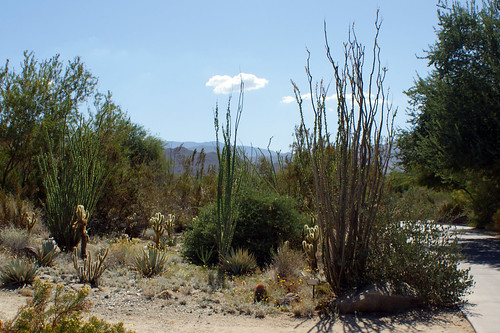
The Living Desert Zoo & Gardens by Fritz Liess

In Palm Desert, California you can visit the Living Desert which is a zoo and a botanical garden.

I didn’t check out every state to see where they are giving the free tickets. I will let my readers choose where they want to go. Have fun. And again, Thank You Bank of America.

Hellebore Seminars for the Totally Obsessed

yellow hellebore by perseverando

Where: Carolyn’s Shade Gardens

325 S Roberts Rd

Bryn Mawr, PA 19010

610-525-4664

carolynsshadegardens@verizon.net

When: (Select One)

Saturday, March 20, from 10 to 11:30 am

Sunday, March 21, from 1 to 2:30 pm

Friday, April 2, from 10 to 11:30 am

Saturday, April 3, from 10 to 11:30 am

Cost: $25 per person

Attendance is limited to 15 people

Content: Using examples from my own gardens, I will cover everything and anything you ever wanted to know about hellebores, including:

+ How to grow and maintain them

+ How to propagate them by division and seedlings

+ How to pick the best plants

+ The difference between “species” and. “hybrid” hellebores

+ What makes a superior hybrid hellebore

+ What is special about the 15 or so species of hellebores

+ Some of the interesting new species crosses available

+ A special selection of hellebores will be available for purchase, including rare plants potted just for the seminars

The seminars are suitable for any level gardener as long as you can listen to discussions of the most esoteric qualities of hellebores without your eyes glazing over. Questions and observations from the group are encouraged. Feel free to bring samples for identification and discussion.

Registration: To register, please click on this address carolynsshadegardens@verizon.net and send me an email listing the seminar date, your name, and phone number. You will receive a reply confirming your registration and containing further details.

A Hellebore.....The Lenten Rose by keithhull