Because dandelions were so prevalent, I always wanted to try a recipe for dandelion wine. Obviously lawns, when I was growing up, were not so pristine as they are these days. No one, that I knew, used any herbicides to kill dandelions. They may have been considered weeds even then. I can’t remember, but we children always loved them and loved blowing on the seed heads, dispersing more seeds to turn into yet more dandelions. And the flowers and leaves were always healthy to eat.
Wine recipes always read as an easy wine to make. But I never tried. However, we had the dandelion leaves for salad. No one that I knew ever heard of arugela in those days for the bitter green in a salad.
Someone observed that the healthiest diet is the one poor people had to eat in the old days. So consider adding dandelion greens to your diet for health reasons as well as a more diverse green palatte in the salad bowl.
Winter is the time of year when people who live in climates where there is a barren landscape or with snow, would like to look out the window and see some color outdoors. Unless you have “planted” artificial flowers, no living flowers will bloom outdoors at this time of year. So those lucky or smart enough will have planted plants on their grounds with color interest. If you don’t have plants with color, consider adding them to your landscape in the spring so that they will brighten the view next winter.
Two popular plants for winter interest are the red and yellow twig dogwoods.
Red twig dogwoods such as Cornus alba cultivar ‘Elegantissima’ or the cultivar ‘Argenteo-marginata’ are native to Asia.
Red osier dogwoods (Cornus sericea or Cornus stolonifera) with a cultivar like ‘Cardinal’ are native to North America.
Bloodtwig dogwoods (Cornus sanguinea) with cultivars like ‘Winter Beauty’ or ‘Winter Flame’ are native to Europe.
Cornus sericea 'Flaviramea' by Caffinara
The Yellow twig dogwood is Cornus sericea with cultivars like ‘Flaviramea’ or ‘ Bud’s Yellow’ or ‘Silver and Gold”
Some of the cultivars are more orange than red or are yellow with red tips.
Both yellow twig and red twig dogwoods are shrubs, which mean they grow about 10 feet tall. They have berries and flowers so they have all year interest, but they are both grown mainly for their wintertime twig color. Some grow in temperature zones as low as zone 2 and as high as zone 8. They like sun for most twig color but can take slight shade. These are showiest and most effective if you have a location where you can plant a few shrubs in one area that you can see out the window.
If you are interested in these shrub dogwoods, check out the best nursery in your area. See which cultivars they recommend for your area. You don’t have to buy the plants at this nursery; but you will get an idea of what the best nursery recommends. Then see what the lower priced nurseries have available. See if you like what you see. The price might just be lower because they sell a smaller tree. Google up the Latin name of the plant with the cultivar and see if you have the best environment on your property for the plant.
If you plant the yellow and/or red twig dogwoods, please send TheGardenLady blog a photo of the colored twigs next year in the winter. The photo would be especially appreciated surrounded by snow- like most of the country is getting this year.
In planning your garden for next year, TheGardenLady wants her readers to consider a brand of plants that is sold under the Proven Winner label. The Proven Winner brand calls themselves “the leading brand of high quality flowering plants in North America.”
The Proven Winner company was founded in 1992 and is owned by “three leading U.S. plant propagators” and “together with 3 licensees in Canada” produce top quality plants. They also sell a complementary brand, “Proven Selections®, which consists of regional favorite varieties.” Proven Winner plants are sold in almost every garden center in North America. Proven Winner plants can also be purchased around the world. There is a Proven
Winners Europe, Proven Winners Asia and Proven Winners Aussie.
Proven Winner’s goals ” are to introduce the best, most unique, high performing plants, to produce them under the highest quality standards, and to market the plants innovatively. Proven Winners brand plants claim they are unsurpassed in terms of flowering, growth habit, disease resistance, and garden performance.” This GardenLady has been delighted with her Proven Winner plant purchases and always looks for the Proven Winner label when she goes shopping for plants. Many of the best nurseries in TheGardenLady’s area carries this brand.
For 2010 Proven Winner lists 166 new plants with photos and information about each plant. Place the cursor over the photo area and more info about each plant will come up. Proven Winners is not quite finished putting all the photos of the new plants on their site- but they promised TheGardenLady that all the pictures are going up. Proven Winner also has lists of the other plants they have introduced over the years. Their excellent website has answers to both gardening and container gardening questions. And there is even a place for you to contact them with your personal plant questions. The website also lets you know where you can buy Proven Winner plants in your zip code area.
Spring Basket – photo is courtesy of ProvenWinners
Now is the time to mark your calendar so that you won’t forget to buy tickets to attend the flower and garden shows that are coming to your area. Or if you want, you can travel around the country attending wonderful flower shows before you start planting your own gardens. Here is a list of some of the Flower and Garden Shows in the US in order of the dates they are happening. It is incomplete so let TheGardenLady know of shows that she missed that will be in your area.
TheGardenLady received this question from Charlotte.
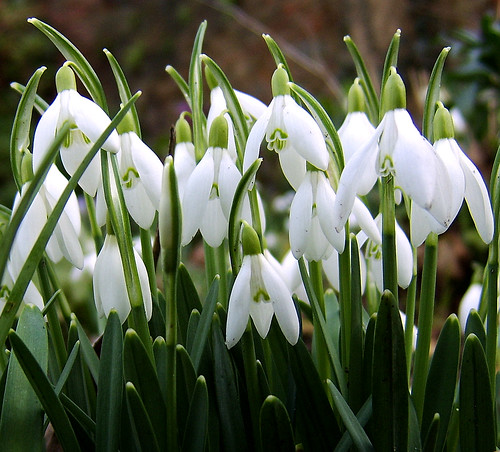
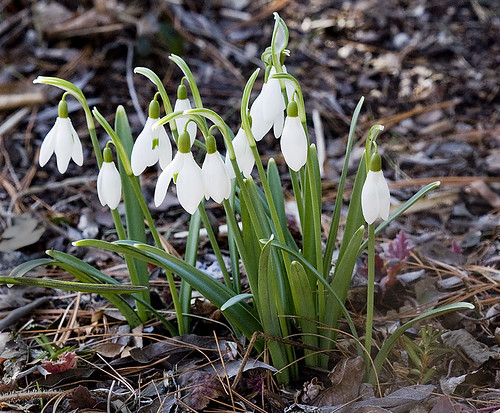
Can you tell me where you can see snowdrops (galanthus) in the US – I cannot seem to find any listings except yours for Winterthur – if you can help, I’d be really grateful.
Check out the public Botanical gardens in your area to see if they have spring flowering bulb gardens and call them to see if they grow Galanthus-Snowdrops. Gardens that have spring show gardens should have Galanthus. Gardens such as the Denver Botanic Gardens (see here)Â or the New York Botanical Garden may have them growing among their spring bulbs. Or contact the Missouri Botanical Gardens to see if they can recommend a garden with Galanthus. If you call any of the Botanical Gardens you should be able to ask for a list of the plants they exhibit.
Snowdrops in the perennial garden at the NY Botanical Garden - First spring flowers by annabelleny
Join the American Horticultural Society and contact them to take tours of gardens or learn of spring gardens you can visit to see Galanthus. Or contact the Horticultural Society in your area. The Pennsylvania Horticultural Society, for example, gives great tours of gardens that you could take to see spring bulb gardens. See here.
Join the Garden Conservancy and visit gardens during their open gardens days. Private gardens are often open to the public on these days. One of the gardens that often shows during open garden days is David Culp’s private garden. Culp, a famous breeder of Helleborus, loves Galanthus and has them growing in his delightful garden in Downingtown, Pennsylvania.
As you gaze out at your garden wishing you could have something of interest in it even when it is winter and most of your plants look dead or barren, TheGardenLady would like to suggest thinking about adding sculptural elements to your garden. Sculptural elements could be things you buy or things you create. Since TheGardenLady tries to give ideas that are not expensive, she would like to emphasize the creative side of garden things you might consider trying to make.
First let me describe the work of two garden sculptors. TheGardenLady is so pleased to have met both of these sculptors.
Patrick Dougherty
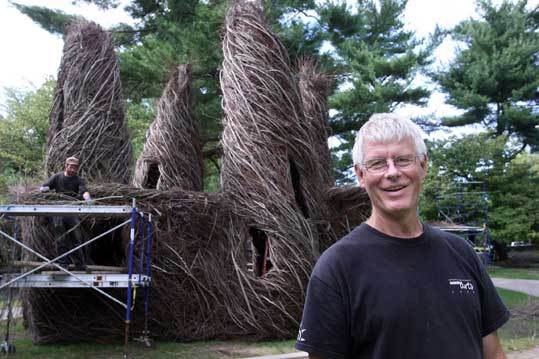
The first sculptor is Patrick Dougherty, a man who created an art form using saplings from trees. As far as TheGardenLady knows, Patrick Dougherty created this art form. He cuts down loads of saplings and then, with help from the community where his work has been commissioned (I and others had the fun of helping him build one of these sculptures), removes the leaves and starts creating a sculpture doing nothing more than weaving the saplings together. See here.
Patrick Dougherty builds his creations as ephemeral, something lasting a short time, creations. He uses no cement, glue or tape or anything to hold the sculpture together. When he finishes weaving the piece he lets nature take its course. And after a few years, if the piece is outdoors, it breaks down and is removed. Only those who were lucky to visit the site of the sculpture get to see it. TheGardenLady first saw one of Dougherty’s piece on the Swarthmore College campus.
At this time of year, you gardeners might have lots of saplings, branches or twigs that you are cutting down. Pick out the ones that will bend and not snap or break. Try creating your own ephemeral garden sculpture. Now don’t expect your creation to match Patrick Dougherty in style, shape, size or interest. But it will be your own work of art for your own garden. It might become an addictive hobby.
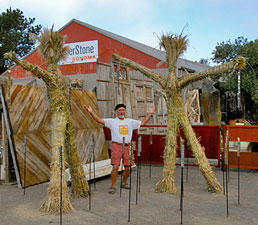
Simple
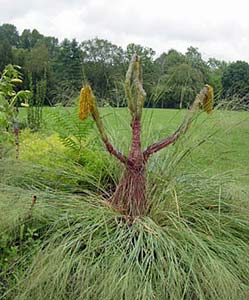
The second creative sculptor is a man who calls himself Simple. Simple creates art for the garden and teaches how to make this art or he will come to your garden and create the art in your garden. His brochure reads, “Who has been Simple-ified?” and tells you his creations are at Longwood Gardens, The American Rock Garden Society, etc. He seems to especially like to work with Grasses to create what he calls a Grass Menagerie. These cats or dogs or tall people or anything your imagination can conjure. If you have grasses in your garden, now that they are brown and have to be cut back, this seems like the perfect time to create your grass sculpture and it seems like a fun thing for families and friends to get together to do. Simple is available from fall to spring to teach his personal craft of Horticultural Garden art. Simple can be reached at (610) 404- 1760. or check out his website.
Simple also offers other garden art design ideas.
If you try either of these art forms, please send photos of you creations so that TheGardenLady and her readers can see them.
TheGardenLady recently found a site that can help people who have questions about Christmas Trees or just want to have fun with Christmas Tree puzzles. This is a great site that will answer any and all of your questions about Christmas Trees. This site will help dispel myths about Christmas trees; it will tell you what you want to know about keeping the tree alive; best trees to buy; whether the trees are safe or not; and finally how to dispose of Christmas trees in your area after the holiday. Check out The National Christmas Tree Association.
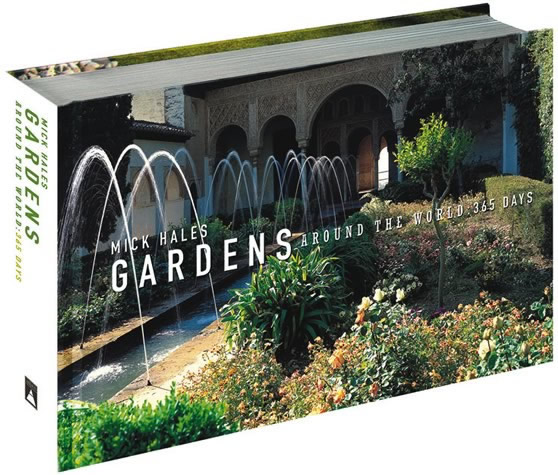
By now TheGardenLady readers know, as do friends and family, that TheGardenLady loves to visit gardens and parks and nurseries in her area every season; and when she travels she loves to visit every garden she can. Because of this a friend gave me a book entitled “Mick Hales Gardens Around the World:365 Days.” One would think there would be 365 gardens in the big book of lovely photos from the gardens. But some gardens have more than one day devoted to them. Still there are about 160 gardens listed. I wonder how the author chose the gardens. Were these all the gardens he visited? Or did he just take the best of the best photos he shot and use them for the book?
Is it okay to plant Encore Azaleas (Autumn Sangria) in November in Dallas or do I need to wait until Spring?
Here is the answer from the spokespeople from Encore Azalea to this question:
Fall is a great time to plant, allowing the roots to get established during the winter before they concentrate on growing and blooming in the spring. But Encores can be planted at any time of the year, so long as you keep a watchful eye on young plants during the heat of the summer. During their first year in the ground when the root system is developing, azaleas are more thirsty than when full grown. Young plants will die quickly if the soil dries excessively.
Thanksgiving - Action de grâce by cyanne43 super slow speed
On Thanksgiving Day, this GardenLady likes to not only enjoy the feast with family and friends, but she likes to think of the day as a day of giving thanks, of sitting around the dinner table and sharing with family and friends the things that are meaningful for which each person is grateful.
Asticou Azalea Garden with Buzz and Orton by jblester2002
TheGardenLady wants to share with her readers as if each one of you is sitting at her table and to tell you all that she is so very grateful and give thanks for all the wonderful public and private gardens, arboretums and public parks that are open for her and the public to visit and enjoy. She is grateful for the vision people had to create these magnificent gardens and to keep these places and open these places for everyone to enjoy.
Mt. Cuba Fall 2009 by rwa757
How wonderful it was/is that people of wealth created such beautiful places and now allow everyone to share in their creations. For example, in Deleware who wouldn’t thank the Duponts for making so many beautiful gardens available to us to tour, gardens like Mt. Cuba and Longwood Gardens. Or in Maine, a big thank you to the Rockefellers who have supported gardens in places like Mt. Desert Island for visitors to enjoy, gardens like the Asticou Azalea Garden or Thuya Gardens and if you can get an appointment on the right day, to visit the Abby Aldrich Rockefeller Garden. I had the great pleasure of visiting all three this summer. Or places abroad that open gardens for visitors, like the National Trust for Gardens and Parks (see here).
Thuya Garden by prettie77
And how wonderful that even people of modest means who create private gardens often open their gardens thanks to garden club tours or the Garden Conservancy that started in 1995 and opens to the public what they call the ” best private gardens” (see here) for people to visit; or the garden conservancy in England that has open day garden visits.
I am grateful for all the wonderful Botanic Gardens or Arboretums in this country and around the world: Places like the US Botanic Gardens; the National Arboretum in Washington, DCÂ ; Garvan Woodland Gardens in Arkansas; the Orto botanico di Palermo in Sicily, Italy; or Hortus Botanicus in Amsterdam.
Hortus Botanicus Amsterdam by billandkent
And I am grateful for the wonderful gardens at colleges and universities that are open to the public, gardens like those at Swarthmore College in Pennsylvania; Princeton University’s magnificent arboretum and gardens in Princeton, NJ; Wellesley College gardens in Wellesley, Mass. and Berkeley’s Botanical Garden in Berkeley, California to name just a few.
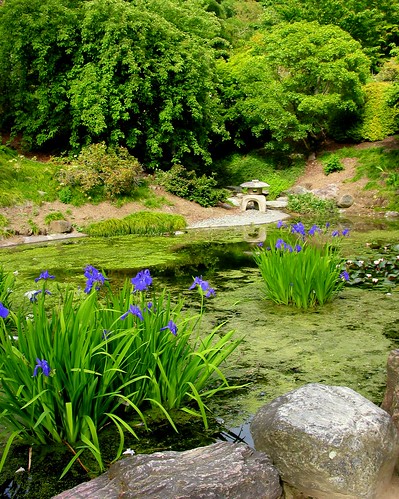
Berkeley Botanical Garden Pond F1280 by CoastRanger
And I am grateful for politicians or wives of politicians who had or have the foresight to create gardens. A loving thank you to Lady Bird Johnson who did so much to promote wildflowers in her state and around the country and who created The Lady Bird Johnson Wildflower Center in Texas.  See here.
lady bird johnson wildflower center by TexasValerie
And a heartfelt thanks to Mayor Daley of Chicago who encourages plantings and gardens all over that city. He has an annual program called Mayor Daley’s Landscape Awards that recognizes Chicago gardeners, both resident and businesses, who make Chicago greener by planting gardens. All cities and towns should have these Awards- and many do, like Cape May, NJ that give awards for gardens.
1999 Mayor Daley’s Landscape Award – First Place, Single Family Residential, Region
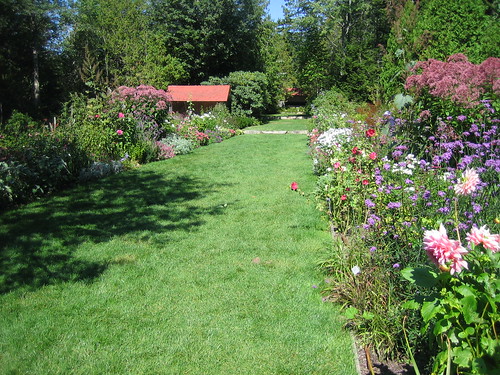
And I am grateful that so many nurseries now have show gardens that are a delight to see, nurseries like Russell Gardens Wholesale with their hosta garden or Matterhorn Nursery in New York (see here) that has wonderful show gardens like their Formal Garden that is based on the Renaissance Garden at David Austin Roses in the United Kingdom or Cricket Hill Garden in Connecticut that has a seven acres terraced woodland garden they call Peony Heaven.
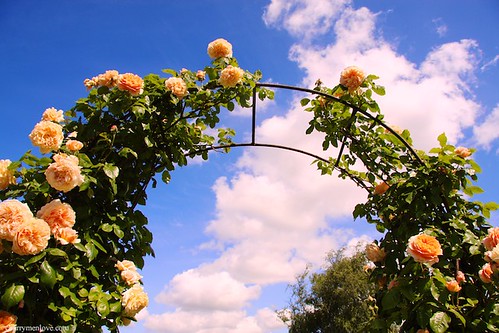
David Austin Roses Visit, June 09 by www.cherrymenlove.com
I am grateful for all those professional gardeners, landscapers and garden workers as well as all the volunteers who help in so many public or private gardens or even create their own gardens for people to see and visit. Professionals and volunteers help plant gardens, care for gardens, save and protect old gardens. There are the wonderful projects for volunteers like Garden Your City or The Trust for Public Land or Master Gardeners who have shown gardens in the US, Canada and now starting in New Zealand and England and there are even people who love plants who have adopted a small island on the street in front of their homes and planted them with flowers.
I can not thank everyone on this short post. But to all of you mentioned above and all of you whom I had no space or time to mention, on this Thanksgiving, TheGardenLady wants you to know how much I appreciate what you have done for me and how much more beautiful and healthier a world you have helped to create and what a wonderful, joyous environment you have made for all of us. There are not enough words in my vocabulary to express how much you and your plantings have done for me. I cannot thank you all enough what what you have given me. And so this post of Thanksgiving is for you. A simple Thank you will have to suffice.