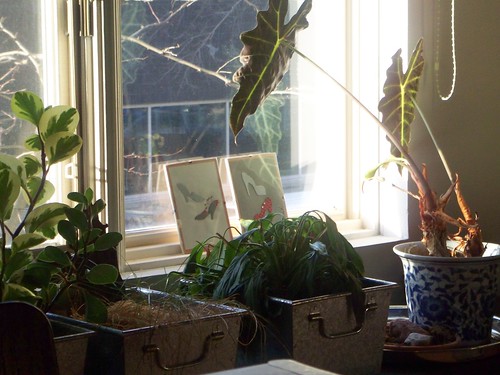
Why this Time of the Year Makes TheGardenLady Sad

sad plants and glitter platforms by A.J. Kandy

The flowers in my garden are still blooming their heads off. It is amazing to see the garden at this time of the year as cold weather is coming. The impatiens are spectacular; I think this has been one of the best years for impatiens. The roses seem to look loveliest at this time of year. Is it because these are the last roses of summer? The chrysanthemums are filled with flowers. I usually like to see flowers with leaves. But to see all the chrysanthemum flowers covering the plant, the leaves are not much needed. My daughter thinks the flowers at this time of year are the prettiest of the entire flowering season. So why does TheGardenLady feel so sad when she looks at her garden?

As I brought my indoor plants indoors, I thought how much this GardenLady dislikes this time of the garden year.

Every year in the spring when the leaves are formed on the trees, in this area that is the month of May, TheGardenLady can’t wait to take the indoor plants outside where they are left on the deck or planted in the ground and remain all summer and part of fall. The plants are not brought back into the house until a week or so before the heat in the house is turned on. The plants seemed so happy when they were taken outside in the spring. I felt that I could hear them thanking me.

But now in the Fall the plants seem to know that they will have to go back indoors where the light is so much dimmer and the forced air heat will be drying. I believe my plants are not happy to have to come in. Oh yes, they know they will be warm and cared for. But their freedom is over.
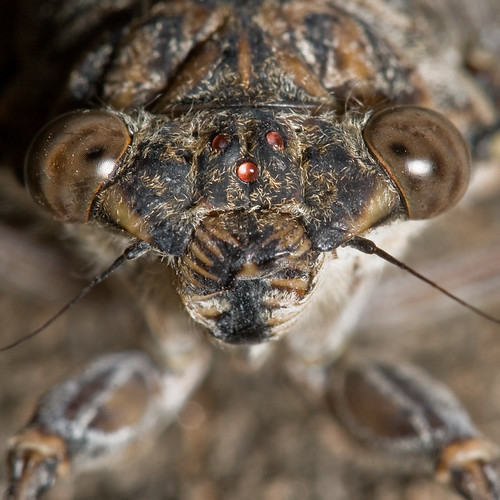
Cicada portrait by macropoulos

Now the work of caring for plants really begins for TheGardenLady. All those pots of plants have to be carried in. And after a summer in the sun and rain, they have grown a tremendous amount. Some of the plants are quite large. Finding spots for them, let alone good spots, is a major challenge. And before they get placed in the house all the plants have to be cleaned off. There are leaves that have fallen into the pots or maybe nuts buried there by the squirrels. The pots are muddy from water splashed onto them from summer rains. TheGardenLady hopes that no pests are carried in with the plants. Last year a cicada had buried itself in the soil and emerged from the pot in the warm house. It was so surprising to hear cicada noise in the winter and to find a cicada gripping a branch of the plant. Many years I have brought in plants with tiny crickets- crickets with the shrillest, high pitched screeching. These little black crickets are relatively tiny and difficult to find even with all the noise they make.
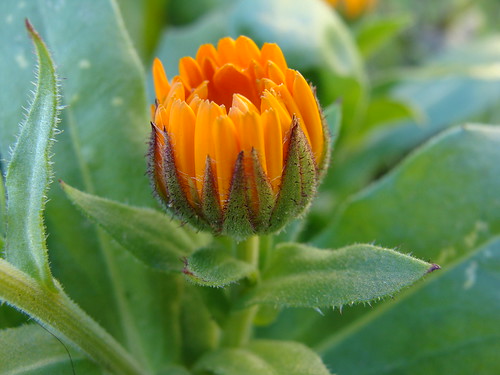
Replanting Marigolds

Pot Marigold by Rachael Hickling

TheGardenLady received this question from Susan:

I have marigolds in a pot which have died.  Can I replant them in an outside garden? If so shall I just take the whole plant out of the pot and dig a hole in an outside garden and put them in it.

Have the marigold flowers died? Or is the entire plant- the flowers, the leaves and stem- dead?

If only the flower has died, the dead flower contains the marigold seeds which, when dry, can be planted in the ground – or planted in pots indoors. Or if the plant is alive and just the flower is dead, you can snip off the flower and plant the entire plant in the soil.

Not knowing where you live, I can not tell you the planting time. Marigold seeds need warm weather and lots of sun to grow. So if you live in a hot climate where there is no winter, you can plant the seeds now. But if you live in a climate where it is now fall, save the seeds to plant in the late spring after the last frost.

HOWEVER, if the entire plant has died, you cannot save it by planting it outdoors. You will have to toss it out.

Oct 3 Open House for Carolyn’s Shade Garden

Carolyns Shade Garden in Bryn Mawr, Pennsylvania
Carolyn's Shade Garden in Bryn Mawr, Pennsylvania

Carolyn is opening her shade garden to the public on Saturday, October 3, from 10 am to 2 pm, rain or shine (checks and cash only).  The following information about the open house is from Carolyn herself.

Please don’t arrive before 10 am. If you can’t come on Saturday, please feel free to schedule an appointment on Friday, October 2, or during the week after the open house.

Parking and Directions: Directions are attached. If you are coming on Saturday, please take a moment to review the parking instructions included with the attached directions. Complaints from neighbors about the parking situation can be avoided by following these simple guidelines.

Now that summer is over, it’s time to think about transforming your fall garden with late-blooming flowers and beautiful ornamental leaves. Fill in spots left by dormant plants, screen tired hosta, add flowers, include hellebores for winter interest—enjoy your garden year round. Fall is the best time to plant because soil temperatures are elevated into December, but new plantings don’t have to contend with hot weather and drought (that’s why bulbs are shipped to our area in October). The plants that I plant in fall are some of the healthiest specimens in my garden. Make your fall garden as beautiful as your spring display!

This open house will offer blooming, specimen size turtlehead, toad-lily, garden phlox, Japanese anemone, hardy begonia (pink and white), and much more. We will also have unusual ferns (including the much-requested holly fern) and plants grown for leaves as well as flowers such as purple, caramel, and lemon coral bells. There will be a good supply of the plant everyone has been asking for—Geranium ‘Rozanne’ (flowers continuously and copiously from May until frost)—and of the 2008 Hosta of the Year ‘Blue Mouse Ears’.

Hellebores: Hellebores have been in demand the last few falls so I have potted up some beautiful, large ‘Blue, White, and Pink Lady’ hellebores for the sale. My own double white plants, ‘Double Integrity’, are huge and ready to sell, and I will also offer the mixed color ‘Double Queen’. I have potted up some very nice specimens of ‘Honeyhill Joy’, a vigorous Christmas rose-Corsican cross with shiny dark green leaves and white, outward-facing flowers. There will also be a good supply of the early blooming (November) and vigorous Christmas rose cultivar ‘Jacob’.

Reusable Plant Crates, Boxes, and Pots: If you took a plastic crate at a previous open house, don’t forget to reuse it on Saturday. Please continue to bring cardboard boxes–we always need more. I am happy to reuse my pots but only if they are black nursery pots with a 100, 200, or 400 on the bottom. Please check the bottom of the pots before bringing them as unusable pots are creating a trash problem.

Questions: My catalogue is an excellent resource for information about the ornamental characteristics and cultural requirements of the plants I offer. I often find incorrect information on the preprinted plastic plant tags and recommend that you go to my catalogue first. Email me to request a copy. Printed copies will be available at the open house. If your question is not covered in the catalogue, please feel free to consult one of my knowledgeable open house “volunteers” in the yellow hats.

Stop by on Saturday and see my gardens. The manicured look of spring has been replaced with the bold and rangy (weedy) look of fall. You can see my collection of toad-lilies in bloom and my wildly self-sowing hardy begonias, as well as unusual ferns, hardy cyclamen, Japanese anemone, phlox in all its many colors, ornamental grasses, and many other fall beauties. I look forward to seeing you then.

Thanks, Carolyn

The Pomegranate Tree – Punica Granatum

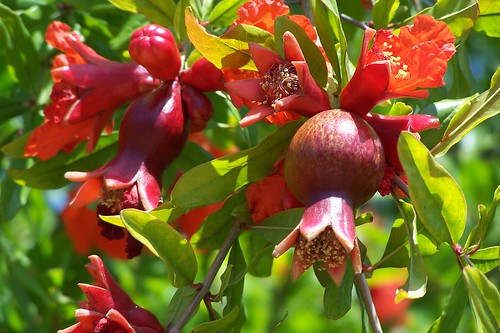
Pomegranate buds and blossoms by laurielabar

One of the prettiest flowering shrub or small tree is the pomegranate tree Punica granatum. Those fortunate enough to live in a climate warm enough- zones 7 to 10- to be able to grow the pomegranate tree outdoors have seen the flowers, which are attractive scarlet, white or variegated flowers that are over an inch across and have 5 to 8 crumpled petals and a red, fleshy, tubular calyx which you see remaining at the top of the fruit. The flowers may be solitary or grouped in twos and threes at the ends of the branches.

Even Aesop, the famous writer, wrote a delightful fable about the beauty of the Pomegranate tree entitled, The Pomegranate, Apple – Tree and Bramble.

Continue reading “The Pomegranate Tree – Punica Granatum”

Ambleside Garden & Nursery

By now readers know that TheGardenLady loves to recommend what she considers outstanding nurseries.

There is an excellent nursery in central NJ called Ambleside Gardens & Nursery,  located in Hillsborough, NJ, that TheGardenLady wants her readers to know about. This is a pretty garden as well as a nursery, a place to visit as a destination.  It’s a place that TheGardenLady takes out of state visitors. It is a garden with lots of gorgeous plants to see that are all for sale and in the center is a charming building with lots of interesting items to buy- items from around the world, not necessarily just for gardens.

It is simply a great nursery to go to if you want to buy excellent plants and/or gifts for yourself or a friend. For example, if you love to give Poinsettias for Christmas, they have some of the most beautiful and unusual colored ones as well as magnificent pots of the red varieties. But if you are looking for something more unusual as a Christmas gift, like Christmas decorations, this is the place to shop. For example, if you like creches for Christmas, they have them from around the world. Even if you don’t celebrate Christmas, these items are works of art. Whoever is their buyer knows how to find some of the most fascinating decorations.

But they are really a nursery. So if you want to see and buy the newest plants on the market, they are probably at Ambleside. If you want to get some idea of how to decorate your garden, Ambleside Gardens is the place to go. If you want help, they have friendly people there to help- including the owner David Scudder and his mother who originally founded the nursery. If you want to be left alone, they are happy that you have come to visit and will leave you alone.

Continue reading “Ambleside Garden & Nursery”

Apples trees don’t like anything to grow near them

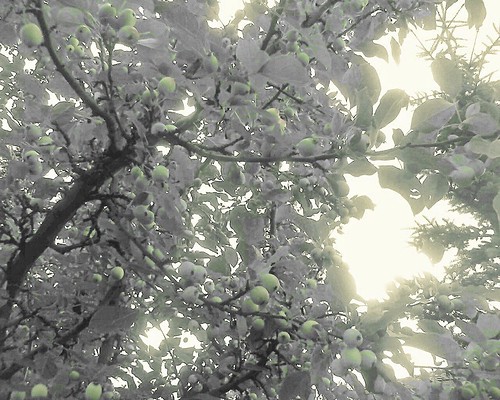
Crab Apple Tree by LostMyHeadache

TheGardenLady received this question from Sandy.

We have a 50 year old crabapple tree in our back yard that is huge. We have tried hostas, astilbes, ferns and such around it and nothing seems to grow more than one year… any suggestions? Apparently the soil is very acidic due to the falling apples.

How very fortunate to have a 50 year old crabapple tree in your back yard! The spring bloom must be magnificent.

Apple blossoms were always my favorite blossoms in the spring. We had a huge old crabapple tree in our side yard that had loads of apples. The apples were too small to really use, so we fed them to the animals or composted them.

The tree was so huge that as a child we would climb its trunk till where it forked. And we always had a swing hanging from one of the biggest branches. I spent many hours on that swing. To make the swing my father used heavy rope over the tree branch and a board that he notched on either side. From the other big limb- this one lower down where the limb joined the trunk, the one where the trunk forked, my father always hung a hammock. One side of the hammock was attached to this lower limb and the other side was attached to a wooden pole that my father hammered into the ground at the perfect distance to enable the hammock to stretch. Again, as children, as many as three of us would lie on the hammock swinging it as high as we could. We tied a thinner rope to a pole at the side of the hammock that was used to pull us back and forth. My father also loved to lie on the hammock to rest after plowing or working in the field.

We never planted anything under the tree, for besides the swing and hammock, we also had chairs to sit on under the shade of the branches- a cool spot to chat with family or friends or a place to shell peas before the era of air conditioning.

Apple trees don’t like having anything grow under them because their roots really don’t want competition for soil nutrients or water. So why fight nature? If you don’t want to put cozy domestic items like chairs or swings under the shade of the tree, why don’t you consider putting some interesting sculpture or yard art under the tree.

Continue reading “Apples trees don’t like anything to grow near them”

Best of Fall Home Show – Sept. 11-13

TheGardenLady loves to talk about shows around the country which gardeners would be interested in attending. Columbus, Ohio will be having the Best of Fall Home Show September 11th 2009 through September 13th. Tickets are $5 per person but senior citizens with valid ID will receive a $1 discount off their ticket on Friday, September 11, 2009, making the tickets $4 instead of $5.

At the show renowned garden author, Tovah Martin will speak.

Renowned garden author Tovah Martin will appear at the show on Friday, Sept. 11, and Saturday, Sept. 12. Martin’s newest book, “Terrariums,” has been the talk of the garden world and has landed her spots on national TV shows and at gardening events. On Friday, Sept. 11, at 3 p.m., Martin will give a presentation on how to use terrariums to bring the outdoors inside in wildly creative ways. In two other sessions she’ll demonstrate how to make a terrarium, with show guests creating their own terrariums to take home and enjoy. The hands-on, make and take workshops take place Friday, Sept. 11, at 5 p.m. and Saturday, Sept. 12, at noon.

For more information please read this release about Tovah Martin.

Remember that the show opens Friday, Sept. 11, and runs through Sunday, Sept. 13, at the Ohio Expo Center. Show hours are Friday Noon – 8 p.m., Saturday 11 a.m. – 7 p.m., and Sunday 11 a.m. – 6 p.m. Tickets are $5 at the door; children 12 under are admitted free. For show information and ongoing updates, log on here.

As a special prize, the first 10 people who contact Jeri at jeri@weirickcommunications.com by 5 p.m. on September 8, 2009 and mention that they read about the show on The Garden Lady.org website will each get a free ticket.

You can download the release on Tovah Martin by clicking here.

More thoughts on getting rid of Yellow Sorrel (Oxalis Corniculata)

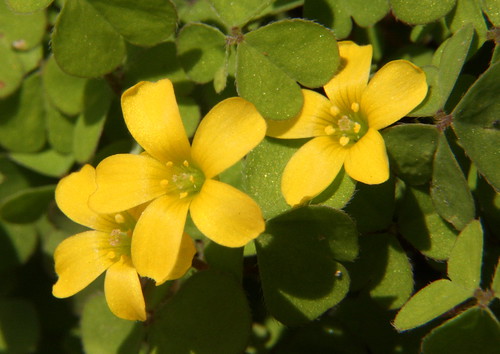
Yellow Sorrel (Oxalis Corniculata) by nickpix2009

TheGardenLady received this comment on her post “Eradicating Oxalis Corniculata“.

This article does not do justice to the invasive and aggressive nature of Oxalis. If you try this what is described above you will FAIL (guaranteed).

If Oxalis has become such an invasive problem in your area of the country, you should call your county extension office to see what they recommend. Unfortunately there are weeds that are becoming extremely, agressively invasive and are becoming more and more difficult to eradicate safely or easily.

TheGardenLady always recommends the least toxic method of removal of both weeds and insect pests. Her parents were organic gardeners before, I think, the word even became popularized. We pulled all the weeds by hand and picked all the bugs off the plants by hand. I cannot recount the number of Colorado potato beetles I picked off the potato plants as a child or how many of the undersides of leaves I checked looking for the orange-yellow eggs to remove. Of course, potatoes were not our cash crop so it was doable.

My husband, who was a trained chemist, believed in organic methods of gardening. He knew how toxic some of those chemicals could be.

Continue reading “More thoughts on getting rid of Yellow Sorrel (Oxalis Corniculata)”

Why Gardeners Garden – Part II

pausing for a moment of reflection by ecstaticist

In Part I of “Why Gardeners Garden” post I gave 5 reasons why I garden.  They were to honor my mother, to help the earth, to bring more bees and pollinating insects, to attract butterflies and moths, and to attract birds. Here are 7 more reasons for why love to garden.  Do you garden for any other reason?  TheGardenLady would love to know.

6. Like the people of my parents’ generation, I love sharing my plants with others. One buys a $5 plant one summer and 3 summers later you have to dig it up because it has outgrown its site. I hate throwing plants out so I love to be able to give plants to friends and neighbors. And family and friends have often given me plants from their yards. Some plants come from the family farm- lilacs, rose of sharon, wisteria, irises. Many of my best plants came from friends or family- my crepe myrtle tree, my lilacs, hostas, helleborus, etc. I often donate plants to local fund raisers. Or I have bought plants at garden fund raisers that were donated by other gardeners.

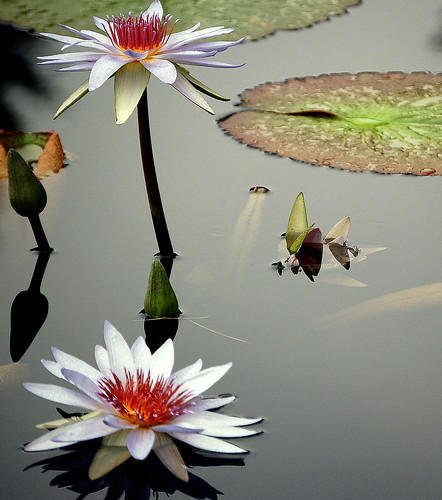
Water Lillies by digitalART2

7. I am so appreciative of those wealthy philanthropists like the DuPonts or the Rockefellars who had the foresight to back the creation of many of the gardens that have been left to mankind to enjoy: gardens like Longwood Gardens in Pennsylvania or Asticou Gardens in Maine. I feel that if I were wealthy that I would want to do the same and leave beautiful gardens for posterity to enjoy. Well, that is a pipe dream because I will never be wealthy. However, I do have my flowering gardens near the street in front of my house for everyone to enjoy. And people do enjoy my flowers. Hardly a day passes that a person doesn’t stop to tell me how beautiful the garden is, or how much they enjoy walking by my garden to see what is in bloom. One family told me that they make a point of walking past my garden every day. I have looked out to see people photographing my plants. People have stopped their cars and gotten out to tell me how much they enjoy my garden. I find this amazing and it is such an added bonus.

8. Because of the flower garden I have made many new friends and met more of my neighbors.

9. I enjoy teaching people about plants when asked. People have asked many questions, like how I prevent deer or rabbits from eating the flowers, etc. I share my information with them much as I share my knowledge with readers of TheGardenLady.org.

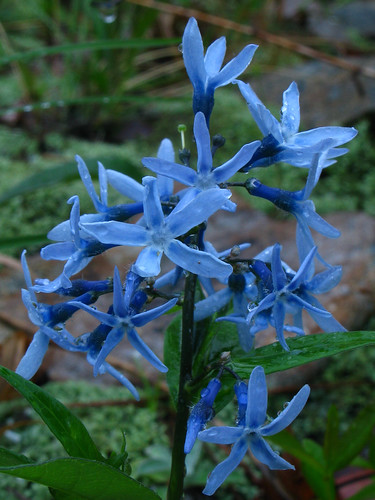
amsonia tabernaemontana, little river canyon national preserve, cherokee county, alabama 2 by Alan Cressler

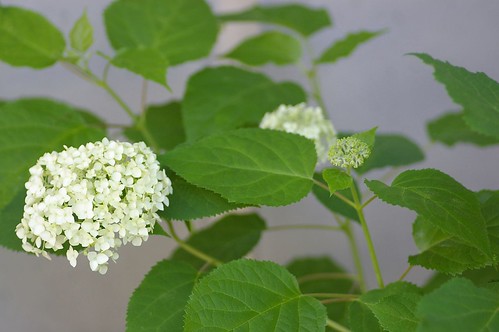
10. People stop to ask me names of plants that are in my garden that they have fallen in love with or asked where I bought the plants. One lady, a Master Gardener, saw my Amsonia tabernaemontana and didn’t know what it was. She wanted one for her garden. A professional landscaper stopped to ask where I bought my Hydrangea Annabelle and then said he would rush over to see if he could buy some at that nursery. I see many more front yard gardens popping up around town and like to think that my garden has in some way inspired these gardens.

Hydrangea Annabelle by bluehazyjunem

11. I also feel that by having a garden I am helping the nursery business. No one that I know gets wealthy by being in the plant business- it is generally a labor of love. So by buying a few plants to add to my garden each year, I feel that I help keep nursery people in business.

12. And gardening is healthy for me. The more one reads about things one should do for oneself, gardening is one of the healthy exercises and being in a garden is one of the things that brings emotional health. So my gardens are good for me. And I can’t stop telling everyone how much I love having the flowers and the color in my garden with all the good that it brings.

Why Gardeners Garden – Part I

slides-misc-012

The Original Garden Lady

Why do you, my GardenLady readers, garden? And what are some of your favorite plants in your garden? TheGardenLady column’s readers would love to know and TheGardenLady would like to know about your garden and why and what you dream about and want in your garden.

Since I sometimes think I am getting a bit obsessive as I plant my plants and want to plant more and more different plants and constantly dream about more plants to add to my garden while reading every plant catalog or visiting every local nursery and public and private garden, I think about what my motivation is.

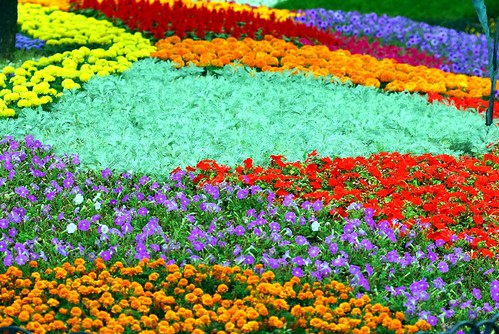
Everland Four seasons garden by floridapfe

I love almost all plants. I especially love blooming plants – whether trees, shrubs, bulbs, tubers, perennials, biannuals or annuals. I love color and I love the show of color to go on as long as it can during the year. If Helleborus or snowdrops will bloom in the snow, I want those blooms. And if chrysanthemums will be in bloom past Thanksgiving, I want those blooms. And because I don’t want a day to pass without flowers in bloom, I must plant flowering plants for bloom that will continue for most of the year. I never want to stop having blooms in my yard. And if I can’t have plants in flower, I want to have plants with vivid berries or plants with bright leaves or leaves that change color in the fall. So I dream of adding more plants that will give me all the color that I crave. Green is calming, meditative, cooling and lovely; but I need my fix of color- continuous color.

Michael Pollan, an author of books about plants – read “Botany of Desire” by him – says that we don’t manipulate plants, we are exploited by plants so that we fall in love with them, which makes us want to plant them and tend to them so that they can continue to survive on this planet. And this GardenLady is surely under the spell of plants. (PS When the flowers come with fragrances, that is an added bonus.)

So why does TheGardenLady plant flowers?

As a child who lived on what is referred to as a truck farm, we mainly grew vegetables. We were very poor, just eking out a living on the farm. The one indulgence my mother had was that she always planted flowers. Though she worked what seemed to be day and night in the vegetable fields, caring for the family without having modern appliances such as the washing machine or dryer, cooking and canning for the winter, and caring for a small dairy as well as other animals- chickens, 2 horses, goats, dogs and cats- she always found time for her flowers.

Continue reading “Why Gardeners Garden – Part I”