Marigold Mystery

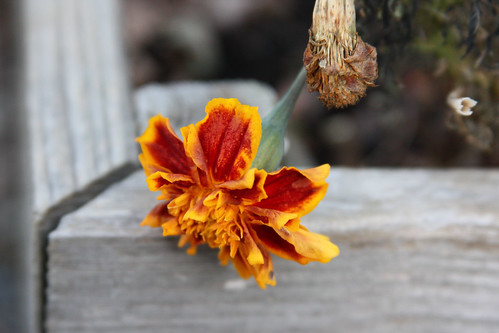
Dying Marigold by interchangeableparts

TheGardenLady received this question about marigolds.

My marigolds are planted around the edge of the garden and watered 2x a week with the rest of the garden.  After a month they just started dying with no visible infestation.  Do you have any idea why?  Last year I planted marigolds in the same vicinity under a citrus tree and they survived just fine.  The plants were bought at Lowe’s garden center both times.

Marigolds are one of the easiest plants to raise. But like any living thing, they can have problems.  See here.  You write that you bought plants at the same local store that you bought them last year. Last year they might have been healthy but this year you might have bought home unhealthy plants- for example, the pots may not have been watered property and you might not have noticed that they looked sickly.

We are lucky to have inexpensive garden centers to buy plants, but many times these stores cannot find knowledgeable people to work in the nursery, people who know how to properly maintain the plants they sell. In the tiny pots the plants come in without proper watering, the roots might have dried out. Or the plants might have had a fungal or bacterial problem in the soil.
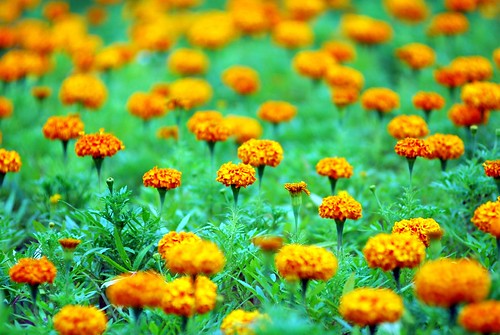
Marigold by floridapfe

You said that you planted the marigolds in the same vicinity as you planted this year. There can be differences in areas that are close by. For example, in my area in my soil we have lots of shale. A part of the ground close by can have larger rocks down below that doesn’t allow for good drainage in one spot but just a few feet away it is fine.

You said that you watered the plants 2 times a week. Not seeing your marigolds, this seems to TheGardenLady to be what caused the death of your marigolds this year. Marigolds may like a little water when the plants are young-if you raised them from seed. But you bought the plants. After the first watering when you planted them, they really don’t want or need to have you water them unless there is a 10 day or 2 week drought. Perhaps the plants in the border that you put the marigolds in need watering twice a week in the area you live, but this was probably too much water for marigolds. Marigolds like to be in dry soil. They don’t like to sit in wet soil and they don’t like overhead watering. When you water them, they prefer it if you use a soaker hose.   See here.

Dig up the dead plants and discard. Replace them with plants that need as much water as the other plants in your border. How will you know which plants are best? Go to a smaller, local nursery where the people who work there are plant lovers themselves. There are many of these small nurseries in every area. Ask questions when you buy the plants. Tell them what other plants are planted near by to see if the new plants you are buying are compatable.
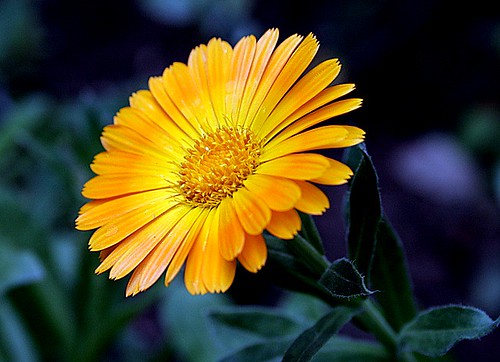
calendula-şamdan çiçeği by NURAY YUZBASI

TheGardenLady has written other posts about problems with marigolds and caring for marigolds.  Check them out here and here and here and here.   Hope you solve your marigold mystery.
Vegetable Gardening for Newbies

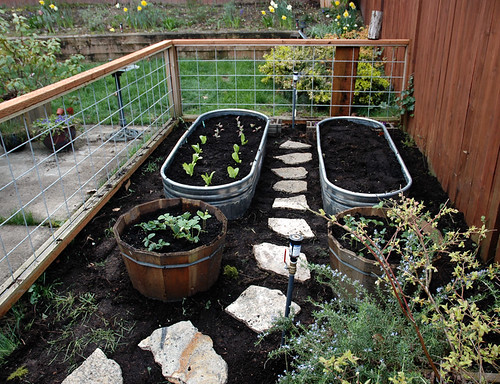
New vegetable garden by Sundry

TheGardenLady received this question from Tricia.

I am very new to gardening, but would love to grow my own veggies. I have a starter set with lettuce, tomatoes, and peppers. I have a large space in my backyard, but it is full of wood chips. Can I plant here? If so what is my next step. Do I need a fence so animals do not get to it?

To have success with vegetable gardening, because vegetables love good friable soil with excellent drainage, you will have to do a lot to prepare your large space. Space alone is not enough to have a vegetable garden. The space for vegetable gardening must be in the sun. Vegetables, especially tomatoes, need all the sun they can get.

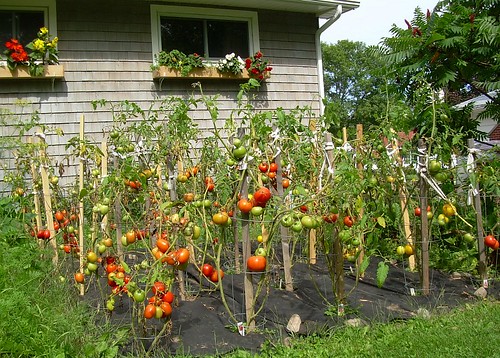
My Tomato Patch by freddyfoyle

Without the proper preparation, you are setting yourself up for frustration and perhaps failure. So this year, you might consider planting vegetables in pots while you get the space in your backyard ready for planting. Buy good potting soil that says it is for vegetables. Some of these soils have fertilizers added to help the plants. Buy or get large pots and plant your vegetables in them this year. You can use either clay pots or plastic pots so long as there is a drainage hole in the bottom of the pot. Then you can start doing the hard work for next year’s vegetable garden in your allotted space.

Continue reading “Vegetable Gardening for Newbies”

Creating a Meditation Garden – Part III – Adding Color

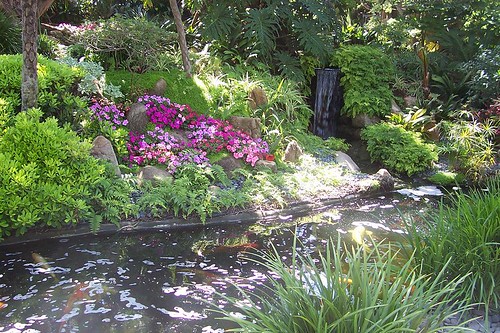
MeditationGardensPond by Complete Wermos Guide
MeditationGardensPond by Complete Wermo's Guide

This is the third post in a three part series on creating a meditation garden.  You can see the first post about creating a meditation garden here, where I discussed some questions you need to answer first before you start building a meditation garden.  In the second post on meditation gardens, I talked about creating a green meditation garden by using hosta lily plants.   In this post, I will discuss some other meditation garden ideas.

To add to the green meditation garden, consider interspersing the garden with ferns. There are numerous ferns for sites like you describe. Fern leaves flow so nicely in the breeze and some stay green in the winter when the hostas die back. Taller varieties would look lovely. A fern and hosta website is here.

If a monochromatic garden with just green does not appeal, consider planting a Japanese maple. But be sure to get the ones that do not grow too tall. Japanese maples give 3 seasons of color. Some turn a different shade in the fall.   See here.

Another tree that would look lovely if you have the space is the dogwood. But I would not consider the native dogwood, as much as TheGardenLady loves it, because it might not be hardy enough. I suggest the Korean dogwood, Cornus kousa.  See here.  I have only seen a white flower on it. But it has one of the most interesting fruits which makes it of interest for two seasons.

Continue reading “Creating a Meditation Garden – Part III – Adding Color”

Creating a Meditation Garden – Part II – Using Hostas

Hosta and Tulip by njk1951

TheGardenLady received a question from Tonia about what sorts of flowers and plants should be used in creating a meditation garden.  In the last post on meditation gardens, TheGardenLady explained that in order to answer this question one needs to answer some other preliminary questions first.  In this post, TheGardenLady will discuss the idea of using hostas to create a meditation garden.

To me, there is nothing more tranquil than shades of green. What you also want are different textures and different heights. Thus my primary plant suggestion for your meditation garden is hosta lily plants. See here.

Hostas love shade and partial sun. Some newer varieties are tolerant of more sun. Hostas come in hundreds of varieties and each year new ones are introduced. See here. There are huge leafed hostas, miniature hostas, sword leaf shaped hostas and hostas of all shapes in between. They come in so many different shades of green that if you just planted hostas, you would have leaves of many textures in the most incredible palette of greens, inluding dark green, bluegreen, yellows, chartruse, or variagated cream or white with greens. See here.

Though hostas are grown for the interesting leaves, because hostas are in the lily family, there is the bonus that many do have flowers in whites and lavenders. Some flowers are insignificant but others grow quite large and some are fragrant.  See here.  My hosta flowers attract black swallowtail butterflies.

If you are planting hostas in areas that are not overly wet and you will water the plants, you will be delighted with some of the most undemanding plants that one can get. In these locations you can plant your hostas fairly close together. However, if your area is very wet, then you might have a slug or snail problem. If the area is wet, you won’t want the plants too close together so you can get rid of slugs. But these slugs CAN be dealt with, (ping back to slugs in Japan) so don’t give up on the idea of the hosta. But, if you have a deer, a major problem is that hostas are like candy to deer.

Consider looking at the American Hosta Society page. There you will see a photo of a hosta garden.

Hostas can be inexpensive. (ping back to Russels) And you can put out a call to gardeners you know to see if they are dividing their hostas- people have to divide hostas every few years, just as one does most perennial plants. Ask them for some of their divisions. You may get the plants free. TheGardenLady got most of her hostas that way. Gardeners are very generous about sharing.

Mini Sansevieria – aka – Dwarf Mother-In-Law Plant

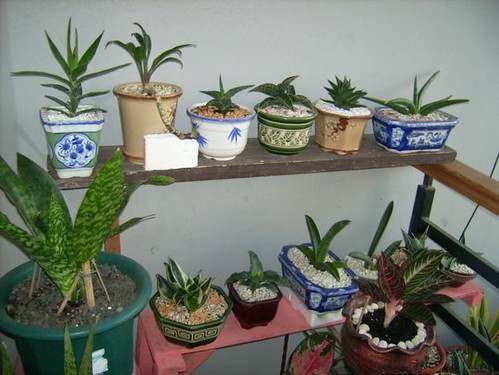
Sansevieria mini Collection by Arzamitra

TheGardenLady received this question from Segunda.

I want to know if there is a mother-in-law (mini or bond) plant? If so, please let me know were I can get it?

There are numerous different Sansevieria plants aka Snake plant or Mother-in-Law Tongue and some of them are dwarf.  A good website that talks about Sansevieria trifasciata is this.   Also check out S.trifasciata ‘hahnii jade dwarf’ or S. trifasciata ‘hahnii swirls’ or S.trifasciata ‘jade dwarf Marginated’ or sansevieria ‘dwarf laurentii’. Look at this more complete list of Sanseviereas where you might find other Sansevierias that meet your requirements of a mini plant.

eBay advertises that they sell dwarf sansevieria as does this site.

Creating a Meditation Garden – Part I – What Questions to Ask

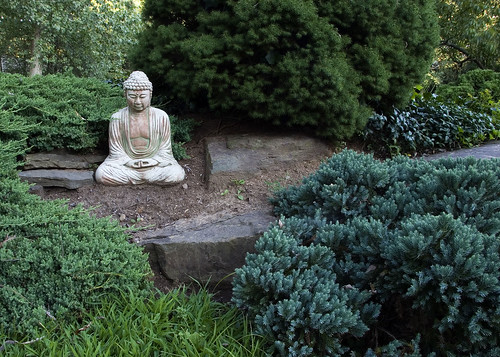
Meditation Garden by John Suler

TheGardenLady received this question from Tonia:

I was wondering if you could give me some names of some flowers and plants that would do well in shade to partial sun. We are renovating a meditation garden at the assisted living center where I work and need to put in some things that will survive in such an area. Also the names of some good berry-bearing plants or shrubs that the turtles in the garden could eat from.

How lovely to renovate and by so doing create a new meditation garden in an assisted living center. What a wonderful assignment. My favorite meditation garden was in Encinitas, California.

As requested, I will be giving you some suggestions for plants that are easy care and that I think will look lovely in a mediation garden.

But to create any kind of garden, a little more information about the site is always helpful. More information is needed both for yourself as well as the person who is being asked for advice.

Since this is a garden that has “shade to partial sun,” are trees providing the shade? How large are the trees? You want to know what kind of root mass you are working with as well as how much shade is given off. Are they deciduous or evergreen trees that are giving the partial shade? Certain trees give more shade than others. For example, if there is a Norway Maple, chop it down because the leaves will block anything from growing under them as the tree ages and its root mass will not allow much to grow. Or does a building provide the shade? Buildings have different problems for plants. Is it morning sun or afternoon sun? Most flowering plants want 5 to 6 hours of sun. Green plants don’t need much sun. The morning sun is cooler than the afternoon sun. Certain plants prefer cooler or hotter locations. Is it dry in the shade or is it moist? Different types of plants have differing moisture requirements. (See here) In fact, landscapers even want to know where the N-S-E-W designations are. Different plants prefer different positions. And of course, one needs the planting zone to get plant recommendations.

Then you should ask yourself what type of plants do you prefer? Do you like native plants? Do you prefer annuals or perennials or do you like a mixture? Do you prefer easy care perennials with shorter bloom periods but with less maintenance or annuals that bloom all summer? The more information one has, the better one can advise.

Photos of meditation gardens can be found here.

In the second part of the series on meditation gardens, published in two days, TheGardenLady will discuss the idea of using hostas when creating a meditation garden.

Snail and Slug Problems

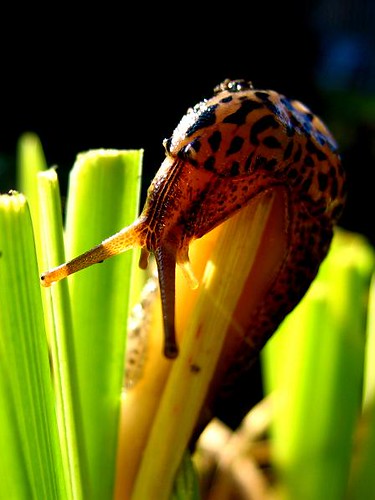
Slug: Translucence by LongInt57

TheGardenLady received this question from Jeanne.

I am living in Japan and have several plants on my porch that have what looks like snail or slug meanderings on the leaves. The plants are dying. I do not know how to treat them. I have only seen ants in the vicinity, no other bugs.  Any ideas?

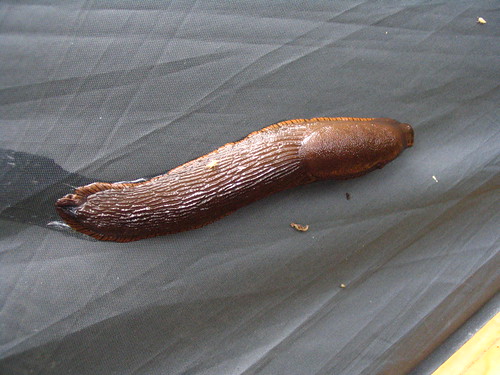
Slug by Sally XIII
Slug by Sally XIII

Snails and slugs are found around the world. I would imagine that in Japan, especially parts of Japan that are high in humidity, snails and slugs would be a fairly common problem.

Japanese Garden slug by Shootages

To tell if you have snail and slug problems, that slime on the leaves of plants or on the soil or in areas where the slugs would be crawling- for example, on your porch is the evidence.

The leaves on your plants could have irregular holes in them. Slugs can strip a young plant bare or even eat it down to the ground.

If you do have slugs you will see them crawling on your plant leaves in the evening after dark. Go out with a flashlight after 10pm or any time before dawn. This is the time when slugs feed. Using a flashlight look under the leaves of the plants to see if you can find the slugs. It is recommended that one wears gloves to do this. Pick the slugs off by hand and drop them into a jar with (stale) beer where they will drown. Some sources says that chopsticks work well for picking off the slugs.

A combination of 2/3 cup of water and 1/3 cup of household ammonia is another safe and natural way to get rid of garden slugs. Ammonia is safe to spray on the soil, but may not be safe to use on all garden plants. To be certain it will not kill your plants, spray a small inconspicuous area, and wait three days to see if the plant was adversely affected. If the plant was not affected, give that particular type of plant a complete misting of ammonia and water. It is the easiest way to reach slugs beneath leaves and in the nooks and crannies of plants.

Clean up debris and weeds around any plants because that is where the slugs hide in the fall. Cut off any branches of plants that touch the floor or ground so that slugs can’t crawl up the plant easily. In the spring cultivate the soil around the plant if you can to destroy the eggs. Consider placing copper flashing, copper tape, or copper mesh around the perimeter of the individual plants.

There are many excellent sites for getting rid of slugs.   See here and here.
There are many slug baits sold. Iron phosphate is one effective snail/slug control and the snail baits containing it does not contain ingredients that could harm kids, pets, wildlife, or beneficial insects.  TheGardenLady would imagine that you could find products for getting rid of snails in the Japanese nursery or hardware stores near you.  See here.

Cricket Hill Garden and Peony Heaven an Outstanding Peony Nursery

Spring River Flowers Moon Night

The river is smooth and calm this evening.
The peony flowers bloom.
The moon floats on the current.
The tide carries the stars.

by Ch’ien Ch’i (date unknown) Sent to me by David Furman

TheGardenLady’s herbaceous peonies (these are the typical peonies most people grow) are just opening but her tree peonies which are woody or shrublike, that are still relatively young, have no buds nor flowers. I learned that tree peonies can take 3 or more years to start flowering- some as long as 8 years to start flowering. But then the plant can live for at least 100 years-tree peonies have been documented to have lived as long as 400 years.

Peonies -Paeonia are one of the oldest cultivated flowers in the world, being mentioned in early Chinese writings 2800 years ago. They are China’s National Flower. Then they were taken to Japan where they started to be raised about 1000 years ago. And in the 1700’s English botanical explorers in China first saw the “tree” peonies and brought them to England.

TheGardenLady loves to tell her readers of excellent nurseries. What designates an excellent nursery for TheGardenLady? The nursery owners have to be PASSIONATE about their flowers. They have to be knowledgeable about their plants and willing to share that knowledge and help people who are interested in the flowers the nursery sells. And the nursery has to sell an extensive number of quality plants. Having a show garden is an added bonus. To this end, TheGardenLady wants to tell her readers about Cricket Hill Garden in Thomaston, Ct.

Continue reading “Cricket Hill Garden and Peony Heaven an Outstanding Peony Nursery”

Peppermint: The Invasive Herb

Peppermint by Jim-AR

TheGardenLady received this question from Dan.

I have question about dead transplant. While transplanting some baby peppermint plants one of them got their tops broken off. I was wondering if the plant is technically dead or will it sprout new leaves around the base of the stem/root? The roots and stem is still strong 1 week later, but there are not leaves still.

Mints can be one of the most invasive herbs. Not only do they seem to multiply rapidly, they seem to send runners far from where they were planted. Peppermints are no exception. So even if you broke the tops while transplanting, if the roots are still healthy when you transplant it, the peppermint will send forth new tops.

One of the ways to propagate peppermint is from root cuttings. Spring is an especially good time for transplanting the peppermint when leaves are just emerging. New leaves will come out where the tops broke, be patient.  If anything, you will probably be sorry you didn’t kill it.

A good site on peppermint is this:

Plants that Love Both Acid and Shade

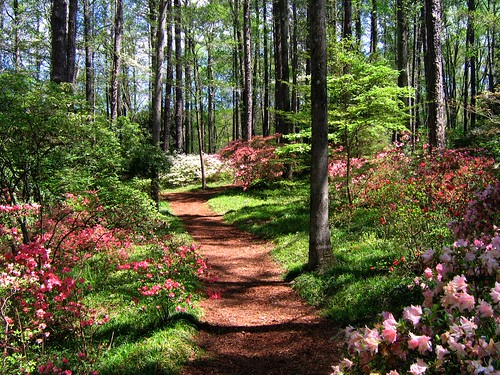
Happy Easter from Georgias Callaway Gardens! by UGArdener
Happy Easter from Georgia's Callaway Gardens! by UGArdener

TheGardenLady received this question from Jennifer.

I have a shady area under my pine trees where nothing grows except weeds. I want to plant some blueberries and other acid loving plants there. Do you have some suggestions on plants that would love very acidic soil and full shade?

When one has a very shady area under a tree, one can always do what is referred to as limbing-up a tree, which is cutting off lower branches to allow more light or space under the tree to have more room for plantings.

Blueberries like most vegetables, herbs and fruit want lots of sun. So though you can use the pine needles to mulch the blueberries, it would really not be advisable to plant blueberries under the pine trees. Blueberries want to be planted in full sun.

Azaleas or rhododendrons would look beautiful under your pine trees. Consider native azaleas to compliment the area and for uniqueness. There are many plants even some with flowers that will also grow happily in this dry shade area with acidic soil .

Enrich the soil by adding humus and mulch and work it into the soil under the tree without hurting the tree roots. Even if you love the shape of your evergreens and are reluctant to cut off branches you can still have plants that will be happy under the pine trees.

Some good shade plants that will work are hostas, foam flowers –Tiarella cordifolia, sweet woodruff – Galium odoratum, lily of the valley, woodland flowers like Celandine Poppy or Wood Poppy-Stylophorum diphyllum, as well as many of the ferns like:

Autumn Fern (Dryopteris erythrosora) – Hardy in USDA zones 5-9. Easy to establish. Rabbit and deer resistant;

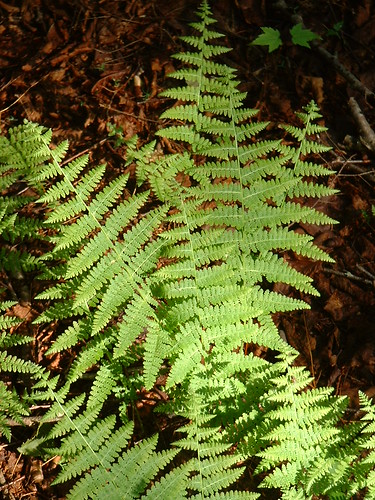
Lady Fern, Athyrium filix-femina. by Jeff Wardeska

Lady Fern (Athyrium filix-femina) Hardy in zones 3-8. Rabbit resistant;

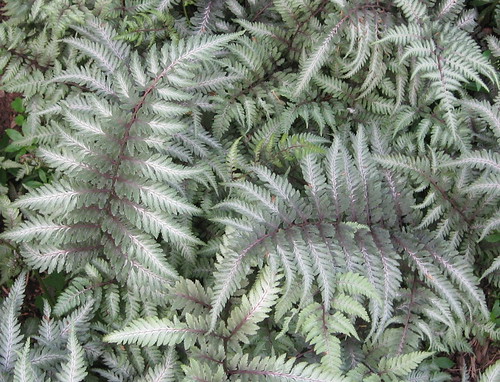
JAPANESE PAINTED FERN by Daisy.Sue

Japanese painted fern (Athyrium niponicum ‘Pictum’) – Hardy in zones 3 to 8;

Christmas Fern by ellyssian

Christmas Fern (Polystichum acrostichoides) – Hardy in zones 3-8. Very easy to grow.  Can take very dry to moist soils.