Underwater Flower Arrangements

Underwater Flowers by withflourish (Flickr)

TheGardenLady received this question from Sally.

How would you condition daffodils that will be used in an underwater arrangement for 24 hrs? Once underwater, is there anything that can be added to stabilize the flowers?

TheGardenLady has never tried to make underwater arrangements and
wonder if the writer of this question is planning an underwater wedding with daffodils :-).  Sounds interesting.

I do hope the person asking this question is willing to do some experimentation before she attempts the underwater bouquet. The one thought TheGardenLady has, but has never tried, is to put the daffodils in a vase with a little glycerin with water in the vase, let it sit for a while and then put the daffodils underwater. A second experiment is to put some glycerin in the water you will be putting the daffodils under. Other stabilizing substances to try can be found on this website to see what works best for daffodils.

Please let TheGardenLady and her readers know your results. A photo
would be appreciated.

Some other websites that give directions for making underwater floral
arrangements are here, here and here.

2009 Longwood Gardens Orchid Show

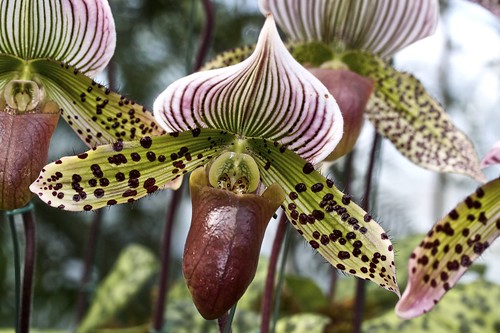
Longwood Gardens Orchids by duck_6872

The biggest orchid show of the season is coming up on March 27-29, at Longwood Gardens. It is a wonderful show. If you haven’t seen this orchid show before, you’re in for a real treat. For more information, go to the sponsoring orchid society’s website for a listing of lectures, exhibitors, etc. For the price of admission to Longwood Gardens, you get to see it all!

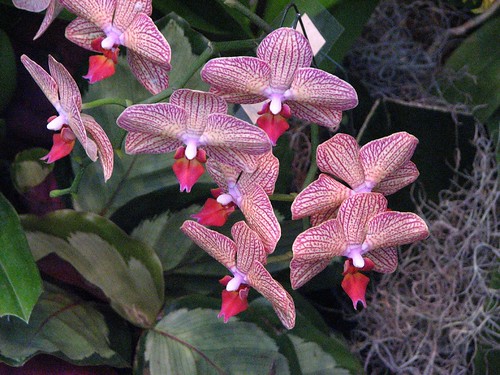
orchids at longwood garden orchid show by paladinsf

Susan Gange, whose Stony Brook Orchid Nursery TheGardenLady wrote about, will be exhibiting at this Longwood Gardens Orchid Extravaganza again this year. If you go to the show, please stop by and say hello to Susan Gange and tell her that you read about the show and her nursery in TheGardenLady.org.

Home Remedies for the Garden

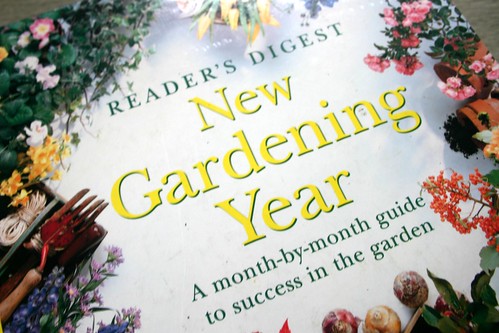
G 365/2 Reading Matter by LittleBlackDuck

The other day, TheGardenLady received in her mail a request to buy a book that has home remedies to use in the garden. These “recipes” can all be found online, so TheGardenLady wouldn’t waste her money buying the book. (Or it can be borrowed from the public library.) Certain reference books are good to own; but TheGardenLady does not recommend this one.

Still many of these recommendations can be effective; though some may not be so effective- that is why chemists are always trying to create improved methods. I know some horticulturists who sneer at this author’s work and some of the home remedies. However, many seem fun to read and even to try. TheGardenLady hasn’t tried them all. Though most of these remedies seem safe or benign, some might not be. Be wary. Remember even home remedies can be harmful. For example TheGardenLady would never recommend using salt to get rid of weeds.  Salt can be very damaging to plants.

TheGardenLady is offering this column as a fun read. If these items work for you, they can be very economical. And who doesn’t want to save money? For example, read about the value of coffee grinds for your garden. You can ask for the used coffee grounds that are given away free at Starbucks.

Vinegar seems to be a popular cheap item that can be used in the
garden.

You can find, on line, things to do, mostly on garden tools, with WD-40. Most of the items in this post are from the Readers’ Digest.  The Readers’ Digest has 100’s of uses for common items that are in your home. From the Readers’ Digest comes:

Give your plants a mineral bath
Don’t throw out that leftover club soda. Use it to water your indoor and outdoor plants. The minerals in the soda water help green plants grow. For maximum benefit, try to water your plants with club soda about once a week.

Continue reading “Home Remedies for the Garden”

Garden Peas and Sweet Peas

The Ides of March, March 15th, and St. Patrick’s Day are old time farmers method of knowing when to plant peas and sweet peas, the flower- at least those farmers on the North, Northeast and Mid Atlantic sections of the US. Of course, if the soil is workable, peas and sweet peas could be planted
even earlier. TheGardenLady has heard of New England farmers planting
the seeds even when the snow is still on the ground. Peas are frost hardy and love cool weather. They can grow wherever there is a long enough cool season- about 55 to 80 days. Peas need cool temperature to grow and produce. Peas like full sun in cooler temperatures or can grow in partial shade, but the flavor won’t be as good in the shade.

If you can raise your own peas, you will be rewarded with one of the most delicious vegetable. And the more one harvests, the more peas are produced on the plant. Peas taste best that are fresh out of the garden; the longer they are off the vine, the more they lose their sweetness. They are so delicious, lots of people like to eat them raw when they are picking them in the garden. And cooking fresh peas takes only a very brief time.

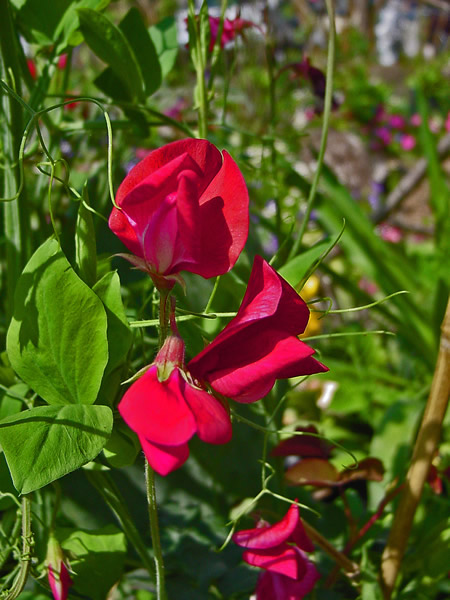
Sweet peas are delightfully charming, mostly fragrant flowers that can be planted at the same time as peas. They will bloom in the late spring and if the area is cool enough, can continue blooming into the fall. They also prefer full sun but will tolerate partial shade.

Sweet peas flowers should be pinched out when they are dying on the plant to encourage more flowering. Sweet peas flowers and seeds are NOT edible. They are poisonous.

Winter Care for Encore Azaleas

TheGardenLady received a comment on her post Summer Care for Encore Azaleas from Mr. Gulius.

What should I do to my Encore Azaleas during winter month?

TheGardenLady sent this question o the people at Encore Azalea, and this is their answer:

As your Encores mature and get more established in their environment, they will be better able to withstand cold temperatures. Young plants are more susceptible to sudden, drastic drops in temperatures, and sustained cold weather (25 degrees or below).

Cold Protection
Mulch well (about 4 inches deep) in the fall. Reduce water for a
month or so before the first frost. Then, after a couple of hard
freezes, water well to provide moisture. This will help the plants to go dormant, or “harden off”.

As you would with any outdoor ornamental plants, Encore Azaleas may need some extra protection during sudden freezes and extremely cold weather. Sudden, drastic drops in temperature are more damaging than a gradual decline, especially to newly planted shrubs.

Burlap, old blankets, or sheets (any cloth material) can be used to cover upper plants. It is recommended that you drive stakes in the ground around your Encore and drape the cloth cover over stakes. Foliage in contact with the cover can be injured, so try to minimize cover contact with plant.

Project BudBurst: Volunteering for Climate Change

TheGardenLady was once asked how climate changes have affected gardeners.  See here.  TheGardenLady responded that we have to wait to see.

Well, now TheGardenLady is asking her readers if they would be willing to volunteer to help find out what the effects of climate change are. Please read the column to see if you can help. If Foreign readers know where volunteers can help in their countries, please let TheGardenLady Blog know.

Project BudBurst Needs YOU

Taking the Pulse of our Planet: Volunteers Needed to Track Seasonal Signs of Climate change

Volunteers across the nation are being recruited to get outdoors and help track the effects of climate on seasonal changes in plant and animal behavior.

Continue reading “Project BudBurst: Volunteering for Climate Change”

WARNING: Cocoa Mulch is Bad for Pets

TheGardenLady knows that eager gardeners want to start putting mulch down in their gardens. This GardenLady uses aged horse manure that a local horse farmer delivers.

Today I received this frightening warning about a relatively new mulch called Cocoa Mulch that is being sold in some major stores. I am passing on the warning to my readers exactly as I received it. Please read the column and let family and friends know about the problem with using this mulch. Even if you don’t have your own pets, neighbors may have dogs and cats that walk where you have mulch. No one would want any pet to suffer because of this product.

Over the weekend the doting owner of two young lab mixes purchased Cocoa Mulch from Target to use in their garden. They loved the way it smelled and it was advertised to keep cats away from their garden. Their dog Calypso decided that the mulch smelled good enough to eat and devoured a large helping. She vomited a few times which was typical when she eats something new but wasn’t acting lethargic in any way. The next day, Mom woke up and took Calypso out for her morning walk . Half way through the walk, she had a seizure and died instantly.

Although the mulch had NO warnings printed on the label, upon further investigation on the company’s website, this product is HIGHLY toxic to dogs and cats.

Cocoa Mulch is manufactured by Hershey’s, and they claim that ‘It is true that studies have shown that 50% of the dogs that eat Cocoa Mulch can suffer physical harm to a variety of degrees (depending on each individual dog). However, 98% of all dogs won’t eat it.’

This Snopes site gives the following information: Cocoa Mulch, which is sold by Home Depot, Foreman’s Garden Supply and other Garden supply stores, contains a lethal ingredient called ‘Theobromine’. It is lethal to dogs and cats. It smells like chocolate and it really attracts dogs. They will ingest this stuff and die. Several deaths already occurred in the last 2-3 weeks.  Theobromine is in all chocolate, especially dark or baker’s chocolate which is toxic to dogs. Cocoa bean shells contain potentially toxic quantities of theobromine, a xanthine compound similar in effects to caffeine and theophylline. A dog that ingested a lethal quantity of garden mulch made from cacao bean shells developed severe convulsions and died 17 hours later. Analysis of the stomach contents and the ingested cacao bean shells revealed the presence of lethal amounts of theobromine.

Galanthus – Snowdrops

Galanthus ‘S.Arnott’

Still looking forward to spring? Besides daffodils and crocuses there is another bulb that blooms early and is a harbinger of spring. It is a bulb native to Europe and Turkey that has a common name of Fair Maid of February because that is when many of the species bloom. In the US they are more commonly known as snowdrops.

Snowdrops are in the Galanthus family, a small family of about 20 species. Galanthus nivalis is the best-known and most widespread representative of this genus. And Galanthus nivalis S. Arnott seems to be the finest, sweetly honey scented, long lasting variety. Galanthus may be celebrated as a sign of spring, but an area blanketed with the flowers can look like there is still a field of snow in places where they are native or have been naturalised.

Galanthus ‘S.Arnott’ enjoying the sunshine

Because this flower is so beloved, in 2007 Scotland held its first Snowdrop Festival. In the UK and Ireland there are many gardens that open early just to showcase their snowdrops. Gardens such as: Brandy Mount, New Alresford, Hampshire, England which has the (NCCPG) National Plant Collection of Snowdrops or Primrose Hill, Lucan, County Dublin, Ireland or Cambo Estate, Fife, and Finlaystone, Renfrewshire both in Scotland.  In the US, this GardenLady’s favorite garden to see Galanthus in bloom with other early spring bulbs, is Winterthur in Deleware.

Galanthus grow in zones 3 through 9 though they do better in the cooler, Northern climates. Plant bulbs in early fall 2 to 4 inches apart and covered with 2 to 3inches of soil. All snowdrops prefer cool, moist conditions in the spring and a surprisingly dry summer dormancy in the shade which makes them good to plant under deciduous trees. Do NOT fertilize. The bulbs can be left undisturbed for years. But when you want to divide them, dig and divide soon after flowering and replant IMMEDIATELY so roots do not dry out. If you want you can plant seedlings which take 3 to 4 years to flower.

A great place to buy Galanthus bulbs is from Brent and Becky’s bulbs. The reason that this is a great place is that Brent and Becky’s dig and ship bulbs earlier than most places so that you know the bulbs are freshly dug allowing you to plant the bulbs really early in the fall to give them a good head start.

If you want to order Galanthus plants, TheGardenLady was told that they don’t ship well and there are only 2 places in the US to buy Galanthus in the plant stage. One place to buy the plants is from Carolyn’s Shade Garden at 325 S.  Roberts Rd in Bryn Mawr, PA 19010. But you have to go to her garden to pick up the plants. (TheGardenLady will soon be writing about Carolyn and her wonderful plants.)

Seeds seem to be trickier to buy. Most seed distributors seem to be in the UK.

Hellebores

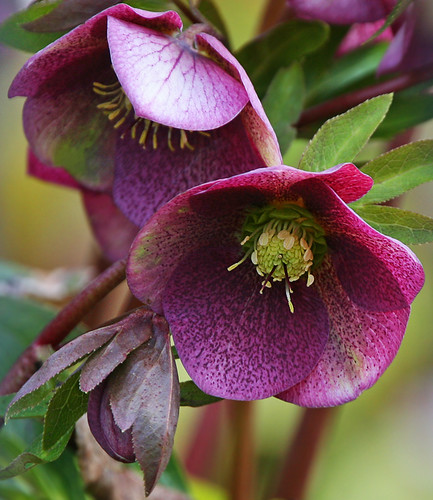
Lenten Rose by janruss

If the reader is like TheGardenLady, he or she is eager to see outdoor flowers in bloom at this time of the year because flowers really are the signal that it is the end of winter. Those lucky enough to have Hellebores might already be smiling if they have flowers on their plants. Those who don’t have these early blooming plants might want to consider planting Hellebores in their gardens, either as plants or the seeds, in order to have a very early blooming plant with such a pretty flower.

Hellebores’ common name is the Christmas Rose or the Lenten Rose.
Though some people think the flower looks something like a wild rose, Hellebores are not roses; they are in the Ranunculus family which includes the buttercup. But the Hellebores blooms so early either in December or February, (it blooms close to Lent or Christmas and can bloom in the snow) that they were given these common names.

Continue reading “Hellebores”

The Filtering Power of the Peace Lily

Distant Peace by chefranden

TheGardenLady received this comment from Rikesh.

I just love Peace Lilly. They have really amazing power of filtering the air.

Rikesh’s comment about the Peace Lilly – Spathiphyllum is correct.

Recently Natural News had an article entitled “Clean Your Air and Brighten Your Day with Houseplants” which not only gives a list of good low light requiring plants for your home or dorm room, but also tells about the research
that NASA and other groups have done to show plants ability to remove some common pollutants from the air. And the research has shown that there are ” other benefits from having indoor plants, such as fighting fatigue and colds.