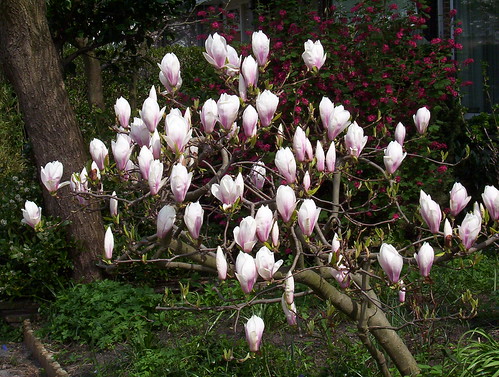
When to Plant a Magnolia Bush

Photo by Fadadomar

TheGardenLady received this questin from Betty:

When is the best time of year to plant Magnolia bushes?

TheGardenLady never heard of a Magnolia bush; but since there are about 80 different species of magnolia that are native to the eastern United States and southeastern Asia as well as hunderds of named hybrids, there might be a plant that has the common name of Magnolia bush.

One difference between a bush and a small tree, TheGardenLady was told, is the height- a bush is under 20 feet tall and a tree is over 20 feet tall. So you can see how arbitrary the word bush can be in a plant name. That is why it is imperative to ALWAYS give the Latin name of a plant when asking a question about a plant. With the Latin name, the person answering your question knows exactly which plant to talk about.

Continue reading “When to Plant a Magnolia Bush”

Chrysanthemum Bonsai in Japan

Bonsai bon·sai  n. pl. bonsai is the art of growing dwarfed, ornamentally shaped trees or shrubs in small shallow pots or trays. Bonsai appeared first in China over 1000 years ago but once bonsai was introduced into Japan in around the 12th century- some say earlier, the art was refined to an extent not yet approached in China. The word means means a tree planted in a container.  Read this for some history of bonsai.

While in Japan, TheGardenLady visited what is considered one of the 3 most beautiful gardens in Japan which is also one of the most famous gardens in Japan since the Edo Period-for over 300 years. This magnificent garden is called Korakuen and is in Okayama. Because it is Chrysanthemum time, the garden had an exhibit of Chrysanthemum Bonsai.

Continue reading “Chrysanthemum Bonsai in Japan”

Chrysanthemums In Japan

TheGardenLady has just returned from a two week tour of Japan with an artist who was raised in Fukuoka but now lives in the US.  She knows Fukuoka very well and takes small groups with her to visit the area around Fukuoka which included Nagasaki and Kyoto. TheGardenLady was most interested in the flora and gardens of the area and to this end took many photos; but since the tour was not specifically plant oriented, ThisGardenLady would love to return to Japan some day to visit the botanical gardens as well as more of the formal gardens.

This time of year is the chrysanthemum festival. Many of the gardens or shrines have displays of chrysanthemums for visitors to gaze at.

According to Wikipedia “Chrysanthemums were cultivated in China as a flowering herb as far back as the 15th century BC.  An ancient Chinese city was named Ju-Xian, meaning “chrysanthemum city”. Then, according to the chrysanthemum society “around  the 8th century A.D., the chrysanthemum appeared in Japan. So taken were the Japanese with this flower that they adopted a single flowered chrysanthemum as the crest and official seal of the Emperor. The chrysanthemum in the crest is a 16-floret variety called “Ichimonjiginu.”

Continue reading “Chrysanthemums In Japan”

Gardening Books

Photo by joeysplanting

I don’t know when gardeners and people who buy gardeners’ presents for the holidays start shopping for these presents, but I thought TheGardenLady’s readers might want to look at some books to buy as presents or drop some hints to friends about certain books you or they might wish for. So, to that end, here is a list of some companies that publish gardening books- in alphabetical order.

The first publishing company that I love for books of all kinds is DK Books. Their gardening books are excellent. One book they print and sell that garden lovers would want to own is DK’s “A-Z Encyclopedia of Garden Plants.”

A second publishing company for gardening books is Fulcrum Books. One book that TheGardenLady thought looks interesting on their list is called “Culinary Gardens: From Design to Palate”.

Continue reading “Gardening Books”

Conifers

Fall is a good time to attend gardening lectures. Not that there isn’t a lot of work still left to do in the garden: harvesting if you have vegetable gardens, putting your plants to sleep for the winter if you have flowers, bringing in summer bulbs like gladioli,  planting next spring’s bulbs like daffodils, etc.  But since there are many good lectures going on in the Fall, like the Perennial Plant Conference on Friday, October 17th at Swarthmore, when readers have free time, they should make every effort to attend.

To that end of going to lectures to learn more, TheGardenLady attended a lecture entitled “Conifers for Your Garden” given by Steven Kristoph who has taught about conifer trees at Rutgers University for over 25 years. He also owns Steven Kristoph Nursery and has a website. 

Steven opened his lecture by saying how pleased he was that so many people attended his lecture since so many excellent websites can be Goggled up on conifer trees that one can find out just about all there is to know about conifers without leaving home.  Conifer trees are defined as a grouping of trees with needle or scale-like leaves (e.g. pine, spruce, cypress) and bear cones. They are usually, but not always, evergreen. A website that he recommends is The American Conifer Society.  This website lists all the conifers with photos as well as tells the readers where there are lectures or symposium on conifers.

Continue reading “Conifers”

Walking and Wildflowers

                                                Photo by Jakob.Enos

This Columbus Day weekend TheGardenLady’s daughter came home and wanted to go for a walk. TheGardenLady has her usual 1/2 mile each way walk that goes along a wooded and wildflower route near a stream. Each time, in every season TheGardenLady walks this route, she discovers different and interesting plants or flowers or  colorations of leaves. TheGardenLady is not someone who walks blindly. Her favorite mantra is to check every blade of grass along the way. And with another pair of eyes walking alongside, TheGardenLady discovers even more.

When TheGardenLady first moved to this area, one May, she found one of  the best stretches for wild strawberries Fragaria virginiana and it was along this route. Because most people who didn’t grow up in a rural area don’t know which foods are edible- even this GardenLady doesn’t know all the edible plants and ALWAYS takes precautions, better to be safe than sorry-  this wild strawberry “patch” was a Mother Lode for TheGardenLady.

For those who have tasted them, wild strawberries are the  most delicious of all the strawberries.  Wild strawberries are one of the fruits TheGardenLady considers ambrosial. But, sad to say, the township mowed this strawberry area down a few years in the running, so that not one wild strawberry plant remains. (Wild strawberry plants do not transplant.)
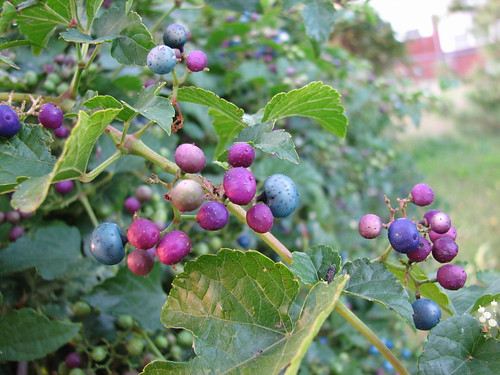
                                               Photo by weretable

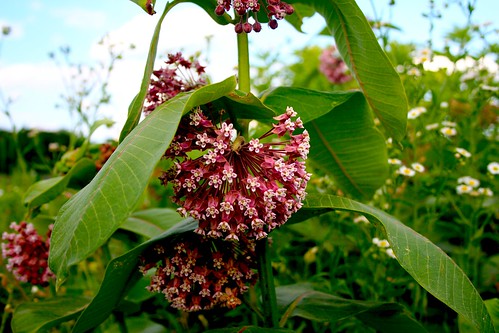
But still there are plants for other animal, bird or insect species to enjoy. Along this walk there is the common milkweed, Asclepias syriaca. There is a rather large clump of them – about a dozen or so plants. Hopefully the township mowers will leave this area unmowed to enable the Monarch butterfly catterpillar to feed on the plant. And on this Columbus Day weekend, the Milkweed seedpods were breaking open and the feathery seed carriers were being blown about. This is one plant that gardeners who want to grow native plants should encourage in your gardens. The plant has a globe lilac to pinkish flower from August through Sept. and an unusually shaped seedpod that cracks open in the fall to allow the seeds to blow. These are easy to grow wildflowers that should bloom in the second year. You can buy the seeds out or gather them now as they are blown about.

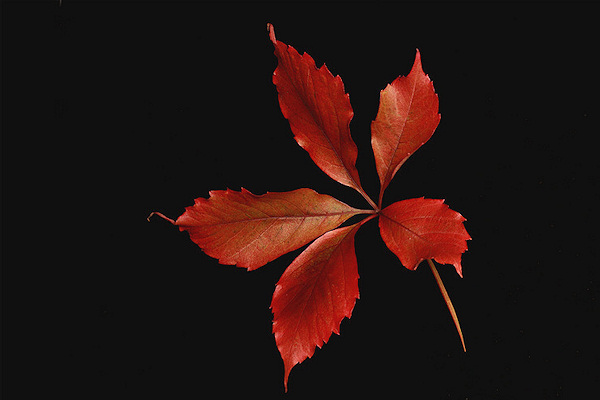
The Virginia Creeper was brilliant red as it climbed up the tree trunks; it is one of the earliest plants to turn color in the fall. TheGardenLady’s daughter sometimes confuses Virginia Creeper with poison ivy because poison ivy also turns a brilliant red. But remember that Virginia Creeper has 5 leaves but Poison Ivy only has 3 leaves.

And on  this Columbus Day weekend, TheGardenLady’s daughter noticed, among some other plants that TheGardenLady had never in her 30 some odd years of walking this same route, seen. One plant growing there was Ampelopsis brevipendiculata or Porcelain Berry Vine with its lovely pale lilac, purple, blue and green berries. This plant is spread easily by birds and small animals that feed on these colorful berries. Sadly this lovely vine has become a major invasive plant because it spreads so easily and grows so fast that it strangles trees and native wild plants.  Because it has some of the prettiest fall berries it was brought to this country to be cultivated around the 1870s as a bedding and landscape plant and in spite of its aggressiveness in some areas, it is still sold by the horticultural trade. Be wary if you fall in love with this  vine. Check your state’s invasive plant list before you buy it.
This is just a small listing of all the plants one sees while walking or hiking. Discovery has got to be one of the great joys of life.

How To Reduce Fall Deer Damage

                                                   Photo by Worldman

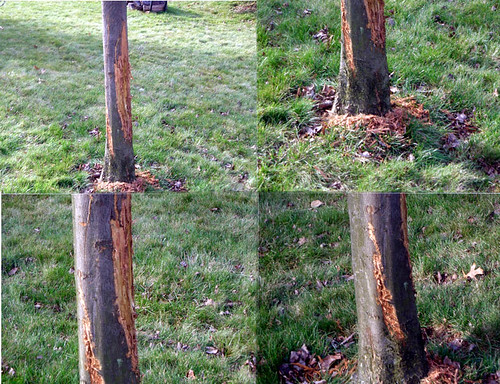
Because male deer’, the bucks, antlers reach full growth in the fall, they want to get rid of the soft velvet that protected their antlers while they were growing. Early in the fall you may see a buck rubbing his antlers on the trunk of a tree or see evidence of the rubbing. Besides rubbing off the velvet on the antlers, later in the fall the deer can be marking his territory by rubbing trunks of trees. Bucks use glands in their foreheads to make scent markers on the trunks of trees. These rubbings are called  “buck rubs.” Look for buck rubs on trees, usually one to two feet high off the ground, from September to December.

Though most trees are resilient to the buck rubs, it can be bad for the tree, especially if it is a young tree- losing bark on the tree trunk can kill a small tree. Damage that completely encircles the tree’s circumference is more deadly than damage up and down because the tree’s vascular system is just under the bark. Young trees have very thin bark that offers no protection from such damage.

You should surround the tree with a sturdy fence or barrier that can keep the male deer away from the tree trunk. A 6-foot-tall barrier of welded wire mesh, supported by 8-foot-tall rebar pounded into the ground at regular intervals around the circumference is one suggestion to keep bucks from rubbing on young trees. Another option is corrugated plastic drainpipe that has been slit along its length and placed around the trunk.  While deer repellents can help prevent deer browsing, they are not very effective in controlling buck rubs.

Continue reading “How To Reduce Fall Deer Damage”

Callicarpa americana

                                           Photo by natureloving

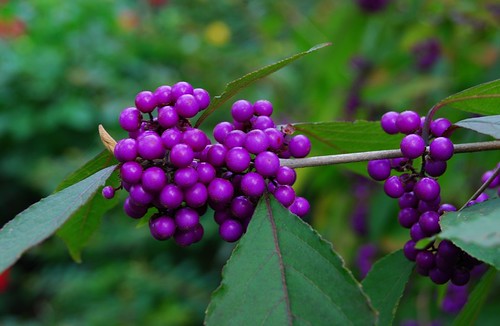
TheGardenLady had never seen a bush with such magnificent fall berries until she walked around her town one fall and saw a shrub with magenta berries on it. Once seen TheGardenLady had to have this shrub; but when she first asked its name - Callycarpa Americana – it seemed difficult to remember.  And its common name with Beauty in it, was also difficult to recall because there is beauty as part of other common plant names. But once TheGardenLady learned that Callicarpa is derived from the Greek words kallos (beauty) and karpos (fruit); Linnaeus named it americana to distinguish it from the old-world species, this TheGardenLady could never forget the name.

It had to be given the name whether in Greek or in English of Beauty Berry because of the strikingly bright magenta berries that are profuse on all the branches-the berries on some shrubs are said to be pink through violet. And there are also white berried Callicarpa americana – var. lactea or other white berried callicarpas.

Continue reading “Callicarpa americana”

Trilliums

                                                Photo by ER Post

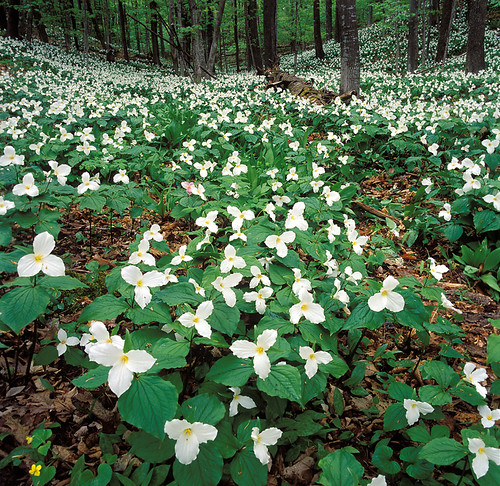
Is there anyone who doesn’t love Trilliums?

When I planted one in my son’s garden and it bloomed the next spring, my granddaughter phoned me to ask what the fairy flower was that was blooming. A friend with a wonderful woodland garden told me that it was her love of Trilliums that started her gardening.

Towards finding out more about Trilliums, TheGardenLady recently attended a lecture given by John Gyer entitled “The Secret Life of Trilliums.” It turns out that if you want to plant Trillium seeds and get flowers from those seeds, you have to wait 8 years.  It takes 2 years just to make a first leaf.

So Mr. Gyer studied what was going on during those 8 years in the life of the plant both underground and when it sent up the stems and leaves that finally led to the plant putting forth flowers. If any gardening group would like to hear this fascinating talk, you can contact John Gyer at fernhill@voicenet.com

Continue reading “Trilliums”

Musings on the Benefits of Gardening

                                            Photo taken by crawfor3

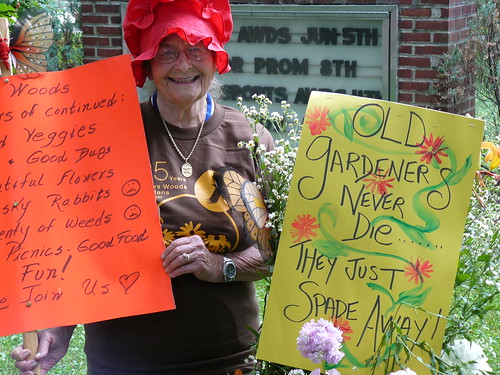
TheGardenLady has read numerous articles about the many health benefits from gardening.  Gardening is said to provide the regular physical exercise necessary in the prevention of heart disease, obesity, adult-onset diabetes and high blood pressure as well as the strength training important in the prevention of osteoporosis. 

Gardening doesn’t allow for boredom; there is something one can be doing all year round, in the garden or planning for the next year’s garden. It is a social activity. Gardeners enjoy each other’s company. They enjoy discussing plants and sharing garden tidbits or even visiting one another’s gardens.

Gardening and having plants reduces stress – the dreary days of winter are relieved by the plants you grow in your house while these plants give a fresher more oxygenated breathing environment. 

Continue reading “Musings on the Benefits of Gardening”