Diagnosing Marigold Problems


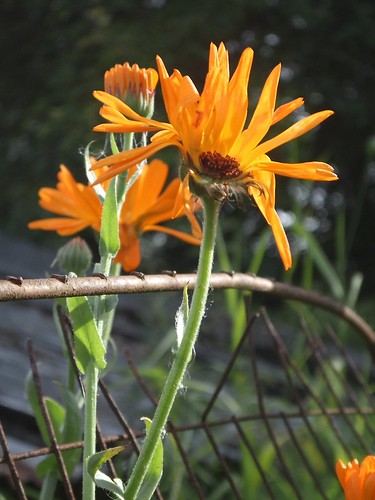
                           Photo taken by juggzy_malone

TheGardenLady received this question from Liz on her “Caring for Marigolds” post.

I am growing marigolds in tall (3″) pots in a very sunny location of my backyard. In the pots I have also planted white flowering bacopa, ivy and a browny spikey grass (not sure of the name).  Everything in the pots were growing well for a few weeks until recently when I noticed that the bacopa stopped flowering and the foliage and flowers of  the marigolds had turned into a daily meal for something.  I’ve checked in the soil, and around the marigolds both in the day and in the evening but can ft locate any insects other than the one lonely earwig.  I have read that the only pests that will feast on marigolds are slugs but I can’t find any in/around my pots. Can you offer any information on what may be causing my frustrations???

You write that you created a mixed pot of plants that includes bacopa and marigolds. Was it your idea of putting these plants together? TheGardenLady would not recommend combining marigold and bacopa in one pot. My understanding is that bacopa will stop flowering with severe drying out. Bacopa likes part sun. But marigolds like full sun and don’t need as frequent watering.

Not knowing the kind of ivy you have or what the grass is that you have, I cannot tell you the proper culture for those two plants.
Continue reading “Diagnosing Marigold Problems”

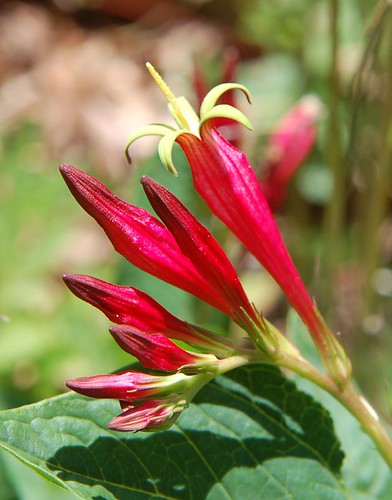
Spigelia Marylandica

In the July 15th post, TheGardenLady wrote about her visit to Chanticleer. One of the pleasures of touring a garden is to discover “new” plants. TheGardenLady and her friends found a plant that they had never seen before.

Chanticleer has, at each of their gardens, a list of all the plants that are located in that garden and on their website they have a list of all the plants in the gardens. But long lists are difficult to use.

However, one page of the Chanticleer website has a special listing of what is blooming by date and TheGardenLady was able to locate the plant on the date when it was first blooming in the park at an area called The Water Wheel.

The plant is called Spigelia marilandica. Spigelia marilandica has upward facing, trumpet-shaped, brilliant red flowers (to 2″ long) atop stiff stems growing to 18″ tall. Each flower is yellow inside and flares at the top to form five pointed lobes which looks like a yellow star. Flowers bloom in June. It has glossy green, ovate to lance-shaped leaves that are up to 4″ long.  It is described as one of the most striking and beautiful of the native perennials. This is exactly how TheGardenLady and her friends felt when seeing the plant for the first time, even before they knew what it was.

Apparently this plant is a native plant of Southeastern US but websites say that it will survive as far north as Zone 5. There are common names for this plant such as Indian Pink or pinkroot. It likes a bright woodland in shade or partial shade or sun plus well drained soil. A surprisingly hardly plant, though it is best established by late summer for reliable success in gardens and containers. It has no known diseases or pest problems and Deer don’t
like it
.

It should never be taken from the wild. It can be bought in numerous
nurseries. TheGardenLady was able to buy Spigelia marilandica at Russell Gardens Wholesale, but they said the plant is very popular so they had few left. There are other places where one can buy Spigelia marilandica (e.g. here or here).

Let TheGardenLady know what you think of this native plant.

Brugmansias

                          Photo taken by Dara at the New York Botanical Garden

One day this hot week, TheGardenLady and friends visited the New York Botanical Garden. If you have never visited this Botanical Garden, you garden lovers must make it a point to go to see its 50 gardens and plant collections. Try to pick a cooler day to allow you to walk comfortably on its 250 acres. But any day is worth while visiting the NYBG. This is one of the great gardens of the world.

In the Enid A. Haupt Conservatory on the NYBG grounds, this time I toured the building, the Brugmansias were having a brilliant show. I saw 6 Brugmansias in full bloom in one wing of the conservatory.  Continue reading “Brugmansias”

Chanticleer

Photo by Bluberd

TheGardenLady loves to visit gardens both public and private, and this summer she has been doing a lot of garden visiting.

Last week TheGardenLady went to tour a favorite garden in Wayne, Pennsylvania called Chanticleer. This 30 acre garden was donated by the owners’ son for the public to enjoy. It is a delight to visit because there is something in bloom from April to October.  And interspersed in the gardens are many unusual garden ornaments including the rooster -Chanticleer- from which the estate takes its name.

Photo by My aim is true

In 14th century Middle English Chanticleer is the rooster in verse narratives from Old French Chanticleer, the name of the rooster in the tale of Reynard the Fox. A cock, so called from the clearness or loudness of his voice in crowing. See here.

Continue reading “Chanticleer”

Where Have All The Butterflies Gone?

Photo taken by Martin LaBar

Is it just TheGardenLady, or have others noticed that there are very few butterflies in the garden this summer?

Yes, TheGardenLady saw one yellow swallowtail, one viceroy, one black swallowtail and a half dozen cabbage white butterflies on her flowers and she saw a fritillary in her friend’s garden. She also had a magical moment at a plant nursery where a yellow swallowtail clung to her arm as she carried away a plant she wanted to purchase.

Continue reading “Where Have All The Butterflies Gone?”

Acid for Hydrangeas

TheGardenLady received this question from Martha:

How can I add acid around my hydrangeas?

Because hydrangeas like an acidic soil – especially if you want the blue blooms- you can supplement the fertilizer and add acid.  Know that not all the hydrangeas will change color. Usually it is the pink and blue hydrangeas that can have their flowers change color, not the white or red hydrangeas.

Any of the following will help: aluminum sulfate (1/4 oz. per gal. of water) which can be bought in many garden stores, egg shells, coffee grounds which you can get free, TheGardenLady was told, at places like Starbucks,  ground up orange or grapefruit peels.

Continue reading “Acid for Hydrangeas”

Summer Care for Encore Azaleas

For those of you who are enjoying Encore Azaleas in your gardens, the Encore Azalea company sent TheGardenLady this email with advice on summer care. Encore Azaleas are the azaleas bred to bloom in spring and throughout the summer.

The heat of summer can be harsh on all plants, and we at Encore Azalea(R) would like to help you prepare.

Keep a watchful eye on the moisture level of the soil around your Encore Azaleas. The shallow fibrous roots like to be moist, but not saturated. A mulch of pine bark will help hold moisture near the roots, as well as protect the roots from the harsh rays of the sun.

This is your last chance to prune for the season. Any heavy pruning should be done immediately after your Encore Azalea’s spring bloom cycle. Remember only to prune lightly in high heat.

Best Regards,

From your friends at Encore Azalea(R)

Mike McGrath will be in Princeton on June 7th


Sustainable Lawrence Presents: An Afternoon with WHYY Radio Host Mike McGrath “You Bet Your Garden”

A Rare Sighting in the Greater Princeton Area

Organic Gardening, composting, Organic Lawn, & Organic Tomato lovers
Come to hear, see, and ask questions of Mike McGrath – Lecture
and Demonstrations, Q &A, A Book Signing Organic Afternoon

WHYY/NPR Radio Host of the Nationally Syndicated Garden program
“You Bet Your Garden” Tomato and Compost Expert Supreme

MIKE McGRATH

“Get Your Lawn Off of Drugs” and Container Gardening, Compost, the Best Organic Tomato Plants”

Former Editor in Chief of Organic Gardening Magazine
Garden Editor of WTOP Washington DC
Columnist for GreenPrints Magazine
Author of McGrath’s Book of Compost; You Bet Your Tomatoes, and
Kitchen Gardening

June 7th 1 PM 3 PM

The Lawrenceville School Kirby Arts Center
Rt. 206 Lawrenceville Boro

$5.00 donation at the door
Rain or Shine

For more info go here.

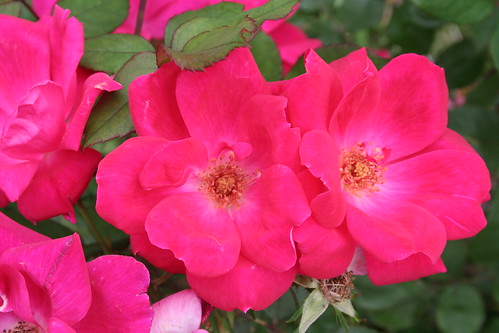
Soil for Knockout Roses

TheGardenLady received this question from Pat:

I am getting ready to plant Knockout Roses in my garden in northern South Carolina, and wonder how to best prepare the soil? We have very dense red clay mixed with some sand. Any recommendations on how to get these roses off to their best start in this type of soil?

Sorry it took so long to get back to you with a response, but TheGardenLady went right to one the sources of KnockOut Roses (see here) to get you the answer. I added a link to Permatill, a product mentioned in this column.

Here is the advice from a spokesperson for Novalis Plants that Work:

Continue reading “Soil for Knockout Roses”

Diseased Marigolds

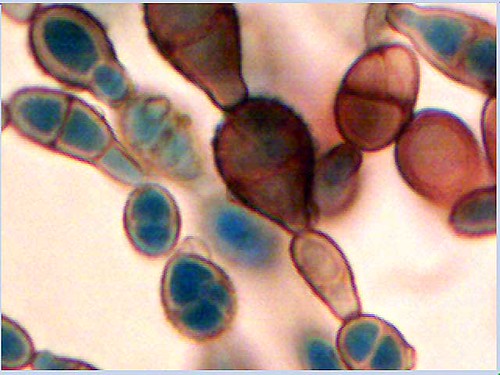
                                              Alternaria

TheGardenLady received this question from Helen.

I just put in marigolds next to my tomatoes, as companion plants. I think I’ve overwatered them and it’s been rainy in Ithaca this year…White spots are forming on them. I don’t have a digital camera handy, or I’d show you what they look like. My daughter says they have the chicken pox! Do I dig them up and replace them with new ones or do I just try to dry them out? I worry if they stay, that they are diseased and will just get worse-maybe attracting pests… What’s your advice?

Not seeing your marigold plants TheGardenLady thinks you have diseased marigold plants. Heavy rains and winds can carry a disease called alternaria to ornamental plants. See here.

Even though TheGardenLady has not seen the marigold plant and the problem, TheGardenLady would pull out the sick looking marigolds which are cheap to replace. The reason for this suggestion is because you might get a similar fungus, a fungus in the same genus, on your tomato plants and this alternaria or Tomato Early Blight damages the tomato plants and fruits. See here.

Continue reading “Diseased Marigolds”