Kabocha

Kabocha (Japanese Squash) by moogs

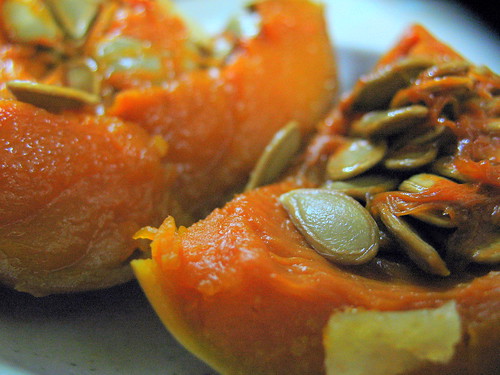
Are you planning your Thanksgiving feast yet?  When you do, consider serving Kabocha, pronounced kah-bow-cha as part of the meal. The Latin name for kabocha is Cucurbita maxima and the common name is Japanese pumpkin or Japanese squash.

This delicious, sweet tasting pumpkin/squash is one of the sweetest of all the pumpkins/squashes. You eat almost every part of the Kabocha. You don’t have to peel it because both the skin and flesh are eaten.  (see here)
Continue reading “Kabocha”

How to get your pumpkin ready for pie and seeds

Pumpkin by UmmAbdrahmaan..

The easiest way to make pumpkin ready to make the pie is to cut it horizontally through the middle to get two “halves.” Try to cut so those are real halves to cook evenly.  I scoop out all the seeds and save them. I then take a grapefruit serrated  spoon and scrape out as much of the strings that are in the pumpkin cavities. You don’t want those strings. Then I take the largest jelly roll type tin* I have- you need sides on the tin- and put the cut edges of the pumpkin cut side down on the sheet- the skin side and stem are facing upward. (see here)  Some people put a little grease on the bottom of the sheet and put a little water in the bottom of the sheet. Those who do this say it keeps the pumpkin moist. You can do this if you want.   TheGardenLady doesn’t bother doing these two things because I find that the pumpkin sends out so much water that it is unnecessary. I find that I may have to take a turkey baster to remove a lot of the liquid given off in the baking of the pumpkin so that it doesn’t overflow the pan and dirty the oven. Then I put the oven temperature up to about 450 degrees Farenheit (230 degrees Celsius). I check on the pumpkin in about 45 minutes- depending on the size will determine how long it remains in the oven. I leave it baking until it is soft. When you press on the skin it will feel soft or sort of cave into itself. Some say a fork will pierce the skin.

Continue reading “How to get your pumpkin ready for pie and seeds”

Pumpkin Time

Another Shot of the Same Pumpkin and Watermelon (Sans Clown) by bill barber

It is pumpkin time again. Can one believe someone could grow a pumpkin that weighed more than a ton? A ton is 2,000 lbs. And this year’s, 2012, winning pumpkin weighed 2009 lbs.  Check it out!  I find this amazing.

If you want to grow gigantic pumpkins you have to start with pumpkins that grow to large size and then spend time encouraging the things to grow larger. For the secrets of growing enormous pumpkins, go here.

TheGardenLady wonders if the flesh of this gargantuan pumpkin is edible?  Or do they feed it to the animals or just compost it after saving the seeds to use for next year’s gigantic pumpkin contest?  (see here)

Continue reading “Pumpkin Time”

Art Tea

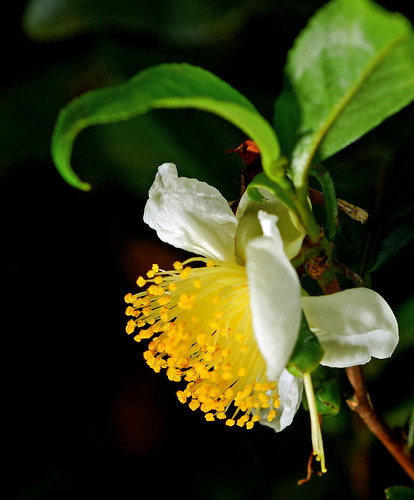
Tea Flower by autan

Tea seems to be reemerging as a very popular drink these days in the United States. It has always been popular in England. But after the tea tax revolt that started the American Revolution, most Americans seemed to drink more coffee. According to Wikipedia and other research, Americans still drink more coffee- most tea in the US is served as iced tea. But hot tea is very popular now, and, especially with all the health benefits of green tea that has been in the news lately, more people will be drinking the hot brew not only when one has a cold, but to prevent illnesses.

Continue reading “Art Tea”

Indian Summer – a time to enjoy many blooming flowers

Indian Summer in New England by Werner Kunz

I love Indian Summer. I wondered about the history of the term. I found this explanation for it.   Whatever the reason for it, I love the warmth before freezing weather and every year I wish Indian Summer would last a long time. I love it because so many flowers take this time to bloom. Not just chrysanthemums and asters that are in bloom and can take some frost; but many fall flowers have their last “hurrah” by sending forth flowers before winter sets in.

I know that the kiss of the frost makes for a great apple taste. But I hate when that first frost strikes because it cuts short the buds of many flowers that would otherwise open.

It is amazing the number and kinds of flowers in bloom in my garden right now.

Continue reading “Indian Summer – a time to enjoy many blooming flowers”

6 more things to do in your garden during October

October Garden by Ravenelle

In the last post, TheGardenLady gave a list of 9 things you should do in your garden before the frost of Fall arrives.  Here are 6 more suggestions:

1.  Pull up diseased plants especially tomatoes, squash and potato plants. Do NOT compost these diseased plants. Bag them and toss them out.

2.  Cut back dead perennials where slugs, snails and other pests might hide. But remember to leave some plants for birds and butterflies.

Continue reading “6 more things to do in your garden during October”

9 Things You Can Do in Your Garden before a Frost

Garden set up for fall frosts by Carolannie–temporaril…

Fall is a busy time of year for gardeners.  Here are 9 of the many things you can do before a frost:

1. Start planting bulbs. This is the time to plant those bulbs you want to bloom next spring- like daffodils, tulips, hyacinths, crocuses, etc. You can plant bulbs until there is a hard frost. You can order them from catalogs. TheGardenLady has a number of favorite bulb catalogs.  The nice thing about catalogs is that they send you the bulbs when it is the best time to plant them in your area. But, of course, you can buy bulbs in your local stores if you prefer.

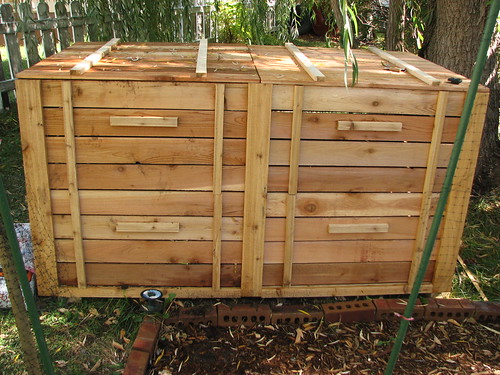
2. Build yourself or buy a compost bin if you don’t already have one.  Sometimes it is best to have at least two compost bins.  There are many instructions for building them online.

Continue reading “9 Things You Can Do in Your Garden before a Frost”

Michael Dirr to be Keynote Speaker at Master Gardeners of Mercer County’s 2013 Horticultural Symposium

Michael Dirr

If you live in NJ or plan on being in the Princeton, NJ area on March 16th, 2013 or if you enjoy traveling to symposiums, you might consider signing up for the Master Gardeners of Mercer County’s outstanding annual horticultural symposium. For the last few years, The Master Gardeners of Mercer County, NJ have held excellent gardening symposiums that are extremely popular and well appreciated by those who attend. Every year these symposiums have been sell-outs. This year they seem to have put together what promises to be their best symposium ever. So even before information about the symposium went public, over HALF the seats have been sold already.

Continue reading “Michael Dirr to be Keynote Speaker at Master Gardeners of Mercer County’s 2013 Horticultural Symposium”

Websites for solving your horticultural problems

Master Gardeners by Carol VanHook

Do you have problems with your plants? Who doesn’t? Do you often wonder where to go to answer your problems, besides writing to TheGardenLady?

Well, you can always call in with your question or take a sample of your problem to your local Master Gardener office. Every state and almost every county in every state in the US has a Master Gardener office. Master Gardeners are in Canada and also in England and New Zealand.  South Korea is considering starting a Master Gardening program. Good luck to South Korea.

Continue reading “Websites for solving your horticultural problems”

Prunus Mume aka Japanese Apricot

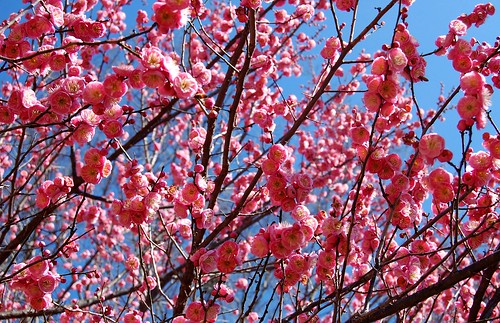
Winter in the Atlanta Botanical Garden – Prunus mume “Peggy Clarke” by UGArdener

An Asian friend told me about a tree that ThisGardenLady had never heard about in the US. And not only had I not heard of this tree in the US, but this friend told me that the tree blooms in the WINTER in my Hardiness Temperature area which is zone 6B. The tree is Prunus mume or the Japanese Apricot. I know that many of the trees with prunus in their names will grow in my temp. zone because prunus is a genus that includes plums, peaches and apricots, etc. and there are many prunus trees growing here. But the prunus trees and shrubs that I know bloom in the spring not the winter. Certainly, I thought, my friend must be mistaken about Prunus mume’s bloom time. (see here)

Continue reading “Prunus Mume aka Japanese Apricot”