Diagnosing Marigold Problems


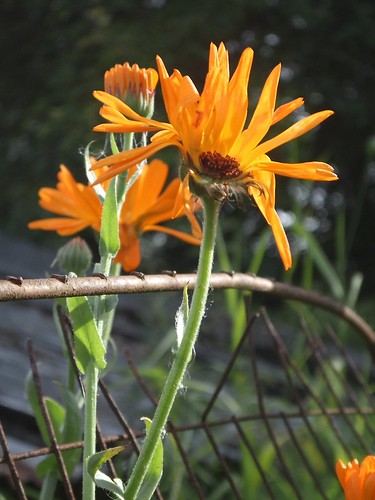
                           Photo taken by juggzy_malone

TheGardenLady received this question from Liz on her “Caring for Marigolds” post.

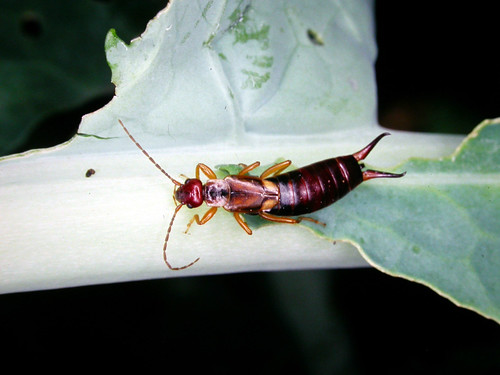
I am growing marigolds in tall (3″) pots in a very sunny location of my backyard. In the pots I have also planted white flowering bacopa, ivy and a browny spikey grass (not sure of the name).  Everything in the pots were growing well for a few weeks until recently when I noticed that the bacopa stopped flowering and the foliage and flowers of  the marigolds had turned into a daily meal for something.  I’ve checked in the soil, and around the marigolds both in the day and in the evening but can ft locate any insects other than the one lonely earwig.  I have read that the only pests that will feast on marigolds are slugs but I can’t find any in/around my pots. Can you offer any information on what may be causing my frustrations???

You write that you created a mixed pot of plants that includes bacopa and marigolds. Was it your idea of putting these plants together? TheGardenLady would not recommend combining marigold and bacopa in one pot. My understanding is that bacopa will stop flowering with severe drying out. Bacopa likes part sun. But marigolds like full sun and don’t need as frequent watering.

Not knowing the kind of ivy you have or what the grass is that you have, I cannot tell you the proper culture for those two plants.
Continue reading “Diagnosing Marigold Problems”

Something Bugging Your Marigolds?


TheGardenLady received this question from Joyce.

I love marigolds but am unable to keep them healthy. I have had the same problem in the past and gave up on them for a while. Now several years later the problem still persists. The foliage looks fine but the flowers and buds (all stages) are full of worms. They are about 1/8-1/4 inch size, vary from brown to beige in color and leave behind a sawdust-like residue on the flower. They burrow into the seed pod and even flowers that look unaffected have the critters inside. None of my other annuals are affected. They are all grown in containers on a balcony. Any thoughts and any treatment suggested would be welcome.

Marigolds, Latin name Tagetes, are usually one of the easiest annual flowers to raise because they have so few pest problems. In fact, they are often used to prevent problems for other plants because they get rid of nematodes in the soil. They are used as companion plants.   See here.  

But like most plants, Marigolds like to have their environment just as it was in their place of origin. Marigolds, in spite of some of their names, originated in Mexico and Central America. There they had lots of sun and not too rich soil. Marigolds, if raised in an area where they do not get the conditions they want are more susceptible to problems.  See here.

Continue reading “Something Bugging Your Marigolds?”

Honey Bee Crisis

TheGardenLady received this question from Joy:

Are you aware of the honeybee crisis and do you think that it will have an
effect on gardening and domestic plants?

The Garden Lady has been hearing about the bee crisis for a number of years.  The Garden Lady has noticed fewer and fewer bees on her property even though she never uses pesticides nor herbicides; both can harm beneficial insects like honey bees.  Alas, my policy of not putting toxic poisons on the ground is a rareity. Most people prefer lawns without “weeds” like clover. Clover to TheGardenLady is welcome in her lawn. Clover is a honeybee attractant. The GardenLady also tries to plant flowering plants that will attract pollinators. The oregano and mint area of my garden is one spot that is filled with nectar sipping insects that are pollinators.

Continue reading “Honey Bee Crisis”

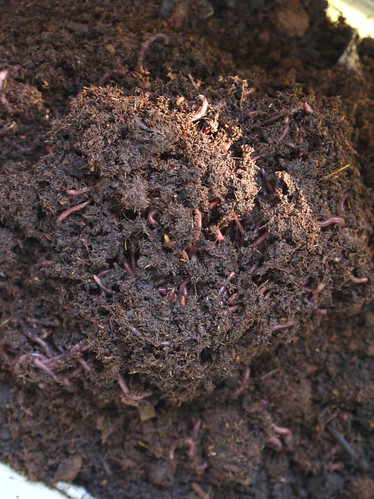
Vermicomposting for everyone – even in classrooms

TheGardenLady received these questions about vermicomposting from Ashley –

I have recently started a barrel composter. It is a modified 55 gallon foodsafe drum/barrel that is working nicely. Can I add worms to this? Because it is off the ground they will not enter natually, and I have been hearing so much about the benifits of worms. I would just love to join in on all the fun. I have yet to read or hear of someone trying out this method; though I’m sure there out there…any thoughts?

Worms are a benefit to composting, so congratulations for wanting to start this excellent endeavor. Some schools are now teaching students how to do Vermicomposting. There are many excellent sites on the computer to learn Vermicomposting. Two sites for teachers that you can use to learn how to start this type of composting are here and here.

Continue reading “Vermicomposting for everyone – even in classrooms”

Composting and Worms

TheGardenLady received emails from two people asking questions that are similar. I will try to answer both together as well as saying a few words separately to each.

Laura King wrote:

I wanted to know more about composting and what kinds of things I can put in it. I heard so many different things, I know what not to put in but not everything I could be adding.I also want to know if I can add my used tea bags to my rain barrel? Thanks for your help.I just found your web site, so tomorrow when the ids are gone I’ll be back.Thanks for a great site. Laura your friend in dirt.


Jay wrote:

Heard that putting worms in garden makes the garden grow better. true? How about in flower pots or boxes? inside?


Continue reading “Composting and Worms”

What’s in a “plant” name?

My nom de plume is Lilac.  So what’s in a name?  What’s in a name? that which we call a rose By any other name would smell as sweet” from Romeo and Juliette.  But I wondered how many of my readers’s names come from flowers, shrubs or trees? Or, how many of my readers want to name their babies after flowers, shrubs or trees? Here is a fun website about names given to people that have flower, plant or tree origins: it’s a website of names with their definitions for both boys and girls. Check it out. Some of the names seem like they could be surnames as well as given names.