Plumbago – A Great Ground Cover

Ceratostigma plumbaginoides by jacki-dee

Are you looking for a ground cover for  difficult-to-grow spots, like on slopes, or a pretty plant for your alpine garden or just a pretty but undemanding flower for your garden? Look no further than hardy plumbago- Ceratostigma plumbaginoides. 

This perennial ground cover is hardy from zone 5 to  zone 9 blooms from July to Sept. It is deer resistant. It likes sun but seems to do well in shady spots. One website said it will grow in sun, partial sun, partial shade, shade.  Plumbago will tolerate drought and will grow in dry to moist soils.  It does prefers well-drained soil with a neutral pH. It does not like heavy, wet soils. It is the kind of cover that doesn’t seem to let weeds grow through but you can plant it over bulbs like daffodils which will grow through the plumbago plant and bloom earlier in the season and be dead by the time the Plumbago emerges. And did I say that its leaves turn a copper color in the fall?

Ceratostigma plumbaginoides (Pflanze) by andreasbalzer

Plumbago is also called leadwort. The genus name is derived from the Latin name for lead, plumbum, I guess because lead gives off a blue flame and plumbago has a stunning blue flower. But it may also have gotten its name because there are accounts of plumbago being a folk-remedy for lead poisoning. Please don’t try it for that.

Corn in Botswana

In May TheGardenLady received an email from her good friend Lynne who is doing Peace Corp work in Mmathethe, Botswana.  She wrote,

I’m in Kanye today so I’m taking this opportunity with internet to send you these pics of what I saw on my walk the other night. It’s harvesting time for the maize, and unfortunately, people did not do well because of the lack of rains this year, but I thought this was really cool. These people are spending the next several days carving off every little piece of maize to sell to the other villagers. I tasted it last week at my host mom’s house, but it is not sweet like our corn, in fact, it was so bland that it’s not even worth eating, but when in Africa—do as the Africans!

The reason the corn is not sweet is because it is dry.  When corn is removed from the stalk, it loses its sugar. By the time the corn is dried, even when dried on the stalk, corn loses its sweetness and becomes bland tasting.  If you tasted the corn when it was young and still soft, picked fresh from the corn stalk and boiled immediately,  it would have tasted sweet. Perhaps not as sweet as the corn we in the United States eat these days which are hybrids and amazingly sweet. By harvesting the corn when it dried, it holds up better for a longer time.  Fresh corn like we eat would not store well unless it were canned or frozen.  I imagine that the corn they are husking and removing the kernels from is what, when I was a child, we used to call horse corn. We fed it to the animals- on our farm we fed the stalks to the horses and cows and the kernels to the chickens. We didn’t use it for cooking but I imagine it is the same thing that is ground up to make corn bread here in the states or corn meal mush or muffins.

Continue reading “Corn in Botswana”

How to Deal with Bagworms

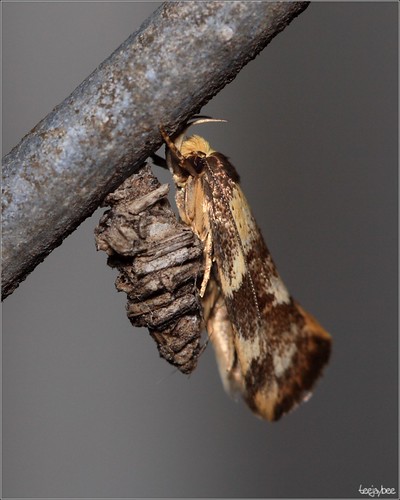
bagworm moth by teejaybee


TheGardenLady received this question from Carolyn about bagworms:

It is mid July in steamy Charleston, SC and I have just discovered I have bagworms on 2 of my 45′ Leland cypress trees. I am not getting call backs from people who could treat this. Maybe it is too late in the year and they know it is hopeless. I am too old to be out in the 104 heat index to hand pick the cone sacks and I can’t get up high enough anyway. The worms are spreading to roses and other shrubs. What should I do?

I am sure that you are correctly identifying bagworms. Because by the time you are seeing them, they are happily living in their bags and are quite obvious. And when they are dangling like ornaments on the trees, other than hand picking the cocoons, they are difficult to kill by using any insecticide that will effectively kill them.  Insecticides are most effective when applied during the early stages of bagworm development which is in the early spring.

Continue reading “How to Deal with Bagworms”

Converting your lawn into a vegetable garden

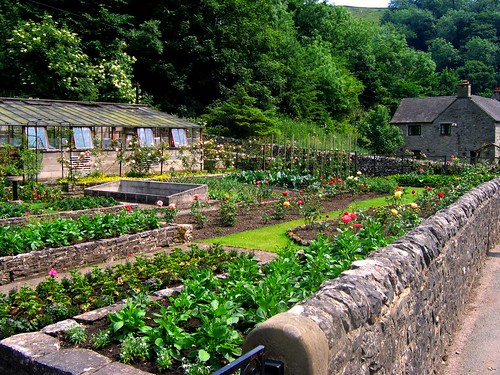
Now That’s a Vegetable Garden! by UGArdener

As clean water becomes a more scarce commodity and because of the rising cost of using it or the towns’ limiting of the use of water on flowers and lawns due to drought, as well as because fresh produce prices are going up, many people are converting their front lawns as well as their back yards to vegetable gardens.

It used to be that there were rules regarding the plantings on your front yard. These rules may still be in effect where you live. So before you decide to create a vegetable and herb garden on your front yard, or even before you plant drought-tolerant plants and remove the lawn, find out what is allowed in your community.  You don’t want to pay a fine should your town or housing development have laws on the books that don’t allow certain plantings in the front of the house. Or you may not want to destroy your lawn and flowering plants in the front of the house and upset your neighbors’ feelings.

Continue reading “Converting your lawn into a vegetable garden”

The Wonderful Watermelon

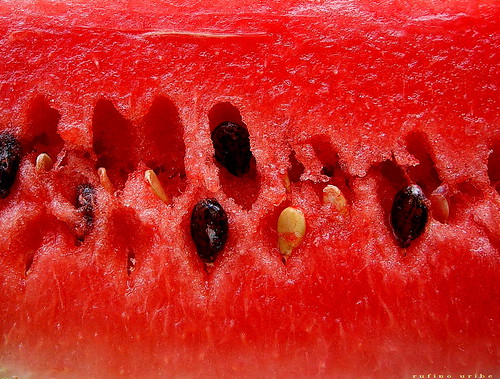
Watermelon by EssjayNZ

I think a good watermelon has got to be among the best fruits on earth. First there is that wonderful red color when the watermelon is cut. (Now there are yellow fleshed ones which I just tasted for the first time this summer at the Highlawn Pavillion Restaurant– it was delicious and so was all the food I ate there. ) Then the fragrance that emanates from the cut watermelon makes me recall the wonderful smell of swimming and summer when I was a child. And finally there is that sweet, but not too sweet taste of the watermelon- something so right, refreshing and delicious. Some fruits are too sweet for my taste, but not the watermelon.  I love watermelon. I remember being shocked when my father-in -law told me that watermelons were fed to the pigs, where he grew up in Poland.

para los panas – for the friends by ruurmo

The seedless varieties are nice, but I never minded having seeds. They were not difficult to remove and one could have fun, the old fashioned way, by having a seed spitting contest- to see who could spit the seed the farthest. I guess this younger generation is too fastidious these days to play that kind of fun game which used to keep us old timers happily laughing for hours.

Continue reading “The Wonderful Watermelon”

Staying Cool in the Garden

Beat the Heat by EJP Photo

The National Climatic Data Center reports that the US is experiencing the worst drought since 1956. Parts of the world are experiencing flooding. What does this extreme weather mean for gardeners? It is difficult to know.
But the most important piece of advice is to take care of the gardener first.

If you are in an area where there is flooding, there is nothing you can do to protect your garden until the water recedes. Save your family, yourself and your animals.  You can worry about the garden when things get back to normal.

If it is sunny and hot, you may be able to save something in your garden.  But remember to take care of the gardener (yourself) first. If you do go out in the garden, be sure to carry ample water for your own needs. It is often advised on the labels of hoses NOT to drink from them as you water your plants. Your garden hose may be hazardous to your health. Many hoses are made of polyvinyl chloride (PVC), which uses lead as a stabilizer.  So have a bottle of water with you when you are outdoors, so you can drink safely.

Continue reading “Staying Cool in the Garden”

What do you do in a drought situation?

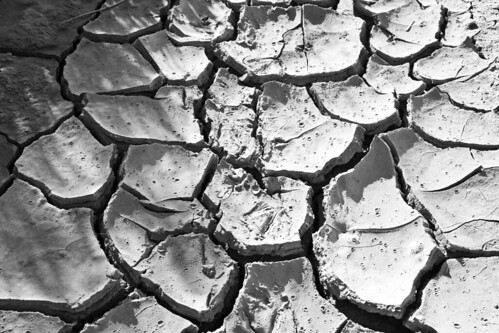
Drought by Bert Kaufmann

Be sure your plants have a good layer of organic mulch to retain as much moisture as possible.

If your town does not allow watering your garden during the drought period there is not much you can do. People and animals come first.

If you are allowed to water, remember that the best time to water is in the early morning hours before the sun comes up and temperatures start to rise. Water as close to the ground as possible so that the water gets to the roots of the plants. Water deeply, not superficially. If you cannot water early, next best is to water after the sun goes down in the evening. Again water close to the ground. If water stays on the leaves, fungus can grow – that is why morning watering is best for the water to evaporate off any watered leaves.  (see here)

Continue reading “What do you do in a drought situation?”

More about Lilies

black_beauty_oriental_lily by b00ng

TheGardenLady received this question from Becky about the photo in the last post of the lily taken by Per Ola Wiberg.

Hi there, what a BEAUTIFUL photo of the pink Lily–could you please tell me the variety? I would like to get one for my son who lives in KY and for me too in CO! ALSO… I am currently savoring Genius of Place, it is just a wonderful book; I caught most of the author’s interview on Book TV about a year ago (great interview, never forgot about it). Then I asked my library to get it for me and ended up purchasing my own copy which I’m SO glad I did! My nephew was a landscape architect (Rutgers). I would have loved to talk about Olmstead with him but he passed away in 2008. ANYWAY, thanks for mentioning that book.

I love the oriental and Asian lilies. But so do the deer. So I tread cautiously when I plant lilies. My first group of lilies was totally wiped out by the deer. That was before Liquid Fence was sold in the market and I  was experimenting with different things to keep deer off my plants. Because that photo is one of those lilies that was eaten by the deer, I regret that I do not recall the name.

Continue reading “More about Lilies”

People Enjoy Lilies in TheGardenLady’s Garden

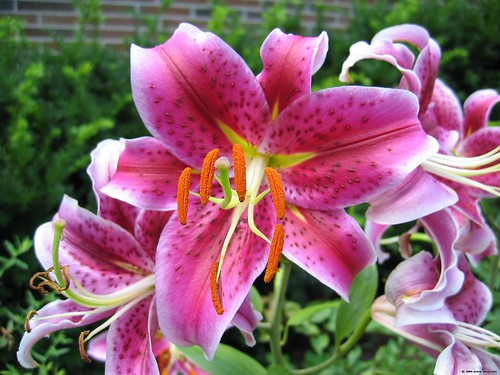
lily by Per Ola Wiberg ~ Powi

I love any flower in the Lilium Family. I love them and not just because my mother’s name was Lillian and my granddaughter’s name is Lillian. There are many plants with the name lily in them, but the ones that have the WOW flowers are the true Lilies. Google up Images when you type in Lilum and you will see why.

I keep adding more and more lilies to my garden. The only worry is that deer love them, too.

When to plant raspberries

Raspberry Bush by The Adventures of…


Someone asked TheGardenLady when is the best time of year to plant raspberries.

The best time to plant raspberry shrubs is early spring as soon as the soil can be properly prepared. You should plant the raspberries in an area that receives 6 to 8 hours of sunlight. If you want good information about planting raspberries, Ohio State University Extension has an excellent fact sheet.  Though the raspberry shrubs will grow in many soils, the best soil for raspberries is sandy loam soils well supplied with organic matter.  They like a well-draining area of slightly acid soil. Loamy soil is best for growing most plants. If you do not know what loam is check here.  Raspberries must be kept free of weeds, watered when necessary, fertilized and pruned.  (see here)

Continue reading “When to plant raspberries”