When To Plant Seedlings Outdoors

April 16th: Seedlings galore by flickrich

TheGardenLady received this question about starter planting.

We have plants that we started in the window and green beans are 4 in and our corn is right behind. We have other veggies that are a little slower. We live in Olathe Kansas. When can we put them all out?

People read the directions on packages of seeds and often it says to start the seeds by first planting them indoors a certain number of weeks before the last frost date and after that last frost to transplant the seedlings outdoors. The seed companies cannot tell you when to plant seeds outdoors because they have no idea where the purchaser lives.

Each temperature zone has a different last frost date – some Temp. zones don’t always get a frost some years. And even in the same Temp. zone no one knows exactly when the last frost date will be. Where you live might be warmer because you are near the ocean or colder because of various reasons. So how are you supposed to know?  (see here)

Continue reading “When To Plant Seedlings Outdoors”

Demilked.com: Design Milking Magazine

Designer: Kevin Hunt

TheGardenLady recently discovered a fun website called demilked.com that I thought gardeners might enjoy seeing. I have chosen the sections of this site that I thought gardeners might enjoy  (see here and here and here).

I love creativity and this website has many creative ideas to view but since TheGardenLady is a garden website, I am pointing you to the sites related to nature. But don’t stop there. You will love some of the art and design shown. Unfortunately I do not know where to purchase any of the interesting items.

How to Eliminate the Stink Bug

Brown Marmorated Stink Bug by e_monk

Last week my son had lunch with a friend who is an emergency room doctor in a New York hospital. They got around to talking about some of the more numerous insects in New York. One of those insects seems to be found in nightmare numbers. But the interesting thing about this insect is that, though creepy and an insect that no one wants in their house or apartment, it is not known to cause any real diseases to people. It does bite people and can make you itch. Yet scientists have never found this insect to carry any disease. But this young doctor says he is seeing many people in the emergency room because of the insect. Why? Because people don’t want the insect and have been buying toxic chemicals to spray or spread in their apartments. The people are getting sick from the chemicals they are using to try to get rid of this insect. The saddest thing is that mostly all the chemicals that they are using that are poisoning them are ineffective in getting rid of the insect they want to kill. This young doctor told my son that he is seeing numerous cases of poisoned patients.

There is another insect that is considered benign that has been coming into people’s homes in great quantities to over winter. This is an insect in the stink bug family known by scientists as the Brown Marmorated Stink Bug – Halyomorpha halys (see here). Most other stink bugs overwinter in dead leaves, but the Brown Marmorated Stink Bug discovered that it can get into your house through numerous cracks or through window air conditioners and be comfortable hiding in a warm comfortable house. You really don’t see that many until it warms up outdoors and they want to leave in the spring because they are starving after a long winter of no food. Sometimes they are fooled into thinking that it is spring when lights are on indoors. Though this bug is considered a nuisance more than a disease carrier, no one likes finding them in the house. Have you ever been to a dinner party when they came out and in their confusion dive bombed the guests? TheGardenLady has and it wasn’t pleasant.

So how does one get rid of them?

Continue reading “How to Eliminate the Stink Bug”

Battling Animals in the Garden – Part II

Baby Groundhog #1 by Chiot’s Run

Besides battling the deer in my garden (see last post), I have rabbits. They could have eaten some of my plants. I haven’t seen any rabbits on my property so far this spring, so that was why I had not blamed them for this early spring eating. Liquid Fence supposedly guards against both rabbits and deer. So I hope they won’t eat what I have sprayed.

Then I have squirrels who have not vacationed over the winter. They may be digging up some of those acorns they planted last fall or some of the bulbs I planted, like crocus bulbs.

Or is it the resident groundhog (Marmota monax) also called a woodchuck that lives on my property who is eating everything? (There is probably a family living with him) Since I am not a Jane Goodall type who can tell one groundhog from another to be able to name them, I cannot discern how many waddling groundhogs are out and about each day. To my eye it seems to work solo.

Continue reading “Battling Animals in the Garden – Part II”

Pesticides

The Dangers of Chemical Pesticides

Pesticides are chemical substances that are used to kill, repel, or regulate the growth of biological organisms. This diverse group includes insecticides, herbicides, fungicides, nematicides, acaricides, rodenticides, avicides, wood preservatives, and antifoulants. The U.S. Environmental Protection Agency recently estimated that more than 1.2 billion pounds of pesticides are applied to crops, forests, residential areas, public lands, and aquatic areas in the United States every year. The release of these chemicals into the environment creates a potential for unintended adverse health impacts to both humans and surrounding wildlife. (Laetz, Baldwin and Collier)

Pesticide Regulation

Mixtures of pesticides are common in the human food supply. These mixtures are also common in the aquatic environment, including lakes, river, streams, and other surface waters that support aquatic life. Assessing the cumulative toxicity of pesticides in mixtures has been a difficult challenge for environmental health research, as well as ecotoxicology, for the past several decades. In 1996, the United States Congress passed the Food Quality Protection Act, which directs the U.S. EPA to assess the human health risks from cumulative exposures to pesticides that share a common mechanism of action. Consideration of mixture toxicity is also required when pesticide tolerances are reassessed under the Federal Food, Drug, and Cosmetic Act.

Continue reading “Pesticides”

Israeli Flower Websites

Gorgeous flowers on the hillside of the Hinnom Valley

Purple Flower by WKeown

This April people around the world will be celebrating both Passover and Easter. This year you might like to decorate your house with flowers that Moses or Jesus might have seen or trod on. You may want to buy flowers that are native to or are grown in Israel. If you wonder what flowers are native to Israel and much of the Middle East and what flowers grow in Israel, TheGardenLady thought some websites about Israel’s flowers might be interesting.

One of my favorite sites is called Spring Awakening in Israel.  The homepage says Flowers in Israel, “That they all may blossom in a beautiful world beyond war.” My wish completely. This site gives the Latin name, the English name, the Hebrew name and some have the Arabic name of each of the flowers. It gives the names of the flowers that were in the Bible. From flowers listed as native to Israel, some of the flowers that I believe we might find in our local flower stores to create more authentic bouquets for the holiday table could include Anemones, Madonna Lilies, Jack in the Pulpits, poppies and irises. To walk on the hills of the Galilee in the spring among the red poppies is a sight to remember. Put that on your “bucket list.”*

Continue reading “Israeli Flower Websites”

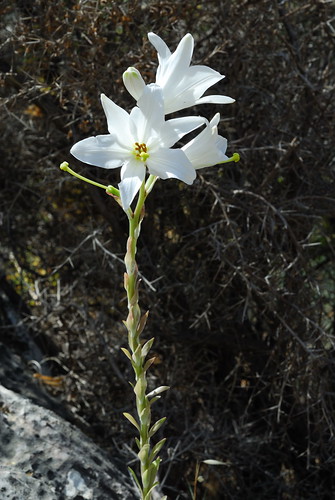
Madonna Lily – Lilium Candidum

lilium candidum by Giuliagas

Easter will soon be here and with it all the wonderful flowers of Spring will be appearing in the stores. Mostly we think of the flowers that are produced from bulbs like tulips, hyacinths and others. The most popular of the flowers is the Madonna lily, Lilium candidum. Not only is this flower spectacular but the fragrance is heavenly.

The oldest picture of this lily dates back 3500 years ago, found in Crete. Lilium candidum was a popular flower in ancient Jewish civilization and is mentioned in the Bible, both the Jewish Bible and the Christian Bible.

Lilium candidum by Nick Turland

This lily is considered to be most significant flower for the Christians and when you see early religious paintings, you will see the Madonna lily as one of the symbols.  See here. The pure whiteness of the flower is a symbol of purity, chastity,innocence, and sweetness associated with virgins and is the special flower of Mary, the Holy Virgin.

Continue reading “Madonna Lily – Lilium Candidum”

Alpine Plant Sales or Conferences

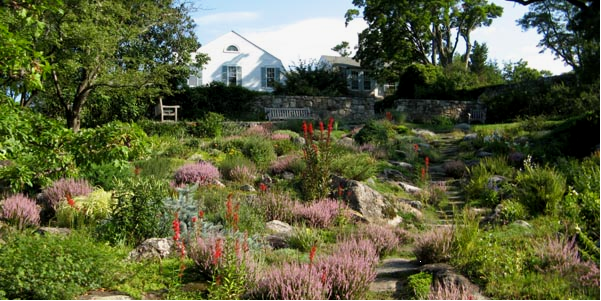
The Fells – Photo source: The Fells Chapter of NARGS

For readers of TheGardenLady.org who love alpine flowers and are interested in using them in their gardens or are planning on making a rock garden, or whatever, one of the best places known for their Alpine plant sales in the Eastern US is Stonecrop Gardens in NY.  See here. They will be having their annual Alpine plant sale and tour of their Alpine plants this April.

Saturday, April 23: 5th Annual Alpine Plant Sale with Wrightman Alpines, Evermay Nursery, Garden Vision and more, 9am-3pm, $5/members-no charge

Thursday, April 28: Guided Garden Tour featuring Alpine Plants, 6-7pm, $10/members-no charge

On April 17 The New England chapter of the North American Rock Garden Society will be having a rare plant auction at the Tower Hill Botanic Garden in Boylston, Mass.

See here.

Continue reading “Alpine Plant Sales or Conferences”

UK Gardens

Chelsea Physic Garden by europealacarte.co.uk

TheGardenLady loves to visit gardens. Spring is here and the urge is back.

A number of years ago, TheGardenLady created a tour of gardens of England for myself and garden lover friends- this is not a business that I do, just a labor of love. The tour that I had created included such fabulous gardens as the Chelsea Physic Garden, Kew, Sissinghurst, Wisley, The Great Dixter, Stourhead and other wonderfully gorgeous gardens. The gardens I visited were so wonderful that my friends have asked me to plan another such tour.

Continue reading “UK Gardens”

Winter Flowering Plants – Part III

Hamamelis x intermedia ‘Primavera’ by Tie Guy II

In addition to winter-flowering flowers (see here and here), there are also winter flowering shrubs. Many of these shrubs are hardy in US hardiness zones 5 and warmer.

One of the earliest blooming shrubs is the witch hazel. Witch Hazel, Hamamelis intermedia “Pallida” is considered one of the best to open in mid to late winter.  See here.  Friends eagerly went to view the one that opened early in a local garden. Many of the Hamamelis have the added bonus of fragrance. Plus the witch hazel has fall interest with colored foliage.

Continue reading “Winter Flowering Plants – Part III”